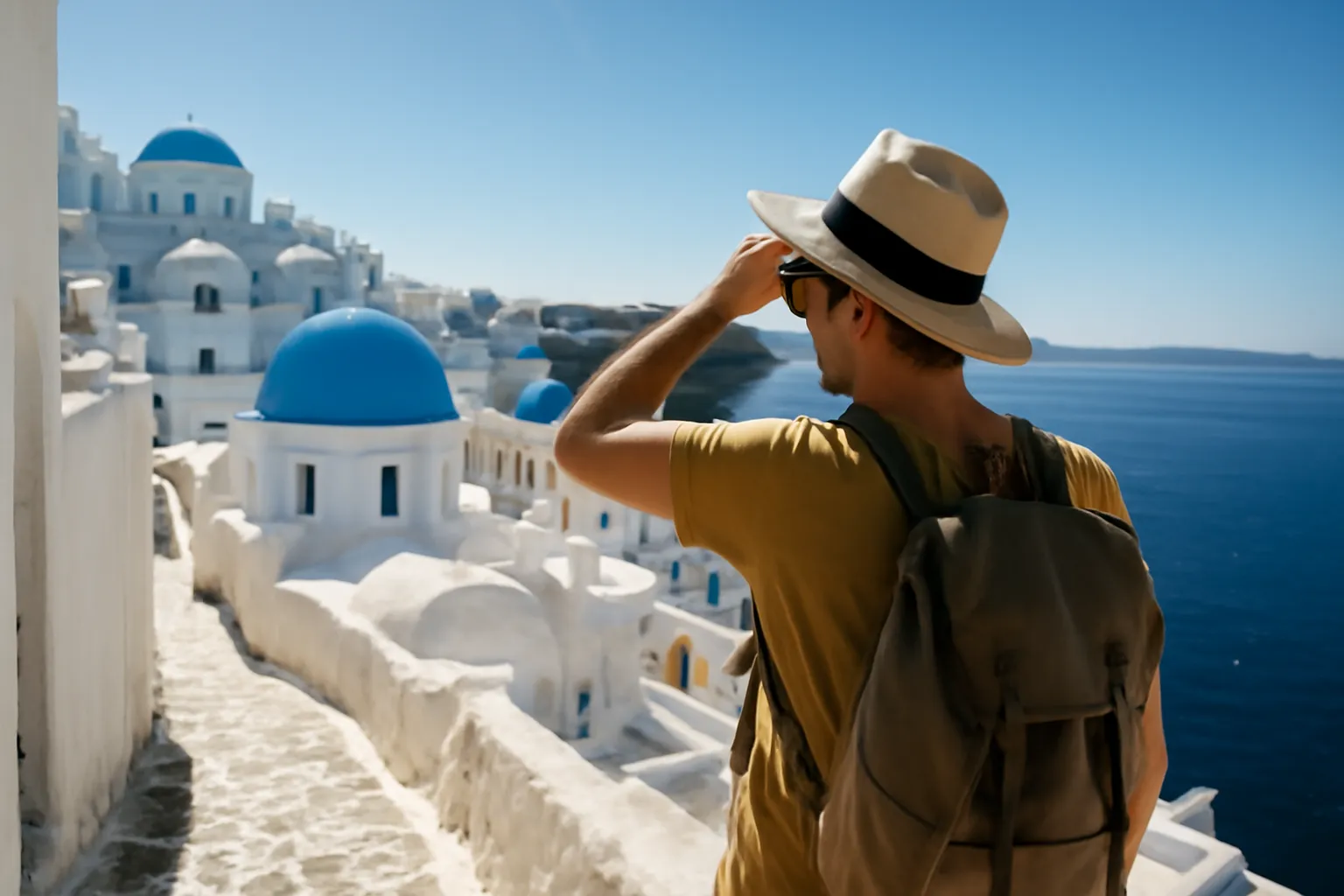
“Just toss a pair of sunglasses in your bag and you’ll be fine” — that’s the line I heard from at least three other travelers before I ever set foot on the island, and it falls apart within the first hour of actually being there. Everyone tells you Santorini is white — you’ve seen the postcards, the Instagram feeds, the travel magazine covers. But knowing a place is white and standing inside it at noon in July, with the temperature climbing to 34°C (93°F), the sky locked into that specific Aegean blue, and every surface around you — walls, stairs, church domes, cobblestones, garden walls, bougainvillea pots — bouncing sunlight straight into your face from every conceivable angle at once, are two entirely different experiences. Forty minutes into a walk through Oia, my eyes started streaming on their own. An hour in, a headache had started building behind my temples, and it felt less like garden-variety dehydration and more like someone slowly pressing their thumbs into my eye sockets. By the time I made it to the famous blue-domed church for the photo I’d been planning around for six months, I was squinting so hard in every single frame that I looked less like a happy traveler and more like a suspect under interrogation-room lighting. That evening, back at the hotel, my eyes carried a deep, specific ache unlike anything I’d felt before. It took me an embarrassingly long time to connect the dots. This is the story of what I figured out — about santorini sun protection eyes skin tips, about photokeratitis, about polarized lenses, and about why the most photographed village in the world doubles, quietly, as one of the most optically brutal environments on earth.
Why Santorini’s White Buildings Sun Glare Is Unlike Anything You’ve Encountered Before
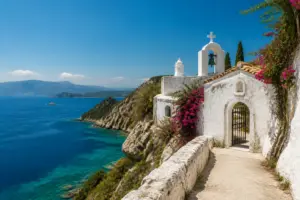
Here’s what the glossy travel brochures never mention about Santorini: that iconic white-wash isn’t there just to look pretty. Coating buildings with asvestis — a lime wash produced locally — is a tradition stretching back centuries across the Cycladic islands, originally valued as a natural antiseptic and as a way to bounce off heat during merciless Greek summers. The Venetians, who controlled the islands from the 13th century onward, kept the practice going. Eventually the Greek government wrote it directly into the building codes governing the Cyclades. What that means in practice is that every surface you encounter in Oia, Fira, and Imerovigli was deliberately, specifically engineered for maximum reflectivity. Architecturally, that’s a selling point. Optically, it’s a liability.
White surfaces bounce back somewhere between 80 and 90 percent of visible light and UV radiation. Compare that to fresh snow — the same surface responsible for goggle requirements and actual snow blindness up on Alpine slopes — which reflects around 80 percent. In other words, you’re wandering through the optical equivalent of a ski run. Except rather than one flat reflective surface beneath your feet, the glare is arriving from every direction at once. Walls on your left. Stairs beneath you. A church dome at eye level. A terrace garden above your head. A reflective bowl wrapped fully around you.
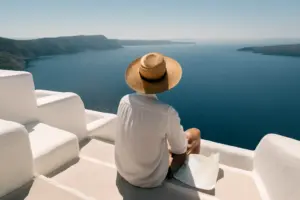
The shape of the caldera makes the whole situation worse. Santorini occupies the collapsed crater left by one of the most violent volcanic eruptions in recorded history, and the caldera rim forms a near-circular cliff face, with the postcard villages perched along its western lip. The water sitting inside the caldera stays remarkably calm compared to any open-ocean beach, which turns it into a mirror. So the white cliffs above are throwing light down at you, the white buildings all around are throwing light sideways at you, and the flat caldera sea below is throwing light straight back up. There’s genuinely no direction you can look that isn’t a light source of its own.
The clinical name for what happens to your eyes after hours of reflected UV exposure is photokeratitis — a sunburn, essentially, on your corneas. What makes it sneaky is the delay. You feel nothing while it’s actually happening, because corneas don’t carry real-time pain receptors for UV damage. The symptoms — that deep eye ache, sudden light sensitivity, uncontrollable tearing, the sensation of sand ground in under your eyelids — don’t show up until four to twelve hours afterward. Which explains why so many people end up spending the most romantic sunset the Aegean has to offer flat on their back in a darkened hotel room, wondering why their eyes feel pickled.
Most visitors log somewhere between six and eight hours on foot through these villages on any given day. The caldera trail connecting Fira to Oia by itself is a three-hour trek across exposed white limestone cliffs with not a scrap of shade anywhere. Cheap standard sunglasses will cut down brightness — they darken what you see — but they do nothing whatsoever against polarized reflected glare, the particular kind of light that bounces off flat horizontal surfaces. If you want real Greece island sun glare eye protection, polarization is non-negotiable — tinting alone won’t cut it. The difference, once you actually experience it firsthand, is almost comical.
The Glasses That Finally Made Santorini’s Glare Bearable (Not Just Trendy)
The reflected white light in Santorini doesn’t just make you squint — it actually causes pain. By the third hour of walking through Oia, my eyes felt sandpapered raw, and it became obvious that my everyday sunglasses were barely putting up a fight against the nonstop bounce-back glare coming off every surface around me.
Where they earned their keep
- Polarization genuinely cuts the bounce-back glare instead of simply dimming the whole scene — suddenly you can look at the cobblestones without that searing white haze in the way.
- They stayed put on my face even while sweating through the village heat, and they’re light enough that after a while you stop noticing you’re wearing them at all.
- The metal frame stays cool against your skin, unlike the cheap plastic kind — something you’ll appreciate after six straight hours in 34°C heat.
Where they came up short
- They’re dark enough to make navigating the old narrow staircases a genuine hazard — I nearly missed a step because I couldn’t judge how deep the shadows actually went.
- The frame picks up scratches easily if it’s riding around loose in a backpack without a case, and once a lens gets marked up, you’ll spot that scratch every single time you put them on.
I almost ditched them halfway through day two when the darkness felt too limiting, but stepping back into that unfiltered white glare reminded me exactly why I brought them. ATTCL Polarized Sunglasses (UV400, AL-MG Metal Frame, Style 8587 in black-gray)
Frequently Asked Questions
What is photokeratitis and how does it happen in Santorini?
Photokeratitis is a sunburn on your corneas from reflected UV exposure. It’s sneaky because you feel nothing while it happens—corneas lack real-time pain receptors for UV damage. Symptoms like deep eye ache, light sensitivity, and uncontrollable tearing appear four to twelve hours later, which is why many visitors end up in darkened hotel rooms during sunset.
Why is Santorini’s glare worse than other beach destinations?
Santorini’s white buildings reflect between 80 and 90 percent of visible light and UV radiation—comparable to fresh snow. The glare comes from every direction simultaneously: walls, stairs, church domes, and the calm caldera water below acts as a mirror. The caldera’s near-circular cliff face amplifies this effect, creating a reflective bowl around you with no direction that isn’t a light source.
Why do standard sunglasses fail in Santorini villages?
Cheap standard sunglasses cut brightness by darkening your view, but they do nothing against polarized reflected glare—the light bouncing off flat horizontal surfaces. For real protection against Santorini’s glare, polarization is non-negotiable; tinting alone won’t cut it. The difference becomes obvious once you experience it firsthand.
How many hours do most visitors spend walking through Santorini’s villages?
Most visitors log between six and eight hours on foot through these villages on any given day. The caldera trail connecting Fira to Oia by itself is a three-hour trek across exposed white limestone cliffs with no shade anywhere.
About This Article

Written by Elena Vasquez. Elena Vasquez is a full-time traveler and the founder of Witty Passport. Over fifteen years and more than 50 countries across six continents — including a stretch spent leading groups professionally through Southeast Asia and the remote highlands of South America — she's written the kind of destination guides she always wished existed: practical, specific, and built on real experience rather than recycled itineraries. More about this site.
Scope and limits. Elena is a full-time traveler, not a licensed travel agent or immigration adviser. Entry requirements, visa rules, and advisories change without notice — always confirm against the official government source for your destination and passport before booking.
Verify this against a primary source
Specifics change, and your situation may differ from the one described here. These are the authorities worth checking directly:
- U.S. Department of State — entry requirements and travel advisories
- CDC Travelers' Health — vaccination and health notices by destination
- TSA — current carry-on and screening rules