Mid-July, day two of my Naxos stay, and I’m peeling a tank top off my shoulder in a whitewashed guesthouse near Agios Prokopios beach when the fabric snags skin and I suck air through my teeth loud enough that my travel companion spins around from clear across the room. My shoulders weren’t merely pink — they’d gone a furious, deep scarlet, the kind that comes from a body screaming warnings nobody bothered to listen to, and two neat patches of skin had already started to blister. Strangest part: I never felt it coming. The Meltemi — that northerly wind famous for sweeping the Cyclades from June straight through September — had been gusting all day, making the air feel like an easy, breezy 28°C. I’d swiped on SPF 30 exactly once, at ten that morning, then spent the next six hours fully convinced I’d dodged a bullet. I hadn’t. Eight more days of island-hopping sat ahead of me — Milos, Santorini, Mykonos — and I spent the bulk of them under a loose linen shirt, hiding raw, weeping skin, unable to strap on a backpack, unable to lie on my back to sleep, watching everyone else cannonball into that turquoise Aegean while I sulked beneath the one sorry tamarisk tree in sight, second-guessing every decision that got me there. If you’re hunting for the right sunscreen for a Greek islands beach trip before you go, take this as the cautionary tale it is — my mistake was completely my own doing, and completely avoidable.
Why Sun Protection in Greece Is Uniquely, Sneakily Dangerous
What the brochures never capture — all those postcard-perfect shots of blue domes and infinity pools — is how brutal the actual sunlight is out there, and how the whole setting seems almost engineered to let you forget that until the damage is done.
Start with the numbers: across the Cyclades in July and August, the UV index routinely climbs to 10 or 11, landing squarely in the WHO’s “Extreme” bracket. Translate that: at UV 11, fair unprotected skin can start burning inside ten minutes flat — quicker than it takes to order a frappe and stake out a lounger. Most summer destinations elsewhere in Europe top out around 7 or 8. Greece is playing an entirely different game.
Then factor in the Meltemi itself — that dry, forceful northerly that sailors adore and poets have written odes to, and that quietly works against anyone lying on a beach towel. It keeps the air feeling pleasant, even refreshing, precisely when UV radiation is maxed out. Your body never fires off the usual “too hot, find shade” alarm, because the wind’s constant cooling short-circuits it. You feel perfectly fine. Meanwhile you’re being roasted from the inside out.
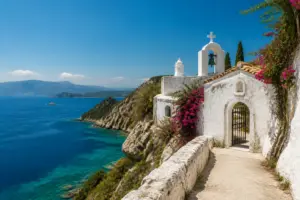
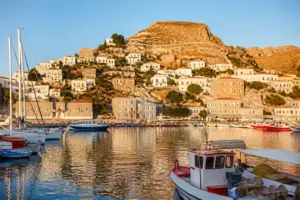
Geography piles on more trouble. Those brilliant white Cycladic walls that every photographer chases don’t just look stunning — they bounce UV radiation back at you from every direction, so you’re catching rays from above, the sides, and below all at once. Pale sand and limestone do the exact same trick. Sarakiniko on Milos, all otherworldly white volcanic rock, functions basically like a giant reflector. Santorini’s caldera beaches flip the script with dark volcanic sand that soaks up heat and beams it straight back upward, frying you from underneath while the sun handles the top half. It’s an assault from two directions at once.
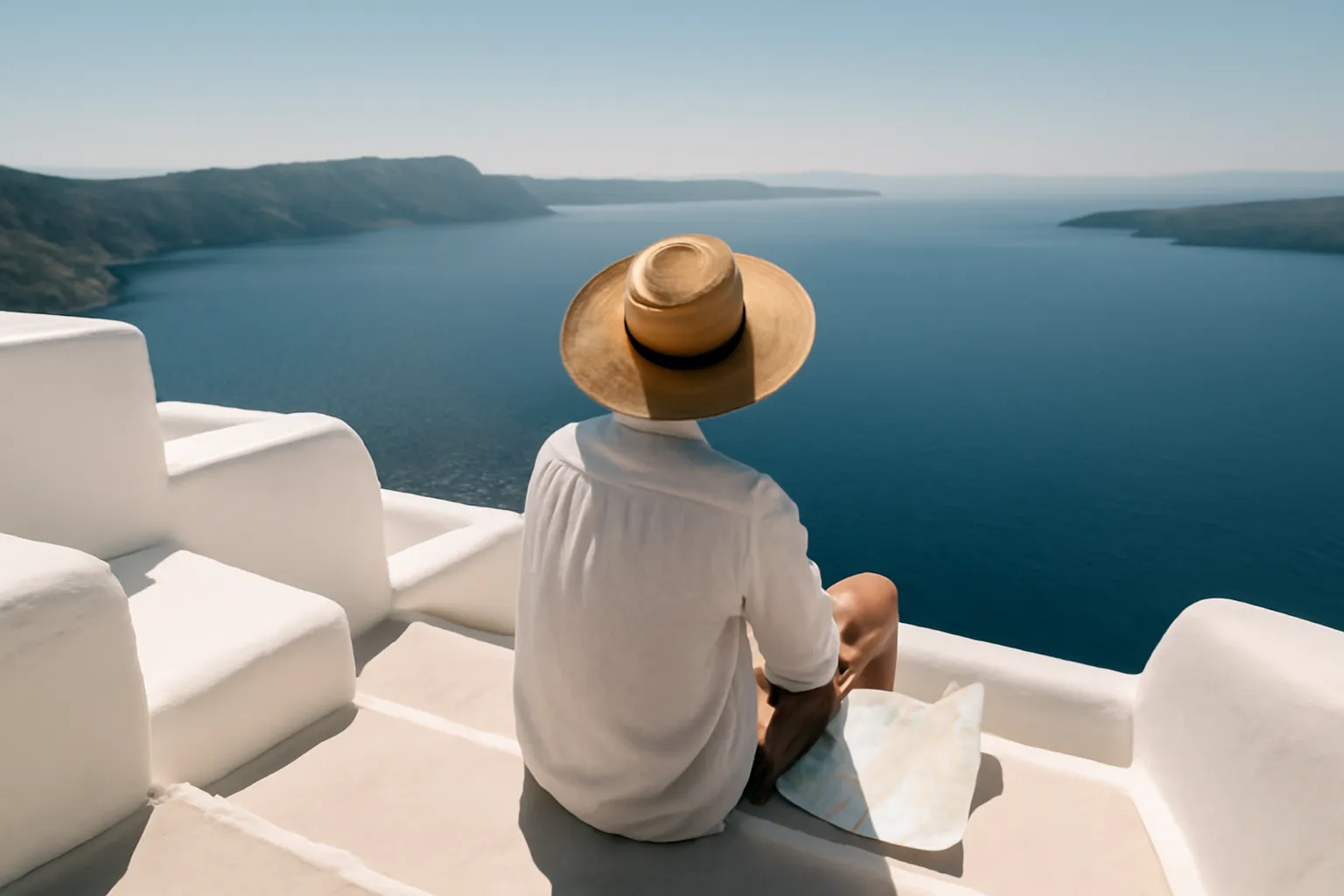
Then there’s how people actually spend a beach day here — nobody’s doing a quick dip and retreating indoors. A proper Greek beach day stretches 6 to 8 hours: lounging, swimming, eating, another swim, a nap, repeat. Plenty of beaches, Naxos and Milos especially, offer little to no built shade. And don’t count on the water to save you — that impossibly clear, warm Aegean lets UV radiation punch through to roughly a meter down, so you’re getting cooked even while snorkeling. Honestly, there’s no real escape route.
Bottom line: sun protection here isn’t something you casually toss in as an afterthought — it’s a survival strategy, full stop. Treat it any other way, the way I did with my single dab of SPF 30 and my false sense of security, and you’ll lose days of your trip to recovery and weeks afterward to peeling.
The Sunscreen That Genuinely Holds Up on a Greek Island Beach Day
The Aegean sun plays for keeps, so your SPF game needs to match it. I found this out the hard way on Naxos, where relentless midday heat, saltwater, and that deceptive cooling breeze conspire to strip most sunscreens off — or break them down entirely — before lunch even arrives.
What Actually Worked
- Survives repeated dips in the ocean without leaving that greasy film that turns you into a sand magnet.
- The mineral-based formula skips that plasticky feel you’d expect at 95 degrees — it settles almost matte, which counts for something once you’re sweating through your shirt before ten in the morning.
- SPF 50+ genuinely holds its ground against the UV levels you get surrounded by whitewashed walls throwing sunlight straight back at your face.
Where It Falls Short
- Costs noticeably more than the drugstore bottle you’d grab at the airport, and it disappears faster than you’d guess once you’re logging six beach hours a day.
- The zinc oxide can leave a faint white cast on deeper skin tones before it fully sets in, tacking an extra five minutes onto a morning routine you probably hadn’t planned for.
I skipped it on day three, thinking I’d save money and that my base tan was “good enough” — spoiler alert, it wasn’t — but I’ve never left a Greek island without it since. Blue Lizard SENSITIVE Mineral Sunscreen with Zinc Oxide, SPF 50+
Frequently Asked Questions
What is the UV index like in the Greek Cyclades in July and August?
Across the Cyclades in July and August, the UV index routinely climbs to 10 or 11, landing in the WHO’s “Extreme” bracket. At UV 11, fair unprotected skin can start burning inside ten minutes flat, compared to most summer destinations elsewhere in Europe that top out around 7 or 8.
Why does the Meltemi wind make sunburn worse on Greek islands?
The Meltemi is a dry, northerly wind that sweeps the Cyclades from June through September and keeps the air feeling pleasant and refreshing precisely when UV radiation is maxed out. Your body never fires off the usual heat alarm because the wind’s constant cooling short-circuits it, so you feel fine while being roasted from the inside out.
How long does a typical Greek island beach day last?
A proper Greek beach day stretches 6 to 8 hours, involving lounging, swimming, eating, another swim, a nap, and repeat. Many beaches, especially on Naxos and Milos, offer little to no built shade, making sun protection essential for the entire duration.
Does ocean water protect you from UV rays on Greek islands?
No. The impossibly clear, warm Aegean lets UV radiation punch through to roughly a meter down, so you’re getting cooked even while snorkeling. There is no real escape route from the sun’s intensity on a Greek island beach day.
About This Article

Written by Elena Vasquez. Elena Vasquez is a full-time traveler and the founder of Witty Passport. Over fifteen years and more than 50 countries across six continents — including a stretch spent leading groups professionally through Southeast Asia and the remote highlands of South America — she's written the kind of destination guides she always wished existed: practical, specific, and built on real experience rather than recycled itineraries. More about this site.
Scope and limits. Elena is a full-time traveler, not a licensed travel agent or immigration adviser. Entry requirements, visa rules, and advisories change without notice — always confirm against the official government source for your destination and passport before booking.
Verify this against a primary source
Specifics change, and your situation may differ from the one described here. These are the authorities worth checking directly:
- U.S. Department of State — entry requirements and travel advisories
- CDC Travelers' Health — vaccination and health notices by destination
- TSA — current carry-on and screening rules