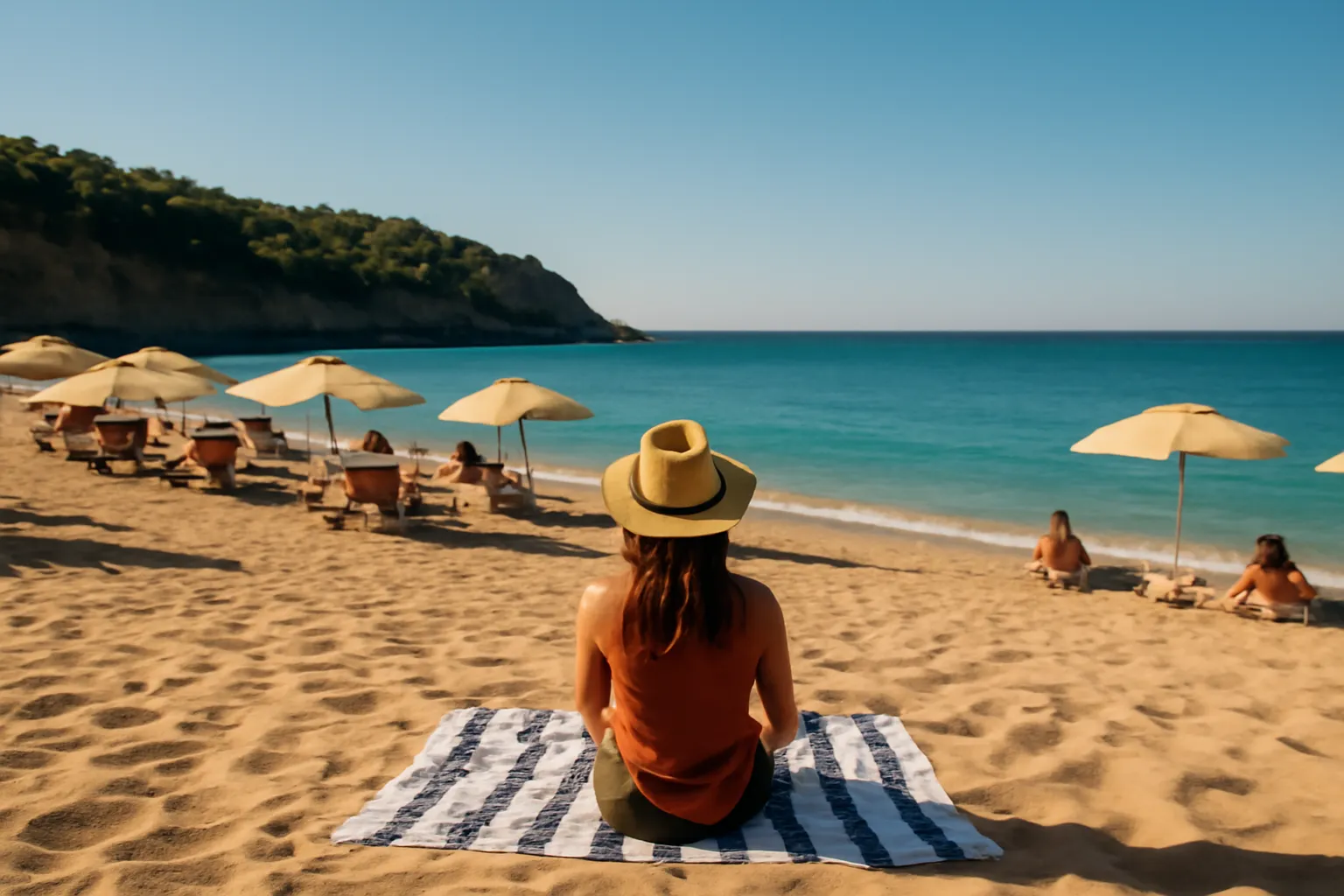
Most travelers assume a clothing-optional beach is something you’d have to go looking for on purpose — a niche box ticked deliberately, never stumbled into by accident. That assumption is flat wrong, and I learned it the hard way on Brač island in Croatia. The map showed nothing more than a thin blue squiggle dropping down through pine-covered cliffs, with a promise of a “secluded cove” roughly forty minutes below the car park. By the time I reached it I was sweat-soaked, pink-shouldered, and carrying just enough water for someone who hadn’t planned on a forty-five-minute scramble in each direction. What I hadn’t packed at all was any real grasp of clothing optional beaches in Europe: what to know before wandering straight into one — which is exactly the mistake I made. The trail bent around one last limestone shoulder, the Adriatic dropped open in that impossible turquoise that seems custom-built for postcards, and there they were: something like sixty people, spread across towels, sunlit, and completely, unbothered-ly naked. Every last one of them. I stood frozen at the top of the path for what felt like a solid minute, pack still hanging off one shoulder, jaw slack, while a German couple somewhere in their fifties strolled past me toward the water with all the urgency of two people crossing their own kitchen. Not one head turned. Nobody registered anything out of the ordinary. That was my crash course in European naturist culture, and it started the second I hit the sand.
Why Clothing-Optional Beach Culture in Europe Is More Widespread Than Anyone Warns You
What the guidebooks conveniently skip: clothing-optional beaches across Europe aren’t some fringe hobby, they’re built-in infrastructure. France by itself counts over 400 official naturist sites, including more than 100 designated naturist beaches running from Brittany all the way to the Côte d’Azur. Germany’s approach — codified in what amounts to an FKK beach etiquette guide, FKK short for Freikörperkultur, or “free body culture” — traces back to the 1920s health movement and shows up in designated sections on public beaches from Sylt in the north down to the Baltic coastline in the east. Croatia, where I made my accidental entrance, has been formally embracing naturist tourism since the 1930s. Rab island claims the honor of hosting the Adriatic’s first official naturist beach back in 1934, supposedly after King Edward VIII requested a private spot for a nude swim. The Croatian Tourism Board still tells that story with more than a little national swagger.
The regional differences here aren’t cosmetic — they change the whole experience. In Germany, FKK culture leans heavily toward family life: grandparents, toddlers, and teens will happily share one FKK stretch of Baltic sand without a flicker of discomfort, because for a huge swath of Germans this is just how a normal summer day unfolds. Sylt, Germany’s polished North Sea escape, has kept FKK traditions alive since the 1960s, and locals treat nudity with roughly the emotional intensity most people reserve for putting on socks. It’s a body. It needs sunlight. Nothing more to it.
France, on the other hand, covers a much wider range. Cap d’Agde in Languedoc is Europe’s biggest naturist resort — practically its own small city, home to roughly 40,000 people during peak season, complete with banks, restaurants, grocery stores, and a post office, all operating in an environment where staying clothed is the odd choice rather than nudity being merely tolerated. Its two-kilometer beach is the best-known naturist stretch on the continent, but the vibe there runs noticeably more adult and charged than what you’d find on a German FKK beach or a quiet Croatian cove. That distinction matters a lot if you’re bringing kids along, or if you simply weren’t braced for that kind of energy on an ordinary Tuesday.
Down at the southern edge of Ibiza sits Platja des Cavallet, quite possibly the island’s most striking beach — a sweeping curve of pale sand backed by salt flats and protected dunes, where naturists, LGBTQ+ visitors, and plenty of ordinary tourists who wandered over from the clothed section all blend into one of the most easygoing beach scenes anywhere on the Mediterranean. Water temperatures around Ibiza in August hover comfortably near 28°C. The sun turns brutal starting around 11am. And the line separating the clothed section from the unclothed one is, let’s say, loosely enforced at best.
What actually trips up first-timers has nothing to do with embarrassment — it’s the unspoken rulebook. Nude beaches in Europe have strict social codes, and breaking them gets you noticed in exactly the way you don’t want. Always sit on your own towel — never bare skin on sand or a shared surface. Staring is off-limits, whether at bodies or faces, anything that reads as lingering appraisal. Photographing anyone without direct permission is a hard no, and a great many naturist beaches ban cameras outright regardless of consent. Anything remotely sexual is unwelcome on family-oriented naturist beaches. Going topless-only is universally fine and needs zero justification. And yes — bodies react to sun exposure sometimes; the standard move is to roll onto your stomach, ride it out calmly, and rest assured nobody’s watching you with the intensity you’re imagining, because nobody actually is.
The Sunscreen Worth Packing Before You Climb Down to a Croatian Naturist Cove
Descending forty-five minutes of unmarked Croatian trail under a sun bouncing off both sky and sea turns ordinary sunscreen into a liability fast. What you actually need is a formula that survives more than ten minutes before sweating off, doesn’t burn your eyes the moment you wipe your brow, and — since you’re headed toward a clothing-optional cove — won’t leave you awkwardly apologizing to strangers nearby for chemical burns.
What works
- The spray version actually bonds to skin that’s already damp with sweat instead of turning into a slippery film — which matters when you’re picking your way over wet rocks with nothing to grip with but your feet.
- Zinc-based mineral formulas sit on the surface of your skin instead of soaking in, so they don’t disappear the second you step into saltwater the way chemical sunscreens tend to.
- No real sting in the eyes and no burning on sensitive skin, which counts for a lot once you’re taking in far more direct sun than you’re used to.
What doesn’t
- It leaves an obvious white cast on the skin — no big deal on an empty stretch of coastline, but enough that you’ll look like you’ve been dusted with flour.
- Reapplication is needed more often than you’d like, particularly post-swim, meaning you’re lugging the bottle back up the trail and picking sand out of the nozzle.
I nearly skipped reapplying after my first swim—convinced the initial coat would hold—and felt the beginnings of a sting across my shoulders by late afternoon. Reef Safe Mineral Sunscreen Spray SPF 50+ with Zinc Oxide is the difference between enjoying a secluded beach and spending the next three days regretting it.
Frequently Asked Questions
How many official naturist beaches does France have?
France has more than 100 designated naturist beaches running from Brittany all the way to the Côte d’Azur, as part of over 400 official naturist sites across the country. These span diverse coastal regions and attract visitors year-round.
What are the main unspoken rules at European nude beaches?
Always sit on your own towel rather than bare skin on sand or shared surfaces. Staring is off-limits, photographing anyone without direct permission is prohibited, and anything remotely sexual is unwelcome on family-oriented naturist beaches. Going topless-only is universally fine and needs no justification.
What water temperature should I expect at Ibiza in August?
Water temperatures around Ibiza in August hover comfortably near 28°C. The sun turns brutal starting around 11am, so plan your beach time accordingly and bring reef-safe sunscreen with you.
Which Croatian island hosted Europe’s first official naturist beach?
Rab island claims the honor of hosting the Adriatic’s first official naturist beach back in 1934, supposedly after King Edward VIII requested a private spot for a nude swim. Croatia has been formally embracing naturist tourism since the 1930s.
About This Article

Written by Elena Vasquez. Elena Vasquez is a full-time traveler and the founder of Witty Passport. Over fifteen years and more than 50 countries across six continents — including a stretch spent leading groups professionally through Southeast Asia and the remote highlands of South America — she's written the kind of destination guides she always wished existed: practical, specific, and built on real experience rather than recycled itineraries. More about this site.
Scope and limits. Elena is a full-time traveler, not a licensed travel agent or immigration adviser. Entry requirements, visa rules, and advisories change without notice — always confirm against the official government source for your destination and passport before booking.
Verify this against a primary source
Specifics change, and your situation may differ from the one described here. These are the authorities worth checking directly:
- U.S. Department of State — entry requirements and travel advisories
- CDC Travelers' Health — vaccination and health notices by destination
- TSA — current carry-on and screening rules