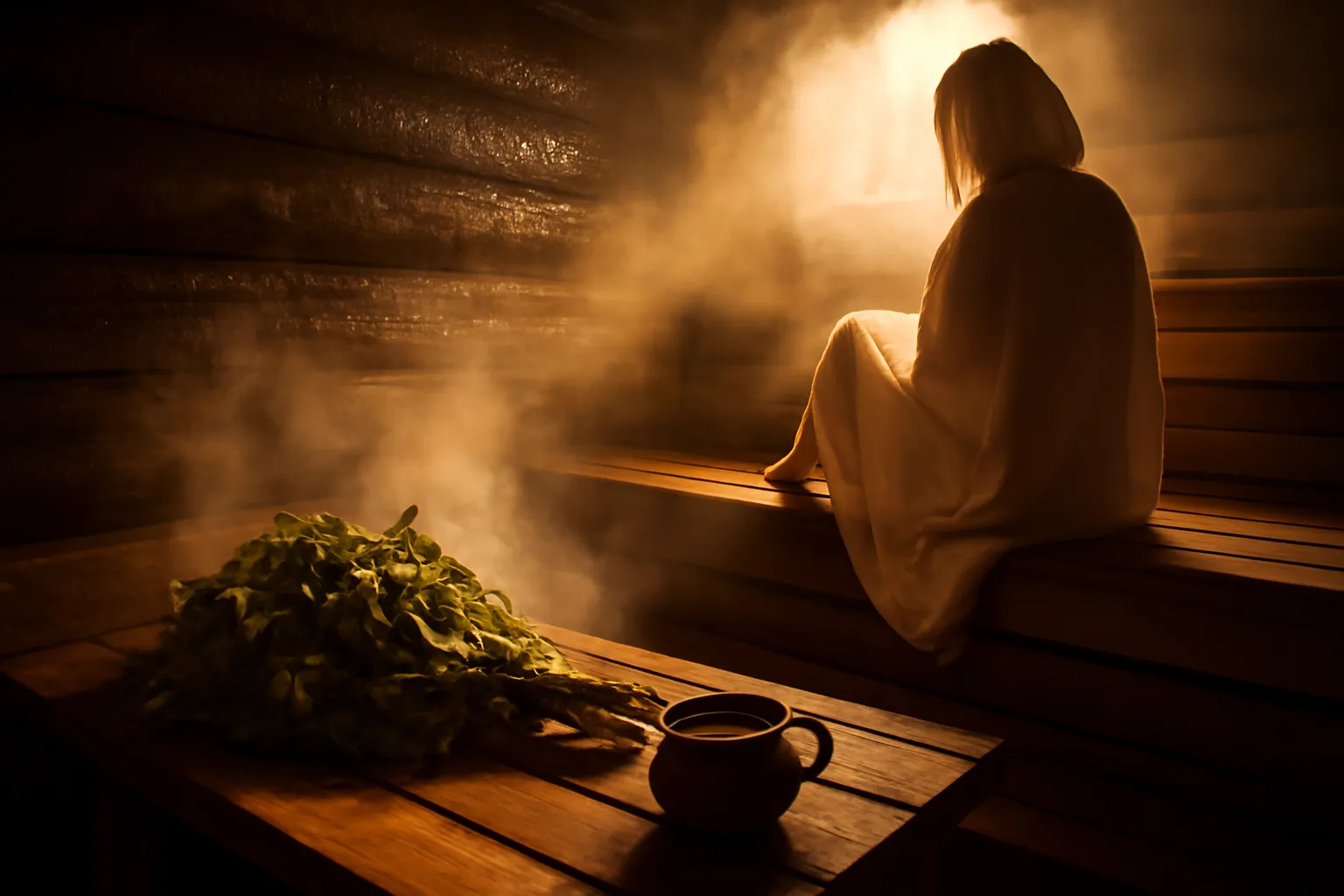
Most first-timers assume a Russian banya is basically a hotter Finnish sauna with better branding — that assumption falls apart within about ninety seconds of walking through the cedar door. Dmitri, my guide’s contact in Moscow and a man who’d clearly done this a thousand times, handed me a felt hat shaped like a wizard’s cap and said, with total sincerity, “Put this on. It protects your brain.” We were standing right outside the parilka at Sanduny Banya, the wall thermometer reading 112°C — hotter than your home oven cranked to its ceiling setting. Within minutes I’d be face-down on a wooden bench while a stranger I’d known for eleven minutes worked me over with a bundle of soaked birch branches. This is the reality behind russian banya etiquette what to expect — not the softened version you find in guidebooks, but the strange, centuries-old ritual Russians have been refining since the 11th century, in all its full-contact glory. I tugged the felt hat down over my ears, stepped through after Dmitri, and felt my lungs momentarily forget their job. The heat wasn’t ambient — it had mass, weight, opinions, pressing against my skin like a hand that meant business. Somewhere behind me, someone let out a long, contented groan, and not a single person reacted. I understood, instantly and completely, that I was in over my head — and also, weirdly, that this was exactly where I was supposed to be.
Why the Russian Banya Experience Is Unlike Any Bathhouse on Earth
Nobody warns you ahead of time that this is nothing like a sauna. Doesn’t matter if you’ve logged hours in Finnish saunas, sweated it out in Turkish hammams, or survived a Korean jjimjilbang at two in the morning in Seoul — none of it prepares you for a banya. The Russian bath house experience carries a cultural density, a social choreography, and a physical punch that turns what sounds like a casual “let’s go sweat together” into a full four-hour ceremony, complete with its own hierarchy, its own unspoken rulebook, and plenty of ways for an outsider to unknowingly commit a small act of disrespect.
Start with temperature. Finnish saunas generally sit at 70–90°C with dry air. A banya runs 90–110°C, and the parshchik — think of them as a professional steam therapist — periodically ladles water infused with eucalyptus, mint, or birch oil over the hot rocks, sending both the par (steam) and the felt-heavy heat climbing even further. Whatever you experienced in Helsinki will suddenly feel like a mild warm-up.
Next comes the venik, and it’s the moment that makes most tourists visibly flinch. This banya venik ritual — being struck with birch branches — sits at the heart of the entire experience. A venik is simply a bundle of dried birch or oak branches, softened in hot water, which the parshchik uses to essentially beat-massage you head to toe. It sounds brutal. That rhythmic thwap thwap thwap bouncing off wood paneling can sound like applause at a stadium. And yet the sensation itself is remarkable — the leaves release their oils, circulation kicks into overdrive, and the whole thing lands somewhere between a deep-tissue massage and full-body exfoliation. Turning it down, particularly if a Russian friend arranged it specifically for you, comes across as genuinely impolite. Say yes to the venik. Your body will thank you afterward.
Sanduny Banya — Dmitri’s chosen venue — has been running continuously since 1808, meaning it predates modern Russia by any reasonable measure. Its elite section, all vaulted ceilings, classical columns, and chandeliers that feel almost comically out of place in a room full of naked bathers, runs roughly ₽3,000–₽5,000 per visit. These walls have absorbed the steam of tsarist aristocrats, Soviet military brass, and today’s oligarchs alike, which is exactly why it’s regarded as Russia’s most prestigious banya — and exactly why newcomers tend to emerge from their first round looking slightly ashen.
Step outside Sanduny and you’ll find where actual Moscow locals go: Krasnopresnenskie Banya, less palatial, more neighborhood fixture, the sort of place where a seventy-year-old regular in a felt hat will critique your form whether you asked or not. Over in St. Petersburg, Banya No. 1 near Ligovsky Prospekt has updated the interiors with a sleeker, more modern finish while leaving the core ritual untouched. Each location has its own flavor — but the underlying etiquette stays consistent everywhere you go.
The social piece is where visitors most commonly trip up. A banya isn’t a spa, and it definitely isn’t a wellness retreat — it’s a social institution, historically the setting where business got sealed, friendships got forged, and honest conversations surfaced in the raw, exposed headspace that extreme heat tends to produce. The food shared between rounds isn’t a side note; skipping it isn’t an option. The tea — usually strong black tea with honey, sometimes sbiten, a spiced honey drink — isn’t refreshment on the side, it’s ritual in its own right. Hurry through any part of this and your Russian companions will register their disappointment loudly, without saying a word.
The Cooling Towels That Saved Me From Heat Stroke at Sanduny Banya
Cycling between a 112°C steam room and an ice-cold plunge every five minutes puts your body in a strange limbo — it can’t decide whether to shut down or bolt. A standard towel just makes things worse at that point, soaking up sweat and heat instead of helping you actually recover between rounds.
What actually helps
- They genuinely stay cold against your skin even wrapped around your neck inside the heat, and the first time you feel it, it’s almost unsettling how well it works.
- Small enough to fit in a locker or gym bag with room to spare, so you’re not lugging soggy terry cloth back and forth between the parilka and the cooling area.
- Quick-drying enough to run through several cycles in one session without turning into a limp, useless rag.
Where they fall short
- The chill effect wears off — give it roughly fifteen minutes in serious heat and you’re right back where you started.
- You have to pre-soak them in cold water before they’ll do anything, so pulling one straight out of your bag mid-session won’t get you the magic you’re hoping for.
I almost abandoned mine after the third round, convinced they were just fancy placebo, but then I wrapped one around my shoulders during the cooling break and felt my heart rate actually drop. Grab the Nemlistey 4 Pack Cooling Towels if you’re planning a banya session—you’ll thank yourself.
Frequently Asked Questions
How hot does a Russian banya get compared to a Finnish sauna?
A banya runs 90–110°C, whereas Finnish saunas generally sit at 70–90°C with dry air. The parshchik periodically ladles water infused with eucalyptus, mint, or birch oil over the hot rocks, sending both the steam and heat climbing even further than the base temperature.
What is a venik and why is it important in banya culture?
A venik is a bundle of dried birch or oak branches, softened in hot water, which the parshchik uses to beat-massage you head to toe. The leaves release their oils, circulation kicks into overdrive, and the sensation lands somewhere between a deep-tissue massage and full-body exfoliation. Turning it down is considered genuinely impolite.
How much does Sanduny Banya cost in Moscow?
Sanduny Banya’s elite section runs roughly ₽3,000–₽5,000 per visit. The banya has been running continuously since 1808 and is regarded as Russia’s most prestigious banya, with vaulted ceilings, classical columns, and chandeliers.
What should I know about cooling towels between banya rounds?
Cooling towels genuinely stay cold against your skin even in serious heat and are small enough to fit in a locker. However, the chill effect wears off after roughly fifteen minutes, and you must pre-soak them in cold water before they work, so pulling one straight from your bag mid-session won’t produce results.
About This Article

Written by Elena Vasquez. Elena Vasquez is a full-time traveler and the founder of Witty Passport. Over fifteen years and more than 50 countries across six continents — including a stretch spent leading groups professionally through Southeast Asia and the remote highlands of South America — she's written the kind of destination guides she always wished existed: practical, specific, and built on real experience rather than recycled itineraries. More about this site.
Scope and limits. Elena is a full-time traveler, not a licensed travel agent or immigration adviser. Entry requirements, visa rules, and advisories change without notice — always confirm against the official government source for your destination and passport before booking.
Verify this against a primary source
Specifics change, and your situation may differ from the one described here. These are the authorities worth checking directly:
- U.S. Department of State — entry requirements and travel advisories
- CDC Travelers' Health — vaccination and health notices by destination
- TSA — current carry-on and screening rules