The Paleokastritsa monastery clothing restrictions are straightforward: shoulders and knees must be covered for everyone, and women are expected to wear a skirt or dress — not shorts or trousers. That’s the short answer. I learned this the slightly awkward way on a hot July afternoon, watching a steady stream of visitors in swimwear get turned away at the gate before I’d even made it up the hill. A five-minute conversation with a monk at the entrance clarified everything, and I’ve laid it all out below so you don’t have to figure it out on the spot.
Paleokastritsa Monastery Clothing Restrictions: The Exact Rules and Visiting Details
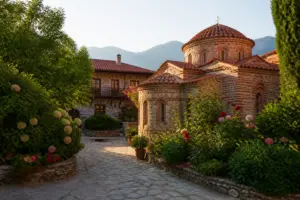
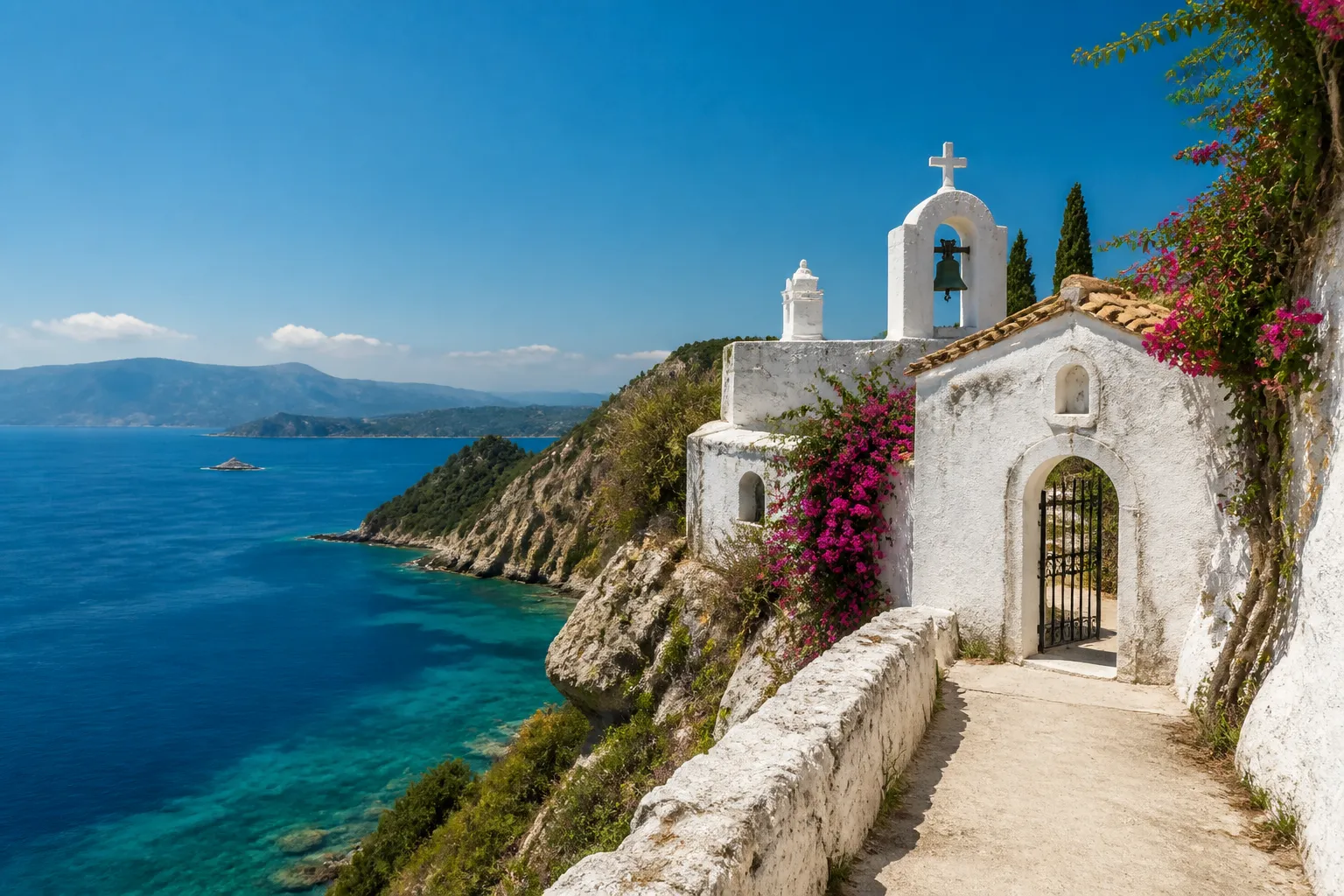
The Monastery of the Virgin Mary — officially the Panagia Theotokos Paleokastritsas — sits on a rocky promontory above Corfu’s most famous turquoise bay. It’s a working Greek Orthodox monastery with resident monks, which means it’s treated as a place of active religious life, not a tourist attraction. Entry is free, but the dress code is enforced at the gate, no exceptions.
Here’s exactly what’s required:
- Women: A long skirt or dress covering the knees is expected — not shorts, not trousers, not leggings. This is stricter than many monasteries in Greece, which sometimes allow long trousers for women. Here, a skirt is the standard.
- Men: Long trousers past the knee. Shorts, even knee-length ones, will get you turned back.
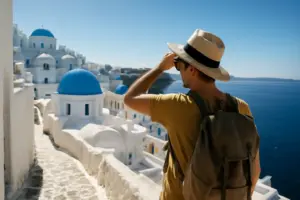
- Shoulders: Both men and women must have shoulders covered. Tank tops, sleeveless shirts, and swimsuit straps don’t pass.
- Wrap skirts at the entrance: The monastery typically keeps a small supply of wrap skirts near the gate for women who arrive without appropriate clothing. Don’t count on this, especially in peak summer — they run out, and when they’re gone, you’re turned away.
- Photography: Allowed in the courtyard and outdoor areas in most cases, but the small museum room — which houses religious icons, old monastery artifacts, and a fascinating whale-rib bone locals have long called a “monster bone” — restricts or prohibits photos. Follow posted signs and any guidance from the monks.
- Behavior: This is an active monastery. Keep voices low, don’t wander into restricted areas, and treat it accordingly. It’s not the place for loud conversation or rushing through.
- Getting there: It’s a short uphill walk — maybe 5 to 10 minutes — from the main Paleokastritsa beach parking area. Not strenuous, but wear actual shoes, not flip-flops, if you can manage it on a hot day.
On the Corfu monastery dress code: this one aligns with standard Greek Orthodox practice, similar to what you’d encounter at monasteries across the country. The stricter skirt requirement for women is worth noting specifically for Paleokastritsa.
Visiting hours follow a typical Greek monastery schedule with a midday closure. Roughly: 7:00am–1:00pm and 3:00pm–8:00pm, though these hours shift seasonally and can change without much notice. Aim to visit in the morning or late afternoon, and avoid showing up between 1pm and 3pm expecting to get in. Confirming hours locally on the day is always smart.
What to Actually Wear to Paleokastritsa Monastery
The most common scenario: you’re spending the day at Paleokastritsa beach and want to walk up to the monastery afterward. The problem is obvious — beach clothes don’t meet the dress code, and you don’t want to haul a full outfit down to the sand.
The practical solution is a lightweight sarong or wrap skirt that folds into almost nothing in a beach bag. Women can throw it over a swimsuit, cover their shoulders with a lightweight scarf or kimono cover-up, and walk straight up. Men need actual trousers — a lightweight pair of linen or travel trousers tucked in a bag works well, or a pair of long swim trunks that genuinely pass the knee and a shirt for the shoulders.
For women specifically, something like the Eicolorte long sarong wrap skirt is exactly the kind of thing worth tossing in your beach bag before you leave the hotel — it covers everything required, doubles as a beach cover-up all day, and takes up essentially no space. That’s the most low-effort way to be prepared without packing a separate outfit.
The key mindset shift: pack for the monastery visit before you leave your accommodation in the morning, not after you’re already at the beach wondering what to do.
Common Mistakes Visitors Make (and One Related Thing Worth Knowing)
The single most common mistake is assuming the monastery’s proximity to a famous beach resort means it’s casual about dress. It isn’t. The monks enforce the policy consistently, and “I didn’t know” doesn’t get you in. If you’re visiting Corfu in July or August and planning a beach day at Paleokastritsa, assume the monastery wrap skirts at the entrance will already be claimed by mid-morning.
The second mistake is misjudging the hours. If you finish lunch at a taverna near the beach at 1:30pm and head straight up, you’ll likely find the gate closed for the midday break. Build the monastery visit into either your morning plans or your late afternoon — it pairs well with watching the sunset light hit the bay from up on the promontory.
If you’re planning to visit other monasteries on this trip, it’s worth knowing that dress codes vary slightly by site. My guide to Meteora monasteries dress code requirements covers how the rules differ across multiple sites in one destination, and for a broader overview of dressing respectfully at religious sites around the world, cultural clothing expectations when traveling internationally is worth a read before your trip.
The Paleokastritsa monastery clothing restrictions aren’t complicated — they’re just easy to forget when you’re in full beach-holiday mode. A wrap skirt and a light cover-up solve the problem entirely, and the monastery genuinely rewards the small effort: the courtyard views over the bay are some of the best on Corfu, and the little museum with its whale rib and old icons is quietly fascinating. It’s worth the five minutes of planning.
Affiliate Disclosure: This post contains affiliate links. As an Amazon Associate, I earn from qualifying purchases. If you buy something through my links, I may earn a small commission at no extra cost to you. I only recommend gear I’ve actually used on the road.