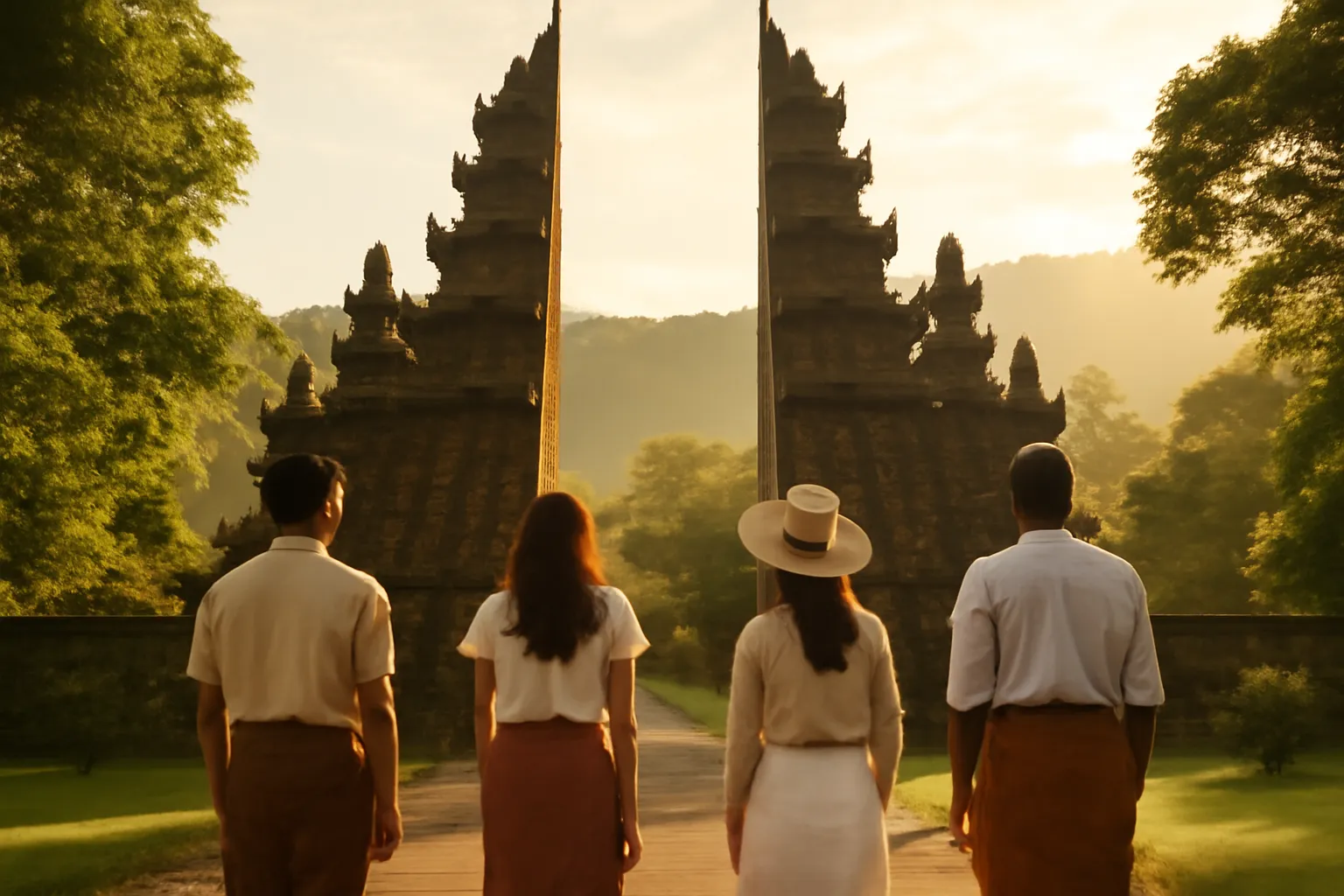
Bangkok has two very different versions of arriving at Wat Pho: the traveler who glides through in loose linen without a second glance from staff, and the traveler — me, on one particularly overconfident afternoon — who gets stopped cold in a spaghetti-strap sundress and handed a pair of paper shorts by a guard who is polite but absolutely not budging. The linen wins every single time. That mortifying detour into a curtained changing area taught me more about how sacred-site dress codes actually work than any guidebook had managed in years, and it’s shaped how I pack ever since. Whether the itinerary includes Thai temples, the cliffside monasteries of Meteora, or a centuries-old mosque, knowing exactly what to wear — and what to leave in the suitcase — is the line between walking straight in and shuffling around in borrowed paper pants.
Why the Temple Dress Code Exists (And Why It Actually Matters)
One thing worth getting straight before the specifics: these dress codes aren’t red tape dreamed up to inconvenience visitors. They exist because these buildings are actively used — people pray there, mourn there, celebrate there, reach for something larger than themselves there. Wandering in wearing a crop top isn’t just a style misstep; it’s closer to showing up at someone’s grandmother’s funeral in a beach coverup. Locals register it, and it genuinely matters to them. Dressing appropriately is a small, simple way of signaling “I understand I’m a guest here.” None of this requires overthinking, though — once the underlying pattern clicks (and there is one), building a wardrobe for a trip full of sacred sites gets easy fast.
What to Wear at Temples in Thailand and Bali
Thailand Temples
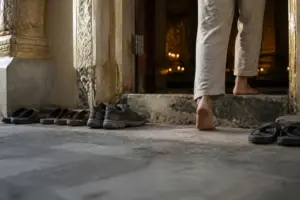
Thailand ranks among the world’s premier temple countries, and thankfully the rules don’t shift much from region to region. Non-negotiables: covered shoulders, covered knees, no visible bra straps, and footwear you can slip off in seconds — because you’ll be pulling your shoes off at nearly every entrance, no exceptions. The flagship Bangkok sites, Wat Pho and Wat Phra Kaew inside the Grand Palace complex, enforce this without flexibility, and staff won’t hesitate to turn you away. Out in the provinces, wats tend to feel looser, though the underlying respect is still expected. Women do well in a loose linen top paired with lightweight trousers or a midi skirt. Men can usually get by with shorts that fall below the knee and a collared or short-sleeved shirt. Tank tops and anything sleeveless are simply off the table. For the full rundown, our detailed guide to Thailand temple dress code rules covers everything worth knowing before you land.
Bali Temples
Bali layers on one extra requirement Thailand doesn’t ask for: the sarong and sash combo. At almost every Hindu temple on the island — the famous sea temple Tanah Lot included, along with the terraced rice-paddy temples scattered around Ubud — you’ll wrap a sarong at the waist and cinch a sash across your hips before entering. Most temples will either hand these out for free or sell them cheaply right at the gate, and honestly, they photograph beautifully too. Past the sarong, the standard playbook still applies: shoulders covered, no swimwear-adjacent outfits, and women who are menstruating are traditionally asked to skip entry — a Balinese Hindu belief tied to spiritual purity, not a judgment aimed at anyone individually. More detail lives in our complete guide to appropriate attire for Bali temples.
Beyond Southeast Asia: Dress Codes at Meteora, Mosques, Cathedrals, and Japanese Shrines
Meteora, Greece (Greek Orthodox Monasteries)
Balanced on absurdly tall rock towers in central Greece, Meteora’s monasteries rank among the most visually stunning religious sites anywhere — and the dress code inside is one of the stricter ones you’ll encounter in Europe. Women need long skirts (trousers get rejected at many of these monasteries) plus covered shoulders; men need long trousers. Sleeveless clothing is out for everyone, regardless of gender. A handful of monasteries keep wrap skirts at the door for borrowing, but don’t count on it — the stock is unreliable and often thin, ill-fitting fabric. Bring your own. Our Meteora dress code guide walks through everything so a wardrobe mistake doesn’t cost you one of the most extraordinary views on the planet.
European Cathedrals
The Vatican, Notre-Dame, Sagrada Família, St. Peter’s Basilica — Europe’s list of showstopper churches runs long, and nearly all of them post a dress code right at the entrance. Covered shoulders and covered knees are the baseline everywhere. The Vatican is notoriously unyielding and will refuse entry to shorts or sleeveless tops even during brutal July heat. St. Paul’s in London softens the rule somewhat but still expects “modest” dress. Toss a light cover-up layer into your daypack on any day packed with church visits, and the door will never be a problem.
Mosques in the Middle East and Beyond
Stepping into a mosque — the Sheikh Zayed Grand Mosque in Abu Dhabi, Istanbul’s Blue Mosque, Casablanca’s Hassan II Mosque, take your pick — calls for full coverage regardless of gender. Women will usually need a headscarf on top of covered arms and legs; men need long trousers and covered shoulders. The big tourist-facing mosques often loan out abayas and head coverings free of charge at the entrance. Shoes come off before the prayer hall, movement should stay quiet, and if prayer is underway, either wait patiently off to the side or come back later. These buildings rank among the most beautiful on earth — the couple of minutes it takes to cover up properly is nothing against that payoff.
Japanese Shrines and Temples
Japan, refreshingly, sits at the loose end of this list. Shinto shrines and Buddhist temples don’t police clothing the way sites in Thailand or Bali do. Even so, there’s an unspoken bar for cleanliness and neatness — muddy festival wear or beach clothes won’t fly. A number of inner sanctuaries and zen gardens still require shoes off, so skip the elaborate lace-up boots on days packed with shrine visits. Keep it modest and tidy, and you’re covered.
Temple Dress Codes Side by Side
Here’s the whole picture condensed into one glance:
| Destination | Shoulders Covered | Knees Covered | Head Covering | Shoes Off | Other |
|---|---|---|---|---|---|
| Thailand Temples | ✅ Required | ✅ Required | ❌ Not required | ✅ Yes | No sleeveless tops |
| Bali Temples | ✅ Required | ✅ Required | ❌ Not required | ✅ Yes | Sarong + sash required |
| Meteora (Greece) | ✅ Required | ✅ Required | ❌ Not required | ❌ Usually not | Women: skirts only at some monasteries |
| European Cathedrals | ✅ Required | ✅ Required | ❌ Not required | ❌ No | No shorts |
| Mosques | ✅ Required | ✅ Required | ✅ Women required | ✅ Yes (prayer hall) | Full modest coverage |
| Japan Shrines/Temples | ⚠️ Encouraged | ⚠️ Encouraged | ❌ Not required | ✅ Inner areas | Neat, tidy clothing |
The Scarf That Kept Me Out of the Paper-Shorts Bin After That
What that Wat Pho embarrassment actually revealed wasn’t a wardrobe mistake so much as a missing safety net — I had no fast, dignified way to fix things once I inevitably got the outfit wrong. Sacred-site dress codes don’t bend, and traveling with a shawl that genuinely stays in place (and doesn’t look like it came straight off the gift-shop rack) solves the entire problem.
Where it earns its space in your bag
- It sits over the shoulders without sliding off every half-minute, so you’re actually free to walk through a temple instead of constantly hiking it back into place.
- Built-in UPF 50+ protection earns its keep during long stretches in full sun at outdoor sites, so you’re not merely code-compliant — you’re actually shielded.
- It packs down small enough to disappear inside a daypack, which makes carrying it through a three- or four-temple day completely effortless.
Where it comes up short
- Anyone prone to feeling chilly may find a single scarf isn’t enough warmth against heavily air-conditioned temple interiors, and might end up wishing for actual sleeves instead.
- The neutral tone works great for looking respectful but also means it fades into the background — travelers who like their gear to make a statement will find this one a bit underwhelming.
I had a moment at Angkor Wat when I realized I’d forgotten to pack it and genuinely considered turning back — that’s when I knew it had become essential. Grab the Coolibar Beach Shawl – UPF 50+ Sun Protection – Sanibel and avoid my mortifying mistake.
Frequently Asked Questions
What do you have to wear to enter Wat Pho in Bangkok?
Wat Pho enforces strict dress codes without flexibility: you need covered shoulders, covered knees, no visible bra straps, and footwear you can slip off quickly since you’ll remove shoes at the entrance. Staff won’t hesitate to turn you away if you don’t comply, as the author learned firsthand when handed paper shorts at the entrance.
What’s required to enter a temple in Bali?
Bali temples require covered shoulders, covered knees, and a sarong wrapped at the waist with a sash cinched across your hips. Most temples provide sarongs free or sell them cheaply at the gate. Women who are menstruating are traditionally asked to skip entry based on Balinese Hindu beliefs about spiritual purity.
Can you wear shorts to Meteora monasteries in Greece?
No. Meteora’s monasteries enforce strict dress codes: women need long skirts with covered shoulders, and men need long trousers. Sleeveless clothing is rejected for everyone regardless of gender. Wrap skirts at the door are unreliable, so bring your own clothing rather than counting on borrowing.
What should you wear inside a mosque?
Mosques require full coverage regardless of gender: women usually need a headscarf on top of covered arms and legs, while men need long trousers and covered shoulders. Shoes come off before the prayer hall. Many tourist-facing mosques like the Sheikh Zayed Grand Mosque loan out abayas and head coverings free at the entrance.
About This Article

Written by Elena Vasquez. Elena Vasquez is a full-time traveler and the founder of Witty Passport. Over fifteen years and more than 50 countries across six continents — including a stretch spent leading groups professionally through Southeast Asia and the remote highlands of South America — she's written the kind of destination guides she always wished existed: practical, specific, and built on real experience rather than recycled itineraries. More about this site.
Scope and limits. Elena is a full-time traveler, not a licensed travel agent or immigration adviser. Entry requirements, visa rules, and advisories change without notice — always confirm against the official government source for your destination and passport before booking.
Verify this against a primary source
Specifics change, and your situation may differ from the one described here. These are the authorities worth checking directly:
- U.S. Department of State — entry requirements and travel advisories
- CDC Travelers' Health — vaccination and health notices by destination
- TSA — current carry-on and screening rules