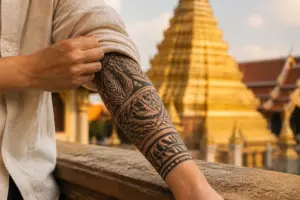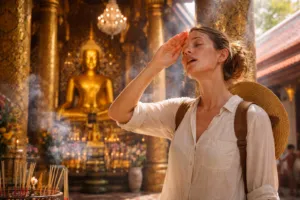
Everyone treats “dress modestly” as though it’s one fixed rule you can memorize from a listicle and forget about — it isn’t, and I learned that the hard way on my very first afternoon inside a Thai temple. I’d flown in the moment my school-year contract wrapped, exhausted, still half-convinced I’d imagined the flight confirmation, chasing those famous golden compounds I’d seen in a hundred photos. I walked up in shorts, made it about thirty seconds before a guard’s expression told me everything, and spent the next twenty minutes hunting down a market stall for a pair of “temple pants” I never wanted to own. Fifteen years of guiding groups through this country later, I can tell you the dress code isn’t uniform — it tightens and loosens depending on exactly which temple gate you’re standing at — and getting it wrong doesn’t earn you a warning, it gets you turned around at the entrance. This guide lays out precisely what belongs in your bag and what should stay folded at the hotel, so your first temple morning goes nothing like mine did.
A Traveler’s Guide
The Non-Negotiables: Cover Shoulders and Knees
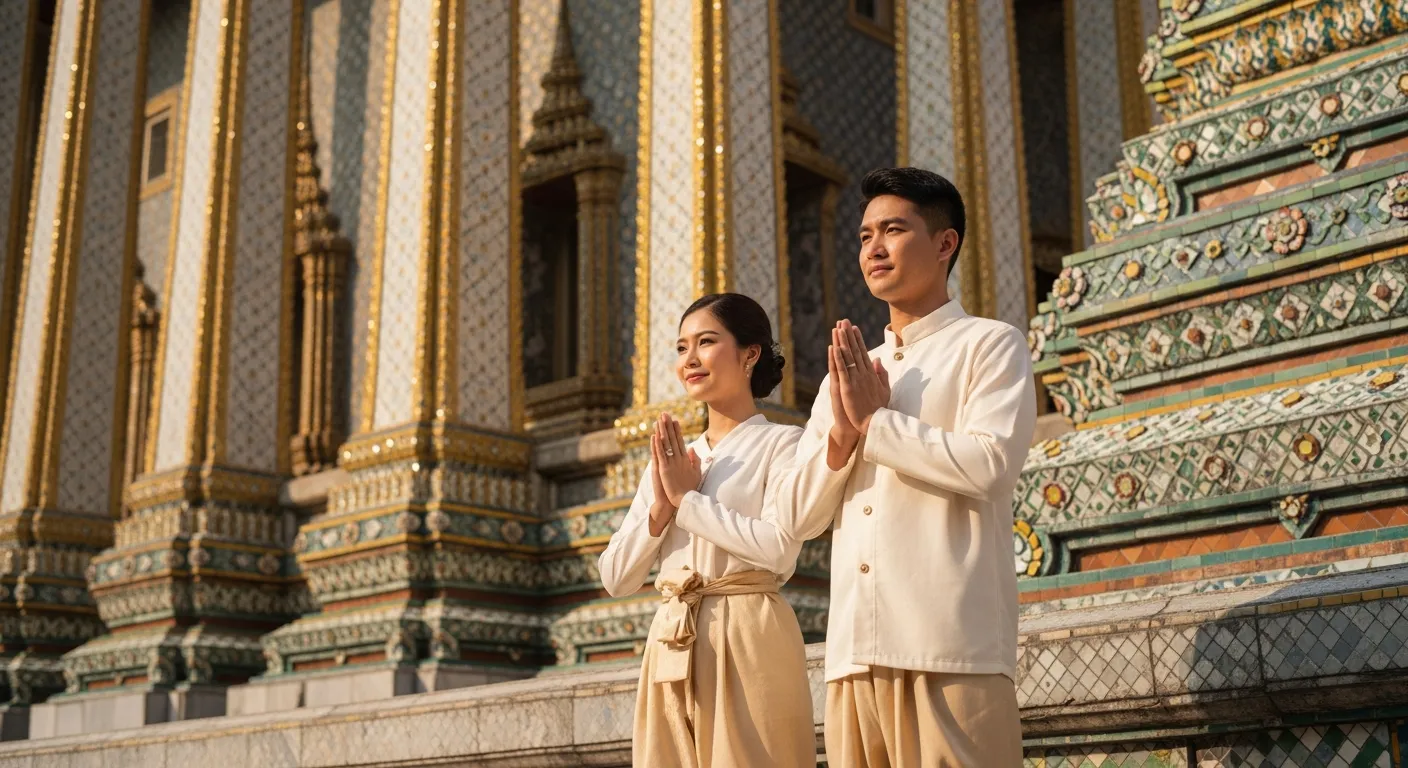
There’s really only one rule you can’t get around: shoulders covered, knees covered, full stop. It doesn’t matter if you’re a man or a woman — nearly every temple compound in Thailand enforces this. These aren’t museum exhibits; they’re working places of worship where monks actually live and practice daily. That’s why dressing modestly isn’t a suggestion so much as a basic courtesy toward the people who call these grounds home. Stick to this one guideline and you’ll clear the entrance at the vast majority of sites without a second glance.
Picture it the same way you’d picture dressing for a wedding or a funeral. Nobody shows up to a church service in a bikini, and the same logic holds at a Buddhist temple — anything skin-baring just doesn’t belong there. Pack with that in mind before you leave home, and you’ll skip the scramble I went through. A little foresight here saves you an awkward standoff at the gate later.
The Rules for Men
Men have it fairly easy here, according to the Temple Etiquette and Dress Code from the Tourism Authority of Thailand. Any t-shirt with sleeves passes without issue, and a polo works just as well. Skip tank tops, sleeveless anything, or shirts printed with anything crude — your shoulders need to stay fully covered, no exceptions.
Down below, stick with long pants. Something in linen or lightweight cotton works best given how warm Thailand runs — you’ll stay comfortable without breaking the dress code. Some of the more casual temples will let long shorts that fall well past the knee slide, but I’d never bank on that. Long pants get you through every door, even the strictest ones.
The Rules for Women
Women have more room to work with when it comes to temple-appropriate clothing. Start with a t-shirt or blouse that covers your shoulders — steer clear of spaghetti straps, tank tops, off-the-shoulder cuts, and crop tops, and keep your midsection covered too. Toss a lightweight cardigan or a pashmina in your bag; it’s the easiest fix, since you can throw it over your shoulders the second you need it.
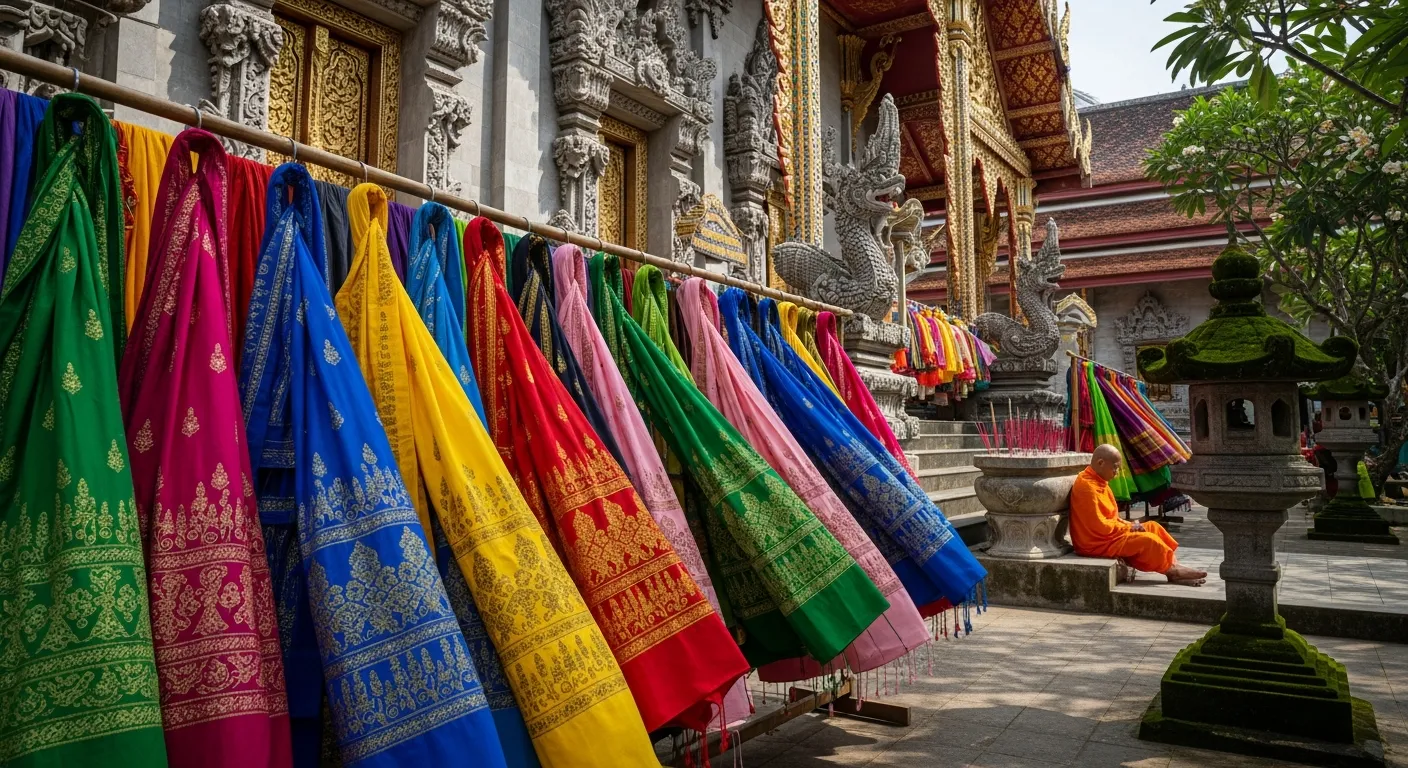
On the bottom half, long skirts or loose trousers do the job nicely, and a maxi dress works too as long as it covers the shoulders. Leggings sit in a murky middle ground — technically your skin is covered, but plenty of temples read them as too tight to count as modest, so I’d default to something looser. A sarong earns its keep here too — wrap it over shorts or a short skirt right before you walk in and you’re covered.
The Clothing That Will Get You Turned Away
A handful of items are flatly banned at temple entrances, and packing any of them is asking for a rejected entry. Short shorts and mini skirts cause the most turned-away tourists by far — anything sitting above the knee reads as inappropriate. Sleeveless tops and tank tops get the same treatment.
At Thailand’s temples, everything about the dress code comes back to one idea: modesty and respect. It’s never just about how much skin shows — it’s about whether your clothing choices honor what the space represents.
Let’s break down the specific categories that trip people up:
- Sheer or See-Through Fabric:
- Why it matters: Covering skin isn’t just a technicality — the fabric itself has to actually conceal, not just gesture at concealing. Sheer material misses the point entirely, since it reveals what it’s supposedly hiding.
- Watch out for:
- Sheer Blouses and Tops: Chiffon, lace with wide gaps, or thin cotton that turns see-through the second sunlight hits it.
- Mesh or Loose-Knit Fabric: Anything with noticeable gaps woven into the material.
- Pale, Thin Materials: A plain white tee with nothing underneath can go surprisingly transparent once it’s sweaty or caught in direct sun.
- Quick test: Hold the garment up to a light source before you pack it. If you can make out your hand or the outline of your body through the fabric, leave it home. A camisole underneath can rescue an otherwise borderline sheer top.
- Distressed or Ripped Denim:
- The problem: Distressed denim might be everywhere on the street, but inside a temple it reads as far too casual, even disrespectful. Even a small amount of exposed skin from a rip works against the dignified look temples expect.
- Avoid specifically:
- Big Rips at the Knee or Thigh: The most obvious no-go.
- Deliberate Fraying: Even minor worn patches showing skin generally don’t pass.
- Jeans With Cutout Details: Store-bought or DIY, intentional holes are still intentional holes.
- Wear instead: Plain, intact jeans in a pinch, though trousers or a long skirt make a stronger impression and show more respect for where you’re standing.
- Skin-Tight Clothing (Leggings, Cycling Shorts, and Similar):
- The reasoning: Modesty isn’t only about square inches of skin covered — it’s also about silhouette. Clothes that trace the body’s shape are seen as drawing attention to the physical form, which clashes with a setting meant for quiet reflection.
- Common culprits:
- Workout Leggings and Yoga Pants: Built for athletic stretch, they hug the legs and hips tightly.
- Cycling Shorts: Same issue as leggings, just shorter.
- Bodycon Dresses and Skirts: Cut specifically to trace the body’s curves.
- Overly Snug Tops: Even shoulder-covering tops can read as immodest if they’re skin-tight.
- Better options: Loose trousers, wide-leg pants, palazzo styles, or flowy maxi skirts. Up top, go for blouses that hang away from the body instead of clinging to it.
- Swimwear and Beach Cover-Ups:
- Why it clashes: Temples exist for worship and quiet meditation, a world away from beach or poolside energy. Swimwear and thin cover-ups are built for leisure and exposure — exactly the opposite of what a sacred site calls for.
- Off the table entirely:
- Bikinis, Board Shorts, One-Piece Suits: None of it works, even layered under other clothing, since it usually just makes that outer layer too sheer or too casual anyway.
- A Sarong as Your Only Layer: Fine as an extra wrap over other clothing, but not enough on its own.
- Sheer Kaftans or Mesh Beach Dresses: Built for quick-dry beach days, not for a sacred site.
- The fix: If you’re heading straight from the beach or pool, change into a real temple outfit first. Carry a proper sarong or scarf for backup coverage if something’s borderline, but don’t ever count on it as your entire outfit.
Bangkok Temples: What to Wear and How Strict They Are
Where Bangkok’s Best-Known Temples Fall on the Strictness Scale
The basic rules hold nearly everywhere, but a few of the big-name sites enforce them far more rigidly. Source Thailand is home to more than 40,000 temples, and unsurprisingly, the most iconic ones tend to be the strictest of the bunch.
The Grand Palace and Wat Phra Kaew (Temple of the Emerald Buddha)
Of every dress code in Thailand, the Grand Palace in Bangkok is by far the least forgiving. Staff at the gate check closely, no exceptions. Men need long pants and sleeved shirts; women need long skirts or trousers with shoulders covered. Tight leggings, ripped jeans, and anything sheer are all off-limits. Show up out of compliance and you’ll be buying an outfit from vendors camped outside the gates — there’s no rental option here anymore, so plan ahead.
Wat Pho (Temple of the Reclining Buddha)
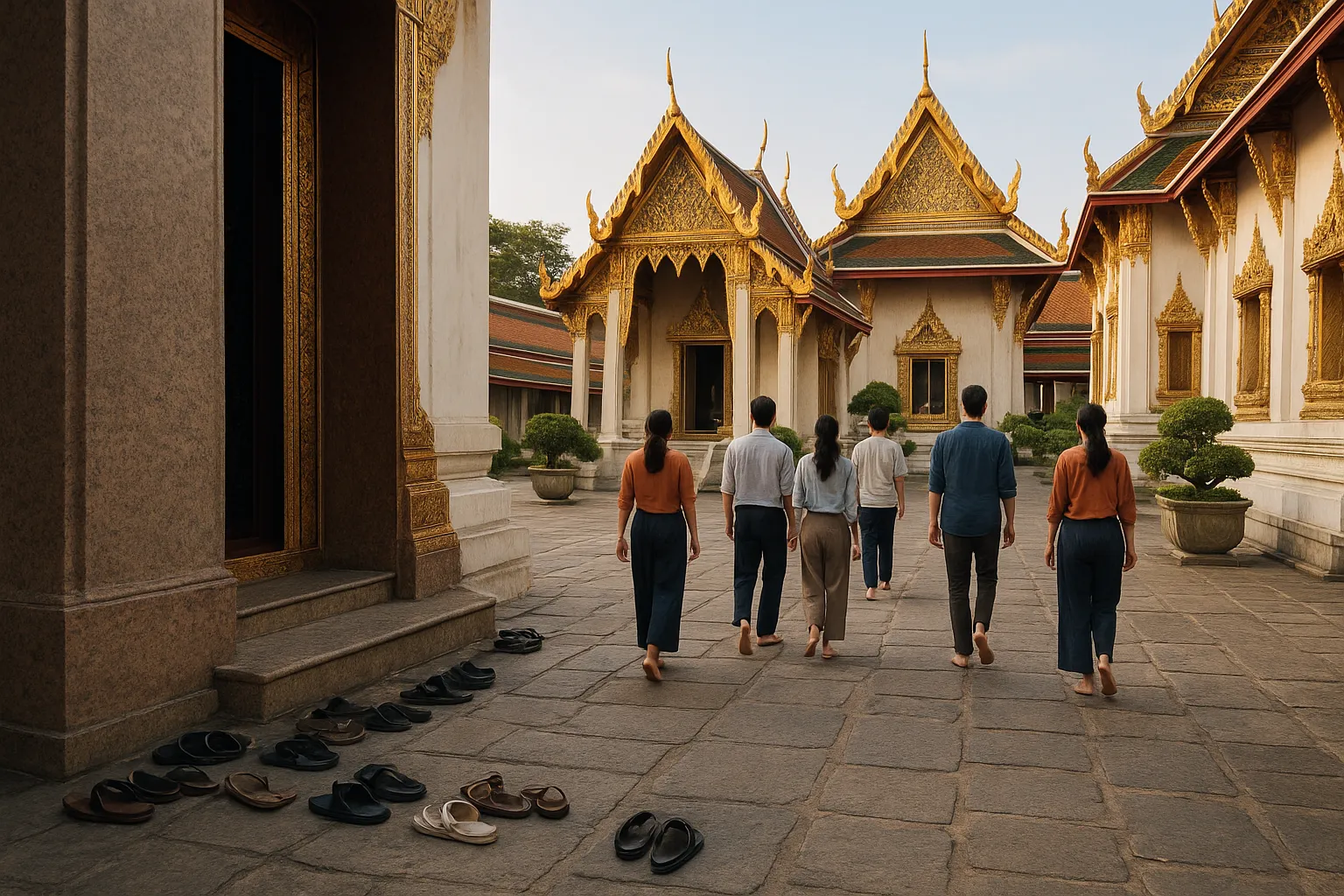
Wat Pho eases off a little compared to the Grand Palace, but shoulders and knees still need covering — that part never changes. This complex sprawls, so comfortable footwear matters more here than at smaller sites. You’ll also need to slip your shoes off before stepping into the main hall where the Reclining Buddha rests. Keeping socks on is completely fine, and honestly nicer once you’re crossing scorching stone outside.
Wat Arun (Temple of Dawn)
Wat Arun, the Temple of Dawn, is one of those sights that stays with you long after the trip — but showing up dressed wrong undercuts the whole experience, and the site deserves better. Past the standard modesty rules, its signature feature, the towering central prang, adds a few practical wrinkles to think through when picking your outfit.
Getting the Coverage Right
Same as every other Buddhist temple in the country, Wat Arun expects a modest dress code — meaning your shoulders and knees stay fully covered, no gray areas.
- Tops that work: T-shirts, blouses, or sleeved shirts covering the shoulders. Short sleeves are usually fine, just nothing sleeveless or strapless.
- Tops to skip: Tank tops, camisoles, crop tops, strapless cuts, or anything showing your midriff or too much cleavage.
- Bottoms that work: Long pants, capris that fall well below the knee, or ankle-length maxi skirts.
- Bottoms to skip: Shorts, mini-skirts, hot pants — anything ending above the knee.
Climbing the Prang: What You Actually Need to Know
Part of the draw at Wat Arun is scaling partway up the central Khmer-style prang, and this is where clothing choices stop being just about etiquette. The steps are steep, narrow, and unforgiving — crowded during busy hours and genuinely slick if there’s any moisture on them. What you’re wearing directly affects how safe and comfortable that climb feels.
- You need to move freely: The steep incline demands full leg mobility. Anything restrictive turns both the climb and the descent into an awkward, uncomfortable, possibly risky ordeal.
- Balance matters most: Those steps are a genuine quad workout, and staying steady while you navigate them requires clothing that doesn’t fight you.
Dressing Smart for the Climb
To enjoy Wat Arun properly — comfortably and respectfully — these are the clothing picks worth considering:
- Bottoms built for movement:
- Loose pants: Linen trousers, palazzo pants, or breathable track pants if they read as put-together enough for a temple. All three give you the range of motion those steep steps demand, without weighing you down.
- Flowing long skirts: A maxi skirt or wide-leg culottes work beautifully — just make sure the fabric is light enough to let you stride freely. Skip narrow pencil skirts or anything with a tight hem that stops you from lifting your leg high enough for each step.
- Sarong or wrap skirt: If you go this route, tie it securely and make sure it’s long enough to clear your knees without risking a trip hazard mid-climb.
- Tops that breathe: Shoulder coverage is non-negotiable, but pick something in cotton or linen so you’re not overheating in Thailand’s tropical humidity.
- Footwear to get right:
- Closed-toe and comfortable: Sneakers or grippy walking sandals give you the stability you’ll want on those uneven, steep steps.
- Skip these: Heels, flip-flops with worn-out soles, or anything loose enough to slide off mid-climb.
Why You Should Always Carry a Scarf or Pashmina
A lightweight scarf or pashmina earns its spot in your bag at every Thai temple, and Wat Arun is no different.
- Fast fix: Drape it over bare shoulders if your top’s sleeveless, or wrap it around your waist if your shorts run a bit short — though full-length bottoms are still the better call.
- Blocks the sun: It doubles as an extra shield against Thailand’s brutal midday rays.
- Useful beyond temples: Handy for cold air-conditioned rooms, and it adds a bit of style to your outfit too.
Get your outfit right and you’re not just respecting Wat Arun’s significance — you’re setting yourself up to actually enjoy the climb and take in the site’s beauty without fighting your own clothes the whole time.
Forgot to Pack Right? Here’s Your Backup Plan
It happens constantly — travelers get swept up in the day’s plans and forget temple-appropriate clothing entirely. The good news: most heavily visited temples have a fix built in. You can typically rent a sarong or loose pants right at the entrance for a small fee, plus a deposit you’ll get back.
You’ll also spot street vendors stationed outside the busier temples selling elephant pants, sarongs, and scarves — a decent souvenir and an easy way to get compliant fast. Honestly, just keep a lightweight scarf or sarong tucked in your daypack the whole time you’re in Thailand. That habit alone will save you from ever standing at a gate wishing you’d planned better.
| Temple | Strictness Level | Men’s Requirements | Women’s Requirements |
|---|---|---|---|
| Grand Palace & Wat Phra Kaew | Strictest in Thailand | Long pants and sleeved shirts | Long skirts or trousers with shoulders covered |
| Wat Pho | Moderate | Long pants and sleeved shirts | Long skirts or trousers with shoulders covered |
| Wat Arun | Standard | Long pants and sleeved shirts | Long pants or maxi skirts with shoulders covered |
| Most other temples | Standard | Long pants and sleeved shirts | Long skirts or trousers with shoulders covered |
Traveling With Kids: Temple Dress Rules for Little Ones
If you’re packing for young children, breathe easy — temple staff generally look the other way on kids’ clothing, and a toddler in shorts almost never gets stopped at the door. That said, the same modesty spirit kicks in as they get older — once kids hit around ten, dress them the same way you’d dress yourself, shoulders and knees covered. Shoes come off before entering any temple building regardless of a child’s age, so slip-on sandals will spare you from re-tying tiny laces half a dozen times a visit. A backup sarong in your daypack works just as well for a kid as it does for you.
The Sunscreen I Should Have Put On Before My Noon Temple Walk
Thai temples offer zero shade, and most dress codes force you into long sleeves and pants covering your shoulders and legs — meaning hours in full coverage while the UV index does whatever it wants to your skin. I found this out the painful way after my first temple day left me looking like a lobster stuffed inside linen.
What actually helps
- SPF 70 holds up against the glare bouncing off marble floors and white temple walls in a way SPF 30 just doesn’t — you genuinely need the stronger stuff here.
- A formula that doesn’t feel greasy under long sleeves matters — nobody wants to be peeling their shirt off their arms two hours in, or staining the fabric.
- Water resistance counts for a lot once sweat and humidity kick in, especially climbing temple steps in 95-degree heat.
What doesn’t
- You end up reapplying it nonstop in that humidity, which is a hassle when you’re already trying to stay covered and respectful inside a sacred building.
- It needs a good five minutes to sink in fully, and if you’re racing to beat the afternoon crowds through the gate, you’ll walk in with a chalky white cast on your forearms that ruins every photo.
I skipped sunscreen on day two because I thought “I’m already covered by clothes” — a decision my neck immediately regretted. Grab the Neutrogena Sunscreen Lotion Beach Defense SPF 70 before you go, and apply it like you mean it.
Frequently Asked Questions
What are the absolute dress code rules for Thai temples?
Shoulders and knees must be covered at nearly every temple compound in Thailand — this applies to both men and women. There are no exceptions to this rule. Everything else depends on the specific temple, but these two requirements will get you through the entrance at the vast majority of sites.
Can I wear leggings to Buddhist temples in Thailand?
Leggings sit in a murky middle ground at Thai temples. While your skin is technically covered, plenty of temples read them as too tight to count as modest. It’s safer to default to something looser like long pants, wide-leg trousers, or flowing skirts to avoid being turned away at the gate.
Is the Grand Palace dress code stricter than other Bangkok temples?
Yes, the Grand Palace and Wat Phra Kaew enforce the strictest dress code in Thailand. Staff check closely with no exceptions. Men need long pants and sleeved shirts; women need long skirts or trousers with shoulders covered. There is no rental option anymore, so plan ahead or buy from vendors at the gates.
What clothing do I need for climbing Wat Arun’s central prang?
The steep, narrow steps at Wat Arun demand full leg mobility and balance. Wear loose pants like linen trousers or palazzo pants, or flowing maxi skirts and wide-leg culottes that let you stride freely. Skip narrow pencil skirts, and choose closed-toe sneakers or grippy walking sandals for stability on the uneven steps.
About This Article

Written by Elena Vasquez. Elena Vasquez is a full-time traveler and the founder of Witty Passport. Over fifteen years and more than 50 countries across six continents — including a stretch spent leading groups professionally through Southeast Asia and the remote highlands of South America — she's written the kind of destination guides she always wished existed: practical, specific, and built on real experience rather than recycled itineraries. More about this site.
Scope and limits. Elena is a full-time traveler, not a licensed travel agent or immigration adviser. Entry requirements, visa rules, and advisories change without notice — always confirm against the official government source for your destination and passport before booking.
Verify this against a primary source
Specifics change, and your situation may differ from the one described here. These are the authorities worth checking directly:
- U.S. Department of State — entry requirements and travel advisories
- CDC Travelers' Health — vaccination and health notices by destination
- TSA — current carry-on and screening rules