Southeast Asia gets marketed as the forgiving, training-wheels region for first-time backpackers — cheap, foolproof, hard to mess up. I can tell you from experience that reputation oversells it. I found out within forty-eight hours of landing in Bangkok back in 2009, carrying a 35-liter pack, a Lonely Planet already two editions behind, and a wildly overconfident sense that I’d covered every base. In that short window, a tuk-tuk driver had steered me straight into a gem-shop scam, a questionable meal had knocked me flat for a full day, and — despite all of it — I was already hopelessly attached to a region I’ve since returned to more than a dozen times.
That’s the honest summary of what this part of the world does to people: it hands out generosity to anyone curious enough to pay attention, and it humbles anyone who assumes they’ve already got it figured out. If Thailand, Vietnam, Cambodia, Indonesia, or any other stretch of the region is your next first-timer trip, what follows is the unfiltered version I wish someone had given me — not the glossy brochure copy, the actual briefing.
The Heat Isn’t What You’re Picturing
Everybody warns you it’ll be hot. What almost nobody explains properly is what that means standing outside at 2 p.m. in Siem Reap in April, humidity pinned at 90%, trying to move between temple complexes on foot. This isn’t discomfort you shrug off — it’s the kind of physical drain that wrecks your entire day’s pacing if you don’t plan around it.
What eventually worked for me was giving up the fight altogether. I rebuilt every itinerary around a 6:30 a.m. start, a long stretch of downtime between noon and 3 p.m., then a return to sightseeing once the late afternoon light rolled in — which, conveniently, photographs better anyway. It took me three separate trips before I stopped stubbornly pushing through midday and just accepted the schedule, instead of paying for it later in exhaustion and a short temper.
One more thing worth flagging: budget guesthouse air conditioning tends to have exactly one setting, and it’s arctic. Pack something with sleeves. I’ve shivered harder inside a $12-a-night room in Chiang Mai than I ever have on an actual flight.
Know the Common Scams Before You Ever Land
I won’t pretend Southeast Asia is unsafe — by most metrics, it isn’t. But there’s a specific breed of low-stakes tourist hustle so polished it fools travelers who should absolutely know better. Recognizing the setup ahead of time is basically your only real defense.
The Bangkok gem scam I got pulled into in 2009 runs on a script: a friendly local tells you the temple you’re headed to is “closed for a special ceremony today,” then conveniently offers a tuk-tuk ride that ends up at a shop instead. That “closed temple” line is almost never true. The instant a stranger volunteers information about a suspiciously timed closure, that’s your cue to keep walking.
A few others worth having on your radar:
- The taxi meter that “doesn’t work”: Confirm the meter’s running before you get in, or just default to Grab, the ride-hailing app that covers most of the region.
- The suspiciously generous motorbike ride: In Vietnam in particular, a “free” lift has a habit of turning into a payment demand once you’ve arrived.
- Mixed-currency mix-ups: Places like Cambodia run on both USD and local currency simultaneously, and some vendors will hand back change in whichever currency benefits them most. Know your conversion rate cold.
None of this is meant to make you suspicious of everyone you meet — the vast majority of interactions are exactly what they appear to be. But once you know these patterns, you spot them the moment they start rather than piecing it together after the fact.
What First-Timers Actually Need to Know About Staying Healthy
This is the part most travel blogs skim past. Here’s the straight version:
Book an appointment with a travel medicine doctor 6–8 weeks before you fly. Depending on where you’re headed, you might need Hepatitis A and B, typhoid, Japanese encephalitis, or a malaria prevention prescription if rural Myanmar, Laos, or Borneo are on the route. I take this seriously ever since watching a travel companion lose four days of a two-week trip to a Hanoi hospital bed over something entirely preventable.
Street food, generally, is not the risk people assume. Look for stalls that are busy, hot, and cooking in front of your eyes. The spots that look sketchiest to outsiders are frequently the safest, because locals are eating there every single day. It’s the tourist buffet sitting under a heat lamp all afternoon that actually gets people sick.
Water deserves real attention. Stick to sealed bottles or carry a filtered bottle — I’ve relied on a Grayl Geopress for four years now, and it’s paid for itself many times over. Brush your teeth with bottled water for the first week or so, until you’ve got a sense of how your system is handling the transition.
Cash, SIM Cards, and Staying Online
ATM fees across the region will chip away at your budget without you noticing. Thai ATMs typically charge a flat rate near 220 baht (about $6 USD) per withdrawal no matter how much you take out — so pull larger sums less frequently. Vietnam’s fees run lower, but the daily withdrawal caps can be annoyingly small.
If you’re American, I’d push hard for a Charles Schwab checking account — it refunds every foreign ATM fee at month’s end. I’ve personally saved hundreds of dollars over the years just from that one detail.
For staying connected, grab a local SIM at the airport as soon as you land. Thailand’s DTAC and AIS both sell tourist SIMs in the $10–15 range with plenty of data included. In Vietnam, Viettel is the most dependable option. Having data working from day one isn’t an indulgence — it’s how you navigate, hail a Grab, translate a menu, and generally stay out of trouble.
The Cultural Norms That Genuinely Matter
You’ll see plenty of vague advice to “respect local customs.” Let me get specific instead.
Temple dress codes are enforced, not suggested. Pack a lightweight sarong or long linen pants. I was once turned away from Angkor Wat’s inner sanctuary — after already paying the $37 entrance fee — because my shorts ended a couple inches above the knee. Those extra inches genuinely matter. Bring your own cover-up; don’t assume you can buy one at the entrance.
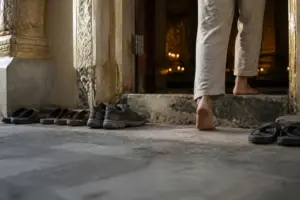
The head-and-feet hierarchy is not exaggerated for tourists. In Buddhist cultures, the head carries reverence and the feet carry the opposite. Don’t touch anyone’s head, and never point your feet at a person, an altar, or a monk. Sitting cross-legged or folding your feet under you inside a temple is the safe move.
Face-saving matters more than outsiders usually grasp. Raising your voice out of frustration — even when you’re completely in the right — almost always backfires. A calm expression and a smile will get you further in every negotiation, complaint, or tense moment I’ve run into across this region. It took me an embarrassingly long time to actually absorb that lesson.
Gear and Guides I Actually Rely On
These aren’t picks pulled from an affiliate spreadsheet — I’ve genuinely used every one of these:
For planning ahead and on-the-ground reference, the Lonely Planet Southeast Asia Travel Guide is still one of the most practical physical books you can carry. Sure, a few specifics age out, but the cultural framing, regional overviews, and practical structure hold up year after year. I pair it with the Insight Guides Southeast Asia: Travel Guide with eBook, which digs further into history and visual context — genuinely helpful when you’re standing in front of a temple that’s been there for 900 years and want to know what you’re actually looking at.
For packing light without leaving out the essentials, the Convenience Kits International Women’s 15 Pc Kit with Palmer’s Travel-Size Products is a solid pickup for a first trip. Palmer’s products hold up well in heat and humidity, and the travel-size format keeps your liquids bag manageable on budget airlines with strict carry-on rules.
One Caveat I Want to Be Upfront About
Everything above comes from fifteen years and dozens of trips of my own across this region. But Southeast Asia isn’t one uniform place. Advice that’s critical in Bali might not apply at all in Hanoi. A scam that was rampant in 2015 might have died out; a new one might have popped up last month. Treat this as a starting point, not the whole map. Talk to travelers you cross paths with along the way. Check recent threads on TripAdvisor, r/solotravel on Reddit, and Thorn Tree. Firsthand intel from someone who was on the ground last week is worth more than almost anything written months in advance.
The Part No Advice Column Can Cover
Here’s where I’ll leave you: Southeast Asia will very likely outdo your expectations in ways that have nothing to do with logistics at all. It’s the stranger who invites you to share their meal for no reason, the sunrise turning Angkor Wat from gray stone to gold, the night train rolling through northern Vietnam with nothing to do but wait for morning — that’s the part no amount of planning briefs you for.
Nail the logistics so they stop getting in your way. Then let the place take over from there.
The Guidebook That Kept Me From Getting Lost (and Scammed) a Second Time
My two-year-old Lonely Planet turned useless the second I landed — scammers memorize exactly which hotels and gem shops show up in outdated editions, and they were ready for me. A current regional guide isn’t a nice extra; it’s the gap between winding up in a gem shop and finding the actual hole-in-the-wall pad thai spot where locals eat.
Where it delivers
- The scam alerts stay current — actual travelers report what’s changed since the last print run, so you skip the exact Bangkok gem-shop trap I fell into.
- The maps hold enough detail to navigate without pulling your phone out every five minutes, which matters a lot when you’re trying not to look like a lost tourist in a crowded market.
- Restaurant and lodging listings reflect what’s actually open now, not what existed back in 2007 — no more showing up to a place that shut down two years ago.
Where it falls short
- It’s dense — in a 35-liter pack, that weight adds up fast, and by day four you’ll be questioning whether the appendix on Burmese hill tribes is worth carrying.
- Even a freshly updated edition can’t keep pace with how fast this region shifts; a newly hyped Bangkok neighborhood might still be absent, so you’ll still need local tips to fill in the blanks.
I almost ditched mine halfway through my second trip, convinced it was outdated junk like my first copy, but it caught a scam setup I nearly walked into in Chiang Mai that newer online reviews had completely missed. Pick up the Lonely Planet Southeast Asia Travel Guide.
Frequently Asked Questions
What time should I plan temple visits in Siem Reap in April?
Start sightseeing at 6:30 a.m., then take a long break between noon and 3 p.m. when humidity peaks at 90%. Return to temples in the late afternoon when the light improves and the heat becomes manageable.
How do I avoid the Bangkok gem-shop scam?
When a stranger tells you a temple is “closed for a special ceremony,” keep walking—that line is almost never true. This setup is designed to redirect you to shops instead. Recognizing the script beforehand is your best defense.
What should I wear inside temples in Southeast Asia?
Pack a lightweight sarong or long linen pants to meet enforced dress codes. Temple staff will turn you away for shorts ending above the knee, even after you’ve paid admission. Bring your own cover-up rather than assuming you can buy one at the entrance.
How do I minimize ATM fees while traveling in Thailand?
Thai ATMs charge a flat rate near 220 baht (about $6 USD) per withdrawal regardless of amount, so pull larger sums less frequently. Consider opening a Charles Schwab checking account, which refunds every foreign ATM fee at month’s end.
About This Article

Written by Elena Vasquez. Elena Vasquez is a full-time traveler and the founder of Witty Passport. Over fifteen years and more than 50 countries across six continents — including a stretch spent leading groups professionally through Southeast Asia and the remote highlands of South America — she's written the kind of destination guides she always wished existed: practical, specific, and built on real experience rather than recycled itineraries. More about this site.
Scope and limits. Elena is a full-time traveler, not a licensed travel agent or immigration adviser. Entry requirements, visa rules, and advisories change without notice — always confirm against the official government source for your destination and passport before booking.
Verify this against a primary source
Specifics change, and your situation may differ from the one described here. These are the authorities worth checking directly:
- U.S. Department of State — entry requirements and travel advisories
- CDC Travelers' Health — vaccination and health notices by destination
- TSA — current carry-on and screening rules