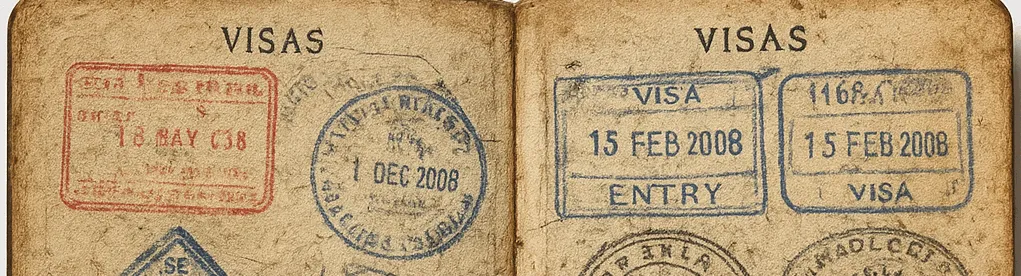

No terminal map or airline website will ever mark the exact point where “you have time” quietly turns into “the door is closed.” Back in 2013, Istanbul’s Atatürk Airport gave me gate numbers, duty-free listings, and a departure board — nothing that warned me how thin the margin actually was. I watched my flight to Tbilisi push back from the jetway with my suitcase on board and me still standing at the gate. I’d cleared security, found a café, ordered tea, and simply misjudged how much time I actually had. I didn’t have as much as I thought. Six hours stuck in that airport and a rebooking fee that swallowed two days of my travel budget later, I walked away with a lesson that’s stuck with me for eleven years now.
That one afternoon changed the way I move through every airport since. Across 50-plus countries and more flights than I could ever tally accurately, I’ve built up a kind of mental checklist for air travel — though it came almost entirely from screwing up, not from getting things right. What follows are the airport mistakes that have cost me the most, plus the ones I’ve watched other travelers make, and the exact fixes I now rely on for each.
How a Simple Time Miscalculation Nearly Wrecked a Trip
Here’s exactly where I went wrong in Istanbul: I clocked a 14:35 departure, checked my watch at 14:05, and figured I had a comfortable thirty minutes. What I actually had was thirty minutes until the plane left the ground — not thirty minutes before I needed to be standing at the gate. Most airlines shut the gate 10 to 15 minutes ahead of departure, and budget carriers like Ryanair and EasyJet have a reputation for cutting it off a full 30 minutes early.
These days, gate closing time is what I treat as my real departure time. I make sure I’m at the gate 40 minutes ahead on international flights and 25 minutes ahead on domestic ones. It feels like overkill right up until you’ve seen a gate agent shrug and say boarding’s closed while your seat number is still glowing on your phone screen.
The fix: The moment you land at a new gate or walk into the terminal, check the boarding time printed on your pass — not the departure time — and set an alarm for 15 minutes ahead of it.
Underestimating the Airport You’re Actually In
Heathrow’s Terminal 5 has nothing in common with Haneda’s Terminal 2. Dubai International doesn’t behave like Singapore Changi. Some airports are small and easy to read at a glance. Others function like entire cities, complete with internal trains, shuttle buses, and gate-to-security walks that can stretch past a kilometer.
I once landed in Frankfurt — FRA, which is a genuinely sprawling place — and figured that clearing passport control 45 minutes before boarding gave me plenty of cushion. It didn’t. The immigration hall to my gate was a full 22-minute walk at a near-jog. I made the flight, just barely, and arrived sweating through the shirt I’d specifically hoped to keep clean.
Now, before any connection or any airport I haven’t flown through before, I take three minutes to pull up the terminal layout on Google Maps or check the airport’s own floor plan online — most major international hubs publish these. It’s not exciting prep work, but it’s bailed me out at least four separate times.
Checking a Bag on a Trip That Really Didn’t Call For It
This is the mistake I see most often among travelers who haven’t quite gotten their system down. Checking a bag when you’re working with a tight connection, a budget airline, or a small regional airport is essentially a bet — and eventually, the odds catch up with you.
Back in 2019, I flew Madrid to London Stansted to Riga on two completely separate tickets and checked a bag in Madrid. It never made it to Riga with me. It turned up two days later, just in time to get repacked for my flight home. I wasn’t carrying medication or anything I couldn’t live without, so I got off easy — but I still lost two days of usable clothing, bought toiletries I already owned, and burned 40 minutes filing a delayed baggage report instead of heading into the city.
My fix now: if a trip runs 10 days or under, everything goes in a carry-on, no exceptions. It takes discipline and a real packing system, but it wipes out an entire category of risk.
Packing in a Way That Turns You Into a Security Bottleneck
Theater or not, the checkpoint is a genuine time cost — and the way you’ve packed determines how quickly you get through it. I used to jam everything into my bag however it happened to fit, cables looping into chargers looping into snacks. Agents flagged my bag for a secondary look more times than I can count, purely because the X-ray came back looking like a tangled bird’s nest.
Switching to an actual system fixed that. Once my bag’s contents are broken into clean, scannable groups, I move through without a hitch. Liquids sit in one pouch that’s out in five seconds flat. Electronics live in a flat organizer that lies neatly across the bin. Everything else goes into compression cubes that read as a clear, uniform block on the scanner.
Landing Somewhere Without Offline Access to the Essentials
This feels like an issue from 2010, but it is still very much alive in 2024. I’ve regularly watched travelers — especially in Southeast Asian and Eastern European airports — get stuck unable to pull up their boarding pass because the airline app needed data and they hadn’t grabbed a local SIM yet. I’ve been that traveler myself. In Kathmandu in 2017, the airport Wi-Fi dropped entirely and I was genuinely panicking.
Now I screenshot everything ahead of time: boarding passes, hotel confirmation numbers, my destination’s address written out in the local script, and the emergency line for my travel insurance. It all lives in one phone album labeled “CURRENT TRIP,” and none of it needs a single bar of signal.
Leaving Your Devices and Charging Exposed
Long layovers, delays, and the general grind of travel guarantee your devices will need power at the worst possible moment. I’ve sat stranded next to outlets that don’t fit my plugs in airports across Japan, South Africa, and Chile. Losing access to a device when I need to navigate, message someone, or pull up a document is a kind of stress I’ve decided is entirely avoidable.
Just as important: a dead phone in a foreign airport with no offline backup is a genuine emergency. I travel with a small power bank for shorter trips and a universal adapter any time I’m heading abroad.
The Gear I Actually Rely On
After a lot of trial and error, here’s what I’ve settled on for good:
For keeping my bag organized, I use the BAGAIL 8 Set Packing Cubes in cream. The color choice matters more than it sounds like it should — lighter cubes let you see what’s inside through the mesh without unzipping a thing. I’ve been running a version of these for three years now. They compress well, they’ve survived constant use, and they’ve noticeably sped up how fast I clear security.
For anyone who wants a fuller kit — one that includes a laundry bag and a passport holder — the Veken 10 Set Packing Cubes come in four sizes and cover every category I actually pack for. I’d point someone toward this if they’re assembling their first serious travel kit or heading out on a longer trip where finer separation matters.
For power, I don’t board an international flight without the GaN PD3.0 Universal Travel Adapter. It supports USB-C fast charging, includes USB-A ports, and covers outlets in the US, EU, UK, and Australia. It’s small enough that I’ve stopped worrying I’ll forget it — it just permanently lives in my bag now.
A Necessary Reality Check
One thing worth saying plainly: none of these habits make you bulletproof. In 2022, I missed a connection in Amsterdam despite doing every single thing right — on time at the gate, no checked bags, full offline access to everything I needed. The inbound flight simply landed too late, and KLM rebooked me automatically. Sometimes the airport and the airline are the variable that’s simply out of your hands.
What these habits actually do is remove the mistakes you can control, and in my experience, those are behind most of the stress airports cause in the first place. A weather delay or a mechanical issue isn’t something you can prevent. Losing track of time over a cup of tea in Istanbul absolutely is.
Where This All Lands
The airport mistakes that end up costing people time, money, and their patience are almost always the same handful: misjudging timing, underestimating an unfamiliar airport, checking a bag on a risky itinerary, packing chaotically, and having no offline backup plan. None of it is exotic or complicated — just quiet, repeatable errors that seem completely obvious in retrospect and totally invisible while you’re living through them.
I made nearly every one of these before I ever fixed them. If any of this sounds a little too familiar, you’re not failing at travel — you just haven’t built the habit yet. Take one item from this list, make it second nature on your next trip, then add another. A handful of trips from now, you’ll be moving through airports with a calm that looks effortless from the outside and feels, from the inside, like the very particular relief of already having been here before and knowing precisely what you’re doing.
Why Packing Cubes Kept Istanbul From Happening Twice
Since that missed flight, I’ve become almost obsessive about knowing exactly what’s sitting in my bag at any given moment — especially during those fragile in-transit hours when you’re exhausted, over-caffeinated, and not thinking clearly. Packing cubes ended up being an unexpected cure for that particular flavor of airport anxiety, mostly because they force you to be deliberate about what you’re carrying and exactly where it lives.
The upside
- Half-asleep in some airport café, you can confirm your bag’s contents at a glance instead of digging through everything and making a mess — the organized cubes tell you instantly that nothing’s missing.
- The compression genuinely helps through long layovers, when you’re constantly moving the bag, pulling it out for a second security check, or wedging it into an overhead bin — nothing shifts into those forgotten corners where things go missing.
- During a six-hour airport wait — I’ve now hit that twice — you can grab a clean shirt or your toiletries without dumping your entire bag onto a chair, which keeps you calmer when you’re already stretched thin.
The downside
- They tack on a small but noticeable amount of weight and bulk to your overall pack — if you’re going ultralight, the cubes themselves become one more thing you’re hauling.
- Zippers eventually give out, especially after a year of heavy use in dusty or humid climates, and at that point it’s not worth patching them — you just end up replacing the whole set.
I’ll admit I was skeptical the first time I packed with cubes; they felt like one more thing to fuss with when I just wanted to shove clothes in a bag. But somewhere over the Atlantic, I realized I’d just spent an entire layover actually knowing where my socks were, and that small certainty somehow made everything else feel less chaotic. Get the BAGAIL 8 Set Packing Cubes.
Frequently Asked Questions
When should I arrive at my gate for international flights?
Arrive at your gate 40 minutes ahead of the boarding time printed on your pass, not the departure time. Most airlines close gates 10 to 15 minutes before departure, and budget carriers like Ryanair and EasyJet may close them a full 30 minutes early.
How do I avoid checked baggage problems on tight connections?
If your trip runs 10 days or under, pack everything in a carry-on with no exceptions. Checked bags on separate tickets risk not making connections—one bag checked in Madrid didn’t reach Riga and arrived two days later.
What should I screenshot before landing at a foreign airport?
Screenshot your boarding passes, hotel confirmation numbers, your destination’s address in local script, and your travel insurance emergency line. Store them in one phone album labeled “CURRENT TRIP” so you have offline access if the airline app needs data or airport Wi-Fi drops.
How can I speed through airport security checkpoints?
Pack your bag with a clear system: liquids in one pouch, electronics in a flat organizer, and clothes in compression cubes. This organized layout reads clearly on X-ray scanners and prevents agents from flagging your bag for secondary inspection.
About This Article

Written by Elena Vasquez. Elena Vasquez is a full-time traveler and the founder of Witty Passport. Over fifteen years and more than 50 countries across six continents — including a stretch spent leading groups professionally through Southeast Asia and the remote highlands of South America — she's written the kind of destination guides she always wished existed: practical, specific, and built on real experience rather than recycled itineraries. More about this site.
Scope and limits. Elena is a full-time traveler, not a licensed travel agent or immigration adviser. Entry requirements, visa rules, and advisories change without notice — always confirm against the official government source for your destination and passport before booking.
Verify this against a primary source
Specifics change, and your situation may differ from the one described here. These are the authorities worth checking directly:
- U.S. Department of State — entry requirements and travel advisories
- CDC Travelers' Health — vaccination and health notices by destination
- TSA — current carry-on and screening rules