Flip-flops will wreck your first day of island-hopping in the Kvarner Gulf, and I mean that literally. I rolled into Krk Town on a scorching June afternoon with no real plan and exactly that footwear on my feet, and within a few hours the region had taught me three humbling lessons: Croatian beaches are rock and pebble, not sand, the Adriatic sun shows no mercy to the underprepared, and hopping between islands without a plan is just asking for a wasted day. Once I sorted out the logistics and figured out which sailing routes actually connect Krk, Cres, and Rab in a sensible order, this stretch of coastline turned into one of the best sailing trips I’ve ever taken. Whether you’re chartering a boat or relying on ferries, here’s what actually matters for planning this trip.
The Best Sailing Routes Around Krk, Cres, and Rab Croatia
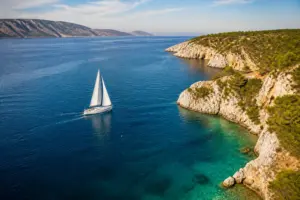
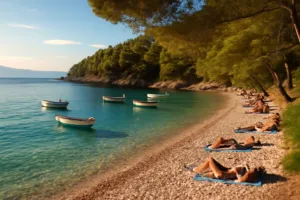
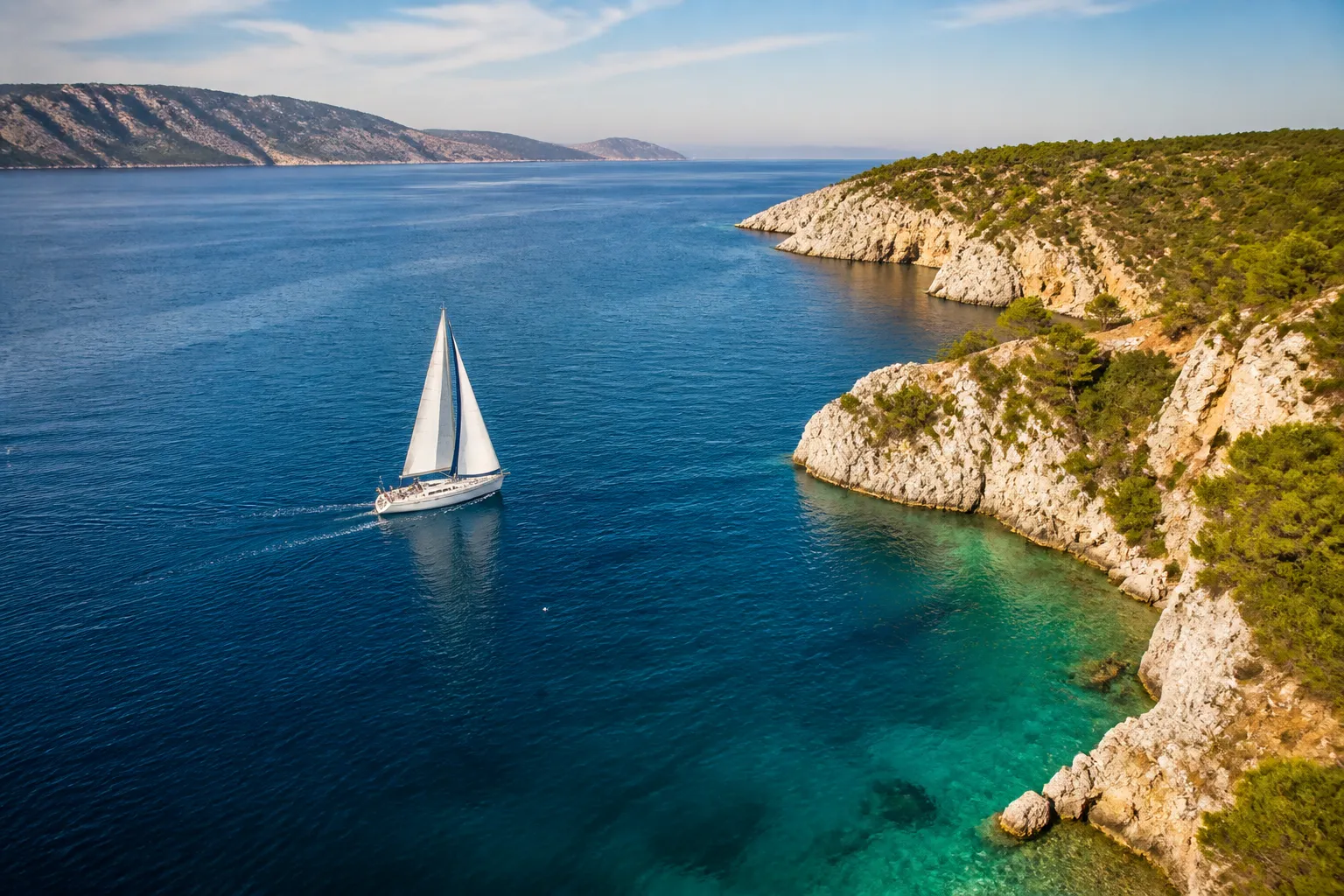
Charter companies in the area tend to push a fairly standard route, and honestly, it earns the recommendation. Most itineraries kick off in Krk Town, notable for its Venetian-era old quarter and the fact that it’s the only island here linked to the mainland by bridge. The usual next move is south to Punat, a well-protected bay on Krk’s eastern shore where you can drop anchor for the night beneath pine-covered hillsides. Figure roughly 12 nautical miles for this stretch, translating to about 2 to 3 hours on the water depending on how the wind’s behaving.
After that comes the hop over to Cres, the bigger of the two islands sitting up in the north. Sailing from Punat to Cres Town runs around 8 nautical miles, an easy 1.5 to 2 hour crossing. Cres Town rewards a proper wander—tight stone lanes, a couple of Gothic-era palaces, fishermen unloading the morning’s haul straight from weathered old boats. What most guidebooks won’t tell you: skip the main harbor and anchor at Veli Mel instead, a tucked-away bay along Cres’s southern coastline. Sheltered, gorgeous, and nowhere near as crowded as the town harbor.
From Cres, you’ll continue southeast for about 10 nautical miles to reach Veli Lošinj, over on Lošinj island. Expect around 2 to 2.5 hours for this passage, and it genuinely feels like sailing through a postcard the whole way. The harbor at Veli Lošinj, framed by Austro-Hungarian villas with pine forest behind them, ranks among the most photographed anchorages anywhere on the Adriatic. To close out the loop, cross roughly 15 nautical miles of open water eastward to Rab Town—a 2.5 to 3 hour sail that frequently delivers ideal wind for a good, fast reach. Budget somewhere between 5 and 7 days for the full four-island circuit, more if you fall in love with a particular anchorage and decide to linger.
If you’re thinking about exploring the wider Kvarner Gulf beyond just these four islands, it’s worth knowing the region sits in a kind of buffer zone between the mainland and the bigger, better-known Dalmatian islands to the south. The water stays calmer here, it’s forgiving for shallower-draft boats, and the fishing villages still feel lived-in rather than built purely for cruise-ship crowds.
Skipping the Boat: Ferry-Hopping Krk, Rab, Cres, and Lošinj
Chartering a sailboat isn’t for everyone, and there’s no shame in that. The good news is the Kvarner islands are still connected by ferry—you’ll just need to piece the schedule together like a small puzzle.
Jadrolinija, the main operator for coastal ferries, runs boats out of Rijeka on the mainland to both Krk Town and Rab Town. The Rijeka–Krk crossing takes roughly 1 hour and 15 minutes with multiple daily departures. Once you’re on Krk, a smaller ferry gets you across to Cres in about 30 minutes, with onward service to Lošinj from there. Reaching Rab from either Krk or Cres takes more planning—usually the simplest option is backtracking to Rijeka and catching the Rijeka–Rab ferry (around 1.5 hours), though in peak summer you’ll sometimes find direct island-to-island links.
Here’s the practical truth: if sailing isn’t in your plans, rent a car once you land on Krk or Rab. The road quality is fine, parking isn’t a nightmare, and you’ll be able to reach quieter villages on your own schedule instead of chasing ferry times. Those timetables shift with the seasons, so double-check Jadrolinija’s site before locking in where you’ll stay.
Ditch the Flip-Flops: The Right Footwear for Croatian Island-Hopping
Adriatic beaches made of rock and slick boat decks are not a place to be careless with footwear, especially when you’re clambering on and off boats between islands in the Kvarner Gulf. I found this out the hard way on my second day, nearly turning my ankle while wading between Krk and Cres, still stubbornly wearing those useless flip-flops.
What actually helps
- Real traction on slick rocks and boat decks, so you’re not slipping every time you go from dinghy to shore
- Quick drying, so your feet aren’t waterlogged and pruned by the time you hit island number three
- Compact enough not to eat up bag space when you’re living out of a cramped cabin
Where they fall short
- Not exactly a fashion statement—more hiking trail than luxury yacht deck
- Soles can wear down faster than expected if you’re crossing rough concrete docks several times a day
I almost ditched them halfway through week one because I was convinced my sneakers would be “fine enough,” but one slippery moment on a boat ladder reminded me why they’re actually essential. Water Shoes for Women Men Quick-Dry Aqua Socks
Frequently Asked Questions
How long does it take to sail from Punat to Cres Town?
Sailing from Punat to Cres Town covers around 8 nautical miles and takes an easy 1.5 to 2 hours, depending on wind conditions. Punat is a well-protected bay on Krk’s eastern shore where many sailors anchor for the night before continuing their journey.
What’s the ferry crossing time from Rijeka to Krk Town?
The Rijeka–Krk crossing with Jadrolinija takes roughly 1 hour and 15 minutes, with multiple daily departures. Once you’re on Krk, a smaller ferry gets you across to Cres in about 30 minutes, with onward service to Lošinj from there.
How many days should I budget for sailing all four islands?
Budget somewhere between 5 and 7 days for the full four-island circuit of Krk, Cres, Lošinj, and Rab. You may want more time if you fall in love with a particular anchorage and decide to linger at that location.
Is Krk Town connected to mainland Croatia by bridge?
Yes, Krk Town is the only island here linked to the mainland by bridge. It’s notable for its Venetian-era old quarter and serves as the starting point for most standard sailing itineraries in the region.
About This Article

Written by Elena Vasquez. Elena Vasquez is a full-time traveler and the founder of Witty Passport. Over fifteen years and more than 50 countries across six continents — including a stretch spent leading groups professionally through Southeast Asia and the remote highlands of South America — she's written the kind of destination guides she always wished existed: practical, specific, and built on real experience rather than recycled itineraries. More about this site.
Scope and limits. Elena is a full-time traveler, not a licensed travel agent or immigration adviser. Entry requirements, visa rules, and advisories change without notice — always confirm against the official government source for your destination and passport before booking.
Verify this against a primary source
Specifics change, and your situation may differ from the one described here. These are the authorities worth checking directly:
- U.S. Department of State — entry requirements and travel advisories
- CDC Travelers' Health — vaccination and health notices by destination
- TSA — current carry-on and screening rules