Search “Kvarner Gulf beaches” and you’ll find two camps arguing past each other. One says skip it — a consolation prize for travelers priced out of Dubrovnik or tired of dodging cruise-ship crowds in Split. The other insists it’s the sleeper hit of the Croatian coast, cleaner water and a fraction of the foot traffic. Having guided groups through plenty of the Adriatic, I’ll tell you flatly which side is wrong: the skip-it crowd. I remember perching on a rock ledge somewhere between Krk and Cres, staring down into water so clear and so blue it genuinely looked edited, and thinking nobody had bothered to mention this stretch of coastline to me before. Dubrovnik keeps the headline spot, Split rakes in the Instagram tags, and Kvarner just quietly delivers thinner crowds, cleaner water, and a beach lineup that spans gentle family coves, unmarked naturist stretches, and cliffs practically begging you to jump. Consider this your shortcut through all of it, sorted by category so you can jump straight to whichever kind of beach day you’re actually chasing.
One more thing before we get into it — if you want the bigger-picture rundown on the region, our Ultimate Guide to the Kvarner Gulf covers logistics like getting in and where to base yourself. And if your plan involves bouncing between islands to hit multiple beaches, the ferry timing and routes are all broken down in our Island Hopping in Kvarner post.
What Makes the Kvarner Gulf, Croatia Such a Great Beach Destination?
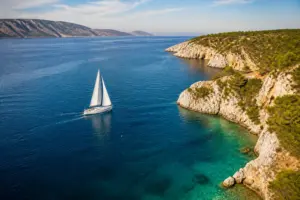
Here’s what actually sets it apart: the water. This stretch of the Adriatic is renowned for its clarity — cool, crystalline, the kind of visibility that makes a cheap snorkel mask feel like it cost twice as much. Geographically, Kvarner sits tucked between the Istrian peninsula and the Dalmatian coast, and the surrounding islands act as a buffer, softening the open-sea swell enough that swimming stays pleasant even when the wind picks up. You’ve got mainland towns like Opatija, Lovran, and Crikvenica, plus the bigger islands — Krk, Cres, Lošinj, Rab — each with its own distinct beach character. Fair warning, though: sand is the exception here, not the rule. Most of what you’ll be walking on is pebble or rock, so pack water shoes. I’ll circle back to that point at the end of this post, and no, I won’t apologize for repeating myself.
Top Pebble Beach Picks in Kvarner
Tomasevac Beach, Lovran
A short drive south of Opatija (more on that town in our Opatija and the Kvarner Riviera guide), Tomasevac is a tidy pebble beach with an unpretentious, local vibe. Showers, toilets, a beach bar — nothing fancy, but everything covered. Show up before 10am during July and August unless you enjoy negotiating towel territory with strangers. Parking near Lovran’s centre is tight, so your best bet is either the coastal promenade walk from Opatija or leaving the car near the old town and strolling down from there.
Sablićevo Beach, Rijeka
Passing through Rijeka? Sablićevo is a dependable, unfussy pebble beach right in the city, with changing rooms, a café, and — importantly — water you’d actually want to swim in, unlike some city beaches that are only technically beaches. It works especially well as a late-afternoon dip once the crowds have cleared out. Bring water shoes; the pebbles are smooth but there are a lot of them underfoot.
Tucked-Away Coves Worth Finding on the Kvarner Islands
Stara Baška, Krk Island
Getting to Stara Baška means surviving a twisting, nerve-testing road in the southwest corner of Krk, but the payoff is a long pebble bay that genuinely feels off the beaten path. It’s a tiny village, the beach stays calm even at the height of summer, and the water sits in that particular turquoise that’ll interrupt whatever you were about to say. Amenities are sparse — a handful of konobas and not much else — so bring your own water and snacks, and don’t forget a decent snorkel, since the marine life here is worth seeing up close.
Lubenice Beach, Cres Island
This beach has earned every bit of its reputation. Reaching Lubenice requires either a steep 20-minute descent down a clifftop trail from the medieval hilltop village above, or arriving by boat — and it’s worth every bit of the effort. The water runs deep blue and vivid, there’s essentially nothing in the way of facilities, and somehow it still manages to feel like a discovery even though you’ll share it with plenty of others who found the same trail. Time your visit for early morning or late afternoon for softer light and fewer people. The climb back up is no joke, so wear real shoes for the descent and save the flip-flops for once you’ve reached the sand.
Sveti Ivan Beach, Lošinj Island
For a calmer alternative to the packed beaches around Mali Lošinj, Sveti Ivan offers a sheltered rocky cove shaded by pines with clean, clear water. It’s about a 15-minute walk from town — far enough to shed the crowds, close enough not to feel like an expedition. Ideal for a slow, unhurried swim that stretches into the afternoon.
Kid-Friendly Beaches Worth Knowing in Kvarner
Šilo Beach, Krk Island
Up in the north of Krk, Šilo might be the most reliably family-friendly beach in the whole region. The water deepens gradually, the beach itself is kept in good shape, and there’s a run of cafés and restaurants right along the waterfront. Parking here is far more forgiving than at the busier beaches down south. Go in the morning, ideally before the Rijeka day-trippers show up.
Crikvenica Town Beach, Mainland
Crikvenica belongs to that category of mainland coastal towns families keep coming back to, and its town beach is largely why. Shallow, calm water, pedalo rentals, ice cream stands everywhere — it checks every box for a family beach day. It fills up fast, though, so either get there early or wait until after 5pm, when the heat lets up and the light turns gold.
Naturist Beaches Across the Kvarner Islands
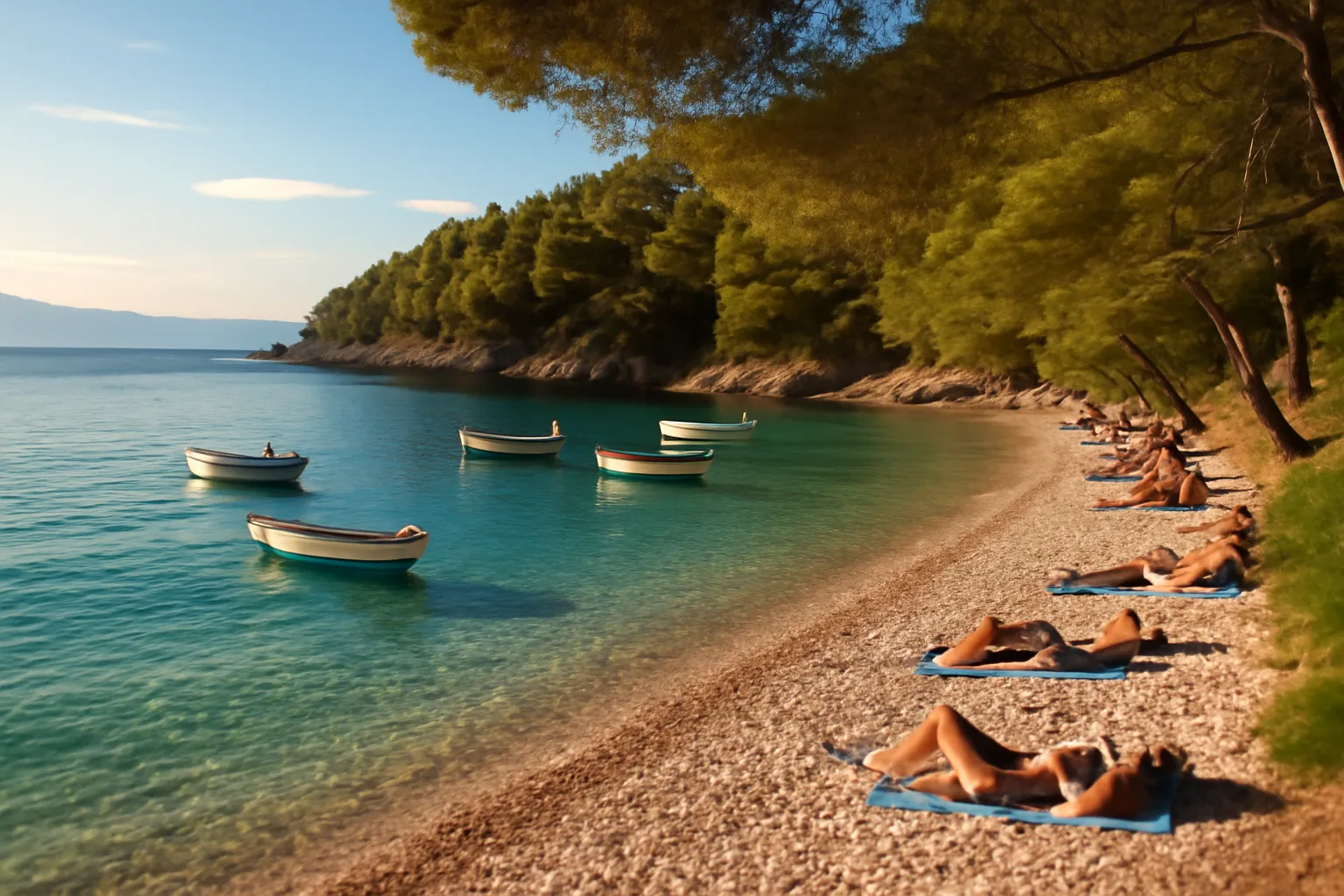
Croatia’s naturist tradition runs deep and unapologetic, and the Kvarner islands sit right in the middle of it. Here are a couple worth knowing:
- Kandarola, Rab Island — arguably Croatia’s best-known naturist beach, officially FKK-designated. It’s long, pebbly, pine-shaded, and properly equipped with showers and other facilities. Signs from the town of Rab will guide you there; expect roughly a 10-minute walk from parking.
- Stolac, Krk Island — a lower-key naturist spot near Punat. The entry is rocky, so water shoes aren’t optional, but the seclusion more than makes up for it.
Where to Cliff Jump (and Feel the Adrenaline)
I won’t push you toward jumping off anything. What I will say is that the rocky shoreline around Punta Križa on Cres, along with a scattering of unofficial spots on the northeast coast of Lošinj, draws local teens and thrill-seeking visitors precisely because of the jumping potential. Check the depth before you leap, never do it solo, and remember these are unofficial spots — no lifeguards, no safety gear nearby. Still, watch someone launch off a limestone edge into that electric-blue water once, and it’s hard not to at least think about doing it yourself.
Why I Won’t Cross Kvarner’s Rocky Shorelines Barefoot Again
Sand is the exception, not the rule, across Kvarner’s best beaches — most are pebble or rock, meaning the stretch between your towel and that unreal blue water turns into either a stiff-legged hobble or a barefoot gamble on sharp stone. Day two of my trip taught me this lesson the uncomfortable way.
What works
- They dry out fast enough that you’re not stuck with damp socks at your next stop — a real plus if you’re hopping between beaches on different islands each day.
- The grip actually holds on slick rocks and pebbles, so you can walk with some confidence instead of tiptoeing while everyone around you strides past like it’s nothing.
- They fold down smaller than you’d expect, barely taking up luggage room — which means you’ll actually pack them instead of leaving them behind “just this once.”
What doesn’t
- They look every bit as practical and un-glamorous as they are, so if you’re going for effortlessly chic beach style, you’ll feel a little out of place.
- A sharp enough edge can still poke through the sole — they’re protective, not indestructible, so you still need to watch your footing.
I almost ditched them after the first beach because I thought they’d feel restrictive, but by Cres I was genuinely grateful I’d brought them. If you’re planning to actually swim at multiple Kvarner beaches instead of just photographing them, grab these quick-dry aqua socks.
Frequently Asked Questions
Is the water really cleaner in Kvarner Gulf than Dubrovnik or Split?
Yes. This stretch of the Adriatic is renowned for its clarity — cool, crystalline water with visibility that makes even a cheap snorkel mask feel like it cost twice as much. The surrounding islands act as a buffer, softening open-sea swell and keeping swimming pleasant even when wind picks up.
What should I wear on Kvarner Gulf beaches instead of flip-flops?
Pack water shoes. Sand is the exception here, not the rule — most beaches are pebble or rock. Water shoes dry fast, grip wet rocks without slipping, and fold down small enough to actually fit in your luggage instead of getting left behind.
Which Kvarner beach is best for families with young children?
Šilo Beach on Krk Island is the most reliably family-friendly beach in the region. The water deepens gradually, the beach is well-maintained, and cafés and restaurants line the waterfront. Go before Rijeka day-trippers arrive for the best experience.
How do I reach Lubenice Beach on Cres Island?
Reach Lubenice either by a steep 20-minute descent down a clifftop trail from the medieval hilltop village above, or by arriving by boat. Wear real shoes for the descent; the climb back up is challenging enough to save flip-flops for after you’ve reached the shore.
About This Article

Written by Elena Vasquez. Elena Vasquez is a full-time traveler and the founder of Witty Passport. Over fifteen years and more than 50 countries across six continents — including a stretch spent leading groups professionally through Southeast Asia and the remote highlands of South America — she's written the kind of destination guides she always wished existed: practical, specific, and built on real experience rather than recycled itineraries. More about this site.
Scope and limits. Elena is a full-time traveler, not a licensed travel agent or immigration adviser. Entry requirements, visa rules, and advisories change without notice — always confirm against the official government source for your destination and passport before booking.
Verify this against a primary source
Specifics change, and your situation may differ from the one described here. These are the authorities worth checking directly:
- U.S. Department of State — entry requirements and travel advisories
- CDC Travelers' Health — vaccination and health notices by destination
- TSA — current carry-on and screening rules