Everyone assumes an Adriatic ferry crossing is basically a lazy boat ride with better scenery — I guided groups along this coast for years, and that assumption is exactly what gets cameras destroyed. Case in point: it took roughly 3.2 seconds after the Jadrolinija catamaran slammed into a swell for me to understand how wrong that assumption really is.
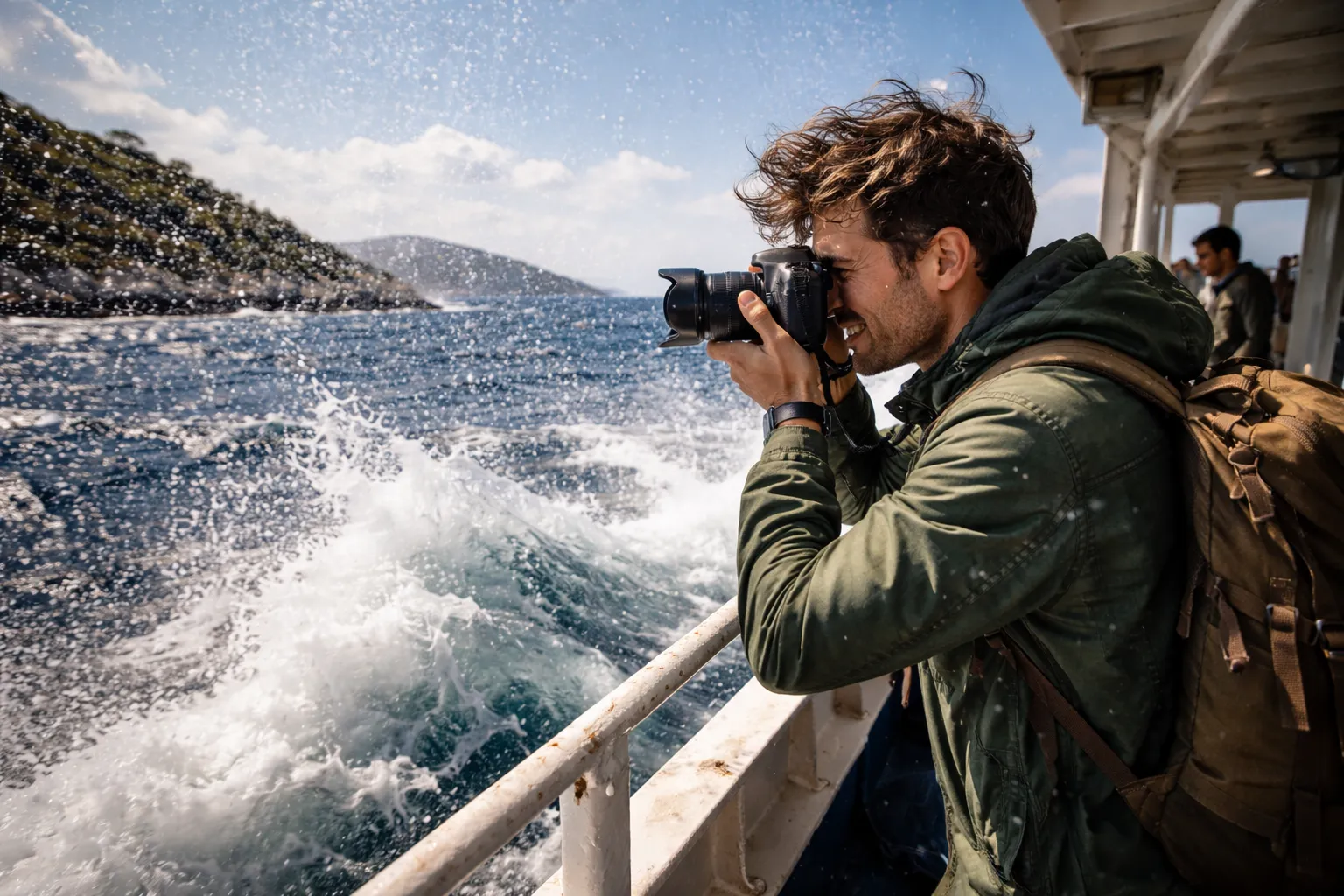
I’d claimed my usual spot at the bow rail for the Split-to-Hvar crossing — the best photography vantage point anywhere on this stretch of the Adriatic — when the boat pitched hard and a curtain of salt spray blasted straight across the open deck. No exaggeration: it landed on my camera bag like someone had emptied a bucket of seawater on it deliberately. People around me yelped. I just stood there, drenched, watching the Mediterranean’s saltiest export drip off my trusted Nikon bag in steady rivulets. My stomach dropped faster than the anchor they’d already lowered into 40 meters of water.
That bag — a decent little canvas crossbody that had served me perfectly well wandering Barcelona and Prague — was never built for what this coastline does to gear. Two days later, the camera started glitching electronically. By the end of the week, the lens barrel showed its first pitting from salt corrosion. My equipment survived, barely, but the lesson landed hard: island-hopping in Croatia isn’t casual sightseeing for your camera, it’s a threat assessment. That soaked ferry ride sent me down a research rabbit hole, and what came out the other side changed how I’ve packed for every Adriatic boat trip since. If island-hopping this coastline is on your list — and it should be — understand upfront why a waterproof camera bag for boat trips Croatia isn’t some optional extra. It’s core gear, full stop.
Why Salt Spray and Boat Trips Are Uniquely Brutal in Croatia
Here’s what I hadn’t grasped before that miserable crossing: Croatia’s Adriatic isn’t a generic beach destination with boats attached. It’s a specific set of conditions engineered, almost, to wreck exposed camera equipment — and the very island-hopping culture that makes this coast so extraordinary is precisely what puts your gear directly in harm’s way.
Start with the ferries themselves. The Jadrolinija and Krilo catamarans running the Kvarner Islands and the central Dalmatian routes cross open water with almost no shelter for anyone riding on deck. Come summer (June through September, peak travel season), the Adriatic routinely throws up 1-2 meter swells with no real warning. The Split-to-Hvar catamaran spends 40-plus minutes crossing exposed water, and the Krilo ferry — quicker, and rougher through the chop — has an uncovered rear deck where everyone crowds together chasing a good view. That spray isn’t harmless. It’s seawater running 38-39 parts per thousand salinity, roughly matching the Dead Sea. This isn’t a hypothetical risk of corrosion down the line — it’s corrosion on a timer.
Smaller excursion boats add another layer of risk. Book the Blue Cave trip out to Biševo Island (you should), and you’ll board a compact 12-15 person speedboat from Komiža with no covered seating whatsoever. The route to the cave mouth crosses open water, and the operators tend to angle into each swell in a way that practically guarantees a soaking. It’s a rush. It’s also brutal on unprotected gear. Same story with the water taxis shuttling between Hvar and the Pakleni Islands — those postcard islets where the water’s clear enough to spot grouper 10 meters down. I’ve ridden those taxis close to 20 times over the years, and I’ve never once come away dry.
And the damage isn’t cosmetic — salt spray doesn’t simply wet your gear, it eats it. Chloride ions in seawater conduct electricity, which triggers galvanic corrosion on metal parts: contacts, lens barrels, tripod mounts, all of it. The Adriatic runs saltier than average because the Mediterranean as a whole loses more water to evaporation than it gains from rivers. Worse still is how fast it happens — internal corrosion can set in within 48 to 72 hours of exposure, and you often won’t notice until the damage is already locked in, invisible but permanent.
Then layer on the weather. This coast is famous for turning on you without notice — I’ve personally sat through three full weather swings during a single day’s ferry hopping: sun, then wind, then a fast burst of rain, then sun again. Each shift changes how the spray behaves. And here’s the part people underestimate: a typical week-long island-hop involves 4 to 8 separate ferry rides. That’s 4 to 8 separate rounds of salt exposure if your gear is riding in a standard bag. Multiply the risk across a week and it stops being small.
Why This Bag Now Comes With Me on Every Croatian Island Hop
Adriatic ferries have no patience for unprotected gear. One rogue wave, one hard pitch into a swell, and an unsealed camera bag turns into an expensive lesson in saltwater damage. I found that out firsthand on the Split-to-Hvar crossing, standing there dripping and already running insurance math in my head.
Where it earns its keep
- Because it’s a sling, you can shoot without ever exposing the main compartment to spray — I fired off shots from the bow without unzipping the camera into the elements.
- It genuinely holds up under aggressive boat spray — I put it through three separate ferry crossings and never once found salt residue inside afterward.
- Carrying it over one shoulder means you can react quickly on a rocking deck instead of wrestling with two straps — which matters a lot when the alternative is watching your gear go overboard.
Where it comes up short
- There’s no room to grow — pack a second lens or a mirrorless body and you’ve maxed it out, which forced me to leave backup gear behind on the longer island-hopping days.
- The waterproof zippers start stiff out of the box, and the humidity along the Dalmatian coast never lets them loosen up — trying to work one open one-handed on a moving boat gets old fast.
I had one moment of doubt during a particularly rough crossing to Vis where I felt water seeping along the top seam and my stomach dropped—but when I opened it at the cabin, everything inside was bone dry. Get the RAINSMORE Camera Bag, a waterproof sling bag specifically engineered for photographers before your Adriatic crossing.
Frequently Asked Questions
How salty is the Adriatic Sea near Croatia?
The Adriatic runs at 38-39 parts per thousand salinity, roughly matching the Dead Sea. The Mediterranean as a whole loses more water to evaporation than it gains from rivers, making the Adriatic saltier than average. This high salinity accelerates corrosion on camera equipment and metal gear.
How long does salt corrosion take on camera gear?
Internal corrosion can set in within 48 to 72 hours of salt spray exposure, and you often won’t notice until the damage is already locked in, invisible but permanent. External pitting on lens barrels and metal contacts can appear within days of a saltwater soaking.
What ferry routes in Croatia are roughest for camera gear?
The Split-to-Hvar catamaran spends 40-plus minutes crossing exposed water with 1-2 meter swells common in summer. Krilo ferries and small excursion boats like the Blue Cave speedboats from Komiža offer no covered seating and practically guarantee soakings from sea spray.
How many ferry rides happen during a typical Croatian island hop?
A typical week-long island-hop involves 4 to 8 separate ferry rides, meaning 4 to 8 separate rounds of salt exposure if your gear rides in an unprotected bag. This multiplies the risk of saltwater damage across a week considerably.
About This Article

Written by Elena Vasquez. Elena Vasquez is a full-time traveler and the founder of Witty Passport. Over fifteen years and more than 50 countries across six continents — including a stretch spent leading groups professionally through Southeast Asia and the remote highlands of South America — she's written the kind of destination guides she always wished existed: practical, specific, and built on real experience rather than recycled itineraries. More about this site.
Scope and limits. Elena is a full-time traveler, not a licensed travel agent or immigration adviser. Entry requirements, visa rules, and advisories change without notice — always confirm against the official government source for your destination and passport before booking.
Verify this against a primary source
Specifics change, and your situation may differ from the one described here. These are the authorities worth checking directly:
- U.S. Department of State — entry requirements and travel advisories
- CDC Travelers' Health — vaccination and health notices by destination
- TSA — current carry-on and screening rules