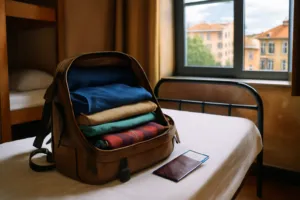
Most guesthouse booking sites in Hanoi will tell you the overnight bus leaves at the time printed on your ticket, give or take a few minutes. Mine said 5:45 a.m. By 6, I wasn’t on that bus — I was standing on a cracked sidewalk outside my guesthouse with everything I owned scattered across the pavement. The schedule wasn’t actually the problem. My old mesh packing cubes had been quietly falling apart somewhere between a Laos night bus and a Vietnamese overnight train, and the main zipper picked that exact morning to give out completely. Clothes, adapter cables, a spare stick of deodorant — all of it now an unsorted heap on a street that smelled aggressively of pho at an hour I was in no state to appreciate. Not a highlight reel moment across 50-plus countries, but it’s the incident that finally made me take packing gear seriously instead of treating it as an afterthought. I’d already been quietly searching for a decent Peak Design packing cubes travel review for weeks before that trip. I just hadn’t gotten around to acting on it.
For years before that, I got by on whatever packing cubes were cheapest and closest — some off Amazon, a set grabbed on a whim at a TJ Maxx in Denver, even one heavily marketed but ultimately flimsy set from a travel brand I’ll leave unnamed. They all shared the same fatal pattern: totally fine, right up until they weren’t. And when they gave out, it was never quiet — always mid-trip, always at the worst possible hour. Hanoi was the tipping point. I told myself afterward that I’d finally spend real money on gear built to keep pace with how I actually travel.
| Packing Cube Type | Durability | Cost | Visibility |
|---|---|---|---|
| Old mesh cubes | Zipper failed mid-trip | Cheapest option | Easy to see contents |
| Peak Design M (Charcoal) | Survived 6 trips, zippers held | North of $30 per cube | Must unzip to find items |
| White mesh cubes | Deteriorated in use | Less expensive | Transparent for quick access |
The Cube That Survived Six Night Buses (And a Hanoi Sidewalk)
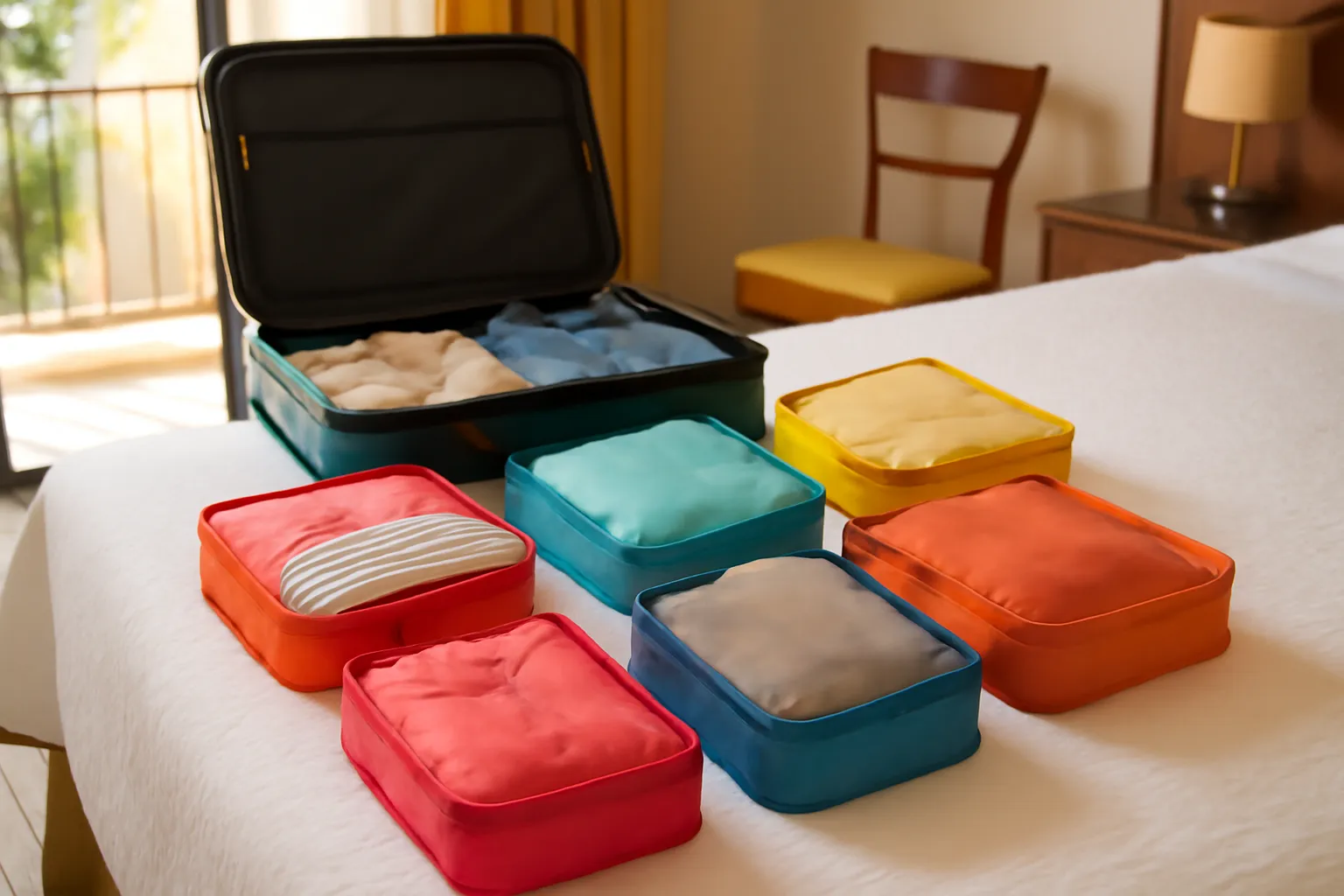
Once that pho-scented mess in Hanoi was behind me, it was obvious my packing system needed to survive the actual chaos of moving through Southeast Asia — overnight buses, sticky hostel lockers, packing and unpacking on repeat, and the odd zipper that decides to die at the worst moment. Peak Design’s M-size cube has been my safeguard against all of it ever since.
Where these earn their keep
- The zipper genuinely tolerates the rough, half-awake handling that comes with jamming a bag shut at 5 a.m. before a bus leaves — I’ve hauled on this thing over and over across six separate trips and it hasn’t once let me down.
- On night buses and overnight trains, it compresses down flat enough to slide under a seat or squeeze into an overhead bin without ballooning out like an overpacked carry-on, which saves you the hassle at checkpoints.
- That charcoal fabric masks sweat and grime far better than the white mesh cubes I used to carry — a small thing that matters a lot when you’re living out of a pack in 35°C humidity for two weeks straight.
Where it falls short
- At north of $30 a cube, this isn’t a cheap habit — I tried to cut corners early on by using a single large cube instead of a full set, which completely undid the point of organizing in the first place.
- The material is heavier and more opaque than mesh, meaning you can’t just peek into your bag and pick out the cube with your underwear without unzipping something first.
I did have a moment on a sweaty Mekong Delta boat where I worried the fabric might trap moisture and cause mildew, but six trips later with no rot or smell, that fear proved unfounded. If you’re serious about not repeating my Hanoi sidewalk moment, grab the Peak Design Packing Cube, Ocean, Weatherproof Luggage Cube with Dual Compartment Organization, Expansion and Compression, Zipper Opening, Travel Organizer for Men and Women, Size S.
Frequently Asked Questions
What happened to Elena’s packing cubes in Hanoi?
Elena’s old mesh packing cubes fell apart between a Laos night bus and a Vietnamese overnight train, with the main zipper failing completely on the morning of her 5:45 a.m. bus departure, leaving her clothes and belongings scattered on the pavement.
How many trips did Peak Design cubes survive?
The Peak Design Packing Cube in Charcoal, Size M survived six separate trips, including repeated use on night buses and overnight trains without the zipper failing once, even with aggressive packing and handling.
Why does Elena prefer charcoal packing cubes over white mesh?
The charcoal fabric masks sweat and grime far better than white mesh cubes, which matters significantly when living out of a pack in 35°C humidity for two weeks straight during travel through Southeast Asia.
What’s the main disadvantage of Peak Design packing cubes?
At north of $30 a cube, they’re expensive compared to cheaper alternatives, and the heavier, more opaque material means you cannot simply peek into your bag to find a specific cube without unzipping it first.
About This Article

Written by Elena Vasquez. Elena Vasquez is a full-time traveler and the founder of Witty Passport. Over fifteen years and more than 50 countries across six continents — including a stretch spent leading groups professionally through Southeast Asia and the remote highlands of South America — she's written the kind of destination guides she always wished existed: practical, specific, and built on real experience rather than recycled itineraries. More about this site.
Scope and limits. Elena is a full-time traveler, not a licensed travel agent or immigration adviser. Entry requirements, visa rules, and advisories change without notice — always confirm against the official government source for your destination and passport before booking.
Verify this against a primary source
Specifics change, and your situation may differ from the one described here. These are the authorities worth checking directly:
- U.S. Department of State — entry requirements and travel advisories
- CDC Travelers' Health — vaccination and health notices by destination
- TSA — current carry-on and screening rules