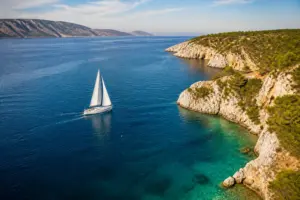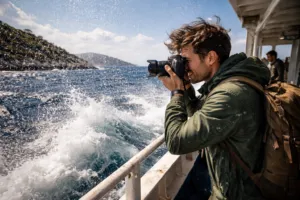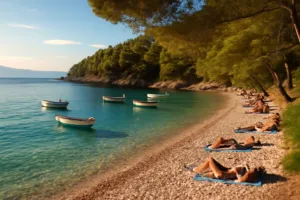
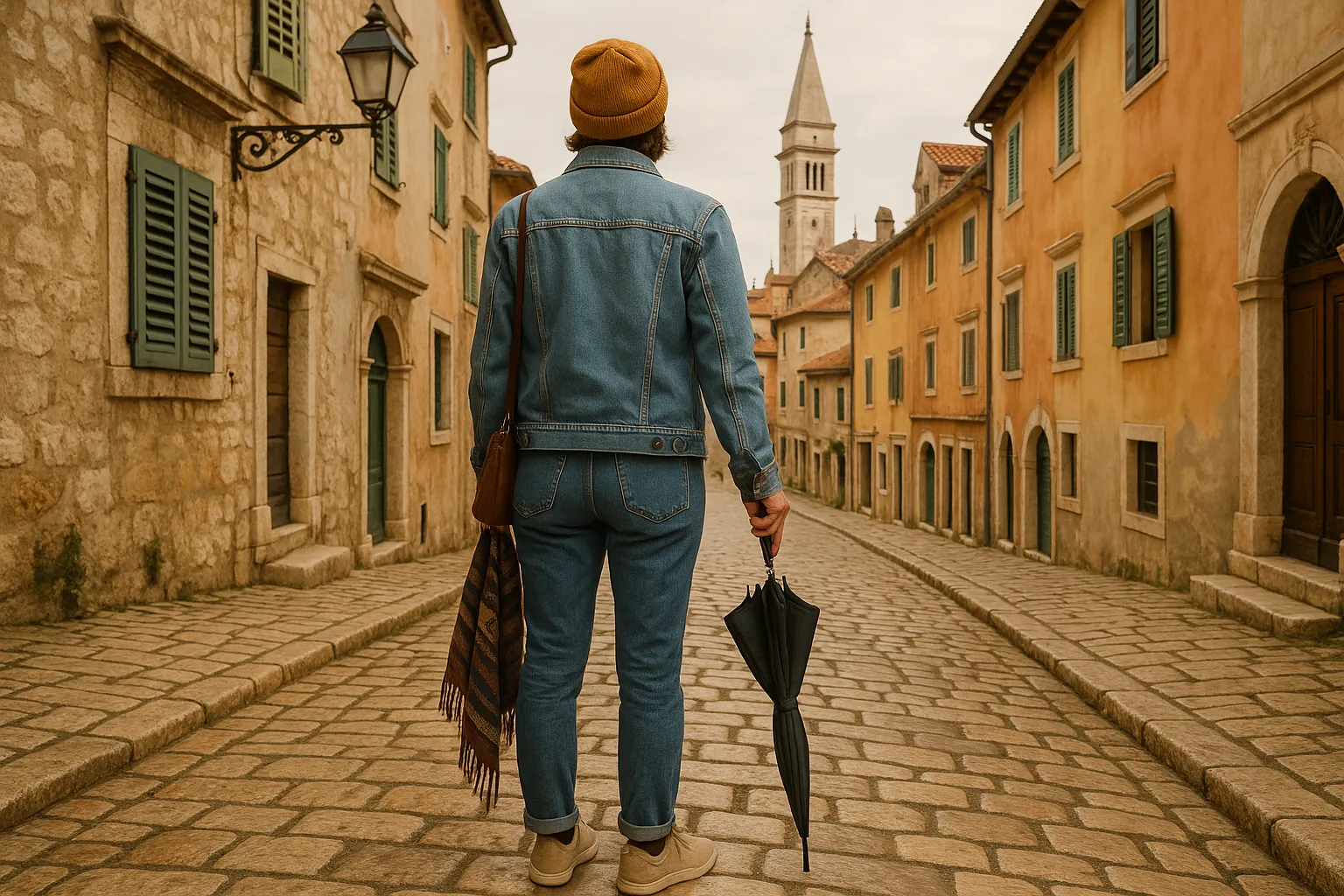
One group I guided through Dubrovnik in early June showed up dressed for a Caribbean resort — flip-flops, sundresses, not a layer between them — and by the third night on the Stradun they were shivering in jackets borrowed from the hotel lobby, half-convinced I’d exaggerated how warm the Adriatic gets. That’s the trap this country sets: the coast can swing from scorching to chilly within a single day, and what gets you through a summer sail around Hvar has almost nothing in common with what you’d need for a winter week in Zagreb. So I built this guide season by season, so you spend less time repacking your suitcase in a hotel bathroom and more time actually out there — living it, not stressing over it.
The Water Shoes I Should Have Packed for Dubrovnik’s Secret Coves
Croatia’s shoreline photographs beautifully and behaves badly — the same limestone that looks so inviting from a boat deck will tear up bare feet in seconds. I found this out while scrambling toward a hidden swimming spot, and two hours later I was hobbling back with heels that wouldn’t stop bleeding.
Where they held up
- Traction held firm even on slick, algae-slicked stone — I proved that scrambling down into a sea cave without a single slip.
- Weight is basically a non-issue; they fold into a daypack and you’d never notice them there, so packing them as a backup costs you nothing.
- Drying time surprised me — after wading in and climbing back onto rock, twenty minutes of walking had them nearly dry.
Where they fell short
- Aesthetically, they’re a letdown in photos — worth knowing if you’d rather look good on camera than protect your feet.
- Sizing skews small — I normally wear a 9 and ended up ordering a 10.5, so read the reviews before you buy.
By day three I nearly left them behind because my carry-on was bursting, and that would’ve been a mistake. Grab a pair of water shoes for rocky shores before you fly out.
Summer Packing for Croatia (June Through September)
Summer is when Croatia gets crowded, and it earns that crowd — the Adriatic gleams, the islands hum with activity, and the weather stays consistently hot and dry. Still, “hot and dry” isn’t an excuse to toss in shorts and a tee and consider yourself done.
Daytime highs typically land in the 80s and can push into the low 90s Fahrenheit. Coastal humidity ranges from moderate to heavy, particularly through July and August. And the sun doesn’t play around — UV levels run noticeably higher here than in most of North America; I went through an entire bottle of SPF 50 in two weeks flat.
Stick to breathable fabrics — linen shirts, cotton shorts, sundresses all earn their spot in the bag. Toss in a light cardigan or sarong too, useful for chillier evenings and for covering bare shoulders at churches and monasteries (dress codes get enforced, and getting turned away from a UNESCO site over a tank top is not how you want to spend an afternoon). A wide-brimmed hat and sunglasses aren’t optional extras — treat them as essentials. And even in the height of summer, throw in a packable rain jacket. I figured July guaranteed dry skies and instead got caught in a short, violent thunderstorm on Hvar that drenched everything I was carrying.
Footwear-wise, pack sandals sturdy enough for wandering old towns, alongside the water shoes for anything coastal. Cobblestones in most Croatian towns are uneven and worn smooth, so steer clear of soles with no grip.
Spring and Fall Packing (April to May, September to October)
The shoulder months here are honestly a treat — lighter crowds, comfortable temperatures in the 60s to low 70s, and scenery that’s either bursting with spring blooms or shifting into autumn gold. What you trade for that is unpredictability.
Temperatures swing hard between a cool morning and a warm afternoon, so layering matters. A thin sweater, denim jacket, or button-up shirt layers well over a t-shirt and ties around your waist once the sun strengthens. Long pants or jeans earn their place too, keeping you warm and shielded from sun on long days out. Don’t skip a light rain jacket or windbreaker — spring showers roll through often, and the coastal wind can turn sharp with little warning.
The sea stays swimmable, just noticeably colder, so if a swim is on the agenda, pack a quick-dry athletic shirt for added warmth and sun coverage. The water shoes are still non-negotiable — rocky shorelines don’t get any friendlier depending on the calendar.
Winter Packing for Croatia (November Through March)
Plenty of travelers cross Croatia off their list entirely once winter hits, and that’s their mistake to make. Crowds disappear, prices on rooms fall, and you get to see the country the way people who actually live there do. Your packing list, though, needs a full overhaul.
Coastal temperatures generally sit in the 40s to low 50s Fahrenheit, with Zagreb and other inland spots running colder still. Rain shows up often and can come down hard. Pack a real winter coat or a heavy fleece, long pants, closed-toe shoes with real grip (wet cobblestones turn treacherous fast), and an umbrella. Layering still matters most — a thermal base layer under your normal clothes keeps the warmth in without the bulk.
A number of smaller islands and coastal towns run limited ferry service in winter, or shut down crossings entirely when the seas get rough, so verify conditions before you lock in bookings. Gray days also make indoor options — museums, wine tastings — more appealing, so bring along some smart-casual pieces for those cultural detours too.
Year-Round Packing Essentials for Croatia
No matter what time of year you’re going, a few things belong in every bag: a universal adapter for European Type C outlets, a reusable water bottle (the tap water here is genuinely good), prescription medications kept in their original containers, and some modest clothing beyond swimwear. Plenty of restaurants and every religious site expect you to dress the part.
Pack lighter than your instincts tell you to. Laundry services exist in Croatian towns, and you’ll be glad for the spare room once souvenirs start piling up. My first trip here I overpacked badly, and I regretted it every single time I dragged my suitcase up another flight of medieval stone stairs.
Pack water shoes for rocky shores—they provide traction on slick, algae-slicked stone and dry in about twenty minutes of walking. They fold into a daypack with minimal weight. Note that sizing runs small, so read reviews before ordering. A quick-dry athletic shirt adds warmth and sun coverage if you’re swimming in cooler months. Summer daytime highs typically land in the 80s and can push into the low 90s Fahrenheit, with coastal humidity ranging from moderate to heavy, particularly through July and August. Despite the heat, pack a light cardigan or sarong for chillier evenings and a packable rain jacket for unexpected thunderstorms. Dress codes get enforced at religious sites, so pack modest clothing beyond swimwear and bring a light cardigan or sarong to cover bare shoulders. Getting turned away from a UNESCO site over a tank top is not how you want to spend an afternoon. Pack a real winter coat or heavy fleece, long pants, closed-toe shoes with real grip for wet cobblestones, and an umbrella. Coastal temperatures generally sit in the 40s to low 50s Fahrenheit, with inland spots like Zagreb running colder. Layering with thermal base layers keeps warmth in without bulk.Season Temperature Range Key Clothing Items Rain Gear Summer (June–September) 80s to low 90s°F Breathable fabrics, light cardigan, wide-brimmed hat Packable rain jacket Spring/Fall (April–May, Sept–Oct) 60s to low 70s°F Thin sweater, denim jacket, long pants Light rain jacket or windbreaker Winter (November–March) 40s to low 50s°F (coastal); colder inland Heavy winter coat or fleece, thermal base layers, closed-toe shoes Umbrella Frequently Asked Questions
What should I pack for swimming in Croatia’s coastal areas?
What are the temperature ranges for Croatia in summer?
How should I dress for visiting churches and monasteries in Croatia?
What do I need to pack for winter travel to Croatia?
About This Article

Written by Elena Vasquez. Elena Vasquez is a full-time traveler and the founder of Witty Passport. Over fifteen years and more than 50 countries across six continents — including a stretch spent leading groups professionally through Southeast Asia and the remote highlands of South America — she's written the kind of destination guides she always wished existed: practical, specific, and built on real experience rather than recycled itineraries. More about this site.
Scope and limits. Elena is a full-time traveler, not a licensed travel agent or immigration adviser. Entry requirements, visa rules, and advisories change without notice — always confirm against the official government source for your destination and passport before booking.
Verify this against a primary source
Specifics change, and your situation may differ from the one described here. These are the authorities worth checking directly:
- U.S. Department of State — entry requirements and travel advisories
- CDC Travelers' Health — vaccination and health notices by destination
- TSA — current carry-on and screening rules