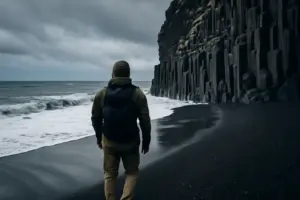
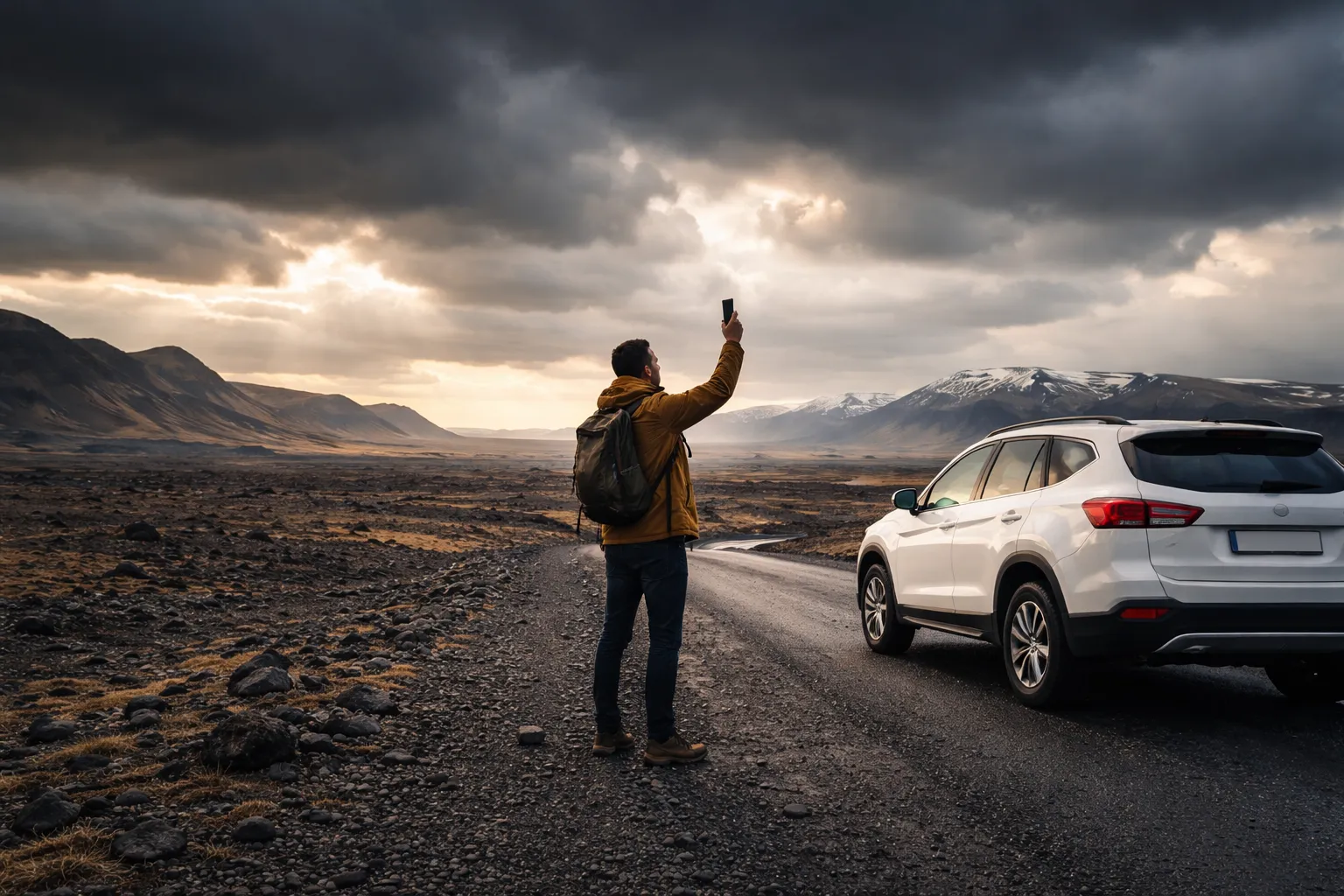
Eight percent — that’s what the battery icon on my phone read, flashing red, while the map app still counted off 47 kilometers to the next town. I’d landed on a nameless stretch of Route 1 between Egilsstaðir and Mývatn, up in Iceland’s northeast, on a piece of road that stops feeling like a road and starts feeling like the edge of a continent. Fog swallowed everything past the hood of the car. My phone hadn’t caught a signal in over an hour. The nearest gas station sat 200 kilometers off in either direction, and there wasn’t an outlet within reach.
None of this was some worst-case scenario I’d dreamed up while packing — it was happening, right then. That phone wasn’t a nice-to-have gadget; it was the one thing standing between me and real trouble. It held my offline maps, my weather warnings (Iceland can flip from sunshine to a whiteout in twenty minutes), the numbers I’d need in an emergency, and my only lead on a remote waterfall I’d already driven three hours toward — with an unbooked guesthouse still waiting somewhere ahead in the murk.
What I learned, the hard way, is that the Ring Road’s long empty stretches don’t forgive casual planning. You need a portable charger built for Iceland’s particular brand of nowhere — not just any power bank, but one that can handle 1,322 kilometers of some of Europe’s most unforgiving terrain. This is the story of how one piece of gear reshaped the way I drive through Iceland, and how you can skip the slow-motion panic of watching your battery percentage crawl toward zero.
Why Phone Battery Drain Is Uniquely Brutal on Iceland’s Ring Road
Driving the full loop of Iceland’s Ring Road isn’t really a long drive — it’s an endurance test through one of the world’s most sparsely populated regions. The numbers make the case on their own: Route 1 runs 1,322 kilometers, and the eastern leg between Höfn and Egilsstaðir throws in a punishing 190-kilometer gap between gas stations. Add every detour to a waterfall, trailhead, or scenic pullout — and you will, don’t kid yourself — and you’re piling on another 50 to 100 kilometers of unplanned exploring.
Here’s the part most travel guides skip entirely: running offline GPS burns through your battery three to four times faster than ordinary phone use. The chip never rests, the screen sits at full brightness so you can actually see it through Icelandic fog and glare, and you’re constantly flipping into airplane mode trying to hang onto whatever scrap of signal exists. I tracked this myself on my first loop — heavy navigation use drained my battery 20 to 25 percent per hour of driving, compared to just 5 to 7 percent under normal use.
Throw Iceland’s climate into that equation and things get worse. Even in peak summer, nighttime temperatures drop to 5-10°C. Cold weather cuts battery efficiency by roughly 25 to 40 percent, meaning the charge you’re carrying on a chilly Reykjavik night effectively shrinks by about 30 percent compared to a warm day. Camp out, as plenty of Ring Road travelers do, and your phone sits at ambient temperature all night — which stays bitter even in July and August. Go to sleep with 45 percent and you might wake up looking at 30.
Then there’s the infrastructure problem: a large number of Icelandic campsites have no electrical hookups at all. Huts and guesthouses will often charge you an extra €5-10 just to plug in, or expect you to charge devices during mealtimes in a shared kitchen. The Ring Road’s most jaw-dropping sections — the Eastfjords, the north coast near Mývatn, the Snaefellsnes Peninsula — are remote on purpose. That isolation is the whole draw. It’s also exactly why it becomes a problem.
Out on the Ring Road, your phone isn’t a convenience — it’s safety gear. You’re pulling up road.is for weather and avalanche warnings, catching SMS alerts the moment conditions turn, leaning on offline maps once 4G vanishes between towns, and keeping emergency numbers within reach. Let the battery die, and all of that disappears at once.
The Charger That Got Me Through Iceland’s Longest Signal-Free Stretch
Watch your iPhone’s battery blink red somewhere along a 200-kilometer gap with no charging station in sight, and a power bank stops being optional gear — it becomes the line between navigating safely and becoming somebody’s cautionary story. Iceland’s most remote stretches ask for more than a full tank of fuel; they ask for a backup plan for your navigation, your SOS texting, and your own nerves.
Where it delivers
- That 20,000mAh capacity isn’t just a number on the box — I pulled two full phone charges out of it on that northeast route alone, enough to run GPS, take photos, and still have battery in reserve for an emergency call.
- Fast charging let me top my phone back up during the fifteen minutes I spent grabbing a sandwich, instead of hunting for a café with a free outlet and the right Icelandic adapter.
- It’s small enough to shove in a jacket pocket, which mattered when I was switching between driving, scrambling up crater rims, and poking through dark lava caves after realizing I’d left my headlamp behind.
Where it falls short
- On a multi-day backpacking trip it starts to feel like dead weight — fine tossed in a car, a lot less fine if you’re the one hauling it up a glacier.
- You have to remember to charge the thing itself the night before, which I nearly forgot when I rolled out of bed at 5 a.m. chasing the first light over Skaftafell.
I almost turned back that morning when I realized the power bank wasn’t fully charged—a stupid risk that would’ve meant ditching my GPS again. I didn’t. JUOVI Power Bank 45W 20000mAh Portable Charger
Frequently Asked Questions
How far between gas stations on Iceland’s Ring Road?
The eastern leg between Höfn and Egilsstaðir has a punishing 190-kilometer gap between gas stations. On other stretches, the nearest gas station can sit 200 kilometers off in either direction, making fuel and charging planning essential before heading out.
How fast does GPS drain phone battery in Iceland?
Running offline GPS burns through your battery three to four times faster than ordinary phone use. Heavy navigation use can drain battery 20 to 25 percent per hour of driving, compared to just 5 to 7 percent under normal use.
How much does it cost to charge at Icelandic guesthouses?
Huts and guesthouses will often charge you an extra €5-10 just to plug in your devices, or expect you to charge them during mealtimes in a shared kitchen rather than in your room.
How long is Iceland’s Ring Road?
Route 1, Iceland’s Ring Road, runs 1,322 kilometers. That distance doesn’t include detours to waterfalls, trailheads, or scenic pullouts, which typically add another 50 to 100 kilometers of unplanned exploring.
About This Article

Written by Elena Vasquez. Elena Vasquez is a full-time traveler and the founder of Witty Passport. Over fifteen years and more than 50 countries across six continents — including a stretch spent leading groups professionally through Southeast Asia and the remote highlands of South America — she's written the kind of destination guides she always wished existed: practical, specific, and built on real experience rather than recycled itineraries. More about this site.
Scope and limits. Elena is a full-time traveler, not a licensed travel agent or immigration adviser. Entry requirements, visa rules, and advisories change without notice — always confirm against the official government source for your destination and passport before booking.
Verify this against a primary source
Specifics change, and your situation may differ from the one described here. These are the authorities worth checking directly:
- U.S. Department of State — entry requirements and travel advisories
- CDC Travelers' Health — vaccination and health notices by destination
- TSA — current carry-on and screening rules