

Woodsmoke and strong coffee, a hen making her opinions loudly known across a gravel yard, steam rising off a mug someone pressed into my hands before I’d even asked for it — that’s the 7 AM I remember from a farmhouse kitchen somewhere between Vík and Höfn, and it’s the exact moment I realized what my first Iceland trip had been missing. That first time around, I’d worked the Ring Road as a series of day trips from a Reykjavik hotel: three hours out before I reached a single waterfall, three hours back each night, then falling asleep in a room so generic it could’ve been bolted onto any airport in Europe. This time, spooning up langoustine bisque and swapping notes about a Route 1 closure with the woman who ran the place, I actually felt planted somewhere. Working out where to stay in Iceland outside Reykjavik ended up being the single smartest call of that second trip, and everything below is the guide I wish someone had handed me before the first one.
Why Staying Outside Reykjavik Actually Changes Your Entire Trip
No glossy Iceland brochure will run this number for you: base yourself in Reykjavik and treat the Ring Road as a series of day trips, and you’re tacking on 60 to 90 minutes of pure driving every day just to escape the city and crawl back into it. Stretch that across a week and you’ve burned close to half a day retracing a stretch of Route 1 you’ve already memorized. Stay overnight in the small towns strung along the Ring Road instead, and you wake up practically next door to whatever’s on the day’s list — the glacier, the black-sand shoreline, the hot spring tucked down some farm track nobody’s marked. Written down, it sounds like common sense. It took me a second trip to actually absorb it.
There’s also a benefit that’s harder to put a number on. Icelandic guesthouses and farm stays run on a completely different frequency than anything you’d find in the capital. Whoever hands you your room key also drove that same road yesterday, knows the waterfall no map has bothered to label, and will phone the next guesthouse ahead if a road closure has you rolling in four hours late. That kind of on-the-ground knowledge is close to priceless in a country where weather can turn a simple drive into an ordeal with almost zero warning.
Which Ring Road Towns Actually Deserve a Night (And Why Each One Earns It)
Selfoss quietly outperforms every other overnight option in South Iceland. Sitting just an hour outside Reykjavik feels almost like a shortcut, but staying here still puts the whole Golden Circle within a short drive, minus the inflated prices you’ll find in the villages closer to the sights. Selfoss has real restaurants where locals actually eat, a full-size supermarket for stocking up, and a general atmosphere that feels like an actual town rather than a set piece built for visitors. Order a flat white at one of the cafés and you might go twenty minutes without hearing another foreign accent.
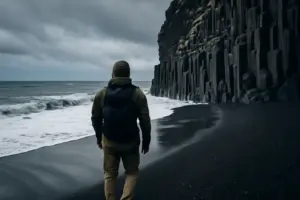
Vík might be the single most photographed village in a country that has no shortage of contenders. That small red-roofed church sitting above the town, black sand running east toward Reynisfjara, fulmars circling overhead — Vík hands you the classic Iceland postcard right from your guesthouse window before breakfast’s even hit the table. What those photos leave out is that Vík is home to roughly six hundred people, and rooms fill up months ahead during summer. Book it early. I mean it — go set a reminder now.
Höfn gets bypassed constantly by people racing toward the East Fjords, which is a shame, because this small harbor town will make you question your whole route. The langoustine here — humar, as it’s known locally — beats anything I’ve eaten elsewhere, plated up in modest restaurants with fishing boats bobbing right outside the window. As your entry point to Vatnajökull National Park, Höfn also sets you up perfectly for glacier hikes, no brutal predawn drive from the capital required.
Akureyri up north is where Iceland’s “second city” reputation is both entirely true and a little misleading in the best way. Around 20,000 people live there, the food is genuinely solid, and the town keeps its Christmas lights strung up all year — even the traffic lights swap circles for little heart shapes. The botanical garden somehow coaxes plants to thrive at a latitude where they’ve got no business growing, and the fjord wrapped around town is so striking that newcomers regularly just stand on the main street staring at it. If you’re doing a full Ring Road loop, Akureyri is your natural anchor point for the north.
What Staying at an Icelandic Farm Guesthouse Is Actually Like
“Guesthouse” is a stretchy term in Iceland, and it’s worth understanding the range before you commit to a booking. On one end you’ll get something close to a private B&B — your own room, occasionally a private bathroom, breakfast set out in a small dining area whenever you happen to wander down. On the other end, you’re sharing a bathroom in a converted outbuilding on a working farm, where the hot water runs genuinely hot and the quiet outside is so total it takes a night or two before you can actually sleep through it. Neither version is a downgrade — they’re just different animals, so read the listing closely before you book.
I think about Icelandic farm breakfasts more than a person with an ordinary life probably should. Rye bread baked underground using geothermal steam, thick skyr piled with local berries, eggs laid by hens you may have personally watched staging a small rebellion in the yard an hour earlier — none of it is fussy, but it’s genuinely delicious and it’s almost always folded into the room rate. Factor that breakfast into what you’d otherwise pay at a Reykjavik hotel, where it can tack on £15–25 a person, and Ring Road farm stays frequently end up cheaper overall than staying in the city.
The hot tubs deserve their own paragraph, honestly. A lot of these farm guesthouses have their own private outdoor tub — not a hotel pool, not something you’re sharing with strangers at a spa, just a small tub outside that’s entirely yours for the night, facing a mountain, a fjord, or, with decent timing, the northern lights. There’s no price point in Reykjavik that gets you this. Build your itinerary around it.
The Small Towns Most Visitors Zip Right Past
Seyðisfjörður in the East Fjords might be Iceland’s most photogenic small town, and it’s still puzzlingly overlooked by foreign visitors given that it’s barely bigger than a village and stunning to an almost unreasonable degree. Rows of multicolored wooden houses sit along a river beneath a steep fjord wall, there’s a real working arts scene, and the ferry from mainland Europe docks here, giving the place a slightly international, bohemian edge you don’t expect from a town this small. The drive down from Egilsstaðir winds through hairpin turns with views strong enough that I pulled over three separate times in twelve minutes.
Kirkjubæjarklaustur — and yes, locals really do say the entire name — sits along the South Coast between Vík and Höfn, ringed by so many waterfalls spilling off the surrounding hills that even people who live there can’t name them all. It’s a small place, just a few guesthouses and one standout café, but its location makes it essential as a break point on the long southern haul of the Ring Road. It’s also exactly the sort of spot where you plan on one night and end up, three days later, coming up with justifications for family back home.
Dalvík, just north of Akureyri, runs whale watching trips that are booked almost entirely by Icelanders rather than tourists. That’s exactly the point. The boats are smaller, the guides are lifelong fishermen who’ve worked these waters their whole lives, and without a forty-person Reykjavik tour group crowding the deck, you can actually hear what the guide is telling you. Based in Akureyri, Dalvík makes for an easy detour that resets your whole idea of what traveling in Iceland can feel like.
Why Packing Cubes Turned Into a Must-Have for Hopping Between Farmhouses
Cycle through five different guesthouses along the Ring Road in a single week, and unpacking-repacking turns into either a calming ritual or a full breakdown. I found out the hard way that digging through a suitcase in a pitch-dark Icelandic farmhouse bedroom at midnight — trying not to wake the host family or send hand-knitted throw pillows flying — really does demand some kind of system.
What actually helps
- You can operate straight out of the cubes without ever fully unpacking, which counts for a lot when you’re only there two nights and the closest laundromat is 40 kilometers off.
- They squeeze down enough to free up real suitcase space during constant moves, without forcing you into a wrestling match every time you try to zip one shut.
- Mesh sides mean you can spot what’s inside without unzipping anything — handy when you’re groping for your “least soaked” layer at 6 AM before heading out on a glacier hike.
What doesn’t hold up
- Packing them well takes actual brainpower, and after 10 hours behind the wheel through wind and rain, your brain has nothing left to give.
- Overstuff one and the zipper flat-out revolts — and nothing tests your patience quite like a stuck packing cube at 11 PM in a farmhouse with barely-there WiFi.
I almost ditched them after day two when I’d crammed too many thermal layers into one and the zipper jammed halfway through—standing in a Vík guesthouse with wet hair, genuinely considering just living out of my suitcase for the rest of the trip. That’s when I realized I’d actually saved myself hours of searching. Get the BAGAIL 8 Set Packing Cubes.
BAGAIL 8 Set Packing Cubes
I stopped wrestling with my luggage when I switched to these mesh cubes for my Iceland hops.
Check Price on Amazon →This post contains affiliate links. As an Amazon Associate, I earn from qualifying purchases at no extra cost to you.