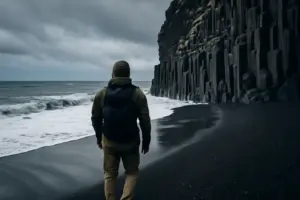

Type “best time to visit Iceland” into any search engine and the top guides will tell you, flatly, that summer wins — no asterisk, no nuance. That’s incomplete advice, and I’d know: I booked this whole trip at 11pm on a Tuesday, fresh out of a meeting where a colleague used the phrase “synergize our deliverables” three separate times in one hour, and typing “Iceland flights” into a search bar felt like the only reset button available to my fried corporate brain. What I did not stop to consider, in that slightly unhinged late-night booking spree, was when exactly to go — and that timing decision, I’ve since learned, might be the single biggest choice you make about this whole trip. I’ve since stood on the same stretch of black sand in July and again in November, and it’s felt like two entirely different countries: one drenched in a disorienting 11 PM glow with a bowl of lamb soup warming my hands, the other numbing my fingers while a friend next to me openly cried at a green-and-purple sky overhead. Same country. Completely different planet. So if you’re stuck weighing Iceland summer vs winter, let’s skip the endless pro-con spiral — the real answer was never about the calendar, it’s about what kind of traveler you are and what you’re actually going there to find.
The Quick Verdict: My Recommendation for Iceland, Summer or Winter
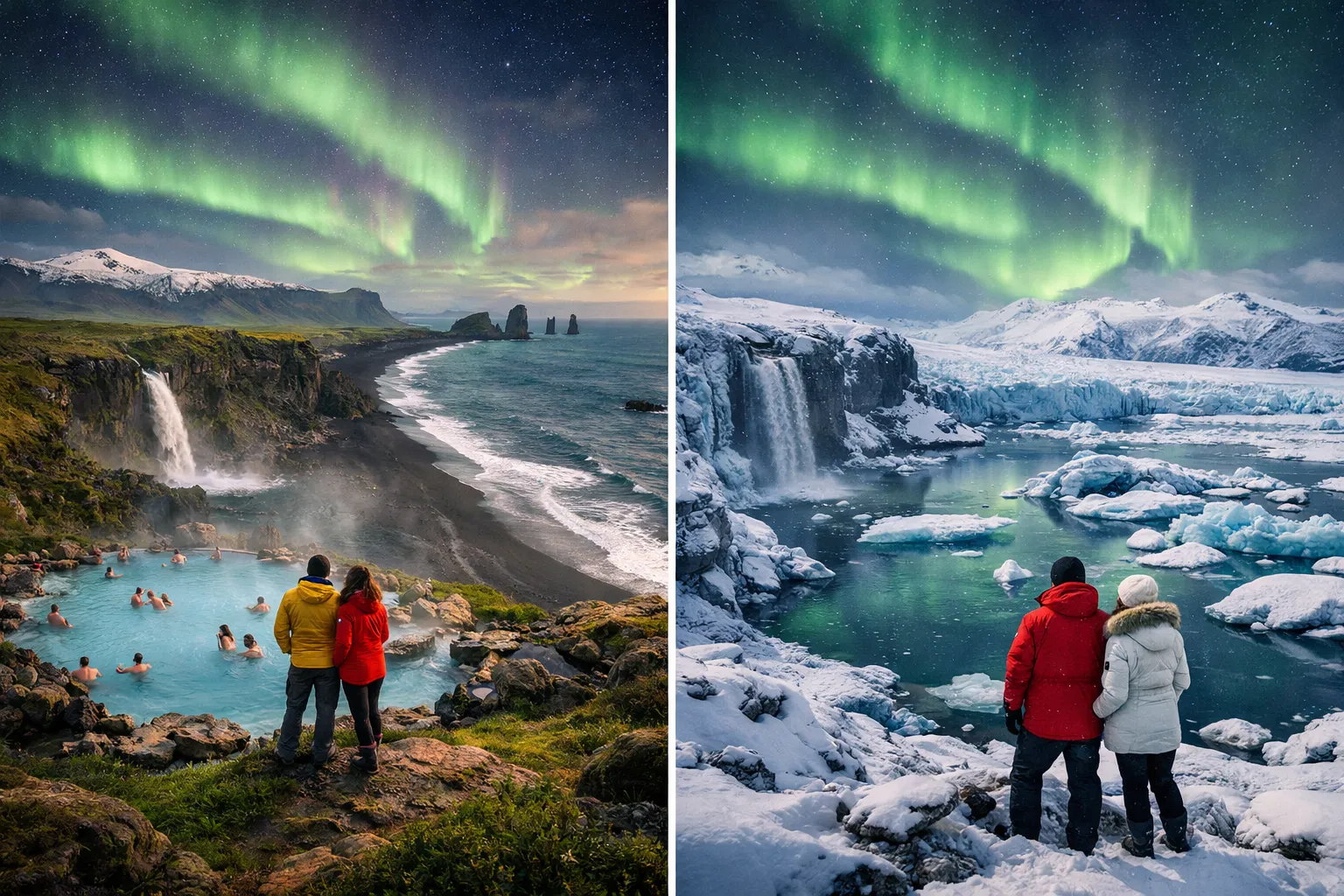
For those who want the bottom line without the backstory: choose summer if this is your first visit, hiking is on your list, you’re renting a car but don’t have much experience driving in rough weather, or you simply want long daylight hours and every road open to you. Choose winter if the Northern Lights or the ice caves are your entire reason for going, you’re after brooding, atmospheric photos with fewer people around, and your itinerary can bend when the weather doesn’t cooperate. If it comes down purely to budget in the Iceland winter vs summer debate, winter — outside the holiday stretch — is meaningfully less expensive. Everything that follows is the reasoning behind that recommendation.
Summer in Iceland: Nonstop Light, Full Trails, Organized Chaos
Everyone brings up the midnight sun, and they’re right to — it’s one of the strangest, most beautiful things I’ve ever experienced firsthand. Through late June and July, the sun essentially refuses to set. It leans toward the horizon around 11 PM, washes everything in gold, and then simply hangs there. By 1 AM, it’s already lightening back up. On my first evening in Reykjavik, I sat down at a café terrace at 9 PM fully convinced it was closer to 6. My internal clock gave up entirely, and it took a good three days to get it back. That constant daylight nudges you outdoors, keeps you walking well past when your legs would normally quit, and gives the whole country a slightly manic, buzzing energy.
The trade-off is sleep. Blackout curtains are hit-or-miss in Icelandic guesthouses, and even when they work, your body knows. Your circadian rhythm files a formal complaint around day two. A good sleep mask became one of the most genuinely important pieces of gear I packed on that trip — not a nice-to-have, but essential survival equipment. I use the Vnwoalu Starry Sky Sleep Eye Mask, and by night four I would have paid double for it.
The scenery in the warmer months surprised me — I’d braced myself for stark volcanic emptiness and instead found green, rolling hills carpeted in purple Nootka lupine, waterfalls thundering at full strength, and trails that are actually walkable. The Landmannalaugar highlands only open once the F-roads clear for summer, and hiking through those rhyolite peaks — banded in orange, pink, and yellow — ranks among the best outdoor days I’ve had anywhere on earth. The exact same paths that turn dangerous and snowbound come January are wide open, well-signed, and almost unbelievably scenic in July.
Now, about the crowds — the Golden Circle in midsummer is properly packed. Geysir puts on its show for a fresh wave of onlookers roughly every eight minutes. Gullfoss’s parking area starts to resemble something you’d see outside a stadium. Reykjavik itself is lively and fun, but you’re never experiencing it alone. The workaround I found: get out of the city by 6 AM. I had Seljalandsfoss basically to myself at 7 AM on a random Tuesday. Iceland’s advantage is its size — the country is spread out enough that dodging the crowds is almost always doable if you’re willing to leave early or stray from the main loop. The Westfjords in summer are stunning and relatively deserted by comparison. Puffin-watching around Dyrhólaey and the Vestmannaeyjar islands only runs until mid-August, and it’s a genuinely absurd sight — thousands of them waddling around like small, self-serious butlers.
Here’s what summer takes off the table: the Northern Lights (the sky simply won’t get dark enough), driving into certain glacial regions without the right high-clearance vehicle, and any real shot at solitude on the Ring Road’s headline stops. And don’t expect the brooding, cinematic Iceland you’ve seen tagged all over Instagram — the summer version is bright, saturated, and almost stubbornly upbeat.
Winter in Iceland: Long Darkness, Big Drama, Blue Ice
January handed me roughly four usable hours of daylight, and I want that number to really sink in. You wake up in the dark. Around 11 AM, a faint, low-slung light arrives that makes everything look like the jacket art of a moody novel. By 3:30 PM, darkness returns. The first two days, this felt suffocating. By day three, I was hooked. That low winter light is genuinely remarkable for photos — imagine golden hour, except it lasts the entire day. Every waterfall, lava field, and steam vent picks up a cinematic weight that summer’s cheerful glare just can’t replicate.
Now, the Northern Lights — worth being upfront about, because the Instagram version leaves out most of the story. You need at least three consecutive clear nights, a KP index of 3 or higher, real darkness, and zero light pollution. Across my January trip, I only saw two displays: a faint green shimmer on night four, and one full, sky-wide curtain of dancing green and purple on night six that literally made me gasp out loud. Nights one through three were a complete washout, clouded over. The move is to stay adaptable, check the Icelandic Met Office’s aurora forecast every day, and refuse to pin your entire trip’s emotional weight on seeing them. When they show up, it’s unforgettable. When they don’t, winter Iceland is still remarkable on its own terms.
The ice caves inside Vatnajökull glacier only exist in winter, and they’re among the most jaw-dropping things I’ve laid eyes on. That blue has no real equivalent anywhere else — deep, glassy, almost glowing. You can’t visit independently for safety reasons, so a guided tour is mandatory, and spots fill months out, so book early. The caves are only structurally safe to enter roughly between November and March. For the right kind of traveler, this experience alone justifies flying in during the cold months.
Road conditions deserve their own serious moment here. F-roads shut down completely for winter. Road.is becomes essential reading — check it every morning before you go anywhere. A 4WD rental doesn’t make you invincible in Iceland; it just means you’re properly equipped. Black ice, sudden whiteouts, and drifting snow are all real threats, and roads can close on short notice. I drove a proper 4WD carefully and came through fine — but I also turned around twice when conditions felt off. Winter driving here rewards patience and punishes overconfidence. What’s off the table in winter: hiking most mountain trails safely without crampons and real experience, seeing puffins, reaching Landmannalaugar, or catching any of summer’s lush green scenery.
Iceland Summer vs Winter: Laying It Out Plainly
Put the two seasons side by side and a pattern emerges pretty quickly. For photography, winter has the edge for aurora shots and ice caves, while summer clearly wins for full-force waterfalls, green landscapes, and hiking scenery. Summer also wins on activity range — more trails open, more wildlife to see, more daylight to work with. Winter demands far more planning, more gear, and more patience with the weather, but it hands you experiences that summer simply cannot offer.
On cost: outside of Christmas and New Year’s, winter runs noticeably cheaper. I paid about 25% less for lodging in January compared to July equivalents, flights cost less, and rental cars were easier to come by. The catch is that more of your trip happens after dark, and you have to accept that some experiences simply won’t materialize if the weather turns. Neither season is predictable — “four seasons in one day” is a running joke in Iceland precisely because it holds true whether you’re there in July or January. I got sunburned in summer and chased sunshine and rainbows in winter, sometimes within the same day.
The One Guide That Actually Prepares You for Iceland’s Seasonal Extremes
Choosing between midnight sun and polar darkness takes more than scrolling Instagram — you need to know what the Ring Road genuinely looks like season to season, what’s realistically drivable, and where the actual traps are hiding. This guide handles that groundwork before you book anything, sleep-deprived-corporate-refugee style or otherwise.
Where it delivers
- The seasonal driving-conditions sections don’t sugarcoat road closures or weather patterns — essentially handing you the reality check you skip when booking at 11pm on a Tuesday night.
- The Ring Road maps spell out exactly which stretches get dicey in winter versus summer, saving you from plotting a December road trip on roads that won’t even exist that month.
- It’s compact enough to actually fit in a glove compartment or backpack, and the info is dense enough with practical detail that you’re not digging through filler for a fast answer at a gas station in Höfn.
Where it falls short
- The accommodation picks age quickly — I ran into several listings that had shut down or changed entirely by the time I showed up, which stung a bit given the guide’s price tag.
- It expects a certain comfort level with self-driving and route-planning already in place; if snow driving or narrow mountain roads are new territory for you, this guide won’t walk you through the nerves of actually doing it.
I almost ditched it halfway through my winter trip—the accommodations section felt useless—but then I hit a unexpected snow closure and the seasonal driving intelligence in the early chapters literally redirected my entire itinerary. Grab Lonely Planet Iceland’s Ring Road before you finalize your season choice and route.
Lonely Planet Iceland’s Ring Road
I stopped planning winter Ring Road trips on roads that don’t exist in December after checking these maps.
Check Price on Amazon →This post contains affiliate links. As an Amazon Associate, I earn from qualifying purchases at no extra cost to you.