
What Cultural Dress Codes Actually Mean for Travelers
Everyone assumes “pack for the weather, use common sense” gets you through any temple gate or village square on earth — years of guiding groups through Southeast Asia and up into the Andean highlands taught me the opposite. The underdressed traveler gets stopped at the door more often than almost any other mistake I watched people make on the road. My own extended family relearned this lesson firsthand. We’d floated the idea of a big group trip for six years running — four postponements, two weddings that ate up the calendar — until we finally stopped talking about it and just bought the tickets. What none of us had done, not even in passing, was think through what to pack, and it wasn’t until we were deep into the itinerary that the wild swings in dress expectations from one stop to the next actually caught up with us. Showing up underdressed isn’t just uncomfortable — in plenty of places, it means getting turned away from a temple, a village, or even a restaurant. So this guide exists to help you skip that particular lesson, because the point of the trip is soaking in the culture, not accidentally insulting it.
The Real Reason These Rules Exist
Before we get into specific regions, it’s worth understanding why any of this matters in the first place. Dress expectations aren’t arbitrary hoops set up to annoy visitors — they’re rooted in respect, religious practice, and social norms that communities have built and maintained across generations. Dress appropriately and you’re quietly telling people you did your homework before showing up. Locals pick up on that. It shows in warmer service at restaurants, friendlier receptions in neighborhoods, and access to spaces that might otherwise stay closed to travelers who look like they wandered straight off a plane in gym clothes.
There’s a practical side to all this too. Plenty of destinations combine extreme weather, religious sites with rigid entry requirements, and formal expectations that shift dramatically from place to place. Pack without understanding any of that and you end up in one of two traps: over-stuffed luggage that defeats the entire point of traveling light, or arriving underprepared and scrambling to buy something appropriate at whatever markup the nearest tourist shop feels like charging.
A Region-by-Region Breakdown of What to Actually Wear
Southeast Asian Temples and Mosques
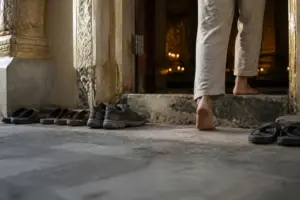
Temples in Thailand, Cambodia, and Laos hold firm on coverage: shoulders, knees, and chest all need to be hidden away, no exceptions. Sheer fabric is out for women, and tight clothing — even when it technically checks the coverage box — still reads as disrespectful. Mosques in Malaysia and Indonesia follow the same logic. Bring lightweight, loose pants or long skirts that won’t leave you melting in 95-degree humidity.
The Middle East and North Africa
Modesty rules here, though how strictly it’s enforced shifts by country and even by city. In the most conservative areas, women should keep everything covered except face, hands, and feet. Cosmopolitan cities like Beirut or Marrakech run more relaxed, but leaning modest — especially in smaller towns and around religious sites — is the safer bet everywhere. Men should skip shorts in religious spaces and in smaller communities generally.
Mediterranean Europe and the West
This is exactly where travelers tend to let their guard down. Europe reads casual overall, but major churches and cathedrals still hold firm on dress codes — no tank tops, no shorts, no hats. In smaller towns and more conservative regions (think parts of Italy, Spain, and Greece), showing up looking like you just left the beach can come across as disrespectful. A decent rule of thumb: if it wouldn’t work for brunch back home, think twice before wearing it into a historical or religious site.
Japan, South Korea, and China
Daily life across Japan, South Korea, and China is generally more relaxed on dress, though temples and religious spaces still hold their own standards. What matters more here is looking pulled-together. City dwellers dress noticeably more formally than most Americans expect, and showing up in visibly worn or sloppy clothing tends to mark you as a tourist in a way that doesn’t do you any favors. Erring conservative also tends to read as more respectful across the board.
The One Cardigan That Kept Me Out of Trouble in Three Countries
You can’t pack for every destination at once, but you can pack the one thing that works nearly everywhere — which is exactly what we needed once we realized, halfway through the trip, how badly we’d underpacked for layering. A lightweight cardigan that doesn’t shout “American tourist” turned into the surprise MVP of staying culturally appropriate without looking like we were overthinking it.
What worked
- Layered over a modest dress for temple visits, it actually looks deliberate rather than like a last-minute cover-up for a wardrobe mistake
- Folds down so small you forget it’s even in your bag until you suddenly need to hide shoulders or arms in a hurry
- Handles air-conditioned restaurants, cool evening markets, and casual dinners without ever tipping into overdressed or underdressed territory
Where it fell short
- Pack it tightly and the fabric wrinkles, and trying to iron it out in a hostel bathroom is its own particular ordeal
- It offers zero real warmth in genuinely cold weather — think of it purely as a coverage solution, not a winter layer
I nearly left it in the drawer on day three, convinced it was eating up space I needed for other things — I don’t think I’ve ever been happier to be wrong about a “just in case” call. Grab the Ekouaer Lounge Women’s cardigan and thank me the moment you need to cover up on zero notice.
How to Actually Pack for This
Start by researching the specific sites on your itinerary, not just the broader region you’re headed to. A mosque in downtown Istanbul carries different expectations than a casual neighborhood café a few blocks away. Most major religious sites and attractions spell their dress codes out clearly on their websites — check ahead, and screenshot the page so you’re not depending on shaky wifi once you’re actually there.
Lean toward neutral colors and natural fabrics wherever you can. Linen, cotton, and light wool travel better than synthetics, pack down smaller, and tend to read as intentional rather than touristy. Neutral tones — white, gray, black, khaki, soft blue — sit easier in conservative communities visually and tend to photograph better too.
Bring one pair of pants that can move from a casual afternoon into a semi-formal evening without missing a beat. Lightweight scarves pull triple duty: head covering for religious sites, shoulder coverage whenever you need it, and a style piece that quietly signals you’ve thought about where you are.
What to Leave at Home
Skip the very short shorts, low-cut tops, sheer pieces without a slip underneath, and anything plastered with graphic slogans or edgy messaging. Save the gym gear and beachwear for the actual beach or gym — wear it anywhere beyond tourist-beach territory and it reads as disrespectful across most of the world. Go light on heavy makeup and jewelry in conservative areas too; it’s a good way to attract exactly the wrong kind of attention.
Temples in Thailand, Cambodia, and Laos require shoulders, knees, and chest to be covered with no exceptions. Shear fabric is inappropriate for women, and tight clothing reads as disrespectful even when technically covering required areas. Lightweight, loose pants or long skirts work best in the 95-degree humidity. Major European churches and cathedrals prohibit tank tops, shorts, and hats. In smaller towns and conservative regions of Italy, Spain, and Greece, beachwear-adjacent clothing can read as disrespectful. If an outfit wouldn’t work for brunch at home, reconsider wearing it to historical or religious sites. In the most conservative areas of the Middle East and North Africa, women should keep everything covered except face, hands, and feet. While cosmopolitan cities like Beirut or Marrakech run more relaxed, leaning modest—especially in smaller towns and around religious sites—is the safer bet everywhere. A lightweight cardigan layers over modest dresses for temple visits, folds down small in luggage, and handles air-conditioned restaurants and cool evening markets without looking like a last-minute cover-up. It provides coverage solution rather than real warmth in genuinely cold weather.Frequently Asked Questions
What should I wear to temples in Thailand Cambodia and Laos?
What dress codes do European churches and cathedrals enforce?
How should women dress in the most conservative Middle Eastern areas?
What single item works for coverage across multiple continents?
About This Article

Written by Elena Vasquez. Elena Vasquez is a full-time traveler and the founder of Witty Passport. Over fifteen years and more than 50 countries across six continents — including a stretch spent leading groups professionally through Southeast Asia and the remote highlands of South America — she's written the kind of destination guides she always wished existed: practical, specific, and built on real experience rather than recycled itineraries. More about this site.
Scope and limits. Elena is a full-time traveler, not a licensed travel agent or immigration adviser. Entry requirements, visa rules, and advisories change without notice — always confirm against the official government source for your destination and passport before booking.
Verify this against a primary source
Specifics change, and your situation may differ from the one described here. These are the authorities worth checking directly:
- U.S. Department of State — entry requirements and travel advisories
- CDC Travelers' Health — vaccination and health notices by destination
- TSA — current carry-on and screening rules