Twenty-six years old, one suitcase, and exactly zero experience outside Europe and North America — that’s the version of me who stepped off the plane in Bangkok for the very first time, and I was, without exaggeration, rattled. My mother had mailed me a handwritten rundown of every disease I might contract. My friends had briefed me on scams so elaborate they sounded like heist movies. Somewhere online I’d stumbled across accounts of travelers felled by street food, three days lost to regret over a single skewer. In my head, this trip was shaping up to be some kind of survivable ordeal — one I’d get through, maybe, but never repeat.
Plot twist: it turned out to be one of the smartest calls I’ve ever made.
Southeast Asia is not the danger zone your anxious brain is currently rendering in HD. It’s actually one of the gentlest regions on earth for travelers raised on Western comforts and Western worries — which is exactly why this post exists. If your stomach is already doing pre-departure flips, keep reading. We’re going to separate what’s real from what’s forum-fueled panic, so you land feeling ready instead of rattled.
The Reality of First Trip to Southeast Asia: What to Expect (Spoiler: It’s Better Than You Think)
Let’s get the obvious thing out of the way first. Ahead of your first Southeast Asia trip, your imagination is almost certainly running worst-case scenarios on a loop — that’s just how brains handle the unfamiliar, they catastrophize. But consider this: millions of first-timers land in Thailand, Vietnam, and Indonesia annually, and the overwhelming majority walk away with stories worth telling, not disasters worth dreading. Plenty come back a second and third time. Almost none experience the calamities they spent weeks bracing for.
What separates the smooth trips from the stressful ones isn’t luck — it’s arriving with realistic expectations instead of a mental highlight reel of worst-case fiction.
The Fears Every First-Timer Brings to Southeast Asia (And Why They Mostly Don’t Materialize)
1. “Am I going to get food poisoning from the street stalls?”
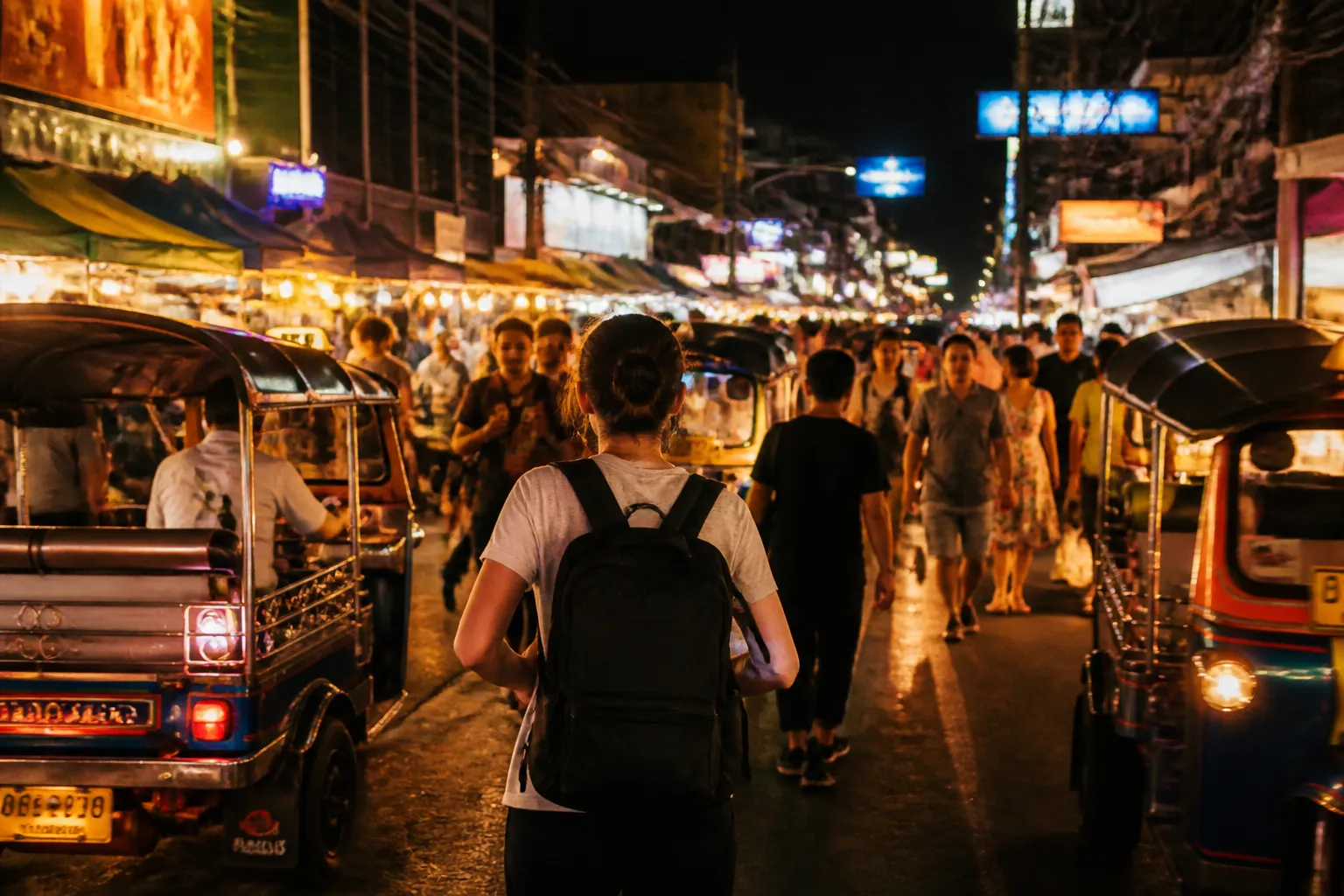
This tops nearly everyone’s worry list, and I understand why. A street stall in Bangkok looks like organized chaos if your reference point is shrink-wrapped sandwiches under fluorescent supermarket lighting. Here’s the actual truth: that chaos is precisely what keeps the food safe. Ingredients turn over fast because demand is constant, everything’s cooked in front of you so there’s nothing hidden, and a vendor’s entire livelihood rests on not making customers sick.
The rule of thumb: follow the crowd, especially a lined-up one. A noodle cart with twenty Thai grandmothers queued up at 7 a.m. is basically a certified endorsement. Skip pre-cut fruit sitting out at markets, stick to bottled or filtered water (7-Eleven is never more than a few minutes away), and you’ll come out unscathed. I ran on street food alone for six straight weeks without a single problem, and most seasoned travelers I know report the same.
2. “Is it actually safe for first-timers — especially women traveling alone?”
Yes — and not a hesitant yes, either. Thailand, Vietnam, and Bali rank among the world’s top solo female travel destinations. There’s a whole ecosystem built specifically for independent travelers — hostels, guesthouses, group tours, online communities — that makes going it alone far easier than most people expect.
A few practical habits go a long way: use Grab (think Uber, but the Southeast Asian version) instead of haggling over tuk-tuk fares — it takes the guesswork out entirely. Keep your hotel’s address saved on your phone in Thai, Vietnamese, or Bahasa script so you can just hand it to a driver. Skip getting completely wasted alone in tourist zones. And trust your gut about people and situations — it’s usually right. That’s the whole playbook. Statistically, Southeast Asia is safer for solo women than plenty of cities back home.
3. “Surely I’ll get scammed at some point?”
Probably, eventually. But calling it a “scam” oversells it — it’s usually closer to a mild upsell you can walk away from. The classics: a stranger outside a temple insists it’s closed today and offers to walk you to a “better one” (which turns out to be their cousin’s gem shop). A tuk-tuk driver agrees to a cheap “tour” that mysteriously ends outside a tailor’s shop. Someone offers you gemstones at a price too good to be real.
The fix is almost embarrassingly simple: book rides through Grab instead of haggling with drivers directly. Wave off unsolicited chats from strangers loitering near temples. Pull up Google Maps before you believe anyone claiming something is “closed” — spoiler: it isn’t. Let your maps app confirm directions instead of trusting a stranger’s word. That handles roughly 95% of what you’ll run into.
4. “I don’t speak a word of the language — how do I get by?”
Honestly, this barely registers as an issue. Thailand’s tourist zones run on English, Vietnam’s younger crowd speaks it comfortably, and Indonesia’s expat-heavy cities mean it’s everywhere you look. Google Translate’s camera function reads menus in real time the second you point your phone at them. Hotel staff, tour guides — English is the default. You’ll manage fine.
The single best move: get your hotel’s name written in the local script — Thai, Vietnamese, or Bahasa — saved right on your phone before you head out. Get turned around, show it to a local, done. Picking up a handful of phrases (“thank you,” “hello,” “excuse me”) is a nice touch but nowhere near essential.
5. “The heat sounds brutal — can I actually cope?”
Yes, but you plan around it, not through it. Peak season in Southeast Asia sits at 35-38°C (95-100°F), with humidity thick enough that walking outside feels like wading through a warm cloud. Brutal? Sure. Unmanageable? Not once you learn to work with the rhythm of the day instead of against it.
Your heat playbook: aim for November through March if your schedule allows — cooler, drier, easier on everyone. Push outdoor plans to before 10 a.m. or after 4 p.m. Carry a small water bottle and top it off constantly — 7-Eleven is basically on every block and water costs pennies. Choose moisture-wicking fabric over cotton. And adopt the local pace — nobody here rushes through midday heat, they slow down and wait it out, and you should too. Once your expectations shift, the heat fades into background noise instead of feeling like a dealbreaker.
6. “The currency situation seems like a headache”
Thai Baht, Vietnamese Dong, Indonesian Rupiah, Cambodian Riel — yes, it’s a jumble of names and zeros, but it stops being confusing about five minutes after you actually start using it. The strategy: pull cash from an ATM at the airport the moment you land (better exchange rates than the currency counters). Carry a Wise or Revolut card for card payments so conversion fees don’t nibble away at you. Keep small bills on hand for street stalls. That’s the entire system. You’ll have the exchange rate instincts down within a day, guaranteed.
7. “What if I mess up temple etiquette without meaning to?”
Take a breath. Thai, Vietnamese, and Indonesian locals are remarkably forgiving toward tourists who are clearly trying. Here’s what genuinely matters:
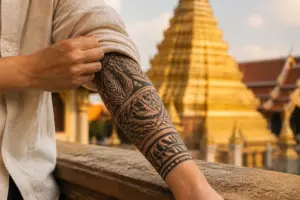
- Cover shoulders and knees before entering a temple (throw a lightweight sarong in your bag — actually do this, it’s a lifesaver)
- If you’re a woman, don’t make physical contact with Buddhist monks (the reverse applies for men around female spiritual teachers)
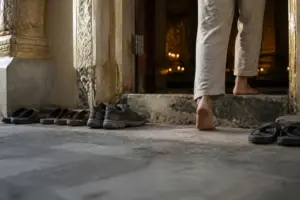
- Shoes come off before you enter — scan for the pile of sandals by the door and just follow suit
- Keep your feet pointed away from Buddha statues and images
- The “wai” (palms together at chest height, small bow) is universally welcome and never a misstep — use it often
That’s the full list, honestly. People recognize a guest making an honest effort.
8. “Do I need shots? Should I be worried about dengue?”
Book a travel doctor appointment 4-6 weeks before you fly. The usual recommendations for this region include Hepatitis A, typhoid, plus a look at your tetanus and MMR status. Malaria prevention only becomes relevant if you’re spending weeks deep in rural jungle territory — the standard tourist trail doesn’t call for it. Dengue exists but rarely touches tourists; the smartest precaution is a DEET-based repellent applied in the evenings. Don’t blow off the doctor’s visit, but don’t let health worries spiral either — the tourist numbers here are in the millions annually, and incidents are rare.
9. “What happens if I actually get seriously ill over there?”
Bangkok is home to genuinely world-class private hospitals — Bumrungrad International draws medical tourists from the Middle East specifically for surgery. Vietnam’s bigger cities have solid clinics catering to expats. In many cases, the care available will beat what you’d get back home. Buy travel insurance before departure — this isn’t optional, medical evacuation alone can run past $50,000. Between good insurance and modern hospitals, you’re in solid hands.
10. “Full package tour, or wing it independently?”
Going it alone is far easier than it sounds, thanks to how developed the infrastructure already is — hostels, guesthouses, local guides, Grab, booking apps, all intuitive and ready to use. That said, single-day tours are genuinely worth it (Halong Bay cruises in Vietnam, a cooking class in Bangkok, ethical elephant sanctuaries up in northern Thailand). Skip the two-week packaged itinerary, but do book a handful of specific experiences — it simplifies your days and puts money directly toward local guides. Blend independent wandering with a few organized outings and you get the best of both.
The Money Belt That Saved My Passport From a Bangkok Tuk-Tuk
Pickpockets are a genuine presence across Southeast Asia, and for a nervous first-timer already bracing for scams, carrying your passport, cards, and cash in an ordinary backpack is a recipe for constant low-grade panic. A money belt worn under your clothing solves that particular worry — and it genuinely delivers.
What earns its keep
- You stop mentally checking your bag every ten seconds in crowded markets or on a packed long-tail boat — your documents and backup cash are strapped to your body, not floating around exposed in a bag.
- It’s slim enough that even at 35 degrees and full humidity, it doesn’t feel like a strapped-on corset — it sits flat under a thin shirt with no telltale bulge.
- Separate compartments keep your passport, cards, and emergency cash apart, so you’re not digging around blindly at an ATM or a border crossing.
Where it falls short
- Every time you need your main cash stash, it has to come off — meaning awkward bathroom-stall maneuvers or hunting for a private corner just to pay for lunch.
- In this level of humidity, sweat collects underneath no matter how “breathable” the fabric is marketed as, and it can leave a visible mark if you’re wearing anything light-colored.
I almost ditched mine after day two in Bangkok because the discomfort seemed pointless—until my wallet actually got lifted at a night market, and suddenly I was grateful I’d left it in the hotel and was carrying nothing but my belt. Grab the VENTURE 4TH Money Belt and stop letting scam stories live rent-free in your head.
Frequently Asked Questions
What should I do if I get food poisoning in Southeast Asia?
Bangkok is home to genuinely world-class private hospitals like Bumrungrad International, and Vietnam’s bigger cities have solid clinics catering to expats. Buy travel insurance before departure—medical evacuation alone can run past $50,000. Between good insurance and modern hospitals, you’re in solid hands if you do get seriously ill.
What’s the best time to visit Southeast Asia for weather?
November through March is peak season with cooler, drier conditions. Peak season temperatures sit at 35-38°C (95-100°F) with thick humidity, so visiting during these months makes coping with heat far easier than traveling during hotter periods.
Do I need malaria prevention for Southeast Asia travel?
Malaria prevention only becomes relevant if you’re spending weeks deep in rural jungle territory—the standard tourist trail doesn’t call for it. Book a travel doctor appointment 4-6 weeks before you fly to discuss vaccinations like Hepatitis A and typhoid instead.
What temple etiquette rules matter most in Southeast Asia?
Cover shoulders and knees before entering a temple. If you’re a woman, don’t make physical contact with Buddhist monks. Shoes come off before entering, keep your feet pointed away from Buddha statues, and use the wai—palms together at chest height with a small bow—which is universally welcome and never a misstep.
About This Article

Written by Elena Vasquez. Elena Vasquez is a full-time traveler and the founder of Witty Passport. Over fifteen years and more than 50 countries across six continents — including a stretch spent leading groups professionally through Southeast Asia and the remote highlands of South America — she's written the kind of destination guides she always wished existed: practical, specific, and built on real experience rather than recycled itineraries. More about this site.
Scope and limits. Elena is a full-time traveler, not a licensed travel agent or immigration adviser. Entry requirements, visa rules, and advisories change without notice — always confirm against the official government source for your destination and passport before booking.
Verify this against a primary source
Specifics change, and your situation may differ from the one described here. These are the authorities worth checking directly:
- U.S. Department of State — entry requirements and travel advisories
- CDC Travelers' Health — vaccination and health notices by destination
- TSA — current carry-on and screening rules