Reading Dubai’s Dress Code Correctly
One woman on a roster I used to manage got stopped cold at a mall entrance in Dubai — security took one look at her tank top and simply shook their heads no. She’d flown eleven hours assuming “modern and glamorous” translated to “wear whatever.” That story made the rounds among the guides I worked with for years afterward, and it’s the reason I now think twice about every single item that goes into my suitcase before landing in the UAE. Dubai gets talked about like it’s all glass towers and five-star excess, but almost nobody mentions how much actual planning goes into what you pack for it. The city sits in this genuinely interesting middle ground — looser than a lot of its neighbors, but still firmly rooted in Emirati culture and Islamic tradition — and dressing appropriately does more for a comfortable, respectful trip here than nearly anything else on your prep list. Whether you’re splitting your days between souks and skyscrapers or heading out toward the dunes, this guide walks through exactly what to wear in Dubai so you can stop second-guessing your closet and just experience the place.
The Basics to Keep in Mind
Moving Through Dubai’s Public Spaces
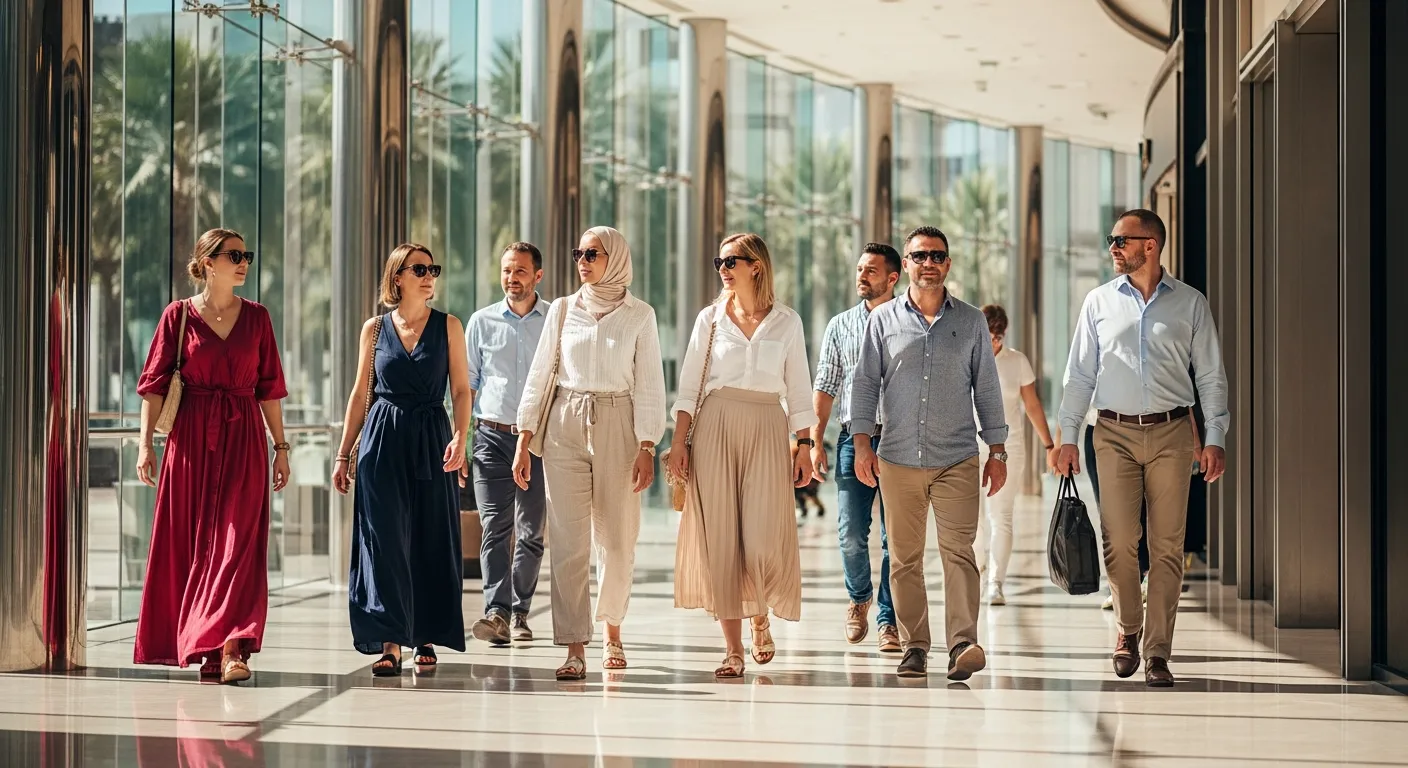
Dubai runs on a mix of modern luxury and Islamic tradition that runs deep. That means dressing for anywhere public — malls, the older souks, government offices — calls for a balance between looking good and showing respect. Security staff aren’t shy about turning people away if an outfit crosses the line, so figuring out your look before you leave the hotel saves you from an awkward moment or an on-the-spot wardrobe fix.
What Women Should Know
Women have plenty of room to look put-together while staying within the dress code. The real goal is covering the areas that matter without cooking in the heat.
- Reach for midi or maxi dresses that fall past the knee.
- Go with loose trousers, culottes, or something in linen.
- Toss a light cardigan or shawl into your bag just in case.
- Skip the plunging necklines and backless tops.
Sheer fabric needs a proper layer underneath it, no exceptions. If leggings are your thing, make sure whatever top you’re wearing runs long enough to cover your hips. And a pashmina tucked into your bag is the easiest fix on the days you feel a little exposed — it’s practical and it still looks intentional.
What’s Expected of Men
Men aren’t exempt from the standards in public areas either. The rules read as relaxed on paper, but there are still lines not worth crossing.
- Trousers: Jeans or chinos — anything full-length — are the safe bet.
- Shorts: Tailored, knee-length shorts pass fine in most malls.
- Shirts: A t-shirt or polo works without issue.
What won’t fly: sleeveless tanks or muscle vests, which read as underwear rather than outerwear here. Same goes for anything printed with crude slogans or graphics. When in doubt, go plain and classic — it’s the safest route every time.
Why Modesty Actually Pays Off
Cultural respect aside, covering up has real practical upside too. Dubai’s indoor air conditioning is aggressive, almost punishing — malls, cinemas, and museums can feel like walk-in freezers next to the heat outside. Longer layers keep you warm through those swings, which matters on long shopping days or guided tours that bounce between indoors and out. On the flip side, loose clothing shields your skin from the sun once you’re back outside. Modest dressing, in other words, is doing double duty for you.
Swimwear and Poolside Wear
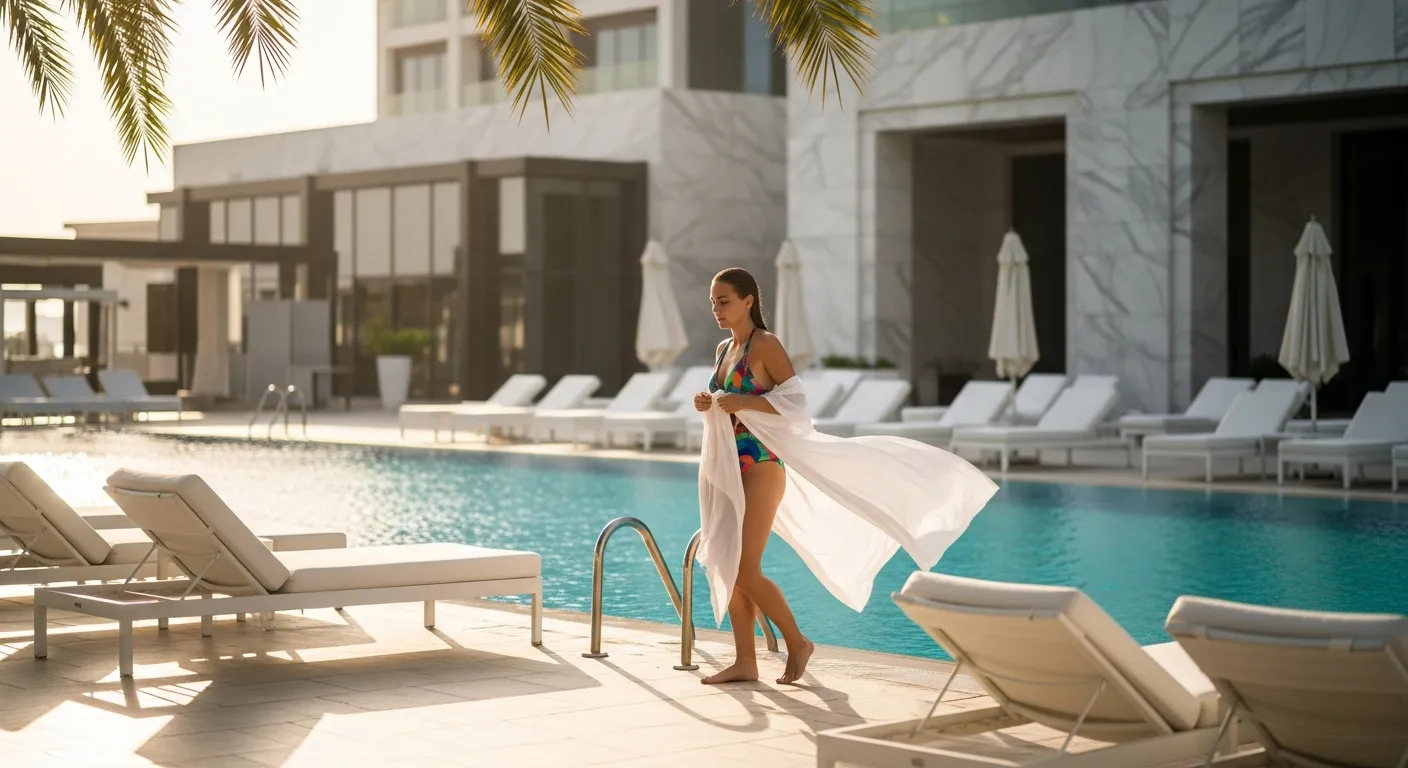
Swimsuits are totally fine at beaches and hotel pools — no restrictions there. The catch is covering up the moment you leave that zone for anywhere public. A kaftan or sarong thrown over your suit handles it easily, and it’s a small gesture that keeps you in line with local norms without any discomfort.
Matching Your Outfit to the Occasion
The Lightweight Layers That Saved Me From Overdressing in Dubai Heat
Dubai’s climate plays tricks on you — conservative spaces like malls and religious sites demand real coverage, but the second you’re outside, anything heavier than the thinnest fabric turns into a liability. I arrived with my normal summer wardrobe and figured out within hours that I’d packed for the wrong climate entirely.
What holds up
- Fabrics that actually breathe let air move across your skin instead of holding heat against it — I felt the contrast myself moving between air-conditioned shops and the open-air souks in the same afternoon.
- Pale colors bounce sunlight off instead of pulling it in, which seems obvious in theory until you’re sweating through 115°F and regretting the dark pieces you packed.
- Loose silhouettes let you stay within the modest dress code without sacrificing comfort — you’re not forced to pick between covered up and not overheating.
What backfires
- Anything ultra-lightweight comes out of a suitcase looking crumpled beyond recognition — my first morning in Dubai was spent hunting down an iron because every piece I owned looked like it had been wadded into a ball.
- Don’t trust a “summer collection” label if your idea of summer is milder than this — those pieces are built for extreme heat, not for an average warm weekend back home.
I almost ditched half my collection on day two thinking I’d made a terrible call, but those lightweight pieces became the actual foundation of everything that worked. Check out this women’s summer collection before you pack.
Frequently Asked Questions
Will I get stopped at Dubai malls for wearing a tank top?
Yes, security staff enforce dress codes at mall entrances and won’t hesitate to turn people away. Tank tops are considered inappropriate in public spaces like malls. Plan to wear sleeved shirts or layers instead to avoid being refused entry.
What should women wear instead of sleeveless tops in Dubai?
Women should wear midi or maxi dresses that fall past the knee, loose trousers, culottes, or linen pieces. Keep a light cardigan, shawl, or pashmina on hand. Avoid plunging necklines and backless tops, and ensure sheer fabrics have proper layers underneath.
Can men wear shorts to shops and malls in Dubai?
Yes, tailored knee-length shorts pass fine in most malls. However, avoid sleeveless tanks or muscle vests, which are considered underwear rather than outerwear. Stick to jeans, chinos, t-shirts, or polos for the safest choice in public areas.
Why does dressing modestly in Dubai help with the heat?
Loose clothing shields your skin from 115°F temperatures and the intense sun. Pale colors bounce sunlight away rather than absorbing it. Modest dressing also works with Dubai’s aggressive indoor air conditioning, keeping you comfortable as you move between freezing shops and hot outdoor spaces.
About This Article

Written by Elena Vasquez. Elena Vasquez is a full-time traveler and the founder of Witty Passport. Over fifteen years and more than 50 countries across six continents — including a stretch spent leading groups professionally through Southeast Asia and the remote highlands of South America — she's written the kind of destination guides she always wished existed: practical, specific, and built on real experience rather than recycled itineraries. More about this site.
Scope and limits. Elena is a full-time traveler, not a licensed travel agent or immigration adviser. Entry requirements, visa rules, and advisories change without notice — always confirm against the official government source for your destination and passport before booking.
Verify this against a primary source
Specifics change, and your situation may differ from the one described here. These are the authorities worth checking directly:
- U.S. Department of State — entry requirements and travel advisories
- CDC Travelers' Health — vaccination and health notices by destination
- TSA — current carry-on and screening rules