Getting to Know Jordan’s Ancient Monastery
Al Deir’s Architecture: What Actually Makes It Remarkable
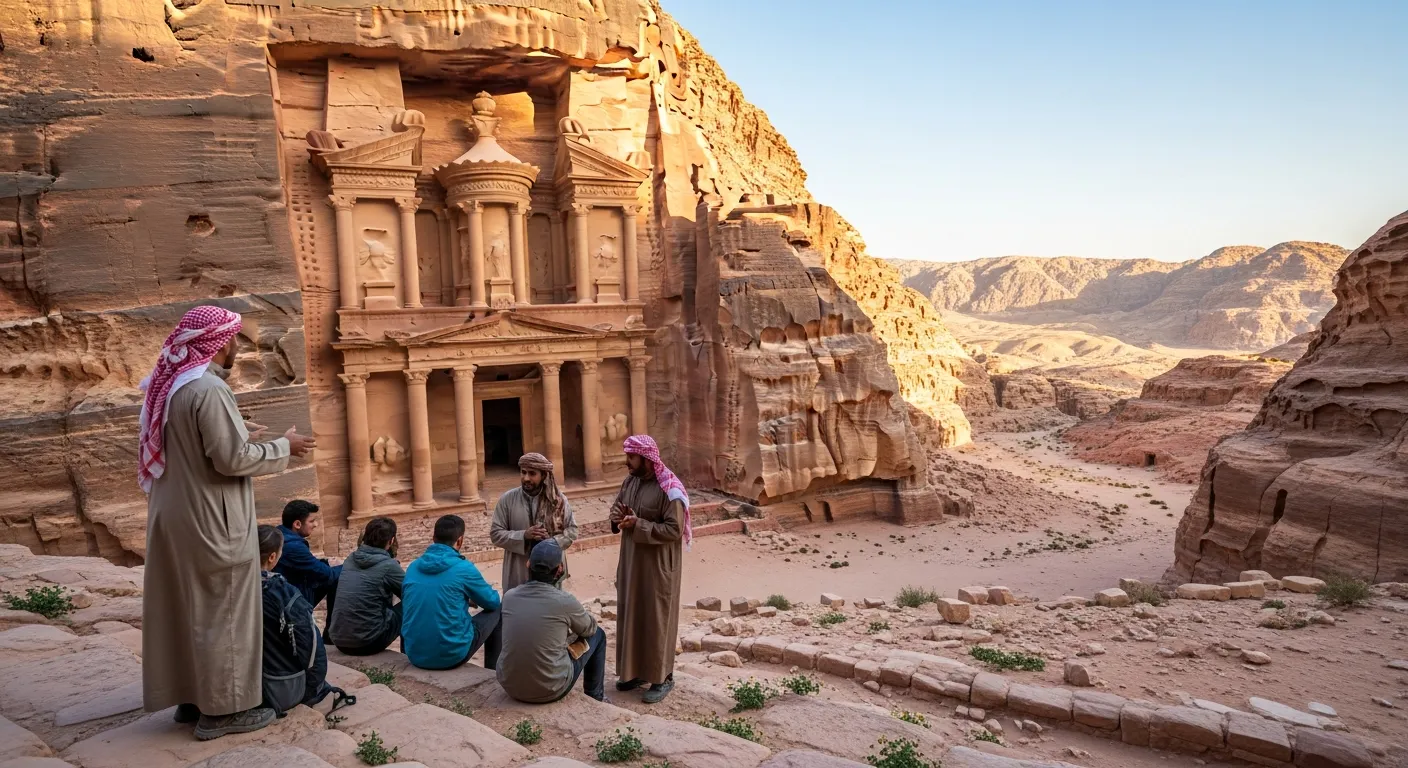
Is Al Deir worth eight hundred-plus grueling steps, or is it really just Petra’s overhyped understudy standing in the Treasury’s shadow? Here’s my answer, earned the hard way: absolutely, and it’s not even close. I’d just walked away from a finance career to chase landscape photography full-time, and before starting that new chapter I gave myself thirty days with zero meetings, zero performance reviews, zero deliverables — just a place that would remind me why I’d made the leap. That place turned out to be Petra, Jordan, and on my third day there I hauled myself up nearly a thousand rock-cut steps to reach Al Deir, the ancient Nabataean monastery most visitors never bother chasing down. Nothing about my old spreadsheet-bound life prepared me for watching that colossal facade emerge from the sandstone cliff — a structure roughly 48 meters wide and 45 meters high, bigger than the famous Treasury sitting far below. If you’re planning your own Petra trip and wondering whether Al Deir earns a dedicated half-day, this guide breaks down the history, the climb, and every practical detail I wish someone had told me before I laced up my boots.
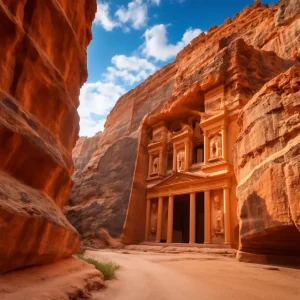
The layout follows a familiar classical grammar — columns, pediments, the works — but executed with a heavier, plainer hand than Petra’s other monuments. The capitals, for instance, read as Nabataean rather than the Corinthian style you’d expect elsewhere. The entrance itself is enormous, making anyone standing in front of it look almost miniature by comparison. In the end, the sheer scale of the place says everything about the ambition of whoever built it.
Taking On the Ascent
Getting to this far-flung site isn’t a stroll — you’re looking at roughly 800 rock-cut steps, and every one of them asks something of your legs. That said, the effort pays for itself many times over. The trail climbs through scenery dramatic enough to make you forget how much your calves are burning.
You’ll also run into genuine local color along the way. Bedouin vendors run small stalls right on the trail, where you can stop for a glass of tea or pick up something handmade. Donkeys are available too, for anyone who’d rather ride than walk. Still, doing it on your own two feet is what lets the views actually land.
The Point Around Step 600 Where I Nearly Quit — And the Boots That Got Me Through
Al Deir’s nearly thousand-step climb isn’t some abstract number you glance at on a map — it’s relentless and uneven, clearly carved by people who never once considered ankle support. I figured out fast that the shoes sitting in my bag weren’t built for this kind of sustained grind over ancient, unpredictable rock.
Where these boots delivered
- Traction on the worn, uneven stone is genuinely solid — my foot never slipped once, not even on steps still damp from the morning mist.
- That ankle support isn’t a gimmick — when you’re planting your foot on a step worn into some odd curve after two thousand years, it’s the difference between a stable landing and rolling your ankle on a bad angle.
- There’s enough weight to them to feel grounded without turning into dead weight on your feet — by hour three, when other hikers around me were clearly flagging, I could feel exactly why that balance mattered.
Where they fell short
- Breaking them in properly takes about a week, and I only gave myself three days before Petra — my heels absolutely paid for that miscalculation on day one.
- Under the full force of Jordanian sun, your feet will heat up inside them — there’s no ventilation trick that fully solves that over a full day of hiking.
Halfway up, with sweat in my eyes and my heels absolutely protesting, I genuinely considered renting lighter shoes at a vendor stall I’d passed. But I kept going, and by the time I reached Al Deir’s carved facade, I understood why the extra support mattered — my knees and ankles weren’t screaming. If you’re serious about making it to the monastery without regret, invest in XPETI Men’s TERRA hiking boots.
Frequently Asked Questions
How many steps is the hike up to Al Deir monastery?
The hike to Al Deir involves roughly 800 rock-cut steps. The climb is relentless and uneven, carved over two thousand years, and the effort pays off with dramatic scenery and views of the colossal facade itself.
What are Al Deir’s dimensions compared to Petra’s Treasury?
Al Deir is roughly 48 meters wide and 45 meters high, making it bigger than the famous Treasury sitting far below. Its enormous entrance makes anyone standing in front of it look almost miniature by comparison.
What can you buy from vendors on the Al Deir trail?
Bedouin vendors run small stalls right on the trail where you can stop for a glass of tea or pick up something handmade. Donkeys are also available for anyone who’d rather ride than walk the steps.
Is Al Deir worth visiting if you’re already at Petra?
Yes, absolutely. Al Deir earns a dedicated half-day visit. The sheer scale of the place and its colossal facade emerging from the sandstone cliff make the eight-hundred-plus grueling steps worthwhile, offering views that make the effort land.
About This Article

Written by Elena Vasquez. Elena Vasquez is a full-time traveler and the founder of Witty Passport. Over fifteen years and more than 50 countries across six continents — including a stretch spent leading groups professionally through Southeast Asia and the remote highlands of South America — she's written the kind of destination guides she always wished existed: practical, specific, and built on real experience rather than recycled itineraries. More about this site.
Scope and limits. Elena is a full-time traveler, not a licensed travel agent or immigration adviser. Entry requirements, visa rules, and advisories change without notice — always confirm against the official government source for your destination and passport before booking.
Verify this against a primary source
Specifics change, and your situation may differ from the one described here. These are the authorities worth checking directly:
- U.S. Department of State — entry requirements and travel advisories
- CDC Travelers' Health — vaccination and health notices by destination
- TSA — current carry-on and screening rules