Skip the guesswork on what to wear before you go, or you’ll spend your first ten minutes at the hammam paralyzed by a scrap of fabric instead of actually relaxing. That’s exactly what happened to me at Çemberlitaş Hamamı, where the cloth handed to me at the door was about the size of a large dish towel — nothing more. A staffer in a white apron pointed me toward the changing cubicles, said a few words in Turkish I didn’t catch, and vanished. I stood there clutching what turned out to be a pestemal, the traditional Turkish bath wrap, with zero clue whether it was meant to be worn, knotted, or held over my eyes so I wouldn’t have to witness myself failing at either option. Anyone typing turkish hammam what to bring first time into a search bar is already ahead of where I started. I showed up with nothing but a hotel-sized shampoo bottle and way too much unearned confidence. The shampoo went unused. The confidence lasted about thirty seconds. What came next turned into one of the strangest, most quietly transformative two hours of my life — inside a 16th-century marble bathhouse, I got scrubbed, kneaded, soaked, and more or less put back together from scratch. Before any of that, though, I had to get through the cringing, clueless stretch of not understanding a single rule of the room.
Why Turkish Hammam Etiquette Is Uniquely Disorienting for First-Time Visitors
Before going further, some background: Çemberlitaş isn’t a run-of-the-mill spa. Mimar Sinan, the Ottoman architect behind the Süleymaniye Mosque, designed this building, and it was finished in 1584. Push through the heavy wooden doors off Divan Yolu Street in Istanbul’s old quarter, and you’re stepping into a bathhouse that’s been in continuous public use for more than four centuries. That weight of history is exactly what gives the hammam ritual its punch — and exactly why it’s so bewildering if you’ve spent your whole life showering solo behind a locked bathroom door.
Turkish hammam etiquette for tourists isn’t intuitive, and there’s no one at the entrance passing out a rulebook. Here’s where most newcomers trip up:
How Much You Actually Take Off
Men shed everything and knot the pestemal around their waist, sarong-style, covering from hip to mid-thigh — that’s the full extent of coverage. Women’s areas generally allow more, with swimsuits or underwear both considered fine, though the exact rule shifts hammam to hammam. Historic, tourist-oriented spots like Çemberlitaş tend to have women keep their swimsuits on; smaller neighborhood hammams run more conservative. Here’s the part nobody mentions: underwear worn beneath the pestemal turns uncomfortable fast, leaves bizarre tan lines once the steam gets going, and instantly marks you as someone who skipped the research. Spare yourself.
The Room-by-Room Order You’ll Move Through
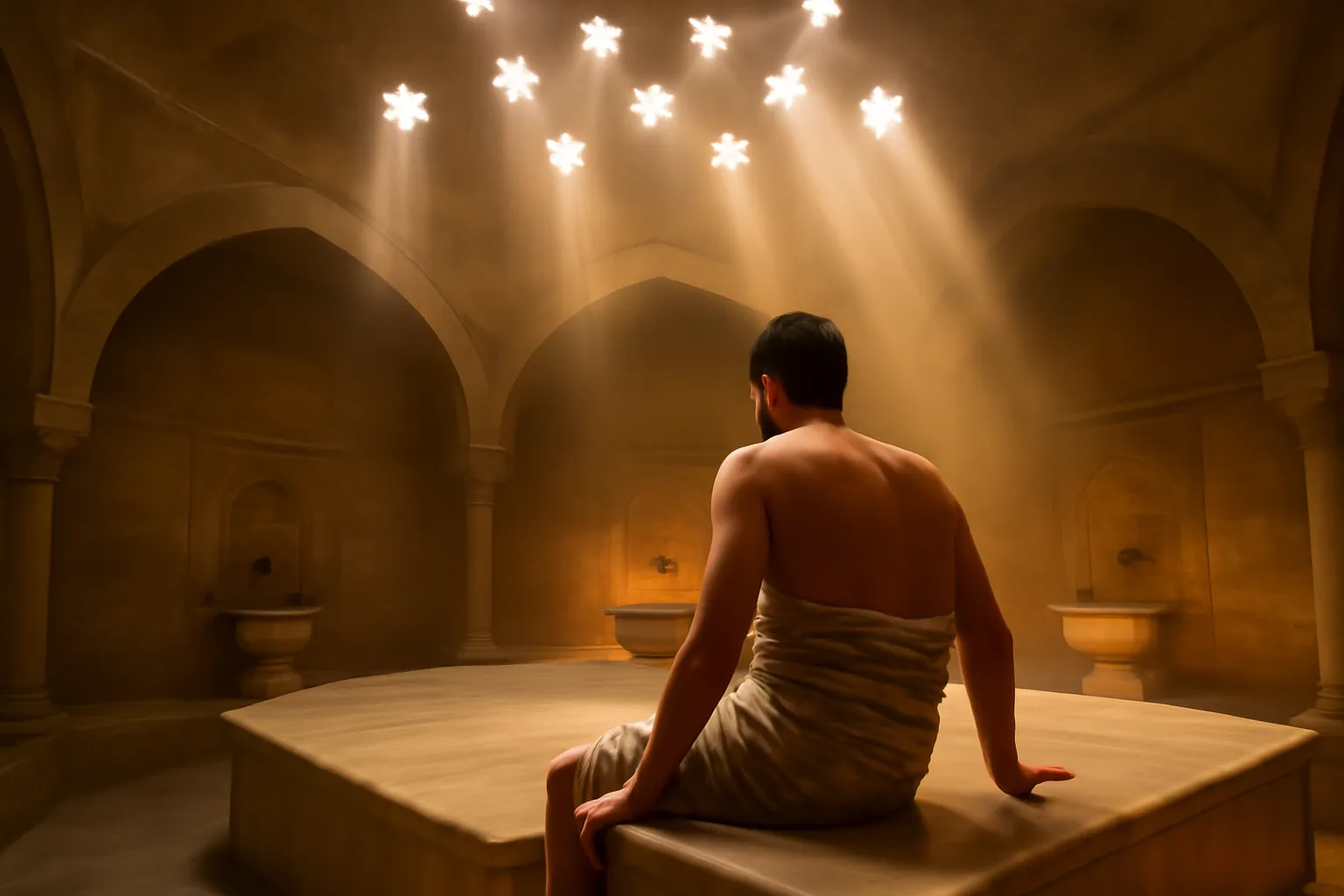
A real hammam visit moves through a fixed thermal path. It begins in the camekân, the domed entry and changing hall, continues into the ılıklık — a warm buffer room meant to ease your body into the heat — and ends in the sıcaklık, the main hot chamber, where temperatures sit between 40°C and 50°C (104°F–122°F). The göbektaşı, literally “belly stone,” sits at the center of the sıcaklık: a broad, heated marble slab you stretch out on while any notion of personal space quietly dissolves. Something about the heat rewires your sense of time — it just stops. And that marble, oddly, stops feeling hard after the first five minutes.
What the Kese Scrub Actually Feels Like
At some point your tellak — the bath attendant — shows up wearing what amounts to a rough oven mitt, the kese. What follows isn’t a delicate spa buff; it’s brisk, thorough, and occasionally verges on aggressive, though in the most satisfying way possible. You’ll watch alarming gray coils of dead skin lift off your body like something out of a wildlife documentary. That’s expected. That’s the whole point. Don’t apologize for having skin — your tellak has seen far worse and couldn’t care less. Then comes the köpük, the foam massage, where a bag of lather the size of a pillowcase gets worked over you until it feels like a very meticulous cloud is washing you.
How Much (and How) to Tip
Tipping at a Turkish hammam typically runs 15–20% of your service total, and it goes straight into your tellak’s hand at the end — never left at the front desk, never folded into the entrance price. At Çemberlitaş, a full scrub-plus-foam session costs around 750–900 Turkish lira (rates fluctuate with the exchange, so confirm the price when you arrive). Pay the tip in cash, in lira, and hand it over yourself. That small gesture is what separates a paid service from a real thank-you for skilled work.
Real Hammam or Tourist Trap: How to Tell
Sultanahmet is beautiful and easy to reach, which is exactly why it’s packed with hammams charging five times the going rate for a watered-down version of the real thing. Çemberlitaş Hamamı and Kılıç Ali Pa��a Hamamı over in Tophane are the two worth paying more for — both are historic, well-kept, and staffed by people who genuinely know the craft. Steer clear of anywhere flashing a laminated English-language menu out front or showing up on a hotel concierge’s suspiciously enthusiastic recommendation list.
Finding a Pestemal That Won’t Slide Off Mid-Scrub
The postage-stamp-sized cloth handed to you at check-in is fine in theory, but once it’s soaked it shrinks down to nearly nothing and has a habit of slipping loose at the worst possible second. What you actually want is something that wraps properly, soaks up water, and doesn’t leave you death-gripping it like a life preserver in front of a room full of strangers.
The upsides
- Big enough to loop around your body twice without turning into an origami project, so you can walk from the changing room to the hot chamber without feeling exposed.
- The diamond-weave fabric dries quicker than the heavy cotton pestemals the hammam supplies, meaning it’s ready to reuse if you’re hitting more than one bath in a day.
- Folds down small enough for a daypack, so you’re not stuck using whatever wrap has already passed through dozens of hands that week.
The downsides
- Showing up with your own towel at a hammam that runs a strict rental system can create an awkward exchange with staff, even though nothing’s technically wrong with it.
- The organic cotton feels softer than a traditional hammam pestemal, but that means less grip once wet — you’ll need to actually tie it correctly rather than just wrap and hope.
I almost left it behind on my second hammam visit because I’d gotten so used to the provided wraps that I forgot mine made a real difference. DEMMEX Organic Diamond Turkish Bath & Beach Towel – 100% is worth the luggage space.
Frequently Asked Questions
What should women wear in a Turkish hammam?
Women’s areas generally allow swimsuits or underwear, though the exact rule varies by hammam. Historic, tourist-oriented spots like Çemberlitaş tend to require women keep their swimsuits on, while smaller neighborhood hammams run more conservative. Avoid wearing underwear beneath the pestemal—it turns uncomfortable in the steam and marks you as unprepared.
What are the temperature ranges in a Turkish hammam sıcaklık?
The main hot chamber, called the sıcaklık, maintains temperatures between 40°C and 50°C (104°F–122°F). This is where you’ll spend most of your time stretched out on the göbektaşı, the heated marble slab at the chamber’s center.
How much should I tip at Çemberlitaş Hamamı?
Tipping typically runs 15–20% of your service total, paid in cash in lira directly into your tellak’s hand at the end—never left at the front desk. At Çemberlitaş, a full scrub-plus-foam session costs around 750–900 Turkish lira, so plan your tip accordingly.
What’s the room sequence in a traditional Turkish hammam?
A hammam visit follows a fixed thermal path: the camekân (domed entry and changing hall), the ılıklık (warm buffer room to ease your body into heat), and finally the sıcaklık (main hot chamber). This progression allows your body to acclimate gradually to the increasing temperatures.
About This Article

Written by Elena Vasquez. Elena Vasquez is a full-time traveler and the founder of Witty Passport. Over fifteen years and more than 50 countries across six continents — including a stretch spent leading groups professionally through Southeast Asia and the remote highlands of South America — she's written the kind of destination guides she always wished existed: practical, specific, and built on real experience rather than recycled itineraries. More about this site.
Scope and limits. Elena is a full-time traveler, not a licensed travel agent or immigration adviser. Entry requirements, visa rules, and advisories change without notice — always confirm against the official government source for your destination and passport before booking.
Verify this against a primary source
Specifics change, and your situation may differ from the one described here. These are the authorities worth checking directly:
- U.S. Department of State — entry requirements and travel advisories
- CDC Travelers' Health — vaccination and health notices by destination
- TSA — current carry-on and screening rules