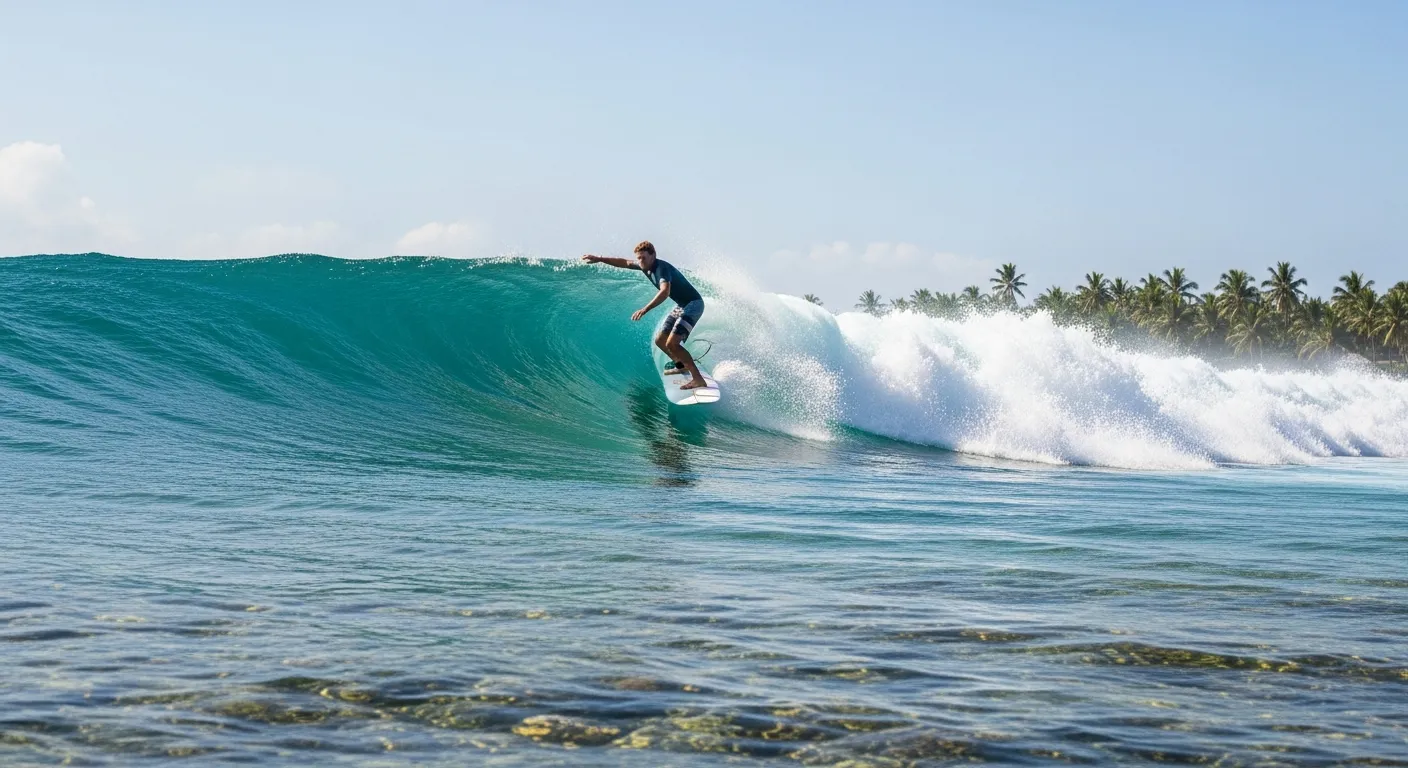
Nearly four decades on the job, and my father kept promising himself a future trip he never actually took — retirement came and went, and so did every excuse he invented for staying home. Watching that unfold lit a fire under me: the day the Pacific started calling loud enough, I grabbed a one-way flight to Mexico and let the swell chart my route instead of a spreadsheet. Mexico’s coastline stretches for thousands of kilometers, running the gamut from soft, forgiving rollers ideal for beginners to thick, hollow barrels that put even veteran pros in their place. What follows is a rundown of the top 10 surf spots in Mexico — the storied big-wave arenas, the easygoing longboard havens, and everything wedged between — built to get you off the fence and into the water.
Planning Your Mexico Surf Trip: What You Actually Need to Know
Before getting into the individual breaks, here’s the blunt truth: chasing waves in Mexico calls for a completely different headspace than your standard beach getaway. Your itinerary bends around swell forecasts, not spa hours. Expect long hauls on twisting coastal roads between towns. Where you sleep will be judged by how close it sits to the break, not how nice the linens are. And the sessions you’ll catch at first light or in that last golden hour will spoil you for ordinary life afterward.
Timing your trip comes down to which coastline you’re targeting. The Pacific side, home to most of these breaks, sees dependable swells from September clear through May, with the heaviest waves rolling in October to March. Over on the Caribbean side, conditions are softer and more welcoming, though far less predictable. Nearly every surfer I crossed paths with kept their plans loose — camping out three to five days at each spot, ready to bolt the moment a better forecast popped up elsewhere. Pack rashguards, board shorts, and reef booties. Skip lugging your own board through airports; rent instead. Any town with a worthwhile break has rental shacks nearby, and having options on hand beats hauling a quiver across the country.
The Sunscreen That Actually Survived a Week of Mexican Sun (And My Forgetfulness)
The Pacific sun down here doesn’t let up, and if you’re logging dawn-to-dusk hours paddling in and out of the water, your average drugstore sunscreen simply won’t cut it. I found this out the hard way after an overambitious day at Puerto Escondido left me looking sunburnt straight through my wetsuit.
Most surfers slap on sunscreen once before heading out and assume it’ll hold — a bad bet in Mexico’s tropical heat, where nonstop saltwater and brutal UV exposure demand something built to cling to wet skin without needing a touch-up every 45 minutes. That’s the point where I changed my whole approach.
What works
- It genuinely clings through repeated paddle-outs and wipeouts — I found myself reapplying far less often than with lighter formulas, which mattered when my attention was on the swell, not my skincare regimen.
- SPF 70 handled 6-plus hours of direct sun without leaving that chalky white cast that makes you look like some kind of ghost surfer.
- The lotion doesn’t rinse straight off your face the second you paddle out, so you’re not swallowing sunscreen with every wave that hits you in the mouth.
What doesn’t
- Reef safety isn’t part of the deal, which matters a lot if you care about the ecosystems beneath your board — I felt bad about that once I found out, late into the trip.
- The bottle takes up more room than I’d like when you’re backpacking break to break, and it empties faster than expected once you factor in tropical heat and constant reapplication.
I nearly gave up on it midway through the trip after leaving it behind at a hostel in Mazatlán, but I hunted down a replacement because nothing else performed the same way. Grab Neutrogena Sunscreen Lotion Beach Defense SPF 70 before you go.
The 10 Breaks Worth Your Time
I’m holding off on the play-by-play for each break here on purpose — every one of these ten spots, from Puerto Escondido’s world-class barrels to the gentle point breaks made for beginners, earns its own full write-up. What I’ll say now: pick your starting point based on your actual skill level, not the one your ego wants credit for. Plan to stick around longer than feels necessary. And please, talk to the locals before you paddle out — they know the currents, the rocks, and the riptides that never make it into a guidebook.
These waves aren’t disappearing anytime soon. My father’s real mistake wasn’t the delay — it was holding out for some perfect window that was never coming. There is no perfect window. There’s just the moment you finally choose to paddle out.
The Pacific side sees dependable swells from September clear through May, with the heaviest waves rolling in October to March. Over on the Caribbean side, conditions are softer and more welcoming, though far less predictable. Skip lugging your own board through airports; rent instead. Any town with a worthwhile break has rental shacks nearby, and having options on hand beats hauling a quiver across the country. Pack rashguards, board shorts, and reef booties. Most surfers stay three to five days at each spot, ready to bolt the moment a better forecast pops up elsewhere, so keep your itinerary loose. Neutrogena Sunscreen Lotion Beach Defense SPF 70 genuinely clings through repeated paddle-outs and wipeouts. It handled 6-plus hours of direct sun without leaving a chalky white cast and doesn’t rinse straight off your face the second you paddle out.Frequently Asked Questions
When is the best time to surf on Mexico’s Pacific coast?
Should I bring my own surfboard to Mexico?
What should I pack for a Mexico surf trip?
What sunscreen works best for Mexican surfing conditions?
About This Article

Written by Elena Vasquez. Elena Vasquez is a full-time traveler and the founder of Witty Passport. Over fifteen years and more than 50 countries across six continents — including a stretch spent leading groups professionally through Southeast Asia and the remote highlands of South America — she's written the kind of destination guides she always wished existed: practical, specific, and built on real experience rather than recycled itineraries. More about this site.
Scope and limits. Elena is a full-time traveler, not a licensed travel agent or immigration adviser. Entry requirements, visa rules, and advisories change without notice — always confirm against the official government source for your destination and passport before booking.
Verify this against a primary source
Specifics change, and your situation may differ from the one described here. These are the authorities worth checking directly:
- U.S. Department of State — entry requirements and travel advisories
- CDC Travelers' Health — vaccination and health notices by destination
- TSA — current carry-on and screening rules