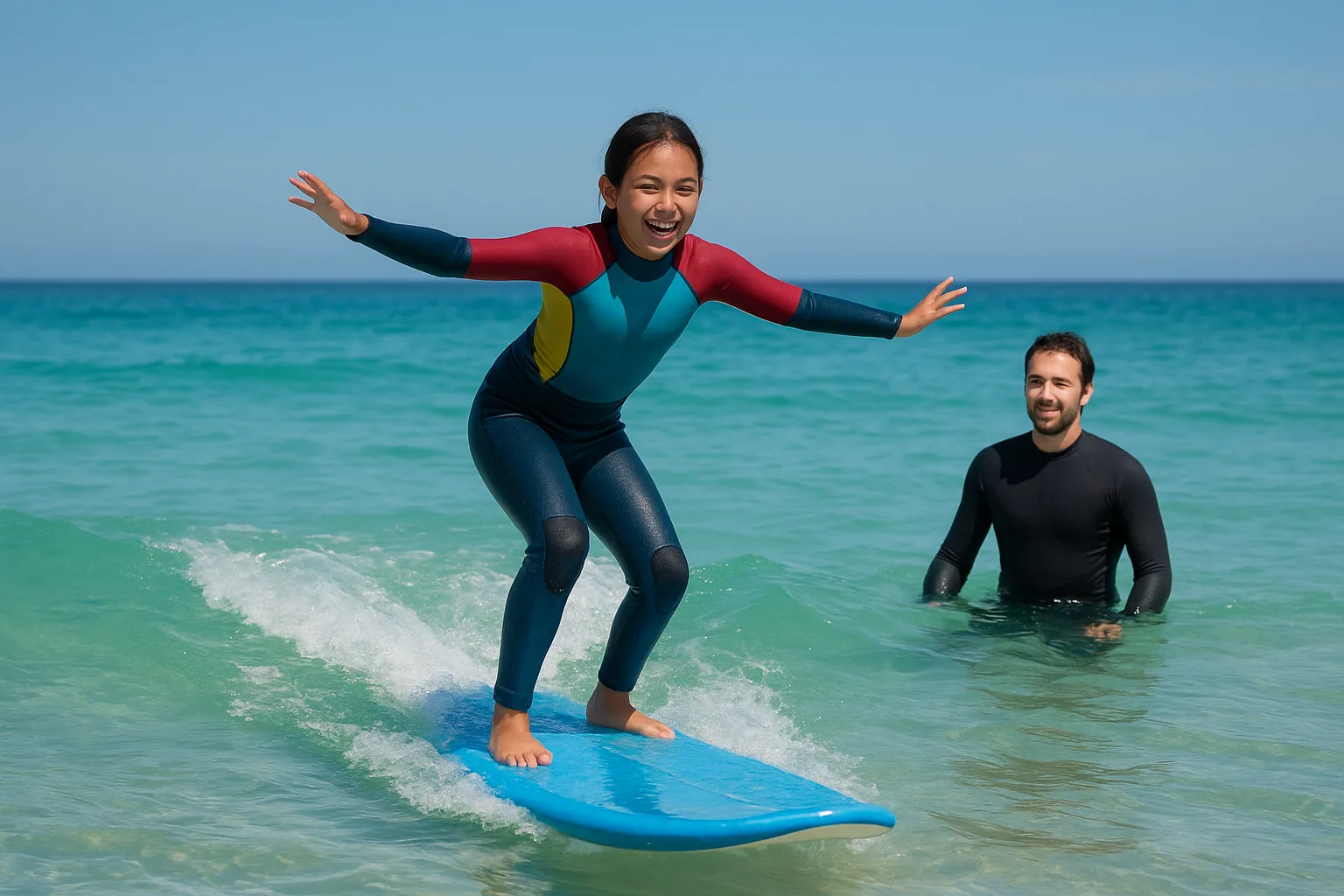
Most people assume you need years of ocean time before Mexico’s surf towns make sense for you — that assumption is backwards, and Sayulita is proof. After two years of staring at the same four walls, I’d built a running list of “places I’ll get to eventually,” and when I finally started working through it, Sayulita, Mexico landed at the very top without me really planning it that way. I arrived with zero surfing experience, an already-pink nose, and no clue that within a couple of days I’d be standing up on real waves in warm, turquoise water with the town’s painted rooftops lighting up behind me. Sayulita has this knack for slowing everything down — surf culture and lazy, colorful living get knotted together here — and that combination happens to be precisely what a first-timer on a board needs. If learning to surf has been sitting on your someday-list, this is the place that makes you question the delay.
What Makes Sayulita a Smart Pick for New Surfers
Sayulita is tucked into Mexico’s Pacific coast in the state of Nayarit, roughly 40 minutes north of Puerto Vallarta. The main beach break here doesn’t punish you — the waves arrive consistent and predictable, sitting at heights most people can handle most days. Compared to shark-heavy reef breaks or brutal beach pounders, Sayulita gives learners actual breathing room instead of a constant wrestling match with the ocean. Water stays around 80°F all year, so you can leave the wetsuit at home and put your energy into staying on the board instead.
The waves are only half the story, though — Sayulita’s atmosphere carries just as much weight. Nothing here feels exclusive. Locals, tourists, families, and hardcore surfers all paddle out into the same lineup without any hierarchy. The town has grown into a legitimate destination while somehow holding onto its unhurried personality — bright buildings, solid seafood spots, and plenty of cafes to keep multiple sessions a day fueled. And critically, the beginner support system is real: surf schools run every single day, boards rent for next to nothing, and locals genuinely seem happy to walk newcomers through the basics.
Arriving and Getting Settled
Fly into Puerto Vallarta International Airport, then head north to Sayulita by rental car or shuttle. It’s a pretty drive and takes under an hour door to door. Once you land, choose a place to stay that’s within walking distance of the sand — you want to roll out of bed for early sessions and grab coffee or fresh juice afterward without turning it into a whole production.
Line up your first lesson before you even land. A handful of schools run right off the beach, and having someone guiding that first session cuts out a lot of the trial and error. A solid instructor will walk you through the pop-up, how to read which waves are worth taking, and where to position yourself in the water — none of which translates well from a screen.
The One Sunscreen That Holds Up Through a Sayulita Session
The sun in Sayulita doesn’t let up — it bounces off the water, radiates off the sand, and seems to specifically target anyone who’s never surfed before. About two hours into my first session, I figured out that whatever ordinary sunscreen I’d packed wasn’t going to survive past wave three.
Where it delivers
- It clings on through a wipeout — I got tumbled by a wave mid-morning fully expecting my chest to be scraped raw from sun exposure, but the coverage stayed right where I’d put it.
- You get 80 minutes of water resistance, enough for a full session without stopping every ten minutes to reapply like you’re lounging at a resort pool.
- High SPF on a Mexican beach isn’t about being precious — it’s the line between a good week and spending your final three days hiding indoors, red as a lobster.
Where it falls short
- It goes on thick enough that if you paddle out too soon after applying, your grip on the board slips — found that out the hard way on my very first day.
- SPF 70 can turn greasy fast in Sayulita’s humidity, and it practically pulls sand toward it if you’re not careful on the walk back.
On day four I nearly skipped applying it altogether because I didn’t want to wait around for it to set and just wanted the morning swell — that impatience cost me a genuinely painful shoulder burn that night, so learn from my mistake. Neutrogena’s Beach Defense SPF 70 is water-resistant for 80 minutes. Put it on 15 minutes before you head down to the water and you’ll sidestep the slippery-hands issue completely.
Rookie Mistakes Worth Skipping
Skip paddling out during the busiest hours for your first handful of sessions — get there at 6 or 7 AM instead, when things are quieter and the whole scene feels more relaxed. Resist grabbing the longest board on the rack — a shorter, thicker beginner board actually catches more waves and speeds up your learning curve. And don’t blow off stretching beforehand; paddling works muscles you forgot existed, and Sayulita’s humidity makes every movement feel twice as heavy.
Above all, don’t let your first wipeout rattle you. Everybody goes down. Over and over. That’s not you failing — that’s literally the process.
Best Time to Plan Your Trip
Sayulita’s rideable all year, but May through October brings the steadiest, most beginner-friendly conditions. Winter months bring in bigger swells better suited to intermediate surfers. Rainy season, roughly September into October, thins out the crowds without hurting water quality at all.
Sayulita is roughly 40 minutes north of Puerto Vallarta by rental car or shuttle. It’s a pretty drive and takes under an hour door to door from Puerto Vallarta International Airport to reach the town. Water stays around 80°F all year in Sayulita, so you can leave the wetsuit at home and put your energy into staying on the board instead of managing cold water exposure. May through October brings the steadiest, most beginner-friendly conditions in Sayulita. Winter months bring in bigger swells better suited to intermediate surfers, while rainy season roughly September into October thins out crowds without hurting water quality. Neutrogena’s Beach Defense SPF 70 is water-resistant for 80 minutes, which is enough for a full session without stopping to reapply. Apply it 15 minutes before heading to the water to avoid slippery hands on the board.Frequently Asked Questions
How far is Sayulita from Puerto Vallarta airport?
What’s the water temperature in Sayulita year-round?
When is the best season for beginner surfers in Sayulita?
How long does Neutrogena Beach Defense SPF 70 last in water?
About This Article

Written by Elena Vasquez. Elena Vasquez is a full-time traveler and the founder of Witty Passport. Over fifteen years and more than 50 countries across six continents — including a stretch spent leading groups professionally through Southeast Asia and the remote highlands of South America — she's written the kind of destination guides she always wished existed: practical, specific, and built on real experience rather than recycled itineraries. More about this site.
Scope and limits. Elena is a full-time traveler, not a licensed travel agent or immigration adviser. Entry requirements, visa rules, and advisories change without notice — always confirm against the official government source for your destination and passport before booking.
Verify this against a primary source
Specifics change, and your situation may differ from the one described here. These are the authorities worth checking directly:
- U.S. Department of State — entry requirements and travel advisories
- CDC Travelers' Health — vaccination and health notices by destination
- TSA — current carry-on and screening rules