Type “best time to visit Mexico” into any search bar and you’ll get a chorus of voices pointing you toward December through April, sunshine and dry season and all that. Nobody mentions that this steers you straight past the single richest month for actually eating your way through the country. My own itineraries have never once started with a museum or a beach or some Instagram-famous overlook — they start with the question of what’s cooking and when. If that’s a familiar affliction, November is your month. Between the food festivals, Mexico Día de Muertos observances, and culinary traditions that don’t exist anywhere else on the planet, this is, hands down, the tastiest stretch on the entire travel calendar. UNESCO didn’t grant Mexico its Intangible Cultural Heritage of Humanity recognition for gastronomy as a courtesy. This is a country where cooking functions as ceremony, where recipes pass down like heirlooms, and where one bite of the right dish can hand you five centuries of history. Here’s where I’d point you if you’re building a November around the table.
Why Mexico Is Arguably the World’s #1 Food Festival Destination
Let’s clear this up fast. Mexican cuisine isn’t merely excellent — it’s structurally, culturally, and historically unmatched. In 2010, Mexico earned the distinction of becoming one of the first countries whose traditional cooking was formally named an Intangible Cultural Heritage of Humanity by UNESCO. That’s not some foodie website’s annual award. That’s the United Nations stating, on record, that Mexican cuisine — its ingredients, its techniques, its rituals, its role in bringing people together — is culture that cannot be replicated elsewhere. Factor in the sheer regional range (Oaxacan mole negro bears about as much resemblance to Yucatecan cochinita pibil as French Burgundy does to Japanese ramen), and you’ve got a country where mexican food festivals to visit could occupy a full year’s worth of trips. November simply happens to be the high point, thanks to the sacred and visually stunning Día de los Muertos.
Where Food Meets Día de los Muertos: Oaxaca’s Celebration
Oaxaca’s Day of the Dead Food Traditions
- Where: Oaxaca City and nearby villages, Oaxaca State
- When: October 31 through November 4 as the core stretch, with buildup starting the week before
- Order these: Mole negro, pan de muerto, tamales de rajas, and hot chocolate made from ground cacao paste
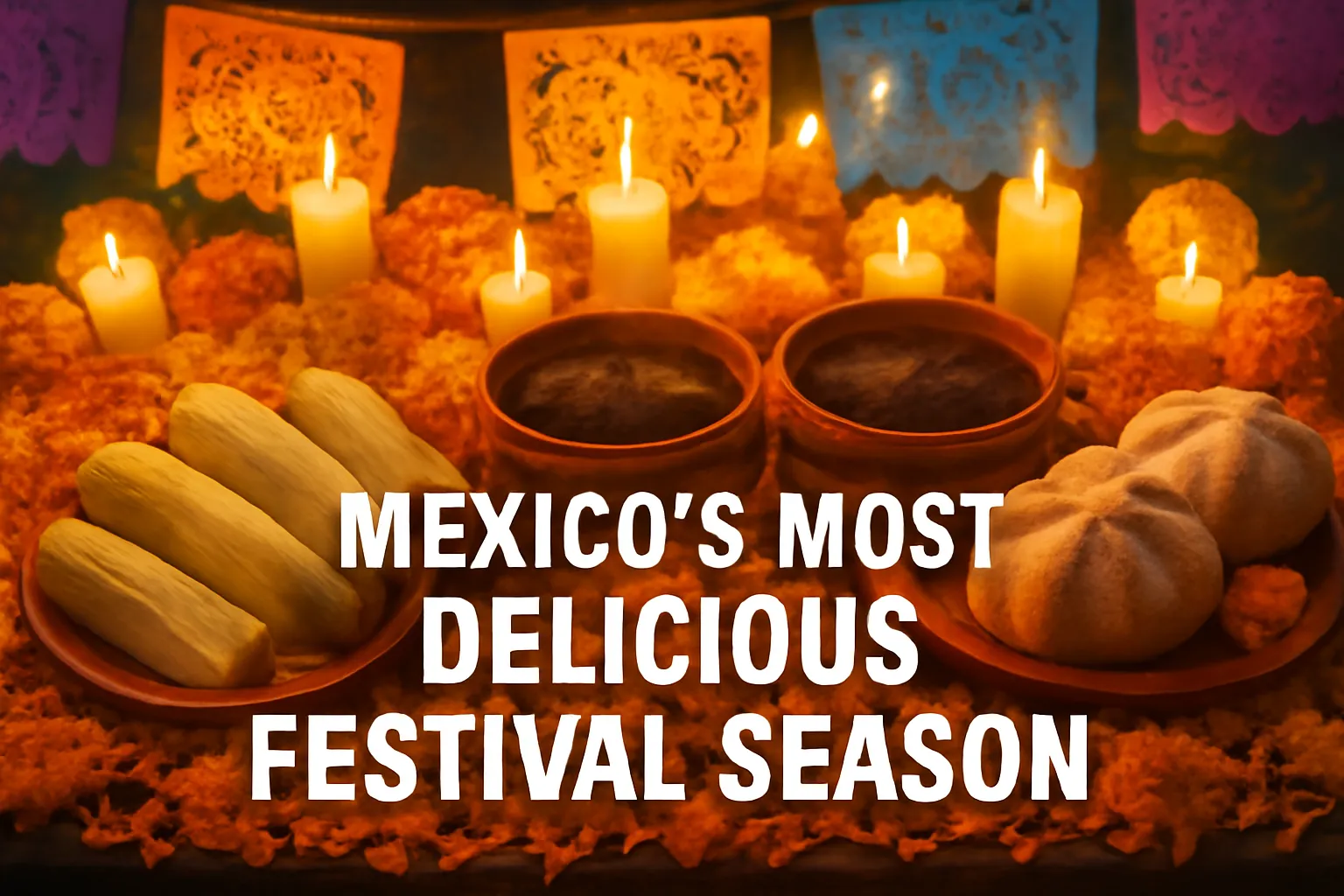
Whenever someone asks me for one food-travel destination to prioritize above all others, I say Oaxaca during Día de los Muertos, every time. This isn’t a festival in any conventional sense — there’s no wristband, no vendor map, no photo-op installation waiting for your phone. It’s a living, deeply sacred practice where food serves as an actual offering to the dead, and you get to witness it as a guest, not a customer. Families construct ofrendas — altars stacked with the dishes their departed relatives loved best: mole negro built from more than 30 ingredients, layering multiple dried chiles with dark chocolate; pan de muerto dusted in orange zest and sugar; tamales tucked into banana leaves; hot chocolate ground the old way on a metate stone and whipped by hand until frothy. The day of dead food traditions Mexico keeps alive here aren’t packaged for tourists — they’re expressions of love, and treating them with the seriousness they deserve will serve you better than any guidebook ever could. Even so, the markets and restaurants in Oaxaca show up in full force for the occasion, and a genuinely memorable meal will run you $8–$15 USD. Lock in your lodging three to four months ahead — this is among the most heavily booked weeks anywhere in Mexico, and the well-run guesthouses in the city center disappear from the calendar early.
Practical Tip: Skip the crowds working the cemetery circuit on the night of November 1st. Instead, ask your hotel to put you in touch with a local family’s ofrenda gathering. Plenty of Oaxacan households welcome visitors who show up with the right attitude — bring marigolds or a small food offering so you’re participating rather than just watching.
Mexico City’s Mole Festival: More Than 50 Varieties in One Place
Festival del Mole, CDMX
- Where: Multiple venues around Mexico City — frequently near Plaza de la Constitución or in Xochimilco
- When: Late October into early November, roughly a week-long run
- Order these: Mole negro from Oaxaca, mole poblano, mole amarillo, pipián verde, plus regional versions you’ve likely never encountered
Imagine 50-plus varieties of mole, brought in by producers and home cooks from every corner of the country, gathered under a single roof. Mexico City’s Festival del Mole is essentially a masterclass in one of the world’s most misunderstood sauces. Outside Mexico, people tend to think mole equals “the chocolate one.” That’s roughly as accurate as calling wine “grape juice.” One afternoon here will completely rewire your sense of how much depth, complexity, and patience goes into a single sauce. Samples generally cost 20–50 pesos each, and the vendors are unusually generous about explaining their regional methods. The vibe leans festive and communal rather than solemn — think a proud grandmother ladling sauce onto a stranger’s tortilla, not a formal tasting room. If you’re planning mexico food travel november around this, it dovetails beautifully with Día de los Muertos programming happening across town at the same time. Set aside roughly $20–$40 USD for a proper tasting run, plus another $15–$20 for a sit-down mole lunch at one of the vendor stalls.
Practical Tip: Show up early on a weekday if your schedule allows it — weekend crowds get intense, the lines stretch out by noon, and by the time you hit mole number 22, your palate will be genuinely worn down if you haven’t paced yourself. Keep a notes app or small notebook handy to track which regions produced your favorites.
Get Ahead of It: Puebla’s Chile en Nogada Window and Oaxaca’s Guelaguetza
Feria Nacional del Chile en Nogada — Puebla
- Where: Puebla City, Puebla State
- When: August through September (start planning during November for next year)
- Order these: Chiles en nogada, mole poblano, cemitas poblanas
I’ll be upfront — you’ve missed the window this November. But if you’re already sketching out a 2025 Mexico food calendar while reading this, Puebla’s Chile en Nogada season belongs on it, full stop. The dish itself — a poblano chile stuffed with a spiced meat-and-fruit picadillo, draped in walnut cream sauce, and finished with pomegranate seeds and parsley so it mirrors the colors of the Mexican flag — depends entirely on fresh walnuts that are only in season August through September. It’s arguably Mexico’s most patriotic plate and certainly one of its most visually striking. The Feria Nacional marks the occasion with cooking competitions, tastings, and a level of civic pride you’d expect at a World Cup qualifier. Book your Puebla stay now — September fills up faster than you’d expect for a city that rarely lands on anyone’s top-ten list.
Guelaguetza’s Food Scene — Oaxaca
- Where: Oaxaca City, Oaxaca State
- When: July, on the first two Mondays following the 16th
- Order these: Tlayudas, chapulines (toasted grasshoppers), mezcal tastings sourced from the Sierra Juárez region
The Guelaguetza bills itself as a dance and cultural celebration, but anyone who’s actually gone knows the food is half the draw. Each Oaxacan region sends its signature dishes, and the stalls and street food ringing the festival grounds are genuinely outstanding. Tlayudas — those huge, crisp-yet-chewy tortillas piled with black bean paste, Oaxacan string cheese, and whatever meat you choose — are meant to be eaten standing, no exceptions. And if chapulines (toasted grasshoppers dusted in lime and chile) haven’t crossed your plate yet, this festival is the gentlest possible introduction. The mezcal tastings that run alongside it are not to be treated casually: sip, never shoot, and if a producer hands you a small jícara gourd cup instead of a shot glass, take it as a sign you’re about to taste something worth remembering. Put July 2025 on your calendar now — the free bleacher seating for the main ceremony is first-come, first-served, and people start lining up before sunrise to claim a spot.
Mezcal, Pulque, and How to Drink Respectfully in Mexico
A quick word on drinking etiquette — it’ll make you a far more welcome presence at any festival stall, mezcalería, or pulquería you happen to wander into. Mezcal isn’t tequila’s rowdier cousin; it’s a craft spirit with enormous regional range, frequently produced by families using methods that haven’t changed in generations. The one rule that matters everywhere: never shoot it. Mezcal gets sipped slowly, with appreciation, from a small clay or gourd vessel. If someone pours yours first, acknowledge the gesture before you drink. Pulque is a different animal entirely — the fermented agave sap that predates mezcal and was once reserved for Aztec priests and elders. It’s thick, faintly viscous, mildly sour, and deeply local. You’ll find it in markets and dedicated pulquerías, almost never in tourist-facing restaurants. Ordering it signals you’ve done your homework, and locals tend to respond with real warmth. During food festivals mexico dia de muertos season especially, pacing yourself at every tasting isn’t a weakness — it’s the smarter move.
The One Cookbook That Explains Why Real Oaxacan Mole Bears No Resemblance to Your Homemade Attempt
You’ll land in Oaxaca thinking one restaurant meal has already taught you mole negro, and then the real version will show you entire layers of flavor, technique, and history you hadn’t touched. This cookbook closes that gap before your plane even lands.
Where it delivers
- The recipes for mole and pan de muerto come straight from actual tradition rather than a dumbed-down Instagram version—you’ll actually recognize what you’re eating when you’re standing in a mercado tasting the real thing.
- The advice on sourcing ingredients is precise enough that you can genuinely track down proper Mexican chocolate, chiles, and spices in local markets or through your guesthouse without feeling lost at sea.
- Reading it ahead of time primes your palate and hands you real conversation starters with vendors and cooks who notice when a traveler already knows the difference between mole negro and mole rojo.
Where it falls short
- It’s no compact pocket guide—at over 300 pages, it’s a real weight to pack, so it’s more useful before you leave and after you’re home than during the actual trip.
- A handful of the specialty ingredients are genuinely hard to find even in Mexico City or Oaxaca, so plan on some “close enough” substitutions regardless of how specific the book gets.
I nearly returned it after realizing I couldn’t find half the chiles it called for in Oaxaca’s Central de Abastos, but then a vendor looked at my dog-eared pages and started telling me which local cooks used which combinations—suddenly the book became a conversation piece, not just a recipe collection. My Mexican Kitchen: 100 Recipes Rich with Tradition, Flavor, and Spice
Frequently Asked Questions
What should I eat at Oaxaca’s Day of the Dead celebration?
Order mole negro, pan de muerto, tamales de rajas, and hot chocolate made from ground cacao paste. Families construct ofrendas stacked with dishes their departed relatives loved best, layering multiple dried chiles with dark chocolate in the mole and dusting pan de muerto in orange zest and sugar. A genuinely memorable meal will run you $8–$15 USD.
How much does mole tasting cost at Mexico City’s Festival del Mole?
Samples generally cost 20–50 pesos each. Set aside roughly $20–$40 USD for a proper tasting run, plus another $15–$20 for a sit-down mole lunch at one of the vendor stalls. Show up early on a weekday if your schedule allows it, since weekend crowds get intense and lines stretch out by noon.
When should I visit Oaxaca for Day of the Dead food traditions?
The core stretch runs October 31 through November 4, with buildup starting the week before. Lock in your lodging three to four months ahead, as this is among the most heavily booked weeks anywhere in Mexico, and well-run guesthouses in the city center disappear from the calendar early.
What is the proper way to drink mezcal at Mexican festivals?
Never shoot mezcal. Mezcal gets sipped slowly, with appreciation, from a small clay or gourd vessel. If someone pours yours first, acknowledge the gesture before you drink. During food festivals especially, pacing yourself at every tasting isn’t a weakness—it’s the smarter move.
About This Article

Written by Elena Vasquez. Elena Vasquez is a full-time traveler and the founder of Witty Passport. Over fifteen years and more than 50 countries across six continents — including a stretch spent leading groups professionally through Southeast Asia and the remote highlands of South America — she's written the kind of destination guides she always wished existed: practical, specific, and built on real experience rather than recycled itineraries. More about this site.
Scope and limits. Elena is a full-time traveler, not a licensed travel agent or immigration adviser. Entry requirements, visa rules, and advisories change without notice — always confirm against the official government source for your destination and passport before booking.
Verify this against a primary source
Specifics change, and your situation may differ from the one described here. These are the authorities worth checking directly:
- U.S. Department of State — entry requirements and travel advisories
- CDC Travelers' Health — vaccination and health notices by destination
- TSA — current carry-on and screening rules