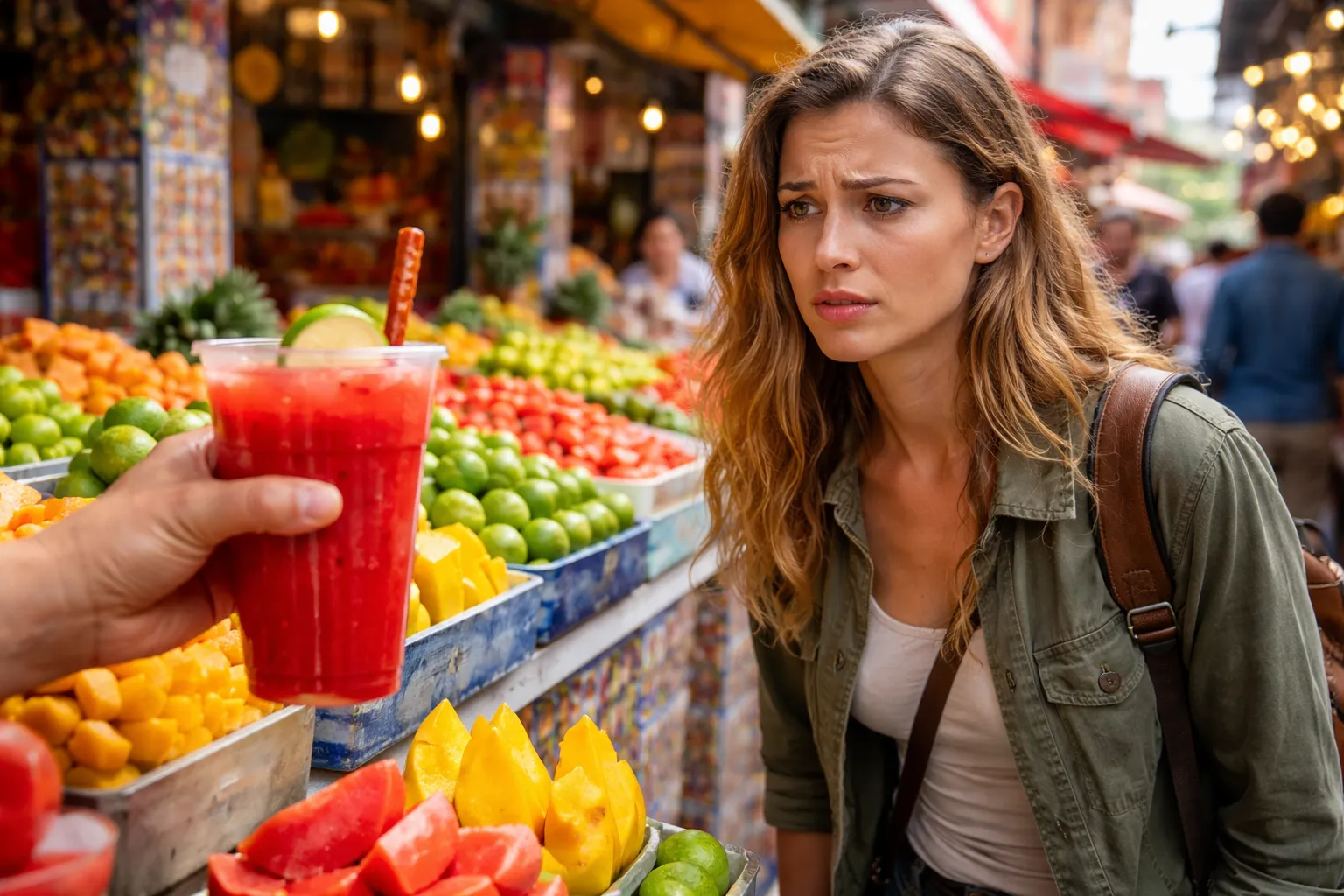
Sweat trickled past my temples as I stood knee-deep in the crowd at Oaxaca’s Central de Abastos market, clock pushing 2 p.m., a paper cup of agua fresca cooling my palm. The drink glowed hot pink, packed with what I assumed was crushed ice, and I’d watched the vendor mix it right there. Thirst had won out over caution, or so I told myself—the water was bottled, surely, and the ice came from somewhere clean, didn’t it? Forty-eight hours later I got my answer, doubled over a hotel toilet at three in the morning. The culprit wasn’t the food stall cooking in front of me. It was the ice. One cube, unremarkable, that neither the vendor nor I had bothered to question.
I’d been to Mexico before that Oaxaca trip, but never had it actually flattened me the way this did. What clicked for me wasn’t really about tap water at all—it was the endless mental math that tap water forces on you the moment you land. Is the ice cube fine or a gamble? Should tonight’s teeth-brushing be a bottled-water affair again? Have I bought enough plastic bottles to make it through the day? Do I risk the market vegetables unwashed, or is there even water around I’d trust to rinse them? Honestly, that low-grade worry wore on me more than the illness itself, and it drained my wallet, my headspace, and left me wincing at how much single-use plastic I was piling up. I flew home determined to fix this for good—not by gritting my teeth through fear on every future trip, but by actually understanding what was going on and finding something that worked.
Why Tap Water Anxiety Is Uniquely Bad in Mexico
I’ll say it plainly: whether tap water is drinkable in Mexico depends entirely on where you are. That shifting, unsatisfying answer is precisely why water occupies so much mental real estate for travelers here, more than in most other destinations I’ve worked in.
The systems exist, they just aren’t uniform. Mexico City and heavily touristed zones like Cancún run modern, genuinely reliable treatment plants. But that same country also has aging pipe networks, region-specific bacteria, and local parasites your body has never met and has no defenses against. Your stomach’s reaction to Mexican tap water has nothing to do with the country being unclean—it’s your microbiome being a foreigner in unfamiliar territory. The bacteria sitting in Oaxaca’s water supply doesn’t bother the people who grew up drinking it; it bothers you.
The exhausting part isn’t the water on its own—it’s the pile-up of small choices it forces all day long. Most destinations give you one clean rule to follow. Mexico hands you about seventeen: ice at sit-down restaurants (generally fine in tourist zones, riskier at street carts), tap water for brushing your teeth (skip it), bottled water for drinking (yes, always), ice in your drink (probably okay, but not guaranteed), rinsing produce at the market (rinsed in what, exactly?), showering with your mouth shut (yes, because splashback happens). Multiply these tiny calculations by dozens of moments a day, all while you’re supposedly on vacation enjoying yourself.
Then there’s the waste. I once did the math on a two-week Mexico trip and landed on roughly 28 single-use plastic bottles with my name on them, personally. Scale that up across the millions of visitors doing the same thing, and you understand why Mexican beaches keep drowning in plastic. That guilt sits on top of everything else, one more weight added to an already complicated relationship with water.
Location changes the math significantly, too. The safest Mexico destinations for water—Puerto Vallarta, Los Cabos, the hotel corridor along the Riviera Maya—run solid infrastructure you can generally trust. Head instead toward Chiapas, the highlands around Oaxaca, or smaller colonial towns, and the risk climbs noticeably. Being careful there isn’t paranoia. It’s just paying attention.
The Bottle That Finally Killed My Water Anxiety in Oaxaca (and Beyond)
After that 3 a.m. bathroom episode, I turned into the traveler who refused anything that hadn’t come from a bottle I’d personally sealed and bought. Trouble was, traveling Mexico on a modest budget meant I was stuck between being thirsty and being terrified, constantly forking over money for overpriced plastic bottles and feeling ridiculous about it every time. What I actually needed was a way to drink from questionable sources with confidence, without turning every sip into a gamble with my gut.
What holds up
- The LifeStraw filter genuinely handles tap water, well water, and questionable market fountains—I put it through its paces across three different Mexican states without a single repeat incident.
- It flattens down small enough to disappear into a daypack pocket, so I ended up carrying it through markets, museums, and long bus hauls without ever thinking twice about the extra weight.
- Refilling at public water sources in smaller towns turned genuinely inexpensive, instead of the endless drip of 40-peso bottled water purchases I’d been racking up.
Where it falls short
- The flow slows down with use and gets harder to squeeze, which is annoying precisely when you’re parched and impatient in a packed mercado.
- It doesn’t scream durability—the squeeze bottle feels somewhat flimsy, and I handled it like glass the whole trip, nervous I’d puncture it and lose the $40 I’d spent.
I had a moment in Mitla where I refilled from a well and the water came out rust-colored, and I almost chickened out—but I used it anyway, and my stomach stayed calm. That was the moment I stopped obsessing. If you’re done playing water roulette, grab a LifeStraw Peak Series — Collapsible Squeeze Bottle Water.
Frequently Asked Questions
Is tap water safe to drink in Mexico City and Cancún?
Mexico City and heavily touristed zones like Cancún run modern, genuinely reliable treatment plants, so tap water is generally safe in these areas. However, the safety of tap water varies significantly by region—aging pipe networks, region-specific bacteria, and local parasites exist in other parts of Mexico that your body may not have defenses against.
What caused Elena’s illness during her Oaxaca trip?
Elena got sick from ice in an agua fresca drink she bought at Oaxaca’s Central de Abastos market around 2 p.m. The culprit wasn’t the food but a single ice cube that neither the vendor nor she had questioned. She was doubled over a hotel toilet at three in the morning with the resulting illness.
How much does a LifeStraw Peak Series Collapsible Squeeze Bottle cost?
The LifeStraw Peak Series Collapsible Squeeze Bottle costs $40. Elena spent this amount on the filter and found it allowed her to refill from public water sources in smaller towns instead of repeatedly purchasing 40-peso bottled water.
Which Mexican regions have higher tap water risk than tourist areas?
Head toward Chiapas, the highlands around Oaxaca, or smaller colonial towns, and the risk climbs noticeably compared to safer destinations like Puerto Vallarta, Los Cabos, and the hotel corridor along the Riviera Maya. Being careful in these areas isn’t paranoia—it’s just paying attention.
About This Article

Written by Elena Vasquez. Elena Vasquez is a full-time traveler and the founder of Witty Passport. Over fifteen years and more than 50 countries across six continents — including a stretch spent leading groups professionally through Southeast Asia and the remote highlands of South America — she's written the kind of destination guides she always wished existed: practical, specific, and built on real experience rather than recycled itineraries. More about this site.
Scope and limits. Elena is a full-time traveler, not a licensed travel agent or immigration adviser. Entry requirements, visa rules, and advisories change without notice — always confirm against the official government source for your destination and passport before booking.
Verify this against a primary source
Specifics change, and your situation may differ from the one described here. These are the authorities worth checking directly:
- U.S. Department of State — entry requirements and travel advisories
- CDC Travelers' Health — vaccination and health notices by destination
- TSA — current carry-on and screening rules