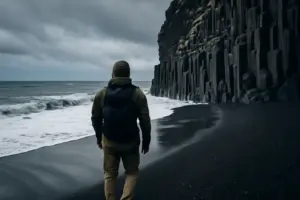
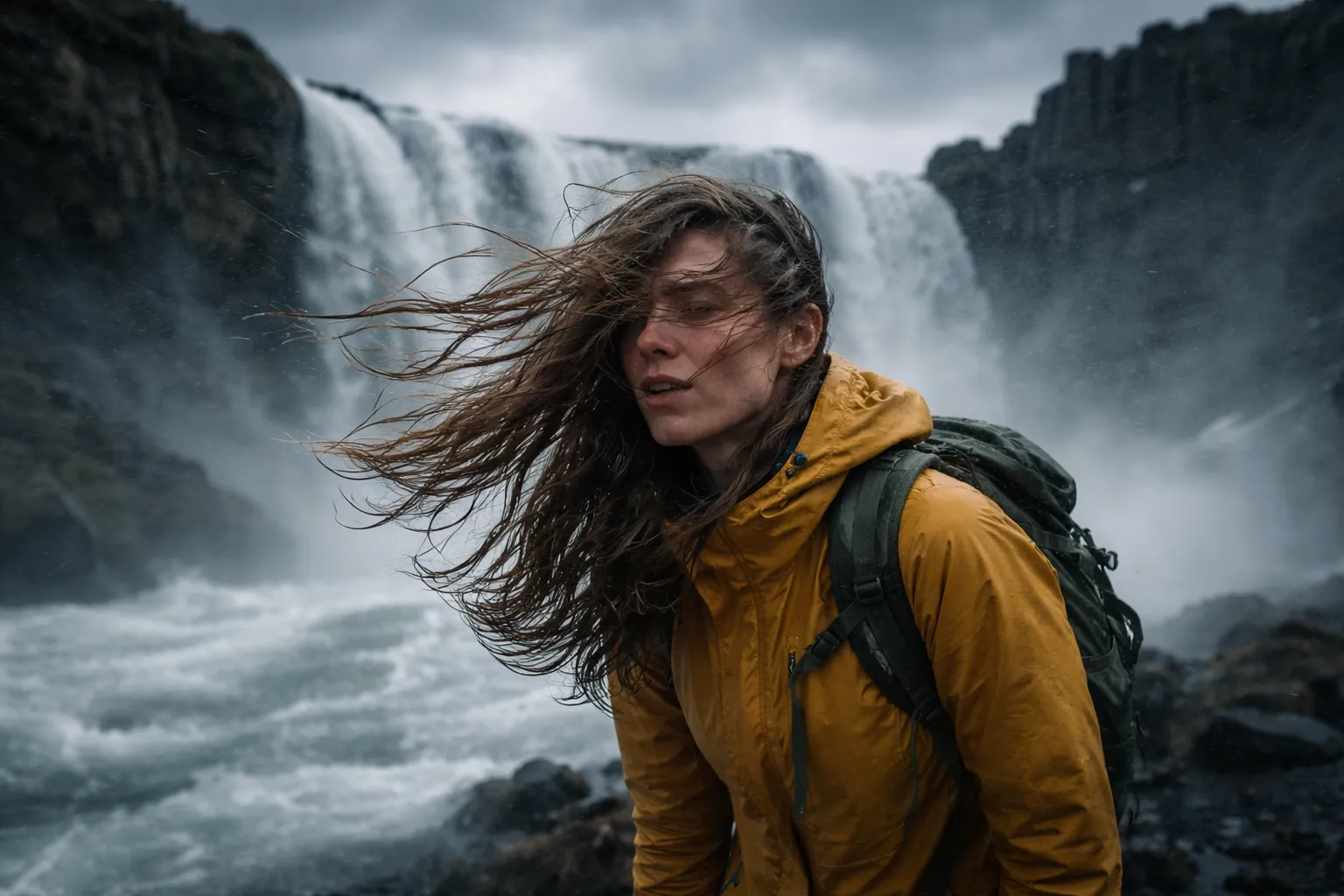
“You won’t need anything special for the waterfalls—just bring a rain jacket,” a fellow traveler told me before my first Iceland trip, and I believed her right up until I was standing at Skógafoss in June (Iceland’s version of summer) getting worked over by what amounted to a horizontal hurricane aimed squarely at my face. The waterfall itself deserved every bit of hype: 60 meters of glacier melt crashing down dark basalt walls, exactly the kind of scene that explains why this island keeps landing in every travel magazine’s rotation. The wind, though, had zero interest in cooperating with anyone’s rain jacket.
Forty miles an hour, with gusts stronger than that. The mist off the falls wasn’t drifting downward—it was traveling sideways, shoved along by air that felt like it had come straight off an ice sheet with nothing in its path. Two minutes in, my eyes were burning. My lips started splitting. My ears felt scoured, like something invisible had taken sandpaper to them. Dozens of other visitors lasted maybe three minutes before throwing in the towel and retreating to their cars, done in by the weather. I didn’t leave. I stayed put for 45 minutes, shooting photos, soaking in the sheer force of the place, genuinely loving the experience. What separated my misery-free 45 minutes from everyone else’s quick retreat came down to a single piece of gear: the best neck gaiter for Iceland wind I’ve come across in years of testing options.
This isn’t some thinly veiled excuse to push gear at you. It’s an explanation of why Iceland’s wind behaves nothing like wind you’ve dealt with anywhere else, why that difference demands a very particular kind of solution, and how finding that solution reshaped what I was actually able to experience on repeat trips to this country.
What Makes Icelandic Wind So Much Worse Than Everywhere Else
I’ve logged plenty of miles in windy places—Colorado’s high country, Patagonia, the Scottish Highlands, terrain where mountains channel gusts into something close to a weapon. Iceland operates on an entirely separate level, and grasping why matters, because wind protection here isn’t a nice-to-have accessory. It’s the difference between a trip that works and one that doesn’t.
Start with the numbers: average wind speeds across Iceland run 15-25 mph all year, and gusts routinely hit 40-50 mph even in the middle of summer. That’s not exaggeration for effect—it’s straight meteorology. The island sits right in the path of the North Atlantic jet stream, and there’s almost nothing on the ground to slow that air down. Mountains are around, sure, but scattered far apart. Trees? Barely any exist. What you get instead is a landscape so open and exposed that wind travels unimpeded for miles.
Here’s the part that separates Iceland from every other windy destination I’ve guided through: this wind carries volcanic debris with it. The whole country sits on a foundation of black sand, volcanic ash, and fine glacial silt. So when the wind picks up—which is constantly—it’s not simply moving air around. It’s flinging countless tiny fragments of rock and mineral that hit bare skin like a spray of needles. Give it twenty minutes with your face uncovered and you’ll finally understand the gap between “it’s a bit breezy” and getting sandblasted.
Now throw water into the mix. Waterfall spray combined with sideways wind creates what meteorologists label “rime ice formation,” though most travelers just call it “why is there ice forming on my face in the middle of June?” At Skógafoss, at Seljalandsfoss, at dozens of other falls scattered across the country, spray and wind team up and genuinely freeze against exposed skin. Your jacket handles your torso fine, but your neck and the lower half of your face are left completely unprotected. It doesn’t take long before you’re finished—lips cracking, ears aching, eyes watering so heavily you can’t actually see the thing you traveled here to photograph.
Conditions can flip in a matter of minutes, too. You’ll set off on a trail at Landmannalaugar under what looks like perfectly manageable skies, and forty minutes later a system has rolled in from seemingly nowhere and is hammering you. The forecast promised “breezy.” Reality had other ideas.
The One Piece of Gear That Rescued My Face at Skógafoss (and Every Windstorm Since)
Iceland’s waterfalls put on an incredible show right up until the wind turns their spray into a sideways attack on your neck and face. I found this out the hard way at Skógafoss, where gusts topping 40 mph forced a choice between taking the sandblasting or walking away without really seeing the falls at all.
What actually held up
- Merino wool genuinely sheds moisture instead of soaking it up—the spray just ran off rather than seeping through and leaving me colder than before.
- It packs down thin enough to toss in a daypack without noticing the extra weight, which meant I stopped skipping it on hikes “just in case.”
- It shielded exactly the areas—neck and lower face—where the wind-blown mist was doing the worst damage, while staying loose enough that it never felt suffocating once it got wet.
Where it falls short
- The lightweight version won’t cut it if you’re genuinely cold—it’s built to manage wind and spray, not to insulate, so a jacket underneath was still non-negotiable.
- It slides around a bit if you’re active or scrambling over rocks, so expect to keep readjusting it rather than forgetting it’s there.
I almost left it off one afternoon because I thought the wind had died down—spoiler: it hadn’t, and I regretted it within minutes. Grab the Buff Lightweight Merino Wool Neck Gaiter before any Icelandic waterfall adventure.
Frequently Asked Questions
What wind speeds should I expect at Iceland’s waterfalls?
Average wind speeds across Iceland run 15-25 mph all year, and gusts routinely hit 40-50 mph even in the middle of summer. At Skógafoss, for example, gusts topped 40 mph strong enough to create horizontal spray and rime ice formation on exposed skin within minutes.
Why does Iceland’s wind feel worse than other windy places?
Iceland’s wind carries volcanic debris—black sand, volcanic ash, and fine glacial silt—that hits bare skin like needles. Combined with waterfall spray, this creates rime ice formation on exposed skin even in June. The landscape is so open with few mountains or trees to slow air movement that wind travels unimpeded for miles.
How can I protect my face at Icelandic waterfalls?
A neck gaiter shields the neck and lower face, the areas where wind-blown mist does the worst damage. Merino wool specifically sheds moisture rather than absorbing it, keeping you dry where cotton would fail. A rain jacket alone won’t protect these vulnerable areas from sideways spray and wind gusts.
Can weather conditions change quickly at Landmannalaugar?
Yes. You can set off on a trail under manageable skies and encounter a system rolling in from seemingly nowhere within forty minutes, even when the forecast predicted only breezy conditions. Weather can flip dramatically in a matter of minutes across Iceland.
About This Article

Written by Elena Vasquez. Elena Vasquez is a full-time traveler and the founder of Witty Passport. Over fifteen years and more than 50 countries across six continents — including a stretch spent leading groups professionally through Southeast Asia and the remote highlands of South America — she's written the kind of destination guides she always wished existed: practical, specific, and built on real experience rather than recycled itineraries. More about this site.
Scope and limits. Elena is a full-time traveler, not a licensed travel agent or immigration adviser. Entry requirements, visa rules, and advisories change without notice — always confirm against the official government source for your destination and passport before booking.
Verify this against a primary source
Specifics change, and your situation may differ from the one described here. These are the authorities worth checking directly:
- U.S. Department of State — entry requirements and travel advisories
- CDC Travelers' Health — vaccination and health notices by destination
- TSA — current carry-on and screening rules