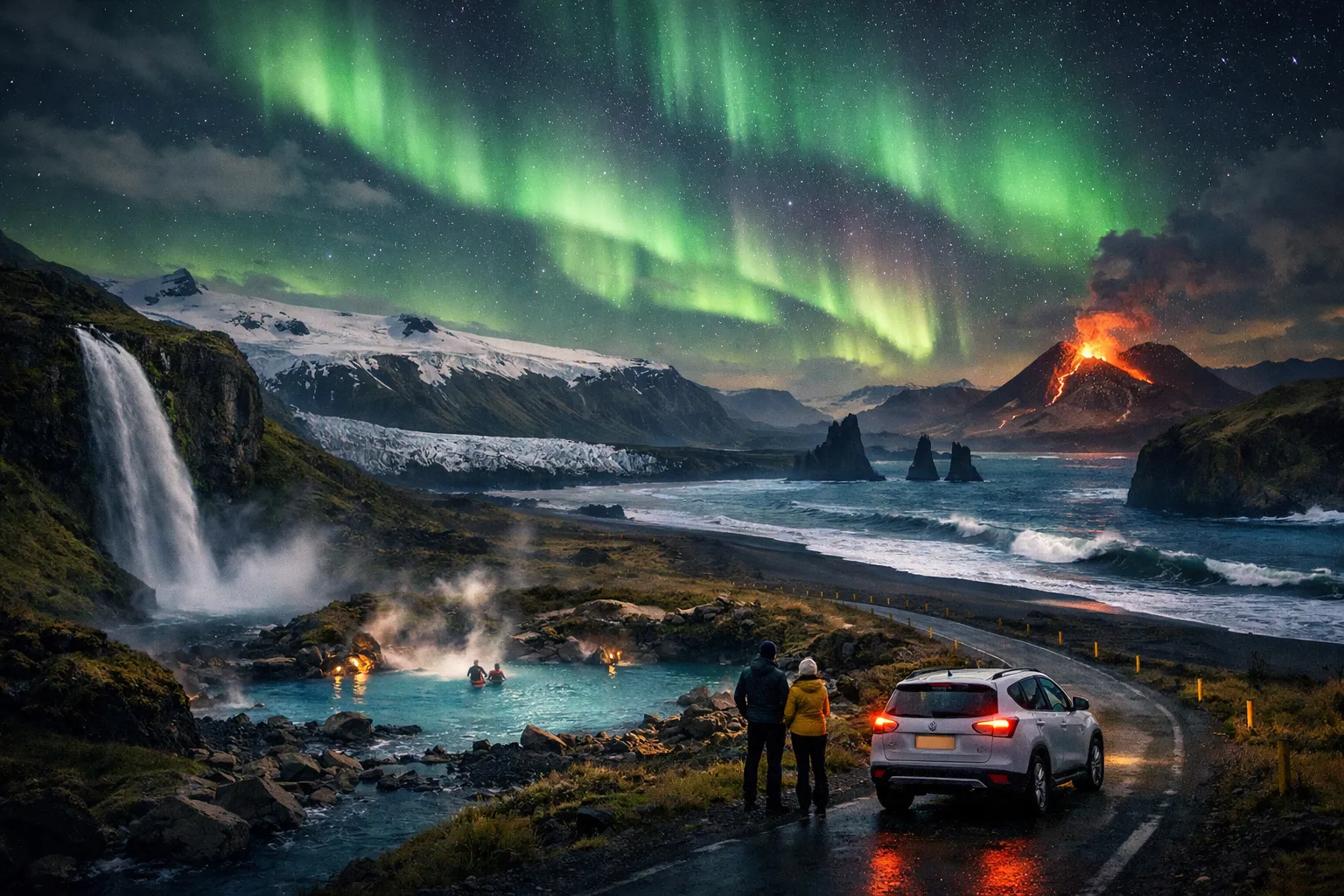
February in my hometown means the sky forgets what color looks like, and that particular year it had worn me down enough that I’d have booked a flight anywhere warm — except I somehow ended up buying a ticket to Iceland instead, which tells you everything about how logic operates once cabin fever really sets in. Eight days followed, all of them spent behind the wheel of a rented Dacia Duster on Route 1 — the Ring Road, if you haven’t heard it called that — chasing waterfalls through sideways sleet, gnawing on granola bars that had gone half-frozen on the car hood at 4:47 in the morning, and stumbling, entirely by accident, onto the most beautiful sight I’ve ever laid sleep-deprived eyes on: a green aurora rippling over the Snæfellsnes mountains, discovered only because a wrong turn had already burned through most of my fuel. Everything in this guide comes from that week on the road — the routes that worked, the timing that didn’t, the mistakes I’d rather you skip — so that your own version of the sublime arrives with considerably less chaos than mine did.
What the Iceland Ring Road Actually Is (and What Nobody Tells You)
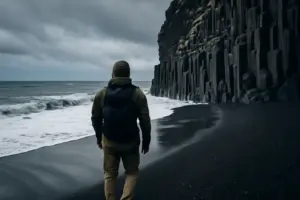
Route 1 — everyone just calls it the Ring Road — runs about 1,332 kilometres in a full loop around Iceland. Starting from Reykjavík, it threads toward the Westfjords, curves along the dramatic South Coast past Skaftafell and the Jökulsárlón glacier lagoon, climbs through the volcanic East Fjords, crosses the broad, wind-scoured plains of the north, and finally swings back through the Snæfellsnes Peninsula to close the circle. On paper, three days would cover the whole route. In reality, expect to stop every twenty minutes because a waterfall, a horse, or some absurdly photogenic mountain will demand it.
I drove it in October — squarely shoulder season. That timing bought me thinner crowds, cheaper places to sleep, and genuine odds of catching the northern lights on nearly every clear night. What it cost me: daylight shrank to somewhere between seven and nine hours depending on location, several highland routes had already shut for winter, and the weather could flip from crisp autumn sun to a sideways blizzard within a single afternoon. One thing worth repeating — Iceland’s weather isn’t scenery in the background. It runs the show.
Before I left home I picked up the Lonely Planet Iceland’s Ring Road Road Trips Guide, which became my single most-used physical object on the trip. It breaks the route into logical stages, flags the exact side roads worth taking, and has pull-out maps that proved useful every single time my phone signal dropped to nothing (which was frequently and without warning). I also grabbed the companion Lonely Planet Journey Iceland’s Ring Road activity book, which sounds gimmicky but actually helped me track notes, sketch rough plans each morning, and feel slightly more organised than I was.
A Secret Hot Spring, a Farmhouse Skyr, and the Guide Who Made the Golden Circle Worth It
Our guide, Einar Sigurðsson, swung open the van door at 8am radiating the energy of a man who’d probably already summited a volcano before coffee — and knowing Icelanders, that wasn’t a stretch. The route was the standard Golden Circle lineup: Þingvellir, Geysir, Gullfoss. But Einar had that early giveaway look of someone who’d already decided to abandon the script. At Þingvellir, he skipped straight past the usual “tectonic plates, neat, snap a photo” routine and told us this exact spot hosted the first session of the Alþingi — Iceland’s parliament — back in 930 AD, making it one of the oldest parliamentary bodies anywhere on earth. The law-speaker of the time had to memorize the entire legal code by heart and recite it publicly every single year. No cheat sheet. Just raw memory and confidence. Below us, the rift between the North American and Eurasian plates split the ground wide open, and honestly I couldn’t decide which fact impressed me more. At Geysir, Strokkur blew roughly every five to ten minutes, sending boiling water some 30 meters skyward and drenching anyone standing on the wrong side — which turned out to be me, twice, because I kept shuffling for a better camera angle like a total amateur. The sulfur hits your nose before the water hits the sky. Hot, eggy, thoroughly volcanic. After my second soaking, Einar just watched, deadpan, and said, “The geysers are also impatient.” Fair enough.
Things got interesting after Gullfoss, where the falls roared loud enough to drown out any conversation and flung cold spray across your face like some overly aggressive facial treatment courtesy of nature. Einar led us off the trail — genuinely off it — into a lava field blanketed in bright, electric moss, toward a steaming hot spring that appeared on no map he’d admit to owning. The water sat at exactly the temperature of a bath somebody ran for you and then forgot about for twenty minutes: not quite right, and somehow perfect for it. Before we headed back, we pulled into a small farm near Selfoss where a woman named Guðrún still makes skyr the old way — strained thick, faintly sour, eaten plain with just a spoon. Einar pointed out that skyr technically counts as a cheese under the old definitions, not a yogurt, no matter what every airport café insists. Guðrún’s batch tasted like that distinction genuinely mattered. Turns out it does.
If a day like Einar’s sounds like exactly the kind of Golden Circle you want, I’m not going to talk you out of it. What’s included varies tour to tour, but a strong guide is the entire difference between checking boxes and actually having a day worth remembering. You can browse similar Iceland tours on Viator to find small-group Golden Circle options built around the kind of detour that makes you forget you’re on a well-worn tourist route.
How I’d Map Out the Same Eight Days a Second Time
I’ll say upfront that this itinerary isn’t flawless — I know because I lived through its flaws firsthand. But if I climbed back into that Duster tomorrow, here’s exactly how I’d break up the days.
Days 1 and 2: Settling Into Reykjavík Before the Golden Circle
Don’t cut Reykjavík short. I nearly did, eager to bank more driving hours, and that would’ve been the wrong call. The capital is compact enough to walk in a single day — Hallgrímskirkja, the harbour, the food stalls along Laugavegur — and spending that day gives your body time to adjust before you’re logging 250-kilometre driving stretches. Day two, loop the Golden Circle straight from the city: Þingvellir National Park, Geysir, Gullfoss. Sure, it’s the itinerary every single tourist runs. There’s a reason it stuck around.
Days 3 and 4: Running the South Coast Toward Höfn
This stretch is the one that ends up in everyone’s photo album, and for good reason. Seljalandsfoss (the waterfall you can actually walk behind), Skógafoss, the black-sand shoreline at Reynisfjara, Skaftafell, and the glacier lagoon at Jökulsárlón all show up back-to-back. My honest advice: go slower here than feels necessary. I raced through on day three trying to beat sunset into Höfn and completely skipped the Fjaðrárgljúfur canyon as a result. I had to circle back for it on the return leg. Learn from that instead of repeating it.
Days 5 and 6: Through the East Fjords Into the North
Most itineraries badly undersell the East Fjords. The road threads through narrow fjords with barely another car in sight, past fishing villages that feel plucked from another century, and a stillness that lands on you physically after the bustle of the south coast. Push on through Egilsstaðir toward Mývatn by day six — the landscape there is volcanic and otherworldly, and even with tired legs, an evening walk through the lava formations at Dimmuborgir is worth every step.
Days 7 and 8: Akureyri, Snæfellsnes, and the Drive Back to Reykjavík
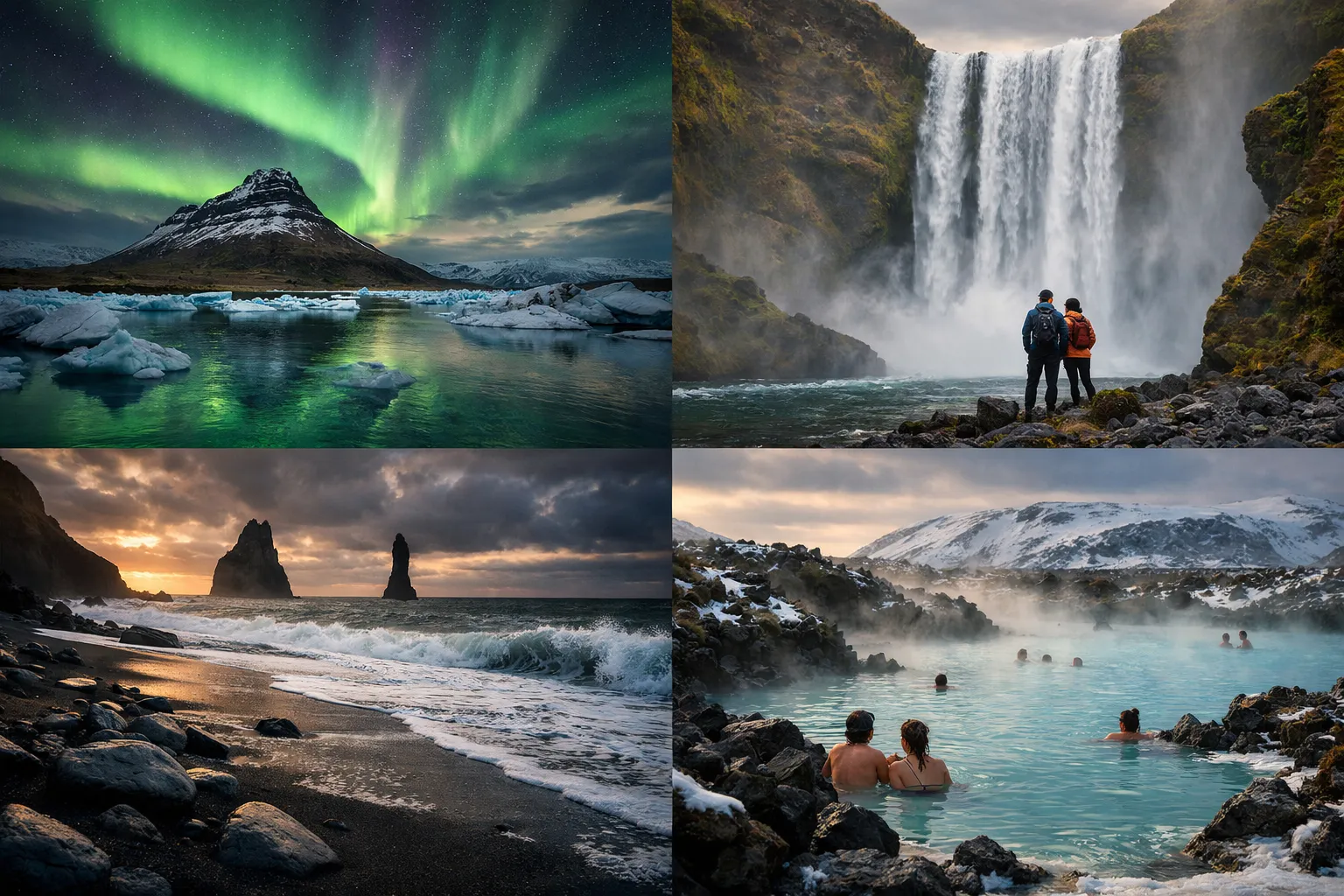
Akureyri, sometimes called Iceland’s northern capital, deserves more than the half-day most visitors allot it. The botanical garden by itself earns an hour of your time. From there, angle west and south toward the capital by way of the Snæfellsnes Peninsula — it juts into the Atlantic and packs in a glacier, a nod to Jules Verne, and some of the most striking coastal cliffs I’ve come across anywhere. This is also where my own aurora sighting happened. If the forecast even hints at clear skies, carve out an early morning here.
The Logistics That Actually Matter
Renting the Car and Reading the Roads
Book ahead, and size up more than feels necessary. I’d reserved a compact and got talked into upgrading to the Duster at the counter, partly because of the October forecast and partly because the upsell was convincing. Zero regrets there. Route 1 itself is fully paved, but you’ll pass dozens of gravel F-roads (the highland routes) branching off it that will tempt you. Many require a 4WD with specific insurance, and Icelandic rental agencies do check. Pull up road.is — the official road conditions site — every morning before you leave, without exception. I checked it obsessively, and it steered me away from at least one genuinely bad call.
Money, Gas, and Meals
Iceland costs a lot. I’ll say that gently once, then repeat it more bluntly: Iceland costs a lot. Fuel prices sting. Grocery stores — Bónus especially, the budget chain — become your go-to for breakfast and lunch supplies. I cooked in guesthouse kitchens far more nights than I ate out, and that choice alone saved real money. One more thing: never drive past a gas station in the East Fjords or the interior north without topping off. Stations can sit 100 kilometres or more apart, a lesson I learned at roughly 94% panic somewhere east of Egilsstaðir.
The Guide That Actually Got Me Ready for Winter on the Ring Road
Eight days on Route 1 adds up to 1,339 kilometers of choices: which detours earn the extra time, where the worthwhile stops hide past the Instagram-famous ones, and whether that gravel side road leads anywhere useful or just to somebody’s driveway. A generic Iceland guidebook falls apart fast when you’re trying to work out whether you’ve got time for Skaftafell before the light disappears at 4 p.m.
Where it delivers
- A day-by-day layout that actually mirrors the Ring Road’s real geography, so you’re not flipping between unrelated chapters trying to stitch together a north-to-south route.
- Driving times and daylight warnings grounded in winter reality, so you don’t end up crawling through 40 km of mountain pass in the dark because the book called it a “45-minute” drive.
- Side-trip picks that cut through the hype, pointing you toward legitimate alternatives to the Seljalandsfoss crowds instead of just naming yet another waterfall.
Where it falls short
- It has no way of accounting for road closures or the week-to-week shifts winter conditions bring — you’ll still need to check local road-status sites yourself each morning before setting out.
- The printed maps run small and cramped; I ended up snapping photos of the key pages on my phone, since squinting at two centimeters of detail while driving simply isn’t workable.
I almost skipped buying this before my trip, thinking Google Maps would be enough — a decision I reversed within the first day when I realized the guide had flagged a whole valley route I’d have missed entirely. Lonely Planet Iceland’s Ring Road Road Trips Guide
Frequently Asked Questions
How long is the Ring Road in Iceland?
Route 1, known as the Ring Road, runs about 1,332 kilometers in a full loop around Iceland. The article also mentions 1,339 kilometers when describing the eight-day itinerary, reflecting the total distance driven including detours and side trips during that journey.
Can you drive the entire Ring Road in three days?
On paper, three days would cover the whole route, but in reality you should expect to stop every twenty minutes because waterfalls, wildlife, or photogenic mountains will demand it. The author completed it in eight days and recommends going slower than feels necessary, particularly through the South Coast.
What time of year did you drive the Ring Road?
I drove it in October, which is squarely shoulder season. That timing bought me thinner crowds, cheaper places to sleep, and genuine odds of catching the northern lights on nearly every clear night, though daylight shrank to between seven and nine hours depending on location.
How far apart are gas stations in Iceland’s remote areas?
Stations can sit 100 kilometers or more apart, particularly in the East Fjords or the interior north. The author learned this lesson at roughly 94% fuel tank panic somewhere east of Egilsstaðir and strongly recommends topping off whenever you see a station in these regions.
About This Article

Written by Elena Vasquez. Elena Vasquez is a full-time traveler and the founder of Witty Passport. Over fifteen years and more than 50 countries across six continents — including a stretch spent leading groups professionally through Southeast Asia and the remote highlands of South America — she's written the kind of destination guides she always wished existed: practical, specific, and built on real experience rather than recycled itineraries. More about this site.
Scope and limits. Elena is a full-time traveler, not a licensed travel agent or immigration adviser. Entry requirements, visa rules, and advisories change without notice — always confirm against the official government source for your destination and passport before booking.
Verify this against a primary source
Specifics change, and your situation may differ from the one described here. These are the authorities worth checking directly:
- U.S. Department of State — entry requirements and travel advisories
- CDC Travelers' Health — vaccination and health notices by destination
- TSA — current carry-on and screening rules