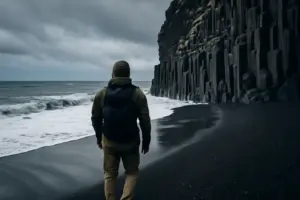
Everyone assumes Iceland only humbles the underprepared backpacker in sneakers — the truth is it catches out anyone who thinks they’ve got this travel thing figured out, and I say that with fifteen years and six continents behind me. I skipped the gap year entirely, moving in a straight line from high school to college to a career, doing everything in the tidy, expected order, until somewhere around 32 it dawned on me that I’d been shelving the “see the world” plan since I was seventeen. So I did what any reasonable person does the moment that realization finally lands: booked a flight to Iceland on two weeks’ notice with essentially zero cold-weather gear packed. By the tail end of day two in Reykjavik, I was standing in a tourist shop near Laugavegur, holding a set of thermal base layers like I’d just unearthed the Holy Grail, while the cashier offered the patient, seen-it-all smile of someone who’s watched this exact scene repeat maybe four hundred times. If this is your first crack at Iceland — whether you’re a fellow late bloomer to travel or just someone who underestimated what the North Atlantic does in October — think of these notes as a way to skip my mistakes, or at least swap them for more interesting ones of your own.

The One Ring Road Guide That Actually Fits in a Day Pack
The Ring Road delivers on scenery, no argument there, but its scale sneaks up on people — what you actually want is real turn-by-turn direction paired with context, not a phone app barking at you to swing left straight into a glacier. A solid guide closes that gap between clocking “there’s a waterfall” and understanding “ah, that’s exactly why people die here.”
Where it earns its keep
- Its maps flag safe pull-off spots and label what you’re actually looking at — far more useful than trusting a Google Maps pin straight into someone’s farm gate.
- Built-in, practical alerts on road conditions and seasonal closures kept me from driving toward a landslide my rental car’s GPS had no clue existed.
- Sections are short enough to skim during a gas station stop, so you’re not stuck plotting the whole day’s route the night before.
Where it falls short
- Hauling it through a full 7-10 day Ring Road loop starts to feel like dead weight — mine got left behind at the Reykjavik hotel by day three.
- A few of the lodging and restaurant picks go stale faster than you’d expect from something priced this high.
I almost ditched it entirely after day two, convinced my phone was enough—until I missed an unmarked turnoff to a valley that apparently has three hidden waterfalls. Lonely Planet Iceland’s Ring Road guide turned out to be the difference between a good trip and one where you actually see everything.
Frequently Asked Questions
What should I pack for Iceland in October?
Thermal base layers are essential—I discovered this the hard way on day two in Reykjavik. Iceland in October catches out anyone unprepared for cold weather, regardless of travel experience. A solid physical guide with maps is equally crucial for navigating safely.
Is a Ring Road guide better than using GPS alone?
Yes. GPS can direct you straight into someone’s farm gate or toward closed roads you don’t know exist. A proper guide like Lonely Planet Iceland’s Ring Road edition flags safe pull-off spots, labels landmarks, alerts you to seasonal closures, and reveals unmarked turnoffs to places like hidden waterfalls.
How long does the Ring Road take to drive?
The full Ring Road loop takes seven to ten days. However, the Lonely Planet guide’s sections are short enough to skim during gas stops, so you don’t need to plot your entire route the night before.
Why do people die at Iceland’s waterfalls?
The article explains that understanding why a location is dangerous—not just that a waterfall exists—is crucial. A detailed guide closes the gap between simply spotting a waterfall and recognizing the actual hazards that make it life-threatening.
About This Article

Written by Elena Vasquez. Elena Vasquez is a full-time traveler and the founder of Witty Passport. Over fifteen years and more than 50 countries across six continents — including a stretch spent leading groups professionally through Southeast Asia and the remote highlands of South America — she's written the kind of destination guides she always wished existed: practical, specific, and built on real experience rather than recycled itineraries. More about this site.
Scope and limits. Elena is a full-time traveler, not a licensed travel agent or immigration adviser. Entry requirements, visa rules, and advisories change without notice — always confirm against the official government source for your destination and passport before booking.
Verify this against a primary source
Specifics change, and your situation may differ from the one described here. These are the authorities worth checking directly:
- U.S. Department of State — entry requirements and travel advisories
- CDC Travelers' Health — vaccination and health notices by destination
- TSA — current carry-on and screening rules