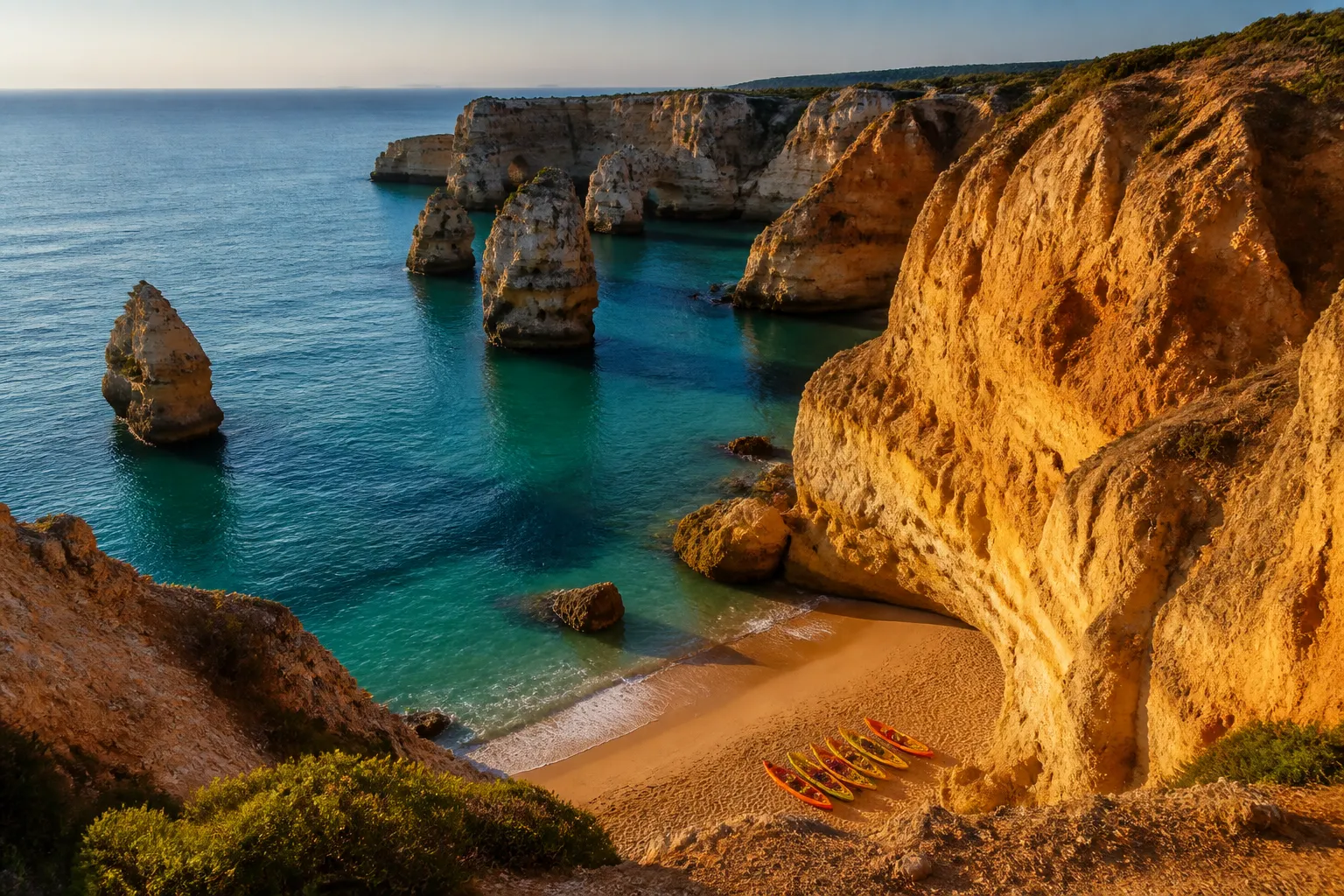
One of my Algarve groups had a guy named Marco who packed exactly two swim trunks and zero long sleeves, convinced Portugal was basically a warmer Spain. He waded into the water at Praia da Marinha, made a sound I can only describe as a wounded seagull, and spent the rest of the afternoon sulking in a beach towel like a scolded toddler. That’s the moment I started warning every single client about this before they ever booked flights: Portugal’s coastline guide isn’t a Mediterranean story. It’s 1,794 kilometers of moody, cliff-carved, genuinely cold Atlantic terrain, and once you stop expecting bathwater, it’s arguably the better trip.
Nobody tells you this part upfront: there is no Portuguese Mediterranean. None. Spain claimed that whole warm-water fantasy for itself, and Portugal got handed something rougher and, frankly, more interesting. Every kilometer of it faces the open Atlantic, which translates to water sitting around 15–22°C depending on the month, waves with real muscle behind them, and limestone cliffs that look hand-chiseled by someone with a flair for drama. Anyone weighing Portugal’s Atlantic coast against the Mediterranean version needs to internalize this before packing a single bikini.
So here’s the plan — I’ll take you region by region through the best of Portugal’s shoreline, so instead of vaguely wondering where this coastline even is, you can build a trip around what you’re actually after.
The Algarve Coastline: Portugal’s Instagram-Famous South
The Algarve is where most people fall in love with Portugal’s coast first, and honestly, it earns that role. Short on time and wondering what’s worth prioritizing? Start here. The cliffs run gold, the coves tuck in nice and sheltered, and the water counts as warm by Atlantic standards — which still means a wetsuit if you’re planning to linger past the five-minute mark.
Praia da Marinha tops the Algarve list, no contest. I don’t say that casually. The striated sandstone cliffs, burnt orange layered against cream, look like a geological wedding cake someone left out in the sun. The cove itself is compact enough to feel personal but big enough to dodge the worst crowds if you show up before 10 a.m. The water runs a jade-green that made me suddenly understand why landscape photographers exist. One caution: there’s no lifeguard on duty, and the currents bite. Arrive early, come prepared, and don’t plan on a long swim.
Praia de Benagil comes next, home to that sea cave you’ve scrolled past a hundred times online. It really is stunning in person — a natural stone cathedral carved into the cliff, reachable only by kayak or a swim that takes more nerve than most people bring (kayak is the sane choice). The downside is that everyone’s seen the same photos you have. Show up at dawn, or make peace with sharing your moment of “solitude” with roughly 200 other people also hunting the perfect shot. Kayak rentals in Benagil village are easy enough to sort out — just reserve ahead if you’re going in summer.
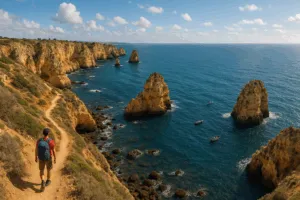
Lagos is the Algarve base I keep returning to — appealing enough to linger in, touristy enough that you’re never short on a decent meal. The rock formations at nearby Ponta da Piedade rise out of the sea like old stone guards, and the light at golden hour here is almost unfair to photograph. The town has real character, solid restaurants, and enough history tucked away to fill a rainy afternoon (and yes, those happen even here).
Sagres sits at the southwestern edge of mainland Europe, and this is where the Algarve stops playing nice. It’s exposed, windswept, and unmistakably a surfer’s town — strong currents, cliffs that mean business, and a genuine sense of standing at the edge of the map. Henry the Navigator founded his school here back in the 1400s, and something of that outward-looking restlessness still lingers in the salty air. Come if you want to feel small for a while. Pack a real jacket.
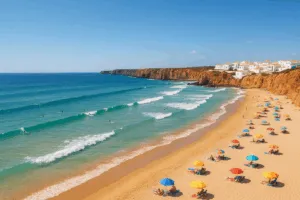
The Algarve coast stretches further to include calmer towns like Portimão and Alvor — nowhere near as photographed, far more suited to families, with sandy stretches that are kinder to young swimmers than the dramatic cliffside coves further west.
Best for: Families, beach holidays, couples, May–September. Water temp: 18–22°C in summer.
Costa Vicentina: Portugal’s Rawest, Least Tamed Stretch of Atlantic
If the Algarve is the crowd-pleasing highlight reel, Costa Vicentina is the obscure track the true fans won’t stop talking about. This might be the least developed coastline left in Western Europe, and that’s not an exaggeration. It falls inside the Vicentine Coast Natural Park, and you won’t find resort strips, high-rise hotels, or a single chain restaurant. It’s beautifully, stubbornly left alone.
This whole stretch caters to people who’d rather rough it than be pampered. Think wild camping, water that stays chilly (15–18°C, even mid-summer), heavy swells, and the Rota Vicentina coastal trail — the kind of hike that leaves your legs aching for days while your head feels completely reset. Beaches here carry names like Praia do Amado (strictly for surfers who know what they’re doing) and feel legitimately far from everything.
This is the region for surfers, dedicated hikers, or anyone whose idea of a great vacation is no cell signal and nobody else in sight. Spring (April–May) and autumn (September–October) hit the sweet spot — summer brings a bit more traffic, but nothing close to Algarve numbers.
Best for: Surfers, hikers, solitude seekers, off-season travel (spring/fall). Water temp: 15–18°C year-round.
Setúbal Peninsula & Arrábida: Atlantic Water, Mediterranean Illusion
This is the stretch where the Atlantic pulls off a disguise. Arrábida Natural Park, just south of Setúbal and about 45 minutes from Lisbon, has limestone cliffs plunging into water so clear and green it could pass for the Mediterranean at a glance. The coves sit tucked away and protected, the water calms down considerably, and you’ll quickly understand why Lisbon locals treat this as their private escape. Praia da Figueirinha and Praia do Galápo are both gorgeous, easy to swim in, and far quieter than anywhere you’ll find in the Algarve.
Don’t get too comfortable, though — it’s still Atlantic water underneath the illusion. Still cold. Still indifferent to your comfort. But the peninsula’s shape creates natural shelter from the wind, which makes swimming and snorkeling genuinely enjoyable here, particularly through the summer.
Best for: Day trips from Lisbon, swimmers, snorkelers, families wanting a “Mediterranean” experience without flying to Spain. 30 minutes from the capital makes this ridiculously accessible.
Costa de Prata: Where the Swells Start Meaning Business
Head north of Lisbon and the whole character of the coast shifts. The Costa de Prata, or Silver Coast, is Portugal’s real surf territory, and it doesn’t hide that fact. Peniche anchors the whole region — a working fishing town that happens to sit near some of Europe’s best breaks, Supertubos among them. Nearby Baleal Island is basically a surf village nested inside a fishing town nested inside a peninsula. It’s rough around the edges in the best way — that’s the whole appeal.
Then comes Nazaré, which claims the world’s largest waves, and it’s not marketing hype. Swells here reach 80 feet, strictly between November and February. Nobody swims here — you watch instead. Crowds gather to see big-wave surfers attempt things that look genuinely unwise from a medical standpoint. Praia do Norte is ground zero for the action, and even from dry land, the sheer force of it is humbling.
Just inland, the Óbidos lagoon offers a completely different world — flat, scenic, and a good backup for kayaking whenever the Atlantic decides to be difficult.
Best for: Surfers, wave enthusiasts, November–February for Nazaré (if you’re brave). Water temp: 14–17°C. This is the real deal cold.
Atlantic vs Mediterranean in Portugal: No Sugarcoating
Given that most people compare this trip to Spain’s Mediterranean side, I’ll say it plainly: these are not the same experience at all. The Mediterranean stays warm, calm, and predictable. Portugal’s Atlantic is temperamental, forceful, dramatic, and occasionally humbling. The temperature gap alone tells the story — Mediterranean waters run 20–26°C, while the Atlantic sits at 15–20°C depending on season and location. In Portugal, that’s a wetsuit conversation, not a casual dip.
Choosing the Atlantic means bigger surf, better conditions if you actually ride waves, more theatrical cliff views, and considerably fewer hours spent lounging poolside in a bikini. You feel nature’s force here rather than admiring it from a sun chair. Neither approach is wrong. Just be clear-eyed about which one you’re signing up for.
Want the classic Mediterranean holiday? Book Spain. Want something rougher around the edges, more genuine, and less packaged for tourists? Portugal’s Atlantic coast delivers precisely that.
Sunscreen Built to Survive Portugal’s Coastal Wind
It’s not only the cold water — Portugal’s coastline also throws constant Atlantic wind at you, the kind that turns ordinary sunscreen into a greasy film within minutes of application. I got burned on day two despite slathering on SPF 30, which is how I learned that spray formulas are the only realistic way to reapply without ending up looking like you fell into a fryer.
What holds up
- Spray form lets you reapply on the move between beach dips — no mirror, no sink, no five minutes of awkward rubbing needed, which matters when you’re bouncing between three different coves in one day.
- A mineral-based formula skips the pilling and that chalky white cast Portugal’s deceptively strong coastal sun tends to expose, so you’ll actually bother reapplying instead of skipping it out of annoyance.
- SPF 50+ genuinely withstands the wind-blown spray and constant saltwater splash you get near the cliffs — ordinary lotions rinse off within the hour if you’re anywhere close to shore.
Where it falls short
- The spray nozzle gets temperamental in humidity or wind, and you’ll burn through half the can just trying to get even coverage on your shoulders while balanced on a cliff edge.
- It costs noticeably more than standard drugstore sunscreen, and you’ll blow through it faster too, since spray application simply isn’t as efficient as rubbing in a lotion.
I almost ditched it halfway through my second week—the cost felt ridiculous for something I was reapplying every 90 minutes—but a nasty burn on day 12 when I switched back to lotion convinced me the spray was worth every euro. Grab the Reef Safe Mineral Sunscreen Spray SPF 50+ before you go.
Frequently Asked Questions
What’s the water temperature along Portugal’s Atlantic coast?
Portugal’s Atlantic water ranges from 15–22°C depending on the region and season. The Algarve runs warmest at 18–22°C in summer, while the Costa de Prata stays coldest at 14–17°C. Even summer swims typically require a wetsuit if you plan to linger past a few minutes.
Is Praia da Marinha safe for swimming?
Praia da Marinha has no lifeguard on duty, and the currents are strong. Arrive early, come prepared, and don’t plan on a long swim. The cove is stunning but demands caution and respect for the Atlantic conditions.
How do I reach the Benagil sea cave?
The sea cave is reachable only by kayak or by swimming. Kayak is the recommended choice. Kayak rentals are available in Benagil village, and you should reserve ahead if visiting in summer to secure equipment.
What’s the best time to visit Costa Vicentina?
Spring (April–May) and autumn (September–October) hit the sweet spot for Costa Vicentina. Summer brings more traffic, though nothing approaching Algarve numbers. The region caters to surfers, hikers, and solitude seekers year-round.
Portugal’s Coastline in Miles (For Those of Us Not Fluent in Kilometers)
If the 1,794km figure didn’t quite land for you, here it is in more familiar terms: Portugal’s Atlantic coastline stretches approximately 1,115 miles. That’s the number, and it’s worth sitting with for a second.
For a sense of scale, driving from Boston to Miami — one of the classic American long-haul road trips — covers roughly 1,500 miles. Portugal’s coastline gets you about three-quarters of the way down the entire Eastern Seaboard. Not bad for a country you could cross by car in a couple of hours. It’s genuinely one of those statistics that reframes the whole place: this small, quietly confident nation on Europe’s western edge has more wild Atlantic shoreline than most people ever get around to exploring. Which, honestly, is exactly why it keeps pulling people back.
About This Article

Written by Elena Vasquez. Elena Vasquez is a full-time traveler and the founder of Witty Passport. Over fifteen years and more than 50 countries across six continents — including a stretch spent leading groups professionally through Southeast Asia and the remote highlands of South America — she's written the kind of destination guides she always wished existed: practical, specific, and built on real experience rather than recycled itineraries. More about this site.
Scope and limits. Elena is a full-time traveler, not a licensed travel agent or immigration adviser. Entry requirements, visa rules, and advisories change without notice — always confirm against the official government source for your destination and passport before booking.
Verify this against a primary source
Specifics change, and your situation may differ from the one described here. These are the authorities worth checking directly:
- U.S. Department of State — entry requirements and travel advisories
- CDC Travelers' Health — vaccination and health notices by destination
- TSA — current carry-on and screening rules