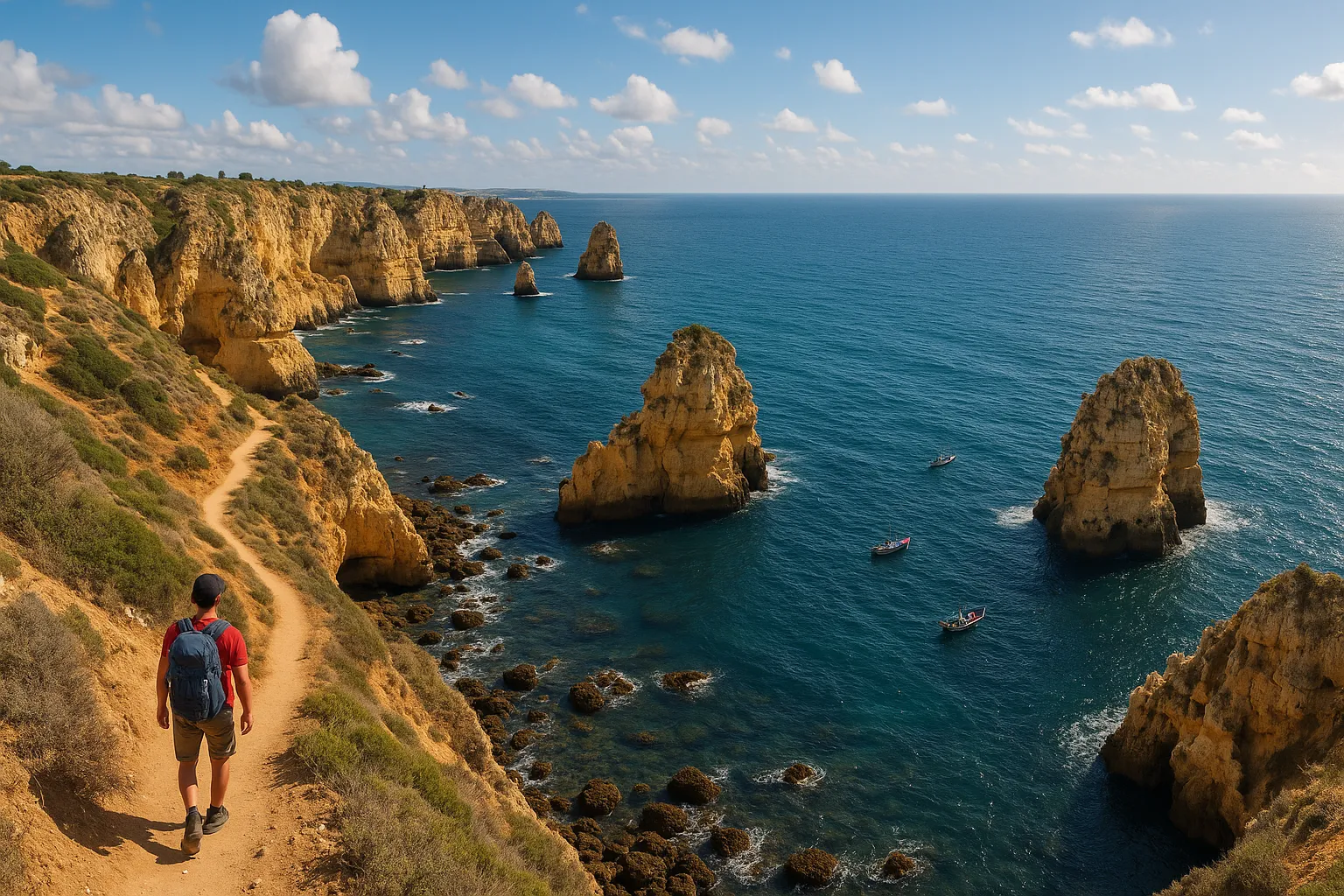
Does going fully remote actually mean you can point at any coastline on the planet and just go there? That’s the question I was turning over the week my company dropped its office lease, and my finger landed on Portugal before I’d even finished asking it, tracing a stretch of Atlantic shoreline that seemed to run forever. For the full beach-by-beach rundown — the golden cliffs of the Algarve, the wild Costa Vicentina, the surf towns further north — I covered all of that here. What’s missing from that guide is this: the sunburn that nearly derailed my second week, and the quiet stretch of Alentejo coast where I ended up spending more time than anywhere else on the entire trip.
Why I Learned the Hard Way About Portugal’s Deceptive Sun
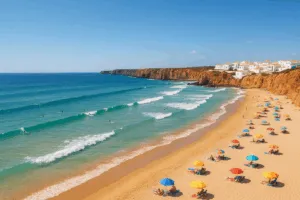
Compared to the Mediterranean, Portugal’s coast reads as forgiving — overcast skies, mild air, that steady Atlantic wind — and the whole combination tricks you into thinking your skin is somehow protected. I found out otherwise on day three, when a burn I didn’t even realize I’d gotten started peeling off in sheets.
What Actually Worked
- SPF 70 isn’t overkill on this coast — between the Atlantic’s glare and skies that look cloudier than they are, you’re taking in far more UV than the temperature suggests
- Even after an hour of wind and sea spray, it never turned greasy, which matters a lot when you’re reapplying every time you move to a new spot on the beach
- It held up through a swim and a fairly rough towel-off afterward — solid staying power for a liquid formula
Where It Fell Short
- Plan on needing more than seems reasonable — a normal bottle disappeared faster than any sunscreen I’ve traveled with, especially once you’re honestly reapplying on the two-hour schedule dermatologists push
- Portuguese pharmacies don’t reliably carry it, so pack your own supply or order ahead rather than counting on finding it locally
I almost skipped reapplication on day five because I’d run low and was annoyed at the cost, and I paid for it with another round of that distinctive Portuguese coastal burn. Neutrogena Sunscreen Lotion Beach Defense SPF 70 is worth ordering in bulk before you go.
A Fast Primer on the Algarve and Costa Vicentina
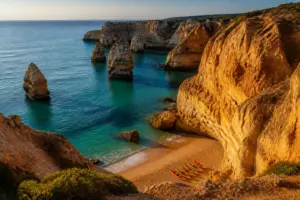
For anyone new to this coastline: the Algarve down south is the polished, busier version — dramatic golden cliffs, easy rental cars, hotels and restaurants that run smoothly, but crowds to match. The Costa Vicentina, just north and west of it, plays nearly the opposite role — windswept, sparsely served, genuinely remote, with long empty beaches you’ll frequently have entirely to yourself. Both get the full treatment — specific beaches, water temperatures, best timing to visit — in the complete coastline guide. What that guide spends less time on is the stretch sitting quietly between the two, which turned out to be my favorite part of the whole trip.
Alentejo: The Coast Portugal Forgot to Advertise
Sandwiched between the Algarve’s foot traffic and the Costa Vicentina’s constant wind, the Alentejo coast manages something neither of the others does: it actually unwinds. This is where calm lagoons hold some of the warmest, shallowest water anywhere in Portugal, and where whole afternoons pass without spotting another laptop-toting remote worker.
Comporta is the closest the Alentejo gets to a recognizable name, and even that’s stretching it. Think a handful of villages set against rice paddies and umbrella pines, with beaches like Praia da Comporta and Praia do Pego feeling closer to a New England beach town than the Mediterranean postcard you’d expect. It attracts a low-key, design-conscious crowd, but nothing approaching Algarve-level crowds.
Melides, a short drive further south, turns things down even quieter. The village sits alongside the Lagoa de Melides, a freshwater lagoon cut off from the ocean by a dune ridge — still, shallow, thick with waterbirds — with the open Atlantic beach just a five-minute walk away if waves are what you’re after. I stayed here longer, in consecutive days, than anywhere else on the trip, mostly because I never found a reason to leave.
Further south still, Santo André pairs a rougher, ocean-facing beach with a genuinely calm lagoon side. The Lagoa de Santo André is a protected wetland with real biodiversity, and it’s a solid spot to rent a canoe if you want a break from swimming against the Atlantic current. None of this is hard to get to — it’s simply quiet enough that most people driving between Lisbon and the Algarve blow right past it.
For anyone working remotely, this is the exact balance I kept steering friends toward afterward: enough amenities to function, none of the overwhelming tourist density, and water calm enough that a swim feels like an actual break rather than a workout against the current.
What Else You’ll Want to Pack and Plan For
Beyond sunscreen, a few other things made this stretch of coast far easier to handle. Throw in a lightweight windbreaker — the Atlantic wind catches people off guard even on days that look warm. A good water bottle earns its keep too; staying hydrated matters, and refill stations aren’t always convenient, especially around the Alentejo’s smaller villages. If remote work is part of your plan, confirm your accommodation’s wifi before you book — I learned this the hard way after a frustrating day spent uploading files over a mobile hotspot at a café by the coast.
If you’ll be swimming regularly, water shoes or reef sandals are worth the space in your bag. Rocks and the occasional sea urchin are real hazards that flip-flops won’t protect you from. And even with Portugal’s solid public transportation, a rental car gives you the freedom to reach the smaller villages and hidden lagoons that make this coastline genuinely worth it. Nearly everything I’ve described in the Alentejo sits past the main tourist infrastructure, reachable only if you drive there yourself.
The Takeaway
Portugal’s coast will burn you faster than it looks like it should, so pack real sunscreen and use it generously instead of rationing it. And if the Algarve’s crowds or the Costa Vicentina’s wind aren’t your speed, give the Alentejo’s lagoons a few days before you decide quiet doesn’t exist on this coast — it does, you’ve just been looking in the wrong region.
Frequently Asked Questions
Why do you get sunburned so easily on Portugal’s coast?
Portugal’s Atlantic coast is deceptively sunny. Overcast skies and mild air make you think your skin is protected, but you’re taking in far more UV than the temperature suggests. The Atlantic’s glare and cloudier-than-they-look skies mean you need SPF 70 and frequent reapplication on a two-hour schedule.
What’s the difference between the Algarve and Costa Vicentina?
The Algarve is polished and busy with dramatic golden cliffs, easy car rentals, and reliable hotels and restaurants, but significant crowds. The Costa Vicentina, just north and west, is windswept and sparsely served with genuinely remote, long empty beaches you’ll often have entirely to yourself.
Where should remote workers stay on Portugal’s coast?
The Alentejo coast between the Algarve and Costa Vicentina offers calm lagoons with warm, shallow water and few other remote workers. Comporta, Melides, and Santo André are quieter alternatives with enough amenities to work while avoiding overwhelming tourist density.
What gear matters most for Portugal’s Atlantic coast?
Bring SPF 70 sunscreen in bulk, a lightweight windbreaker for Atlantic wind, a good water bottle, water shoes or reef sandals for rocky areas and sea urchins, and confirm your accommodation’s wifi before booking if working remotely. A rental car reaches the smaller villages and hidden lagoons most tourists miss.
About This Article

Written by Elena Vasquez. Elena Vasquez is a full-time traveler and the founder of Witty Passport. Over fifteen years and more than 50 countries across six continents — including a stretch spent leading groups professionally through Southeast Asia and the remote highlands of South America — she's written the kind of destination guides she always wished existed: practical, specific, and built on real experience rather than recycled itineraries. More about this site.
Scope and limits. Elena is a full-time traveler, not a licensed travel agent or immigration adviser. Entry requirements, visa rules, and advisories change without notice — always confirm against the official government source for your destination and passport before booking.
Verify this against a primary source
Specifics change, and your situation may differ from the one described here. These are the authorities worth checking directly:
- U.S. Department of State — entry requirements and travel advisories
- CDC Travelers' Health — vaccination and health notices by destination
- TSA — current carry-on and screening rules