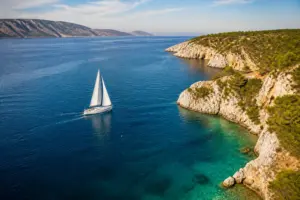

Half the Croatia guides floating around will insist Hvar and Korčula are the only islands worth your ferry ticket; the other half barely whisper Kvarner’s name, treating it like a detour instead of a destination in its own right. The first camp has it wrong. Tucked between the Istrian peninsula and the northern Dalmatian coast, the Kvarner Gulf islands are arguably Croatia’s most underrated island-hopping region — the crowds thin out, prices stay reasonable, and the whole experience feels stubbornly, refreshingly local. Every summer the Dalmatian hotspots drown in party boats and Instagram lines, while Kvarner quietly holds onto something rarer: breathing room, locals who genuinely seem glad you showed up, and a pace of life tourism hasn’t managed to fully rewrite.
Four islands hold this archipelago together, and no two share a personality. Krk is the biggest and best-connected of the bunch — a sensible home base with Roman ruins and a lively main town. Cres runs wild and sparse, all ancient olive groves, circling griffon vultures, and villages that seem stuck a century behind. Lošinj has built its reputation on wellness, thick with Mediterranean greenery, polished marinas, and some of the clearest water anywhere in the Adriatic. Then there’s Rab, carrying a UNESCO-listed medieval old town alongside sandy beaches that could pass for the Greek islands on the right afternoon. Strung together, the kvarner gulf islands form a loop tailor-made for travelers with some curiosity to spare — and this guide walks through exactly how to link it all up.
Solo travel wasn’t something I’d tried before this particular trip, and honestly, the idea rattled me — no one to weigh decisions with, no one else to blame when things went sideways. That discomfort turned out to be the whole point. So I bought a one-way ferry ticket to Krk and decided that if I was ever going to figure out traveling alone, Croatia’s Kvarner Bay — four islands with wildly different personalities, dependable ferry links, and that particular Adriatic light that makes every problem look smaller than it is — was as sensible a starting point as any. What followed was a loosely planned, occasionally chaotic, thoroughly unforgettable circuit through Krk, Cres, Lošinj, and Rab, and this is the guide I wish someone had handed me before I left.
Why Water Shoes Become Non-Negotiable When Island-Hopping Kvarner
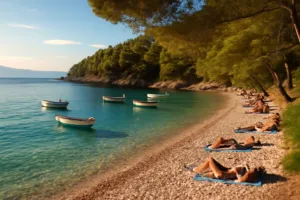
Kvarner’s coastline skips the soft-sand postcard look entirely — it’s sharp, rocky, and unforgiving on bare skin. One morning of picking my way across Krk’s pebbled coves in flip-flops was enough to teach me that the next week would involve either wincing across stone or staying glued to the boat deck.
What Earns Its Keep
- Wading out over the rocky seabed stops feeling like tiptoeing across broken glass, so you end up actually swimming instead of just admiring the water from the shore.
- Between island hops they dry out on deck almost instantly, so you’re not shoving soggy footwear into your daypack or fighting that swampy shoe smell by day three.
- The grip holds up impressively well on wet, algae-slicked rocks — I tested it repeatedly climbing in and out of the water taxi and never once felt my footing slip.
Where They Come Up Short
- Style-wise, there’s none to speak of, so if looking polished while you travel matters to you, expect to look permanently sporty instead.
- They eat up more pack space than you’d think, and anyone bouncing between islands with a slim backpack will notice the bulk right away.
I almost ditched them on day two because I felt self-conscious wearing neon mesh shoes to a waterfront lunch, but the moment I stepped into a hidden cove with a sharp shale bottom, I was grateful I’d kept them. Don’t overthink it—grab a pair of water shoes.
Frequently Asked Questions
Which four islands make up the Kvarner Gulf island-hopping loop?
The four islands are Krk, Cres, Lošinj, and Rab. Krk is the biggest and best-connected, with Roman ruins and a lively main town. Cres features ancient olive groves and circling griffon vultures. Lošinj is known for wellness and clear Adriatic water. Rab has a UNESCO-listed medieval old town and sandy beaches.
Why is Kvarner less crowded than Hvar and Korčula?
The Kvarner Gulf islands are arguably Croatia’s most underrated island-hopping region where crowds thin out, prices stay reasonable, and the experience feels local. While Dalmatian hotspots drown in party boats and Instagram lines every summer, Kvarner quietly maintains breathing room and a pace of life tourism hasn’t fully rewritten.
What type of coastline should I expect in Kvarner?
Kvarner’s coastline skips the soft-sand postcard look entirely—it’s sharp, rocky, and unforgiving on bare skin. The rocky seabed means wading out stops feeling uncomfortable once you have proper footwear, and you can actually swim instead of just admiring the water from shore.
Are water shoes necessary for island-hopping in Kvarner?
Water shoes are highly recommended for Kvarner’s rocky coastline. They provide grip on wet, algae-slicked rocks without slipping, let you wade comfortably instead of wincing across stone, and dry out almost instantly on deck between island hops.
About This Article

Written by Elena Vasquez. Elena Vasquez is a full-time traveler and the founder of Witty Passport. Over fifteen years and more than 50 countries across six continents — including a stretch spent leading groups professionally through Southeast Asia and the remote highlands of South America — she's written the kind of destination guides she always wished existed: practical, specific, and built on real experience rather than recycled itineraries. More about this site.
Scope and limits. Elena is a full-time traveler, not a licensed travel agent or immigration adviser. Entry requirements, visa rules, and advisories change without notice — always confirm against the official government source for your destination and passport before booking.
Verify this against a primary source
Specifics change, and your situation may differ from the one described here. These are the authorities worth checking directly:
- U.S. Department of State — entry requirements and travel advisories
- CDC Travelers' Health — vaccination and health notices by destination
- TSA — current carry-on and screening rules