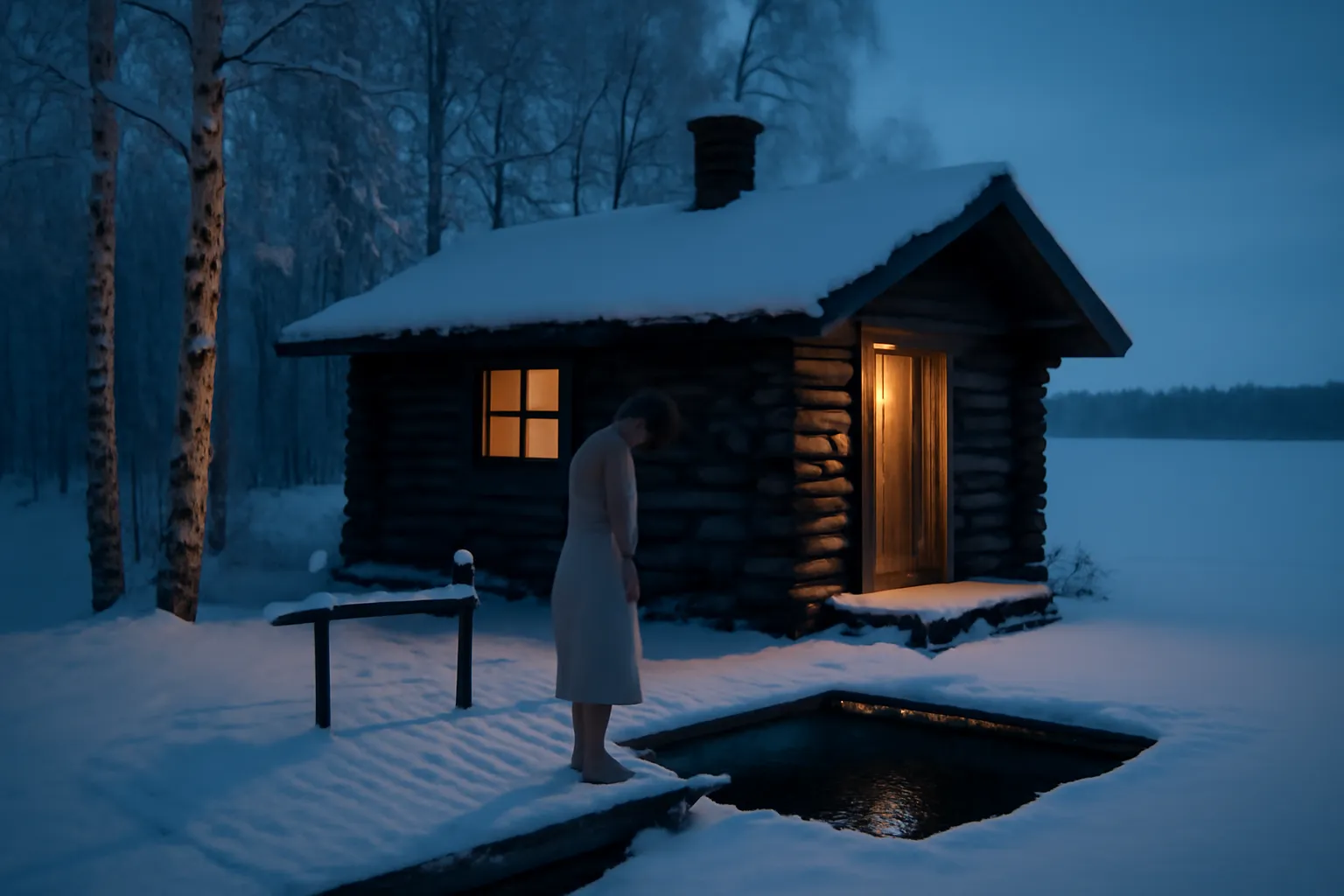
So what actually happens the first time a Finn sees you walk into a sauna wearing swim trunks? I can answer that one precisely, because it happened to me outside Tampere, in a wooden lakeside cabin, towel slung over my shoulder like a man who’d done his research. My colleague Mikko turned from the bench — fully, unhurriedly, unbothered naked — and gave me a look normally reserved for someone confessing they like pineapple on pizza. Nobody said anything. Nobody needed to. The three other Finns already settled on the benches, also naked, glanced at my swimwear and then politely looked elsewhere, which somehow landed worse than if they’d just laughed. In roughly three seconds I’d become the cultural equivalent of showing up to a funeral in a top hat. Off came the trunks. Down I sat. Mikko ladled water onto the stones and the room briefly turned into a small, furious sun. The temperature jumped from a mild 80°C to something my nervous system swore was 110°C, in about four seconds. My ears felt like they were being slow-roasted on a spit. Then Mikko said it was time for the lake. Through the little window I could see the frozen surface of Näsijärvi and the neat rectangular hole someone had sawed through the ice, and I understood instantly that this wasn’t a suggestion. This is finnish sauna etiquette what to know — the part nobody mentions until you’re already standing there, overheated and underdressed.
Why Finnish Sauna Culture Is Unlike Anything Else Tourists Expect
One number should reset your expectations before you’ve even booked the Helsinki flight: Finland has something like 3.3 million saunas for a population of 5.5 million people — about one sauna for every 1.7 residents, which means the country has more saunas than cars. Parliament has one. Factories have them. Corporate offices have them. The little cooldown room next to the sauna, where you sit and drink a cold beer between rounds, is called the pukuhuone in Finnish, and yes, it comes with its own unspoken rulebook too. None of this is a wellness fad or a spa add-on. The finland sauna culture tourists guide nobody hands you at passport control boils down to one idea: sauna is the country’s most intimate, most democratic, and most emotionally loaded institution, full stop.
The roots of this go back millennia. The original version was the savusauna, or smoke sauna — a log cabin with no chimney at all. You’d build a serious fire, let the stones soak up heat for five or six hours, wait for the smoke to clear out, then climb inside. The walls end up blackened, and the air carries a heavy, ancient warmth that electric saunas never quite manage to fake. You can still find it today at Rajaportin Sauna in Tampere, Finland’s oldest public sauna, running continuously since 1906, or at Löyly on the Helsinki waterfront, where a wood-burning sauna sits right alongside the building’s sleek, architect-designed cedar shell.
What all of this means for a visitor is that Finnish sauna culture runs on rules that everyone feels deeply and almost nobody says out loud. Nudity is the standard, not the exception. Wearing a swimsuit inside a private or traditional public sauna sends the same message as keeping your shoes on inside someone’s home — it suggests you don’t trust your hosts, or don’t trust yourself, or, worse, that you think the sauna is about bodies instead of belonging. The löyly, the steam released when water hits the superheated stones, belongs to everyone in the room. You ask before adding more. You start light so people can adjust. You don’t monopolize the ladle. You sit on your own small towel, the pyyhe, out of consideration for whoever uses the bench after you. Voices stay low. Eyes stay to yourself. Mostly, you just breathe. What’s remarkable is watching famously reserved Finns unwind here in ways they won’t anywhere else — business gets negotiated in saunas, hard family talks happen in saunas, and it’s often the one place Finns will actually cry or laugh without holding back.
And then there’s the ice. The avanto, a hole cut straight through frozen lake ice, isn’t some quirky bonus round tacked onto the end — it’s the actual point of the whole ritual. Swinging between extreme heat and extreme cold does something to your body that’s hard to describe and, once you’ve felt it, genuinely hard to stop chasing. A medical reason to skip it is fine. Skipping it out of fear, though, tends to get noted — politely, but permanently.
The Wool Hat That Kept Me From Turning Into a Boiled Lobster
Finnish sauna heat hits a level that would make a lizard question its choices, and your scalp absorbs most of it. I found this out the slow, painful way — by my second visit, my scalp was tender enough that even a lukewarm shower felt like an insult, and it finally clicked that I was the only person in the room without any head protection.
Why it earns its keep
- Felted wool genuinely insulates instead of just perching there — your head stays cool while the rest of you melts happily, which is basically the whole exercise.
- It tells every Finn nearby that you’ve actually studied up on sauna etiquette, which buys you a quiet nod of approval — or at least spares you the pineapple-pizza stare.
- Unlike synthetic versions, real wool doesn’t soak up sweat, so it stays light and stays put even when you’re — let’s be honest — completely naked and slick.
Where it falls short
- It looks a bit like a felt mushroom sitting on your head, and the first glimpse of yourself in a mirror will absolutely deliver a moment of self-doubt — there’s no dodging that.
- Packing it is a small hassle since it’s bulky and awkwardly shaped, hogging suitcase space for something you’ll actually wear only a few times per trip.
I almost ditched it before my third sauna visit, thinking I was overthinking the whole thing, but that’s when I realized my scalp actually felt normal again. That’s when I knew: Halsa Sauna Hat for Men & Women – 100% Natural Wool Felt Finnish Banya Cap
Frequently Asked Questions
Do Finns really wear swimsuits in saunas?
No. Nudity is the standard in Finnish saunas, not the exception. Wearing a swimsuit inside a private or traditional public sauna sends the message that you don’t trust your hosts or yourself, or that you think the sauna is about bodies instead of belonging.
What is the avanto in Finnish sauna culture?
The avanto is a hole cut straight through frozen lake ice. It’s not a quirky bonus round but the actual point of the whole ritual. Swinging between extreme heat and extreme cold does something to your body that’s hard to describe and genuinely hard to stop chasing once felt.
How many saunas does Finland have?
Finland has something like 3.3 million saunas for a population of 5.5 million people—about one sauna for every 1.7 residents. This means the country has more saunas than cars, and they’re everywhere from Parliament to factories to corporate offices.
What’s the oldest public sauna in Finland?
Rajaportin Sauna in Tampere is Finland’s oldest public sauna, running continuously since 1906. It’s a smoke sauna, or savusauna—a traditional log cabin with no chimney where walls end up blackened from the ancient heating method.
About This Article

Written by Elena Vasquez. Elena Vasquez is a full-time traveler and the founder of Witty Passport. Over fifteen years and more than 50 countries across six continents — including a stretch spent leading groups professionally through Southeast Asia and the remote highlands of South America — she's written the kind of destination guides she always wished existed: practical, specific, and built on real experience rather than recycled itineraries. More about this site.
Scope and limits. Elena is a full-time traveler, not a licensed travel agent or immigration adviser. Entry requirements, visa rules, and advisories change without notice — always confirm against the official government source for your destination and passport before booking.
Verify this against a primary source
Specifics change, and your situation may differ from the one described here. These are the authorities worth checking directly:
- U.S. Department of State — entry requirements and travel advisories
- CDC Travelers' Health — vaccination and health notices by destination
- TSA — current carry-on and screening rules