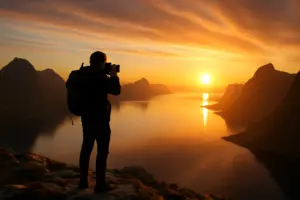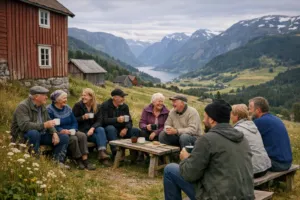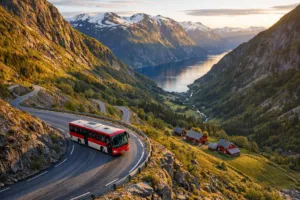
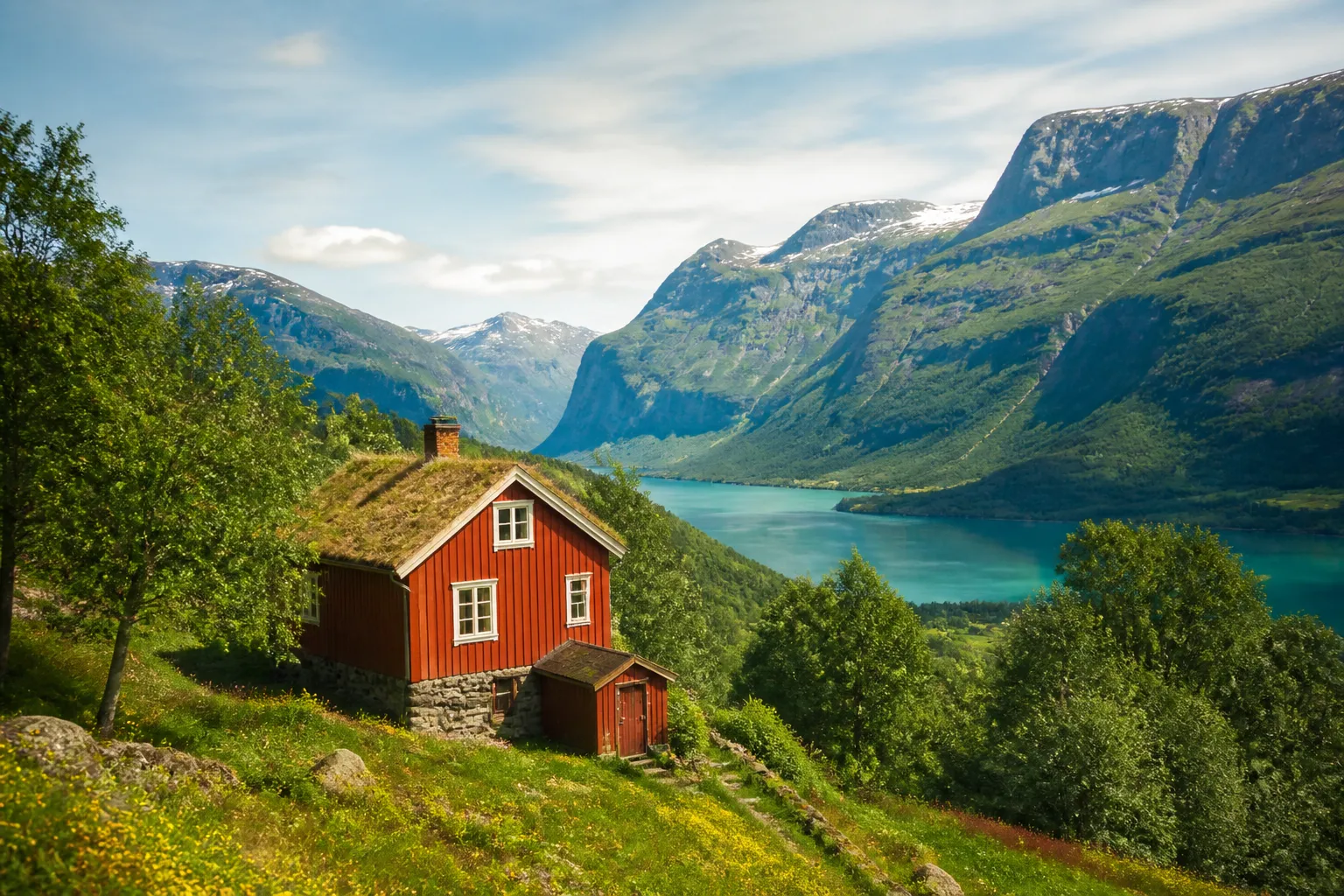
I’m sitting in a tiny café in Balestrand, nursing a cup of coffee that costs more than a small car payment, and I realize I haven’t seen another tourist in three hours. A local farmer just nodded at me—actual eye contact, no phones—before heading back to his truck. This is what I came to Norway for, and it’s absolutely nothing like my Oslo hotel lobby experience two weeks ago. If you’re planning a Norway countryside travel guide adventure, forget everything you think you know about Norway being a crowded Instagram destination. The real magic lives here, in the quiet valleys and on the mountain roads where 5.5 million people somehow manage to disappear entirely.
This post contains affiliate links. As an Amazon Associate, I earn from qualifying purchases.
Norway’s population roughly equals Scotland’s, but it’s spread across a landmass larger than Germany. Outside Oslo and Bergen, you’ll find pristine landscapes, intimate farming communities, and consistently world-leading quality of life. But here’s the thing nobody tells you: experiencing rural Norway travel requires understanding how Norwegians actually live—and that’s a fundamentally different mindset than the typical tourist circuit.
The Allemannsretten: Norway’s Legal Invitation to Roam
Before I explain where to go, you need to understand the law that makes Norwegian countryside experiences genuinely unique. The Allemannsretten (Right to Roam) is an ancient Norwegian principle that grants every person—tourists included—the legal right to walk, camp, kayak, and forage anywhere in nature, even on private land. This isn’t polite suggestion. It’s law.
But—and this is critical—it comes with rules. You must:
- Camp at least 150 meters from the nearest house or hytte (cabin)
- Limit your stay to two consecutive nights in one spot
- Leave no trace (pack out everything you pack in)
- Respect private gardens and cultivated areas
- Ask permission if you’re within 150 meters of a home
This legal framework fundamentally changes how you experience norway life in the countryside. You’re not just hiking designated trails; you’re genuinely moving through the landscape as locals do. I’ve pitched a tent in a farmer’s field (with permission, 200 meters from his house), kayaked across pristine fjords, and picked wild blueberries on a mountainside—all completely legal. The Allemannsretten is the skeleton key to understanding why Norwegians treasure their countryside so fiercely.
Rural Norway Travel: The Fjord Regions Beyond the Postcard
Everyone knows Geirangerfjord and the Norway in a Nutshell route. I’m going to steer you somewhere better.
Sunnmøre: Fjords Without the Crowds
The Sunnmøre region—particularly the towns of Ørsta and Volda—offers the same jaw-dropping fjord scenery as its famous cousins, except you’ll encounter approximately zero other tourists. The steep mountainsides, mirror-water fjords, and dramatic weather systems are identical to the postcard versions. The difference? You’ll have them to yourself. Stay in Volda’s small center, rent a car, and spend your days driving the narrow roads that trace fjord edges. The Atlanterhavsveien (Atlantic Ocean Road) is nearby and genuinely worth a drive—it’s a 8.3-kilometer route hugging the coastline with viewpoints that’ll make your phone storage weep.
Hardanger: Apple Orchards and Hidden Plateaus
Hardanger is where Norwegians go when they want to pretend they’re not Norwegian anymore. Apple orchards blanket the valleys—seriously, more apples per capita than anywhere else in Norway. Several local cideries have opened in the past decade (try Hardanger Sider), and the Hardangervidda plateau above the valley offers hiking trails that span from gentle riverside walks to genuine mountain challenges. The Hardanger region balances norway small towns guide charm with serious outdoor access.
Valdres: Stave Churches and Folk Heritage
— /wp:heading –>If you’re seeking the soul of Norwegian countryside culture, Valdres delivers it in spades. This agricultural region is dotted with traditional stave churches—wooden structures that look like they were assembled by elves—and the Norwegian Folk Museum in Fagernes offers genuine insight into rural life across centuries. The towns are small (Fagernes population: roughly 2,000), the valleys are green, and locals still dress in traditional bunad for special occasions. It’s not touristy because it doesn’t try to be.
Norway Villages Off the Beaten Path: Small Towns Worth Your Time
Ålesund: Art Nouveau and Seafood Excellence
Ålesund punches above its weight class. Population 7,000, but it’s an architectural gem—almost entirely rebuilt in Art Nouveau style after an 1904 fire. Wander the steep streets (your calves will complain), climb the Aksla viewpoint (418 steps for one of Norway’s best vistas), and eat seafood that makes landlocked travelers weep. The fish soup here is legendary; the king crab is fresh daily. Ålesund proves that size has nothing to do with experience quality.
Balestrand: Historic and Strangely Royal
— /wp:heading –>Balestrand sits on the Sognefjord (Norway’s largest fjord) and has hosted everyone from Kaiser Wilhelm II to contemporary Norwegian artists. It’s genuinely small—maybe 1,500 people—but it has the infrastructure to accommodate visitors without feeling overrun. The Kvanndalsstranda beach is lovely, the seafood restaurants are excellent, and the architecture is a mix of Victorian and traditional Norwegian wooden buildings. It’s the rare small town that feels both authentic and welcoming.
Røros: A Living Museum That Doesn’t Know It’s a Museum
Røros is UNESCO-listed and should feel like a tourist trap. Somehow, it doesn’t. The colorful wooden buildings date back to the 17th century (it was a copper mining town), and they’re genuinely still inhabited—not restored for tourism but lived in by actual Norwegians. Walk the streets, visit the old smelter, drink coffee at a local café, and you’ll understand why this place feels like stepping into a very comfortable time machine.
The Norwegian Countryside Experience: Hytte Culture and How to Live Like a Local
Here’s what most visitors don’t understand: roughly 25% of Norwegian households own a hytte—a cabin, usually in the countryside or mountains. Norwegians don’t vacation to cities; they retreat to cabins. This is norwegian countryside experience at its core. You can rent a hytte through Finn.no (Norway’s primary rental site), Airbnb, or the specialized Norges Hytter platform. A modest cabin sleeps 4-6 people and costs roughly 800-1,200 NOK per night ($75-115 USD).
Renting a hytte transforms your trip. You’ll shop at Coop supermarkets, prepare meals in a basic kitchen, and experience the rhythm of Norwegian life—early mornings, coffee before breakfast, long afternoons in nature, quiet evenings reading or playing cards. It’s slower. It’s cheaper than hotels. It’s exactly how Norwegians actually live.
The Cabin Kitchen: Brunost and Mountain Coffee
Norwegian cabin cuisine is simple but distinctive. Brunost (brown cheese, which looks like caramel and tastes like caramel-coated savory heaven) is mandatory. Flatbrød with smoked salmon is a hytte staple. And the Kvikk Lunsj chocolate bar—Norway’s answer to the Kit Kat—exists for a reason: every Norwegian hike comes with a chocolate break. Buy these at any supermarket and understand why Norwegians attach chocolate to outdoor activity.
For coffee, carry a thermos. Norwegian mountain viewpoints don’t have cafés. They have silence, views, and thermos-carrying locals who understand priorities.
Walking Routes and Pilgrim Paths Through Rural Norway
Norway’s most famous long-distance walk is St Olav’s Way (Pilegrimsleden)—a 643-kilometer pilgrimage route from Stiklestad to Nidaros Cathedral in Trondheim. The full walk takes about a month, but here’s the secret: you don’t have to do the whole thing. The southern sections pass through farmland, forests, and genuinely rural Norwegian landscapes. Walking just 3-4 days (say, sections around Hamar or Lillehammer) gives you the essence without the commitment. You’ll stay in small pilgrim hostels, eat simple meals, and experience rural norway travel at a human pace.
Why I Finally Stopped Getting Soaked on Norwegian Back Roads
Norway’s countryside doesn’t care about your travel plans, and neither does the weather. I learned this the hard way during a three-day hiking loop near Sognefjord, where “scattered showers” apparently means “sideways rain for eight straight hours.”
What works
- Actually sheds water instead of just looking waterproof—I’ve worn jackets that failed within the first hour; this one stayed dry through a genuine downpour while I was navigating a muddy trail with no shelter for miles.
- Doesn’t balloon you into an unwieldy mess—the fit is snug enough that it works under a backpack without creating a wind-catching sail, which matters when you’re hiking exposed ridges where weather changes in minutes.
- Packs down small enough to actually keep in your daypack instead of strapped to the outside—I realized halfway through day two that I could have packed this instead of my bulkier rain shell, freeing up space for layers that actually mattered.
What doesn’t
- The zippers are a bit sticky when wet, and fumbling with waterproof gear when your hands are already cold and damp is its own special frustration.
- It’s loud—and not just a little. Brush against a tree or move quickly and you’ll hear yourself before you hear the fjord, which defeats the purpose if you’re out there for the quiet.
I nearly abandoned rain gear altogether after my third wet day in the Balestrand area, convinced it was all marketing hype and bulk. Then I grabbed this one on a whim, and it actually proved me wrong. UIQUR Men’s Rain Jacket
This post contains affiliate links. As an Amazon Associate, I earn from qualifying purchases at no extra cost to you.