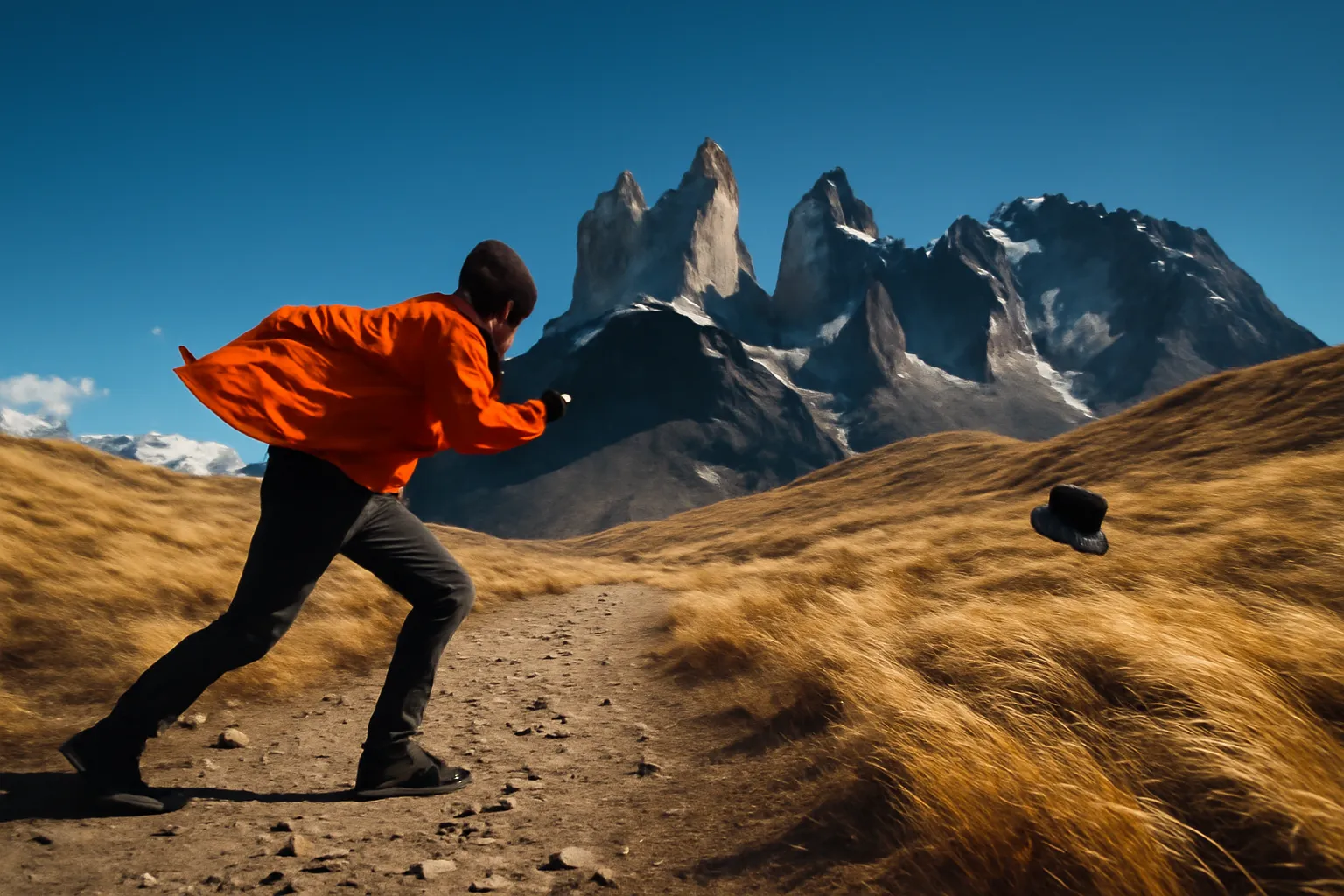
I lost my hat to Patagonia forty-five minutes into a seven-hour trek. Not misplaced it. Not forgot it at the refugio. Lost it — as in, a gust of wind that felt like a freight train made a direct personal decision to remove it from my head, and I watched it sail, in a graceful, almost ceremonial arc, directly into a glacial lake the color of powdered turquoise. Gone. The hat, the shade, and what remained of my dignity — all of it, into the water. I’d done my research before heading to Torres del Paine. I thought I understood Patagonian wind. I had read the warnings, nodded solemnly at blog posts, and even laughed a little at the dramatic language. “Horizontal wind.” Sure. “Gusts exceeding 100 km/h.” I’ve been to Chicago, I thought. I know wind. Reader, I did not know wind. What I know now — after hiking the W Trek, standing on the exposed steppe between Valle del Francés and Mirador Las Torres with my face turning the color of a boiled lobster, desperately shielding my eyes with a trekking pole — is that finding the best hat for Patagonia wind hiking is not a preference. It is a survival strategy. Everything that follows is what I wish someone had told me before I booked that flight to Punta Arenas.
Why Patagonian Wind Is Not Wind — It’s a Weather System With a Grudge
Here’s what the guidebooks gloss over: the wind in Chilean Patagonia is not weather in the way that rain or cold is weather. It is a permanent atmospheric condition, and it has been shaping this landscape — and humbling humans who dare enter it — for millennia. The Paine massif sits at roughly 51°S latitude, and the mountains act as a funnel for the Roaring Forties and Furious Fifties — the bands of near-constant westerly winds that tear across the Southern Ocean with nothing to slow them down. No landmass. No friction. Just open ocean from the tip of Patagonia to Antarctica, and then those winds slam into the mountains and accelerate through every valley and pass like water through a nozzle.
During summer hiking season (November through March), wind speeds of 60 to 80 km/h are a perfectly normal Tuesday. The John Gardner Pass on the O Circuit regularly sees gusts above 120 km/h. Rangers have been known to close the pass entirely, not as a dramatic precaution, but because people have literally been knocked off their feet. The wind changes direction without warning — it will be pushing you from the left for an hour, and then, in the time it takes you to pull a snack from your hip belt, it will be hitting you in the face.
Then there’s the UV situation, which almost nobody talks about. At 50–51°S, the ozone layer over the Southern Hemisphere is measurably thinner, and the Southern Hemisphere summer sun at altitude amplifies this further. On a clear Patagonian day — and there are many of them, because the same wind that destroys you also rips the clouds away — the UV index can hit 10 or higher. The trails along the W Trek offer essentially zero shade. The lenga beech forests are beautiful, but the long steppe sections between them are completely open. You are exposed, in both senses of the word: physically to the sun, and emotionally to the scale of your own smallness.
The Kawésqar people, who inhabited the channels and islands of Patagonia for thousands of years before European contact, survived by sealing their bodies with animal fat to resist the cold and wind. The early European settlers who came to ranch sheep in the late 1800s wore heavy, oiled wool from head to toe. Both groups understood something that takes modern hikers a full day to learn the hard way: this landscape requires full-body commitment to its weather, and your face and head are not optional coverage areas.
The One Piece of Torres del Paine Wind Gear That Changed How I Hike Patagonia
After the glacial lake incident, I spent two days at the EcoCamp Patagonia between trekking sections, doing what any reasonable person does when humbled by a foreign landscape: obsessive internet research in a communal geodesic dome while eating enormous amounts of Chilean cazuela. I needed torres del paine wind gear that would actually stay on my head. I had tried the hat-and-sunglasses combination with a casual clip. I had tried tucking the hat under my hood. I had tried, humiliatingly, using a hair elastic around my chin, which worked for approximately four minutes before the elastic snapped and the hat departed for Argentina.
What I found, and what I’ve now used across three separate Patagonia trips, is the Wide Brim Sun Bucket Hat, Waterproof Boonie Hat for Men & Women. I know. “Boonie hat” does not sound like it belongs in the same sentence as “one of the most dramatic mountain landscapes on Earth.” But let me tell you exactly why this hat works where everything else fails, because it comes down to specific engineering details, not aesthetics.
The adjustable chin strap is the entire reason this hat exists, functionally speaking. And I want to be precise about this, because I’ve seen hikers on the trail with chin straps they’ve left loose, swinging under their jaw like a decorative fringe. A loose chin strap in Patagonian wind is useless — the wind will simply get under the brim and lift the hat right off your head, strap and all. The strap on this hat cinches snugly under the chin with an adjustable toggle, and when it’s properly tightened, it keeps the hat planted even when a gust hits you sideways at full force. It is, genuinely, a windproof hat in a way that most hats marketed as windproof are not.
The wide, stiff brim is the second non-negotiable feature. Floppy brims fold directly into your eyes in high wind, which is both dangerous and deeply annoying when you’re trying to navigate a rocky ridgeline. This brim holds its shape. It also provides real UV coverage for your ears, the back of your neck, and your cheeks — the areas that get torched first on the exposed Patagonian steppe when you’re facing into the sun. The waterproofing is a quiet bonus: the afternoon downpours in Patagonia arrive without ceremony, and this hat doesn’t turn into a soggy mess that drips onto your face for the rest of the day.
One honest limitation: the hat’s packed size is not as compact as a foldable baseball cap. It takes up real space in a daypack or backpack lid. On long-haul flights and in city days in Puerto Natales or Punta Arenas, it’s slightly awkward to carry if you’re not wearing it. This is a trail hat, not a travel hat. Plan accordingly.
How I Actually Use This Hat Across the Major Patagonia Routes
The W Trek is the most popular route in Torres del Paine, and the three arms of the W each present different wind exposure scenarios. The eastern approach to Mirador Las Torres — the iconic viewpoint of the three granite towers — is relatively sheltered until the final push up the moraine field, where you emerge above the treeline and the wind hits you all at once. This is where the chin strap goes from “nice to have” to “genuinely load-bearing.” The Valle del Francés section, heading toward the French Valley, involves long stretches of exposed pampas before you enter the valley proper. I’ve been on this section in November with gusts that stopped me mid-step. The hat stayed on. My dignity continued to be a work in progress.
On the Argentine side, the Los Glaciares National Park is equally demanding. The Perito Moreno glacier viewpoints are built on exposed catwalks above the ice, and the cold air pouring off the glacier creates its own microclimate of constant wind. A patagonia packing list hat is just as critical here — the glacial UV reflection off white ice amplifies your sun exposure significantly. At Fitz Roy, the trail from El Chaltén to Laguna de los Tres is a full-day sufferfest in the best possible way, and the final push to the laguna viewpoint is fully exposed, with wind that comes at you from multiple directions as the peaks funnel it. I’ve watched fellow hikers arrive at the top clutching bare heads, sunburned and squinting, while the hat stayed flat on my skull doing exactly what it was designed to do.
Further south, in Tierra del Fuego, Ushuaia earns its “end of the world” reputation atmospherically as well as geographically. The Martial Glacier trail above the city and the Lapataia Bay section of Tierra del Fuego National Park are exposed to the same Southern Ocean winds in a landscape that feels like the planet is running out of ideas. Even here, in what feels like the very last place, the chin strap windproof hat hiking Patagonia approach applies.
Pro tip from experience: pair the hat with a merino wool buff worn around your neck. If conditions get severe enough that even the hat feels inadequate — or if you’re doing a section where you need a hood up — pull the buff up over your nose and lower face. This combination covers every exposed skin scenario the W Trek throws at you without requiring you to carry a separate balaclava.
Patagonia Packing and Cultural Tips That Complete the Experience
Gear is only part of the preparation. Chilean Patagonia has its own culture and rhythm, and arriving as an informed, respectful visitor makes an enormous difference — both in how well your trip goes and in your relationship with the places and people you encounter.
Understanding the CONAF Rules and Trail Culture
Torres del Paine is administered by CONAF, Chile’s National Forestry Corporation, and the regulations are enforced. Camping outside designated sites is prohibited. Fires — including camp stoves outside designated cooking areas — are banned on the trail after a devastating 2011 fire that burned 17,000 hectares of the park. A tourist caused that fire. The local rangers and Chilean visitors are acutely aware of this history. Follow the rules visibly and without complaint.
The Refugio and Camping Reservation System
Bookings for the W Trek and O Circuit must be made months in advance for the November–February peak season. The refugios — run primarily by the Vertice and Las Torres companies — fill up fast, and showing up without a reservation in high season is not a romantic adventure, it’s a logistical disaster. Budget roughly 20,000–35,000 Chilean pesos (approximately USD $22–38) per night for a tent pitch at a refugio campsite, with refugio dormitory beds running significantly higher.
Dress Codes and Cultural Clothing Expectations
Patagonia is casual by nature, but Puerto Natales — the gateway town — has genuine restaurants, wine bars, and small hotels where you’ll want something other than full trekking gear. Pack one set of clean, non-hiking clothes for your town days. Chileans take their mealtimes seriously, and arriving at a restaurant in a remote Patagonian town in full muddy kit is the kind of thing that’s technically fine but quietly noted. For a broader look at how clothing choices signal respect across different travel contexts, the cultural clothing expectations guide on this site is genuinely worth reading before any international trip.
The Wind as a Fellow Traveler
One thing the best Patagonia hikers have in common is that they stop fighting the wind mentally. It will not relent. It is not personal. The gauchos who still work the estancias around the park have a pragmatic relationship with the wind — it is simply the condition of this place, like altitude in the Andes or heat in the Atacama. Accept it early, gear up appropriately, and the wind becomes part of the experience rather than an adversary. Some of the most extraordinary moments on the W Trek happen when the wind suddenly drops for thirty seconds and the silence is so complete it feels like a gift.
What I Wish Someone Had Told Me Before My First Patagonia Trek
The non-obvious lesson from losing a hat to a glacial lake is not “bring a better hat” — though yes, obviously, bring a better hat. The real lesson is that Patagonia has a specific and non-negotiable set of physical demands, and the travelers who have the best time are the ones who take those demands seriously before they arrive, not after their first equipment failure at altitude.
This is a landscape that will strip away any gear that isn’t actually fit for purpose. Casual hiking clothes, borrowed equipment, fashion sunglasses, hats with decorative chin cords — Patagonia will find the weakness in all of it. But this isn’t a reason to be intimidated. It’s a reason to pack with genuine intention. When you show up prepared — physically, gear-wise, and culturally — Torres del Paine rewards you with something close to transcendence. The towers at sunrise, the grinding blue wall of Glaciar Grey, the condors riding the same thermals that stole your hat — it is worth every bit of the preparation.
Pack smart. Research honestly. Ask the rangers questions. And for the love of everything, sort out your head coverage before you hit the trail.
The Bottom Line on the Best Hat for Patagonia Wind Hiking
If you take one practical thing from this post, let it be this: the hat situation matters more than almost any other single gear decision you’ll make for a Patagonian trek. Not because a hat is the most glamorous gear item, but because going without effective head and face protection for six to eight hours on an exposed trail at high UV index, in wind that does not negotiate, will make you miserable in a way that affects every other part of the experience.
The Wide Brim Sun Bucket Hat, Waterproof Boonie Hat for Men & Women is the hat I now pack for every Patagonia trip without discussion. It is not the only gear you need, and buying a good hat does not substitute for a proper patagonia packing list, a realistic fitness preparation, or the reservations you should have made four months ago. But it solves a real and specific problem in a place where that problem genuinely matters.
Now stop reading and go book that flight to Punta Arenas. The towers are waiting, the wind is already warming up, and I promise — with the right gear and the right attitude — it will be one of the most extraordinary places you ever stand on this planet.
Affiliate Disclosure: This post contains affiliate links. As an Amazon Associate, I earn from qualifying purchases. If you buy something through my links, I may earn a small commission at no extra cost to you. I only recommend gear I’ve actually used on the road.