Dust and diesel drifting off idling shuttle buses, a line of sun-hatted strangers all leaning toward the same stretch of railing at Mather Point — that’s the South Rim on an ordinary afternoon, and it took me two years of postponing before I finally stood there myself. My running list of “someday” destinations had grown embarrassingly long, and when I finally started working through it from the top, the Grand Canyon was waiting right there, impossible to skip past. What caught me off guard was how much where I slept ended up steering the entire trip — whether I caught that first light over the rim or slept straight through it, how many miles separated my pillow from the canyon edge, and whether my budget survived before my boots even hit dirt. The South Rim stays open all year and hands you no shortage of choices, but they really break down into two camps — inside the park or in a nearby town — and each one comes loaded with trade-offs worth understanding before you hit “reserve.”
Bunking Inside the Park: Waking Up With the Rim Already There
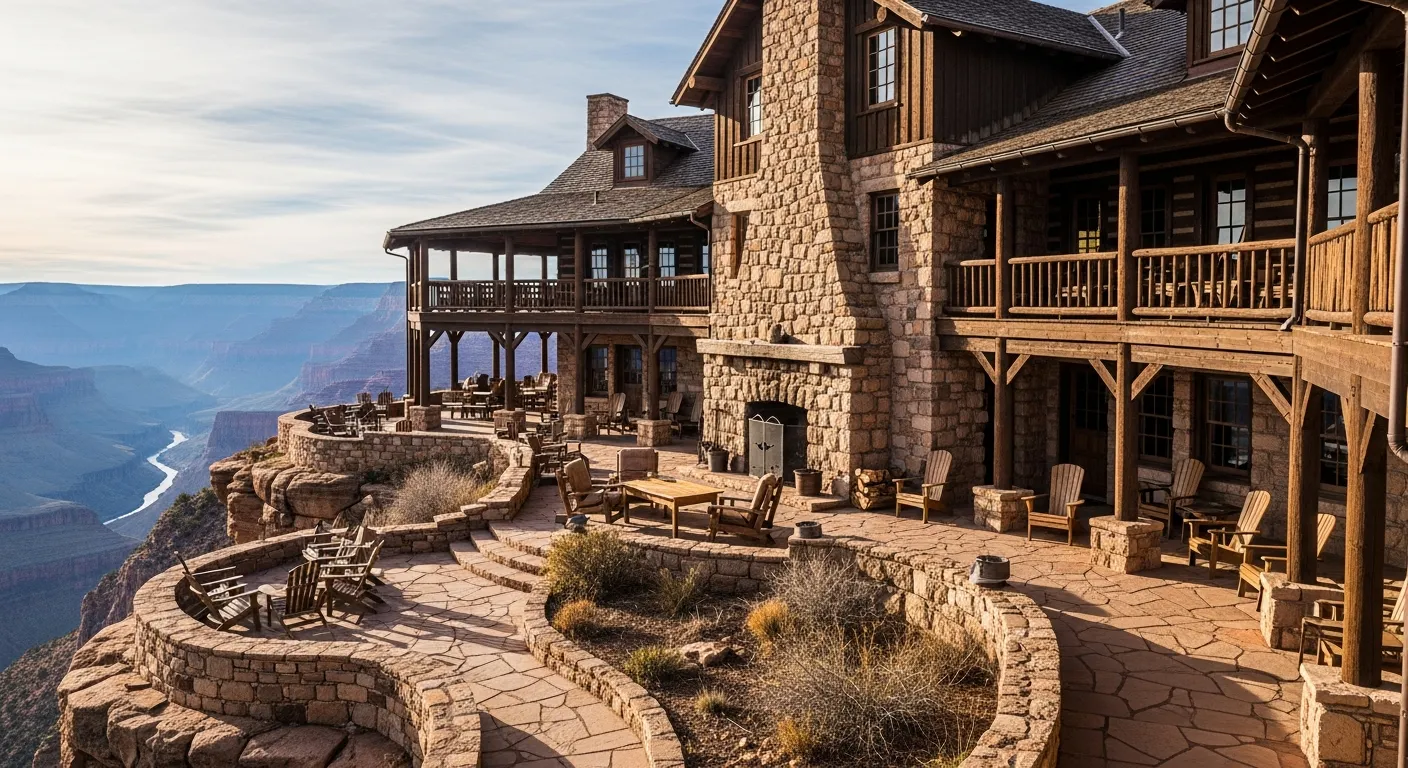
Six separate lodging properties operate within Grand Canyon National Park, every one of them run by Xanterra Parks and Resorts. The payoff is straightforward: your bed is already on-site when the sun comes up. Skip the commute entirely and you can be standing at Mather Point for sunrise, walking the Rim Trail before the tour buses empty out, or dropping into the canyon on a day hike without sacrificing half your morning to a car ride.
Here’s the catch: rooms vanish fast and cost more. Reservations inside the park book out months ahead, particularly through spring and fall. Expect to pay a premium over what you’d find in the surrounding towns, and don’t picture anything five-star — you’re choosing between plain motel-style rooms, older cabins with real history behind them, or bare-bones dorm setups. Nothing resembling a luxury resort exists within the park’s boundaries.
Assuming you land a reservation, the properties sitting closest to the canyon edge are El Tovar — historic, perched right on the rim, and priced at the top of the range accordingly — and Bright Angel Lodge, a step down in cost but still classic and still rim-adjacent. These two disappear from the booking calendar fastest. Mather Lodge and the remaining properties sit a short shuttle ride from the rim, with better odds of availability and gentler rates. Either way, you’re close enough to the visitor center and park entrance that logistics stop being a concern no matter what’s on your agenda.
Reserve in-park lodging through Grand Canyon Lodges, and don’t wait — book the instant the calendar opens online, typically several months out. Miss that window and the rooms are simply gone.
Basing Nearby: More Give, Lower Cost
Tusayan sits just 7 miles south, Williams stretches the gap to 60 miles, and Flagstaff pushes further still at 80 miles — and all three towns are stacked with hotels, motels, and vacation rentals. The upside is obvious: you can book on short notice and still land a room, usually for far less than the in-park lodges charge. Toss in a wider spread of restaurants, more gas stations when you actually need one, and beds that don’t feel like an afterthought after a long day on the trail.
What it costs you instead is time and stamina. Tusayan to the rim runs 15 to 20 minutes. Williams demands roughly an hour and twenty. Flagstaff stretches closer to two hours each way. Squeeze this into a short trip and that drive time eats straight into your hiking hours — you’ll either be racing the rim at the last edge of daylight or giving up on sunset entirely.
Still, for a single full day at the canyon, or if you’d rather keep things loose — showing up without a locked-in reservation, say — basing outside the park makes complete sense. You sidestep the park’s pricing and its limited amenities, and you’re free to bounce between towns if your plans shift midway.
The Paper Map That Kept Me Off a Dead-End Canyon Road
Between the overlooks, trailheads, and scenic pullouts scattered across the South Rim, it’s entirely possible to feel completely turned around — GPS or no GPS. Cell coverage comes and goes unpredictably out here, and Google Maps has a habit of treating an actual trail and a dead-end rocky wash as roughly the same thing.
Where it delivers
- Standing at 7,000 feet trying to judge whether a descent is manageable or reckless, the contour lines suddenly make complete sense.
- Water sources and emergency shelters are marked right on it — details your phone simply won’t offer once the battery dies four miles in.
- Difficulty ratings are specific enough that you can tell a casual rim stroll from a genuine backcountry push before you’ve committed to either.
Where it falls short
- Being paper, it soaks up sweat, creases along the folds, and gets progressively harder to read the more you rely on it — not ideal across a multi-day trip.
- Rendered at such a detailed scale, it’s bulkier than most travelers want in a pack, so you’ll either leave it behind or burn your first hour wrestling it into a sensible fold.
I nearly left mine at home, trusting my phone to handle everything, and ended up burning a tense half hour near Hermits Rest, convinced I’d blown right past a marked turnoff. Unfolding the paper map settled it instantly — I could see precisely where I stood, and how close I already was to where I actually needed to be. Get the National Geographic Trails Illustrated Map of Grand Canyon North and South Rims.
Sorting It Out: The Questions Worth Asking First
First: how much time do you actually have? A single long day at the canyon points toward staying outside and accepting the drive — you’ll cut costs and skip the booking headache entirely. Two nights or more, though, and landing a room inside the park should become the priority. That sunrise alone justifies the months of advance planning it takes to secure one.
Second: where’s your spending ceiling? When lodging eats the biggest chunk of your travel budget, the nearby towns deliver real savings. But if in-park rates fit comfortably and you can plan far enough ahead, the convenience and immersion of sleeping inside the park usually earns back whatever premium it costs.
Third: can your dates shift? Give yourself a week or two of wiggle room in either direction and your odds of snagging in-park lodging climb considerably. Locked into fixed dates instead? Basing outside the park guarantees you’ll actually have somewhere to sleep.
The canyon itself is indifferent to your address — it’s staggering no matter which pillow you pick. Your experience of getting there, though, is shaped by that choice completely.
Frequently Asked Questions
How far is Tusayan from Grand Canyon South Rim?
Tusayan sits just 7 miles south of the South Rim, making it the closest town option outside the park. The drive from Tusayan to the rim takes 15 to 20 minutes, so you can reach the canyon quickly while still accessing lower lodging costs and more amenities than staying inside the park.
What’s the drive time from Flagstaff to Grand Canyon South Rim?
Flagstaff is located 80 miles from the South Rim, and the drive stretches closer to two hours each way. This distance makes Flagstaff a better choice for longer trips where you can absorb the travel time, rather than single-day visits where driving eats significantly into your hiking hours.
How many lodging properties operate inside Grand Canyon National Park?
Six separate lodging properties operate within Grand Canyon National Park, all run by Xanterra Parks and Resorts. These range from historic rim-edge hotels like El Tovar and Bright Angel Lodge to more budget-friendly options like Mather Lodge, though nothing resembling a luxury resort exists within the park’s boundaries.
When should I book lodging inside Grand Canyon National Park?
Book the instant the calendar opens online, typically several months out, through Grand Canyon Lodges. Reservations inside the park book out months ahead, particularly through spring and fall, so waiting guarantees the rooms are simply gone when you try to reserve.
About This Article

Written by Elena Vasquez. Elena Vasquez is a full-time traveler and the founder of Witty Passport. Over fifteen years and more than 50 countries across six continents — including a stretch spent leading groups professionally through Southeast Asia and the remote highlands of South America — she's written the kind of destination guides she always wished existed: practical, specific, and built on real experience rather than recycled itineraries. More about this site.
Scope and limits. Elena is a full-time traveler, not a licensed travel agent or immigration adviser. Entry requirements, visa rules, and advisories change without notice — always confirm against the official government source for your destination and passport before booking.
Verify this against a primary source
Specifics change, and your situation may differ from the one described here. These are the authorities worth checking directly:
- U.S. Department of State — entry requirements and travel advisories
- CDC Travelers' Health — vaccination and health notices by destination
- TSA — current carry-on and screening rules