Heat shimmers off the courtyard stones outside the Hassan II Mosque, and the air smells faintly of sea salt and diesel from the boulevard traffic below. It’s 38°C in Casablanca, my linen shirt has already given up the fight against sweat, and a security guard is pointing at my bare shoulders with the weary patience of a man who’s had this exact conversation forty times already today and would very much like to avoid a forty-first. I thought I’d sorted out visiting mosques in Morocco what to wear — my plan was “a decent top, sensible pants,” which turned out to be only half a strategy. No scarf, no cardigan, nothing. The souvenir stall nearest the entrance was hawking synthetic polyester wraps for 150 dirhams that looked like they’d been woven from repurposed shopping bags. I bought one anyway. It lasted about eleven minutes before my scalp launched a full mutiny against the heat and the fabric. By the time I finally made it into those staggering marble halls — attempting reverence while quietly liquefying — three things had become obvious: Morocco takes its mosque etiquette far more seriously and specifically than anything I’d run into across European churches, the climate makes following those rules genuinely punishing, and skipping the prep work doesn’t just get you turned away at the door. It swallows the whole visit.
Why the Morocco Mosque Dress Code Catches Even Experienced Travelers Off Guard
Nobody puts this in the brochure, but the truth is blunt: the vast majority of Moroccan mosques are simply off-limits to non-Muslims. Not “closed on certain days.” Not “closed during services.” Shut, permanently, to anyone who isn’t Muslim. If you’re arriving from Europe, where nearly every cathedral and chapel welcomes a wandering tourist with a map and a respectful posture, this rule lands like a small shock. Wander the alleys of Fez or Marrakech’s medina and you’ll spot a jaw-dropping tiled courtyard through a half-open doorway — right before a local steers you back toward the street, sometimes gently, sometimes not. That’s not hostility. That’s simply a mosque functioning as a mosque.
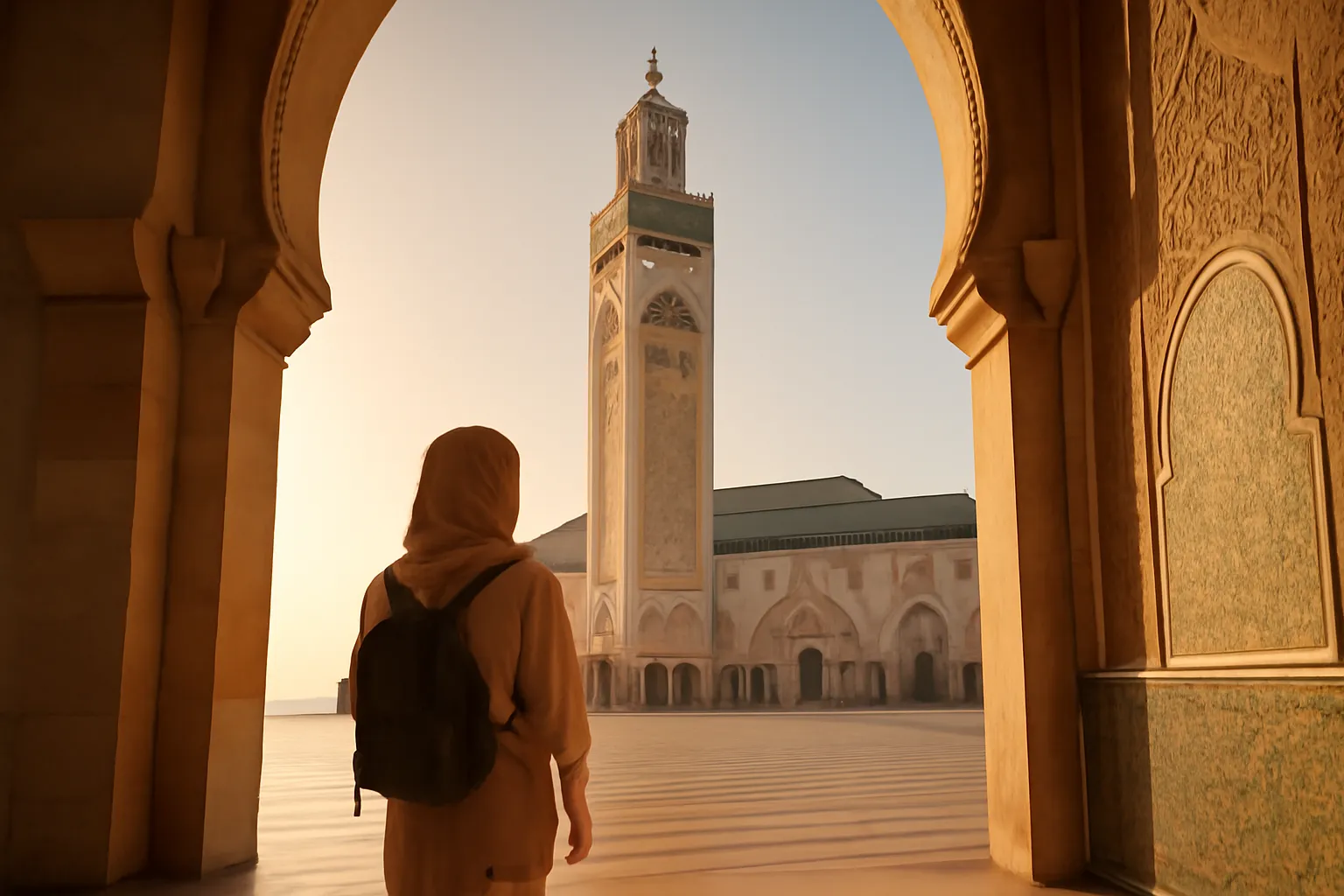
Across the entire country, exactly two mosques officially open their doors to non-Muslim visitors: the Hassan II Mosque in Casablanca, and the centuries-old Tin Mal Mosque tucked into the High Atlas range. Two, total. So when someone asks about the morocco mosque dress code for tourists, they’re really only asking about a shortlist of two buildings — though what a pair they are, since Hassan II ranks among the most jaw-dropping structures anywhere on earth.
Finished in 1993 under the direction of French architect Michel Pinseau, commissioned by King Hassan II himself, the mosque perches theatrically on a rocky ledge above the Atlantic. The minaret climbs 210 meters into the sky — sailors can spot it from 30 kilometers offshore — and the main hall alone accommodates 25,000 worshippers, with room for another 80,000 spilling into the courtyard outside. Engineers spent years perfecting the retractable roof. Once you’re standing beneath the hand-carved cedar ceilings and zellij tile patterns so dense they blur your vision, the dress code stops feeling arbitrary. This isn’t a monument dressed up as a mosque for tourists — it’s an active house of worship that simply opens its doors on a schedule.
Timing is everything here: guided visits run at set slots — roughly 9am, 10am, 11am, and 2pm, though it’s worth double-checking locally — priced around 130 MAD per adult, and there’s no other way inside. Cameras are welcome in most spaces but banned outright during prayer. As for clothing, there’s zero wiggle room. Women need their hair, shoulders, arms, and knees covered. Men need their knees covered. Shoes come off at the door for everyone — and here’s something I learned the painful way: pack socks. Those marble floors swing from scorching underfoot in the sunlit sections to unexpectedly frigid in the shaded stretches, sometimes within a few steps of each other.
Zoom out from the mosque itself and the same logic applies everywhere: respectful clothing in Morocco travel isn’t merely politeness — it’s practical armor. In Fez’s old city, one of the country’s most traditional urban centers, women wearing sleeveless tops or short hemlines tend to draw noticeably more unwanted stares and comments. In the souks of Marrakech, covering shoulders and knees with looser clothing translates into calmer, warmer exchanges with shopkeepers. Nobody’s checking passports at the door in most places — this is a cultural agreement, not a legal one — but honoring it reshapes the texture of your entire trip.
How a Scarf Rescued Me From a Hassan II Dress-Code Showdown
Morocco’s mosques enforce their dress rules without exception, and turning up with bare shoulders at one of the nation’s most iconic religious landmarks will get you politely — but firmly — sent away by security. A packable, lightweight scarf isn’t a nice extra here; it’s mandatory gear, and it has to genuinely perform in 38°C heat rather than leaving you draped like a walking beach towel.
Where it delivers
- The cotton-linen weave lets air move instead of pinning humidity against your skin the way cheaper synthetic wraps do.
- It’s roomy enough to cover shoulders and arms without safety pins or endless readjusting — drape it once and go admire the tilework in peace.
- Its crinkled texture disguises sweat patches and wrinkles, so you’re not second-guessing how you look in every photo you take.
Where it falls short
- The fringe snags on everything — backpack zippers, doorframes, the rough stonework of mosque architecture — leaving you constantly picking it loose.
- Given the price, the dye isn’t remotely colorfast; mine stained the collar of my white shirt during its very first wash, so now it gets laundered alone.
I almost left this scarf in my hotel room the morning I visited Hassan II—figured I’d just keep my arms covered with a cardigan instead—but the moment I stepped outside into that wall of heat, I was grateful I’d thrown it in my bag. Nydotd Women Summer Cotton Linen Scarf Crinkle Long Beach Shawl Wrap with Fringe
Frequently Asked Questions
Can non-Muslims visit mosques in Morocco?
The vast majority of Moroccan mosques are permanently closed to non-Muslim visitors. Only two mosques officially open their doors to tourists: the Hassan II Mosque in Casablanca and the Tin Mal Mosque in the High Atlas range. Both require respectful dress and adherence to their specific rules.
What clothing do women need to wear at Hassan II Mosque?
Women must cover their hair, shoulders, arms, and knees. The dress code is enforced without exception; arriving with bare shoulders will result in being turned away by security. A lightweight, breathable scarf or wrap is essential gear, especially in the heat.
What are Hassan II Mosque visiting hours and prices?
Guided visits run at set slots—roughly 9am, 10am, 11am, and 2pm, though it’s worth double-checking locally. Admission is priced around 130 MAD per adult. Cameras are welcome in most spaces but banned outright during prayer.
How tall is the Hassan II Mosque minaret in Casablanca?
The minaret climbs 210 meters into the sky and is tall enough that sailors can spot it from 30 kilometers offshore. The main hall accommodates 25,000 worshippers, with room for another 80,000 in the courtyard outside.
About This Article

Written by Elena Vasquez. Elena Vasquez is a full-time traveler and the founder of Witty Passport. Over fifteen years and more than 50 countries across six continents — including a stretch spent leading groups professionally through Southeast Asia and the remote highlands of South America — she's written the kind of destination guides she always wished existed: practical, specific, and built on real experience rather than recycled itineraries. More about this site.
Scope and limits. Elena is a full-time traveler, not a licensed travel agent or immigration adviser. Entry requirements, visa rules, and advisories change without notice — always confirm against the official government source for your destination and passport before booking.
Verify this against a primary source
Specifics change, and your situation may differ from the one described here. These are the authorities worth checking directly:
- U.S. Department of State — entry requirements and travel advisories
- CDC Travelers' Health — vaccination and health notices by destination
- TSA — current carry-on and screening rules