Skip to content
OpenAI Playground interface showing text generation example from November 2025 the witty passport

  • Home
  • About Us
  • Contact Us
OpenAI Playground interface showing text generation example from November 2025
the witty passport

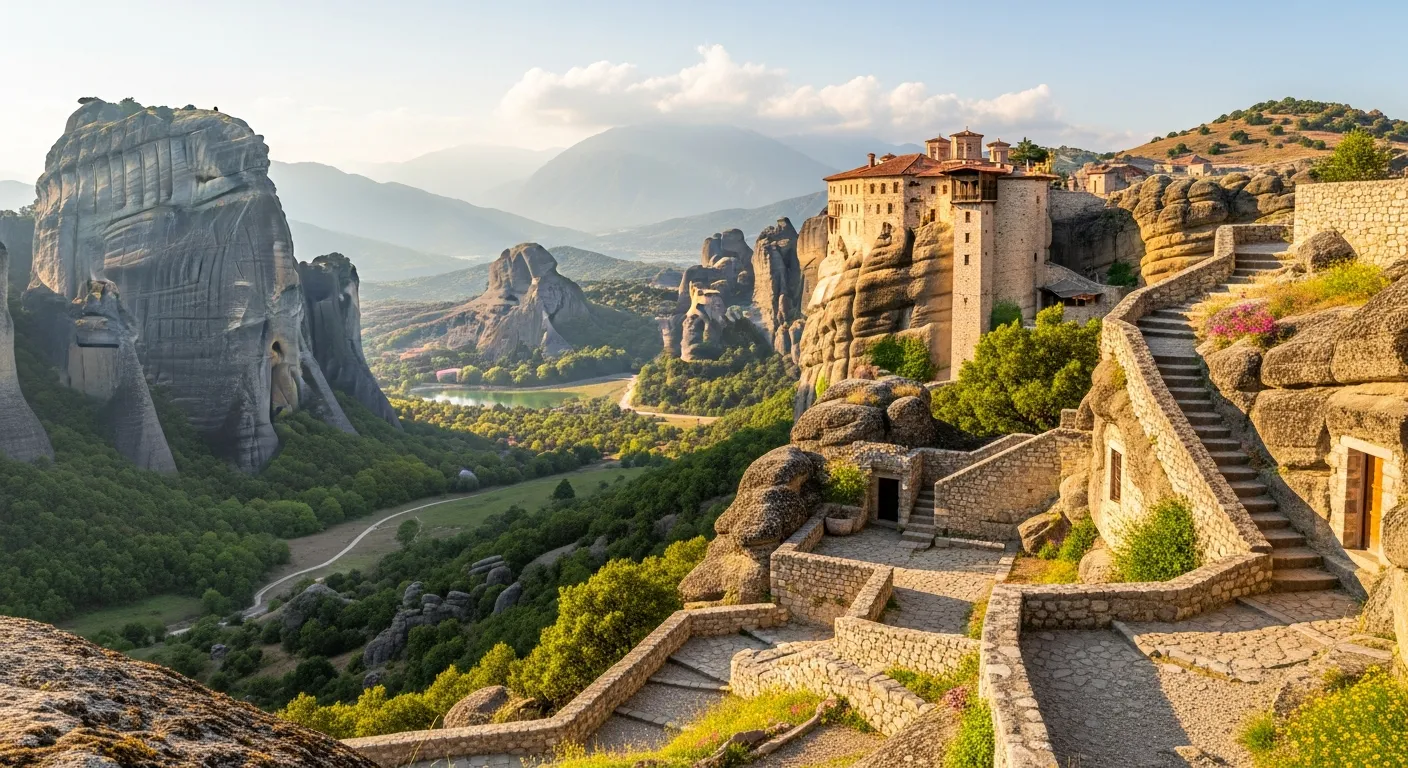
Dramatic landscape of ancient stone monasteries balanced precariously atop towering limestone rock pillars in a breathtaking mountainous region, soft golden sunlight illuminating the rugged stone structures against a misty blue sky with lush green vegetation surrounding the base of the rocky formatiSave

Visiting Meteora Monasteries: A Complete Guide

Posted on November 13, 2025May 27, 2026 By lucybamaboo

The school year ended and I sat in an empty classroom for twenty minutes just listening to the silence. Then I went home and looked up flights. Teaching summers off exist for a reason — and somehow, within an hour, I had a one-way ticket to Greece and a vague but burning need to stand somewhere that felt ancient. That search led me to Meteora, a place where towering sandstone pillars erupt from the Thessalian plain and centuries-old monasteries cling impossibly to their peaks, exactly as dramatic and otherworldly as every photo promises. Six of those monasteries are still active today and open to visitors, and this guide covers everything I wish I had known before I showed up.

What I Recommend

Keep your passport safe while exploring those ancient monasteries with an RFID-blocking passport holder. Greece attracts pickpockets like any popular tourist destination, and this little safeguard has saved me countless moments of panic over the years.

A travel document organizer will be your best friend when juggling admission tickets, hotel confirmations, and travel insurance documents. Trust me, you’ll thank yourself when you need to produce something quickly without turning your daypack inside out.

Grab a travel adapter before you leave home—Greek outlets are different from most countries, and you’ll need one for charging cameras, phones, and the occasional hair dryer in your hotel room.

An European SIM card will keep you connected for navigation and emergencies without eating through international roaming charges. I’ve used these across the continent and they’re genuinely affordable and reliable.

Pack a portable power bank because climbing those monastery staircases while documenting every angle will drain your phone battery faster than you’d expect. It’s also a lifesaver when you’re caught in a remote part of the monasteries without access to outlets.

A travel guidebook specifically covering Greece will give you historical context about the monasteries that goes beyond what you’ll find online. I still prefer having a physical reference when WiFi is spotty.

Bring a phrase book because while many Greeks speak English, learning basic words like “thank you” and “water” goes a long way toward making genuine connections with locals. Plus, it’s fun and shows respect.

Don’t skimp on sunscreen—the Meteora plateau gets intense sun with minimal shade, and Neutrogena Sunscreen Lotion Beach Defense SPF 70 is lightweight and won’t leave you feeling like a greased chicken while you’re exploring. I learned this lesson the hard way on my first visit.

A wide brim sun hat is essential—it protects your face and the back of your neck while keeping the glare out of your eyes as you’re photographing those gravity-defying monasteries.

Invest in UV protection sunglasses because staring up at ancient stone structures all day can strain your eyes, especially in the bright Greek sunlight reflecting off the rock faces.

A quick dry beach towel is great to have on hand if you’re combining your monastery visit with time near the nearby rivers or lakes in the region.

A dry bag will protect your phone, documents, and camera if you’re caught in one of those surprise afternoon rain showers that can pop up.

Packing cubes have been my secret weapon for staying organized on every trip since 2015—they compress your clothes and make finding specific items infinitely easier without unpacking your entire suitcase.

Compression bags are clutch if you’re visiting Greece in summer and want to maximize luggage space for souvenirs and purchases you’ll inevitably make.

Get yourself a solid pair of comfortable walking shoes before you arrive—you’ll be climbing ancient staircases carved into rock faces, and blisters are your enemy when you’re exploring monasteries that are literally built into cliffs.

Comfortable sandals are perfect for your hotel and evening strolls through town after a long day of monastery exploration—your feet will appreciate the break.

A filtered water bottle saves you money and keeps you hydrated during the day—tap water in Greece is generally safe, and refilling beats buying plastic bottles.

A Bluetooth luggage tracker gives me peace of mind when checking bags or leaving luggage at my hotel, especially since I’ve had one close call with a delayed suitcase years ago.

Pack a travel first aid kit with blister treatments, pain relievers, and antihistamines—you’ll be grateful to have it when you get those inevitable minor scrapes from uneven monastery stairs.

A portable phone tripod lets you get yourself in those stunning monastery photos without having to ask strangers or sacrifice composition—I use mine constantly.

Bring a portable camera battery charger if you’re serious about photography—those dramatic monastery shots and sunset views will drain your camera battery quickly, and this ensures you never miss the golden light.

Pack a light dress collared shirt for evening dining—many Greek restaurants appreciate when guests dress up slightly, and a breathable collared shirt is perfect for the warm evenings after a day of monastery exploring.

As an Amazon Associate, I earn from qualifying purchases.

This guide provides everything you need to plan your unforgettable trip. We will explore how to get there, where to stay, and what to expect at each monastery. Consequently, you can experience the magic of this UNESCO World Heritage site with confidence. Meteora Monasteries Travel Gui…

I Nearly Fell Off a Monastery Ledge at Sunset (Worth It)

Our guide, Nikos Papadimitriou, met us at the base of the rocks at 4pm sharp — a compact, weathered man in his 60s who immediately made clear he had zero patience for people who called Meteora “that place from James Bond.” Fair enough. Within the first ten minutes of hiking toward the Monastery of the Holy Trinity, he’d already casually dropped the fact that Byzantine monks began hauling themselves up these 400-million-year-old sandstone pillars in the 14th century using rope ladders and hand-woven nets — the same nets they used to bring up supplies for centuries, right up until the 1920s when stone steps were finally carved in. I asked if anyone had ever fallen. He gave me a look that suggested I had asked a very stupid question. We moved on.

By the second monastery — Varlaam, built in 1541 and housing a jaw-dropping collection of illuminated manuscripts and a refectory with frescoes so dark and detailed they felt like they were watching you — I was fully in Nikos’s orbit. He explained that the monasteries were deliberately built without mortar in the early stages, relying purely on the geometry of the stone, and that the monks considered the inaccessibility itself to be divine protection. Then came the funny part: I was so busy craning my neck at a ceiling fresco that I walked straight into a low doorframe — the kind monks apparently had to duck through as a gesture of humility — and knocked my sunglasses clean off my face into a courtyard bush. Nikos retrieved them without missing a beat, handed them back, and said, “The monks did not have this problem. They were humble.” A small crowd of strangers laughed. I deserved it.

The real payoff came at the secret viewpoint — a flat shelf of rock Nikos led us to just as the sun began melting behind the pillars. No tour buses. No selfie sticks. Just the smell of wild sage warming in the last heat of the day, the distant clang of a monastery bell, and the whole valley turning amber and rose below us. I said something embarrassing like “wow” about fourteen times. Nikos seemed pleased. If you want this kind of experience — the kind where a local actually makes the history feel alive, and you learn more in three hours than you would in three days of solo wandering — browse similar Greece tours on Viator and filter for private options with historian or expert guides. It genuinely changes the whole trip.

Getting to Meteora

Reaching this stunning destination is part of the adventure. You have several great options from Greece’s main cities. The choice often depends on your budget, schedule, and travel style.

From Athens

Traveling from Athens is straightforward. Many people choose the train for its comfort and scenic views. The direct train departs from Athens’ Larissa Station and arrives in Kalabaka, the town at the foot of Meteora. This journey typically takes around four to five hours. Alternatively, you can take a KTEL bus. The bus ride is slightly longer but can be a more budget-friendly option. Driving a rental car offers the most flexibility. The trip by car takes about four hours and allows you to explore the surrounding area at your own pace.

A dramatic landscape of towering rock formations in Meteora, Greece, with ancient monasteries perched precariously on steep, vertical stone pillars. A train winds through the rugged terrain in the foreground, showcasing the dramatic connection between transportation and the breathtaking natural land

From Thessaloniki

If you are coming from northern Greece, Thessaloniki is your starting point. The train journey from Thessaloniki to Kalabaka is also a popular choice. However, it often requires a change at Paleofarsalos station. The total travel time is approximately three hours. Buses run directly from Thessaloniki to Kalabaka, providing a simple and cost-effective alternative. Furthermore, driving from Thessaloniki is another excellent option. The drive is less than three hours and gives you complete control over your itinerary.

Where to Stay: Kalabaka vs. Kastraki

Choosing your home base is a key part of the Meteora Monasteries: Complete Visitor Gu… experience. The two primary villages, Kalabaka and Kastraki, each offer a unique atmosphere.

Meteora Monasteries Travel Guide – Lonel… is the larger of the two towns. Here, you will find a wider selection of hotels, restaurants, and shops. It serves as the region’s main transportation hub, making it very convenient for arrivals and departures. Because of its size, Kalabaka has a more bustling feel.

On the other hand, Kastraki is a smaller, more traditional village. It sits nestled directly among the giant rock pillars, offering more dramatic and immediate views. Kastraki provides a quieter, more tranquil experience. While it has fewer amenities than Kalabaka, its charm and proximity to the Monasteries make it a favorite for many visitors. Ultimately, your choice depends on whether you prefer convenience and options or peace and atmosphere.

Scenic Greek mountain village with traditional stone houses nestled against dramatic limestone rock formations, soft afternoon sunlight casting long shadows across a winding cobblestone street, lush green vegetation surrounding weathered buildings with terracotta tile roofs, distant towering stone p

. Meteora Monasteries: A Complet…

Exploring the Six Monasteries

Six monasteries remain active and are open to the public. Each has its own unique history, architecture, and character. Remember that opening hours can vary by season, so always check the latest schedules before you go.

The Great Meteoron Monastery

As its name suggests, this is the largest, oldest, and highest of the Meteora Monasteries – UNESCO World Herit…. Saint Athanasios the Meteorite founded it in the 14th century. Inside, you can explore a fascinating museum, a beautiful main church (katholikon), and an old kitchen. The views from its courtyard are simply spectacular. However, be prepared for a climb, as many steps lead up to the entrance.

The Varlaam Monastery

Varlaam is the second-largest monastery and is known for its impressive frescoes and a museum showcasing religious artifacts. It offers a wonderful glimpse into the monastic life and history of the region. Visitors can also see the old rope basket system that monks once used to hoist up people and supplies. The access is easier than the Great Meteoron, but it still requires a walk up a series of carved steps. Travel Guide

The Roussanou Monastery

Now a convent, Roussanou sits on a lower rock pillar. This makes it one of the most photographed monasteries in Meteora. Its position offers stunning panoramic views of the valley and surrounding rock formations. Access is relatively easy via a couple of small bridges from an adjacent plateau. The interior frescoes are remarkably well-preserved and depict powerful religious scenes. Meteora Monasteries: Complete …

St. Nicholas Anapausas Monastery

This monastery is compact and built vertically to fit its narrow rock perch. It is often the first monastery visitors encounter when coming from Kastraki. St. Nicholas is celebrated for its exquisite 16th-century frescoes, painted by the renowned Cretan artist Theophanis Strelitzas. Due to its small size, it can feel crowded, but the artwork inside makes the visit worthwhile. Meteora Monasteries Official T…

St. Stephen’s Monastery

St. Stephen’s is the most accessible monastery. A small stone bridge connects it directly to the main road, eliminating the need to climb any stairs. This makes it an ideal choice for visitors with mobility challenges. Now operating as a convent, it houses two churches and a small museum. The nuns are known for their hospitality and maintain beautiful gardens on the monastery grounds.

The Holy Trinity Monastery

For many, the Holy Trinity Monastery is the most visually dramatic. It sits atop a slender, precipitous rock and gained international fame after appearing in the James Bond film For Your Eyes Only. Reaching it requires a significant effort. You must first descend into a ravine and then climb approximately 140 steep steps. Consequently, it is one of the least visited monasteries, offering a more serene and rewarding experience for those who make the trek.

Essential Tips for Your Visit

To make the most of your trip, keep a few practical details in mind. Proper planning ensures a smooth and respectful visit to these sacred sites.

Dress Code

A strict dress code is enforced at all monasteries. Men must wear long trousers. Women must wear long skirts and cover their shoulders. Shorts and sleeveless tops are not permitted for anyone. If you are not dressed appropriately, you will be denied entry. However, most monasteries offer wrap-around skirts and shawls at the entrance for visitors to borrow.

Entrance Fees and Opening Hours

Each monastery charges a small entrance fee, typically around 3 euros per person. This fee helps with the maintenance and preservation of these historic sites. It is crucial to check the opening hours before your visit. Meteora Monasteries Official Visitor Gui… operate on a rotating schedule, meaning at least one is closed to the public each day of the week. Schedules also change between the summer and winter seasons. The official tourism websites provide the most current information.

Getting Around Meteora

You can explore the area in several ways. Renting a scooter or car provides the most freedom. A local bus service runs between Kalabaka, Kastraki, and the Meteora Monasteries: A Complete Visitor’… several times a day. For a more active experience, you can hike along ancient footpaths that connect the monasteries. These trails offer incredible views away from the main roads. Additionally, guided tours are widely available. These tours often include transportation and provide valuable historical context from a local expert.

Historians confirm that monks began building these monasteries in the 14th century to escape political turmoil and find spiritual isolation . Source

Greece greecemonestaries

Post navigation

Previous post
Next post

Recent Posts

  • Vienna Coffee House Culture: The Only Guide You Need
  • Kraków Pierogi Festival: Your Ultimate August Guide
  • Best New Year’s Eve Food Festivals Worth Traveling For
  • Best Christmas Food Festivals in December Worth Traveling For
  • Mexico Food Festivals Worth Traveling For This November

Archives

  • May 2026 (31)
  • April 2026 (15)
  • March 2026 (4)
  • February 2026 (4)
  • January 2026 (14)
  • November 2025 (57)

Categories

  • Australia
  • Bora Bora
  • Costa Rica
  • Croatia
  • Dubai
  • Foodie
  • France
  • Grand Canyon
  • Greece
  • Iceland
  • Italy
  • Japan
  • Jordan
  • Maldives
  • Mexico
  • Norway
  • Portugal
  • South Africa
  • Thailand
  • Travel Tips
  • Uncategorized
  • Terms of Service
  • Privacy Policy
© 2026 the witty passport