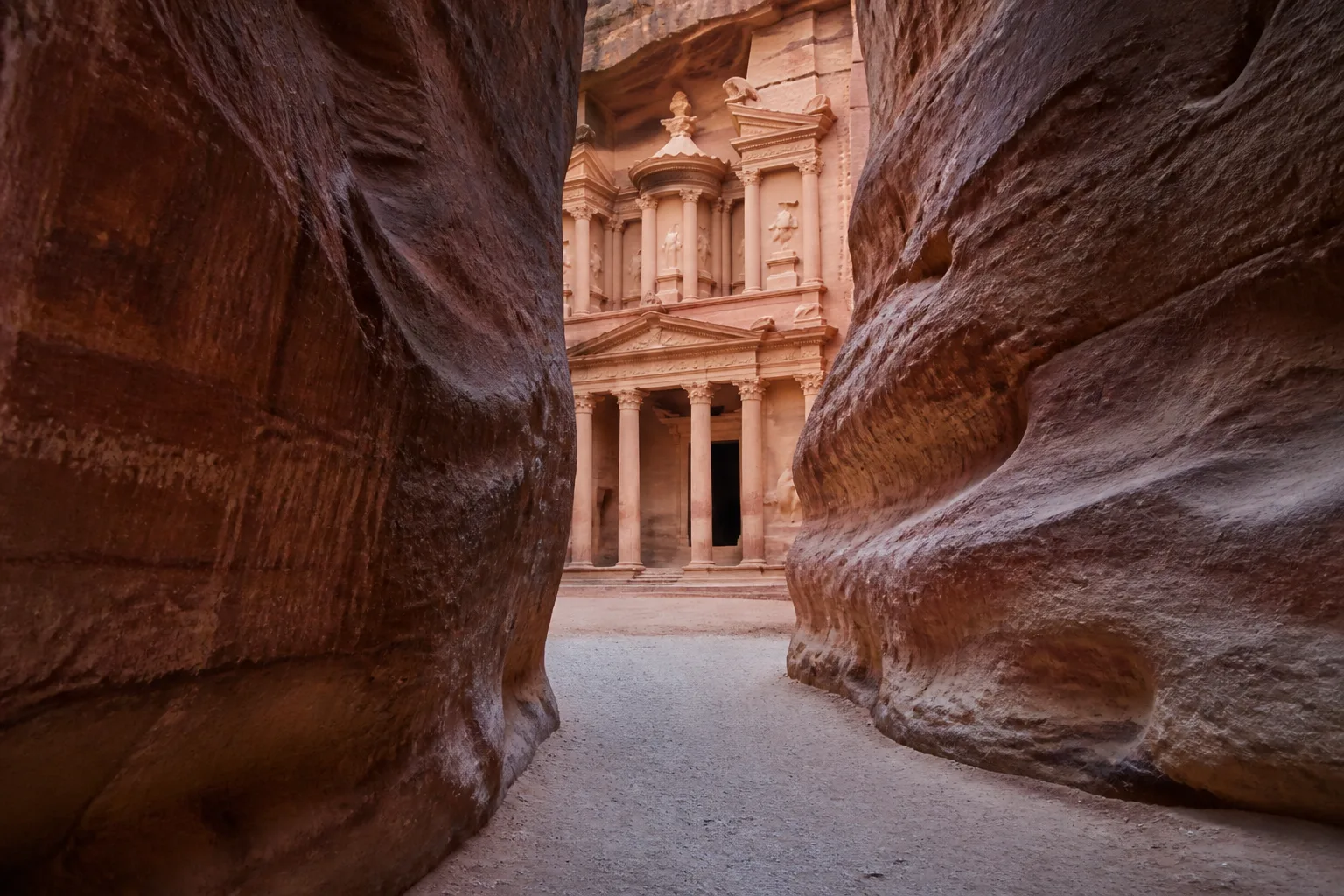
Most people picture Petra as a summer destination: the sun blazing off the pink sandstone, the crowds shuffling through the Siq, the heat pushing everyone toward the nearest tea stall. Go in December, though, and the place feels like a different site. The trails are quiet enough to hear your own boots on the stone, the air is cool enough to hike in without sweating through your shirt, and the hotel rates in Wadi Musa drop noticeably.
Yes, Petra is worth visiting in winter, and for hiking it is often the most pleasant season of the year. The trade-off is that winter brings three real catches: short days, cold shade that lingers well into the morning, and flash floods. The third one is the one that matters most. Plan around those three things and winter is the best time to see Petra. Ignore them and you can end up standing in a wadi bed with a ranger shouting at you to climb.
Why Winter Petra Feels So Different
Petra sits at altitude. The town of Wadi Musa is around 1,000 meters, or about 3,300 feet, and the site itself is in the same range. That puts it well above the heat of Aqaba or the Dead Sea, and it means winter nights get close to freezing and occasional snow is possible. Daytime highs typically run in the mid-50s°F (about 12 to 15°C), which sounds mild until you are standing in the Siq at 7 in the morning with the sun nowhere in sight.
The other difference is the crowd. Winter visitors are far fewer than the spring and autumn peaks, so you can walk the main trail without being part of a slow-moving queue. Photographs of the Treasury without a single stranger in them are very much a winter thing.
The Flood Risk Nobody Mentions
Here is the part most winter guides bury in a footnote. Winter is the rainy season in southern Jordan, and rain falling in the surrounding hills drains into the Siq and the wadis that run through the site. That water does not arrive gently. It comes down in fast, brown surges that can fill a narrow canyon in minutes, often from rain that never touched the ground where you are standing.
This is not a theoretical risk. In November 2018, several thousand visitors were evacuated from Petra after flooding. In late December 2022, about 1,700 people were evacuated. Both times the site was cleared because the water was coming, and both times it was the right call.
My rule is simple. If the site closes for a flood warning, or if rangers tell you to leave or move to higher ground, you do it immediately. Do not stop to take one more photo. Do not assume the sky above you is clear, because the storm may be miles away. And never, under any circumstances, shelter in the Siq or in a wadi bed. High ground is where you want to be.
How to Structure a Winter Day
Winter days are short, and the gate does not open until 6:00. Closing time is around 4 p.m. in winter, compared with about 6 p.m. in summer, and December sunset falls before 5 p.m. That leaves you a window of roughly eight to ten hours, and it needs an order of operations rather than wandering.
A sequence that works well:
- Be at the gate at opening. The first hours are the coldest, but they are also the emptiest, and the Siq is at its most atmospheric when you have it mostly to yourself.
- Walk the Siq and reach the Treasury early. The courtyard stays in cold shade for a long time in the morning, and the facade gets direct light around mid-morning, so arriving early means you may be taking photos in shadow before the light arrives.
- Go straight to the Monastery (Ad Deir) before you linger anywhere else. The climb is about 850 steps and takes 45 to 60 minutes up. Winter afternoons are when the Monastery is best lit, so you can plan to come back down the main street later in the day and let the light do its work.
- Head back toward the visitor center in the afternoon, well before closing. The main trail to the far basin is roughly 4 km each way, so do not treat it as a casual stroll if you plan to see the far end.
Keep an eye on the clock. The last hour of a winter day arrives quickly, and the walk back from the Monastery is longer than it looks on a map.
What to Pack for Cold, Wet Hiking
The first hours at Petra in winter are cold enough that you will want a warm hat and gloves, and by midday you will probably be shedding layers. Dress in layers you can take off easily. Add a waterproof shell in case rain shows up, because the weather in the hills can change faster than the forecast suggests.
Shoes matter more here than in summer. The sandstone steps get slick when wet, and the stone under the Siq can be surprisingly smooth. Choose shoes with real tread, and avoid anything with a smooth sole. A headlamp is useful for the early Siq walk in the dark and for the walk back if the afternoon runs late. A flask of hot tea or water helps too, and the tea stalls along the trail are one of the small pleasures of a winter visit.
Winter vs. Spring, Autumn and Summer at Petra
The table below compares the main factors across the seasons. Treat the figures as typical patterns rather than guarantees, and check conditions before you go.
| Season | Temperature | Crowds | Daylight | Main risk |
|---|---|---|---|---|
| Winter (Dec to Feb) | Highs around 12 to 15°C; near freezing at night | Lowest of the year | Short days; gate closes around 4 p.m. | Flash floods and cold shade |
| Spring (Mar to May) | Mild and pleasant for hiking | Busy, especially around Easter | Longer days, closing near 6 p.m. | Crowds and midday heat building |
| Autumn (Sep to Nov) | Warm days, cooling evenings | Busy, with a rush in October and November | Shortening days | Early-season rain and busy trails |
| Summer (Jun to Aug) | Hot and dry in the day | High, though mornings are calmer | Long days, closing near 6 p.m. | Heat exhaustion on the long trail |
Tickets, Passes and the Practical Stuff
If you are staying overnight in Jordan, the Jordan Pass is worth a look. It bundles Petra entry with the tourist visa fee waiver for stays of at least three nights. At the time of writing, it costs 70, 75 or 80 JOD for one, two or three days at Petra. A standalone one-day ticket for overnight visitors is 50 JOD. Confirm current prices before you commit, because they change.
Before you book a hotel in Wadi Musa, ask whether the room has heating. Not every place does, and a cold room after a cold day is a miserable combination. If you plan to add a night in Wadi Rum, know that desert camps drop below freezing in winter, so pack for that too.
Frequently Asked Questions
Is Petra safe to visit in winter?
Petra is generally safe to visit in winter, but the flood risk is real and it is the main safety concern. Follow every closure notice and ranger instruction immediately. Check conditions the morning you plan to go and be ready to change your plans.
How cold does it get at Petra in December?
Daytime highs usually sit in the mid-50s°F (about 12 to 15°C), but nights can drop to near freezing, and occasional snow is possible. The altitude is the reason, so a warm hat, gloves and a layer that comes off easily will serve you well.
What time does Petra close in winter?
The gate opens at 6:00, and winter closing is around 4 p.m., compared with about 6 p.m. in summer. Hours can change, so check when you arrive. Plan your route so you are heading back well before the gate shuts.
Is winter a good time for hiking to the Monastery?
Yes, the cooler air makes the 850-step climb far more comfortable than it is in summer heat. Allow 45 to 60 minutes going up, and take the steps slowly on wet days because the stone can be slippery. Afternoon is the best time for light on the Monastery, so plan the climb with that in mind.
About This Article

Written by Elena Vasquez. Elena Vasquez is a full-time traveler and the founder of Witty Passport. Over fifteen years and more than 50 countries across six continents — including a stretch spent leading groups professionally through Southeast Asia and the remote highlands of South America — she's written the kind of destination guides she always wished existed: practical, specific, and built on real experience rather than recycled itineraries. More about this site.
Scope and limits. Elena is a full-time traveler, not a licensed travel agent or immigration adviser. Entry requirements, visa rules, and advisories change without notice — always confirm against the official government source for your destination and passport before booking.
Verify this against a primary source
Specifics change, and your situation may differ from the one described here. These are the authorities worth checking directly:
- U.S. Department of State — entry requirements and travel advisories
- CDC Travelers' Health — vaccination and health notices by destination
- TSA — current carry-on and screening rules