Confession up front: no museum has ever dictated where I fly. A slow-roasted suckling pig turning over open flame for four straight days in a Sardinian village, though — that’s rearranged an entire spring itinerary of mine without a second thought. So if you’re the type who treats a dinner reservation as a legitimate cultural landmark and asks “what’s on the menu” before “what’s on the map,” you’re in the right company. Spring across the Mediterranean is built for exactly that instinct, and it’s the single strongest argument for booking April or May flights over anything else. The season lines up perfectly: the first tender greens arrive, the last winter citrus is still hanging around, olive oil fresh off the press is grassy and sharp, and whole towns are shaking off months of grey weather with the particular joy of eating together outdoors again. Consider this your working guide to the best mediterranean food festivals spring has on offer.
Why Spring Is the Secret Season for Mediterranean Food Travel
Here’s what the July crowds never figure out: the Mediterranean tastes completely different in April and May than it does in peak summer. The heat hasn’t beaten the produce into submission yet. Artichokes hit their peak window — nutty, sweet, almost buttery at the heart. Fava beans are young and vivid. Strawberries run small but punch way above their size flavor-wise. Wild greens pulled straight off hillsides show up folded into pasta and simmered into festival stews. Cooking built around spring ingredients reads differently on the plate — lighter, more layered, less about heavy preservation and more about letting whatever just got harvested speak for itself. Add to that: fewer crowds, cheaper beds (figure €60–€120 a night for mid-range stays, compared to €150+ once summer hits), and locals who actually have a spare minute to chat. The real window for Mediterranean food travel opens now — April and May are the calm stretch before everything gets loud.
Festa di Sant’Efisio Street Eats — Sardinia, Italy (Late April–May 4)
On paper, Festa di Sant’Efisio is a religious procession — one of the oldest and most visually stunning in Europe, covering 70 kilometers from Cagliari to the village of Nora across four days beginning May 1st. But strip away the procession itself, and what’s left is one of the most genuine street food scenes anywhere on the Mediterranean. Stalls and impromptu kitchens start popping up along Cagliari’s streets in the final days of April, and the eating hardly lets up after that. This grew out of a community celebration, not a tourism operation, and you can taste that difference in every bite.
What to Order
- Porceddu — suckling pig roasted over myrtle wood, skin gone thin and crackling, meat falling apart. This is the plate people bring up years later.
- Culurgiones — Sardinia’s own stuffed pasta, pinched into a wheat-ear shape and packed with potato, pecorino, and mint. You’ll find it swimming in tomato sauce or kept simple with butter and sage at the stalls.
- Seadas — fried pastry stuffed with fresh sheep’s cheese and finished with a drizzle of bitter corbezzolo honey. Get two. You’ll want the second one before you finish the first.
The Vibe: Unmistakably local and visually over-the-top. Thousands of Sardinians turn out in traditional dress, horses draped in silver, centuries of ritual unfolding right in front of you — then you round a corner and find someone’s grandmother handing out porceddu slices from a folding table. Communal tables stretch down the side streets each evening. Take a seat next to whoever’s there. Pass the bread around.
Practical Tip: Lock in your Cagliari accommodation by February at the very latest — Italians already know about this one, and decent mid-range hotels (€80–€130/night) fill up fast. Vegetarian travelers: Sardinian cooking leans heavily on vegetable antipasti and herb-packed pastas — ask for sa minestra (vegetable and legume soup) or the vegetarian version of zuppa gallurese. You’ll eat well. Our Italy travel content has more on building out the rest of your Sardinian trip.
Greek Easter Eating Traditions — Greece (Dates Shift Each Year, April–May)
Pascha, Greek Easter, sits at the top of the Greek calendar, and food-wise it’s one of the most remarkable multi-day eating marathons anywhere on the planet. The date moves year to year with the Orthodox calendar — 2025 puts it on April 20th — but the dishes and rituals stay wonderfully consistent. There’s no ticket for this one; it’s an entire country sitting down to eat, and if your travels through Greece happen to overlap with it, you’ll find yourself swept in whether or not you planned for it. Don’t fight it. This is exactly what greek food festivals spring travelers dream about.
What to Order
- Magiritsa — the midnight soup served after the Holy Saturday vigil, made from lamb offal, spring onions, dill, and egg-lemon sauce. Rich, herbal, and more delicate than it sounds. Adventurous eaters, this one’s for you.
- Ovelias (spit-roasted lamb) — the centerpiece of Easter Sunday. Whole lambs turning over charcoal for hours. The smell alone justifies the plane ticket, and you’ll catch it in nearly every village square and family courtyard.
- Tsoureki — the sweet braided Easter loaf, scented with mahlab and mastic, occasionally stuffed with chocolate or topped with a dyed red egg. Grab one warm from a local bakery on Saturday morning.
The Vibe: Close-knit, family-driven, quietly moving. Village squares turn into open-air banquet halls. Strangers pull other strangers up to their tables more often than you’d guess. Between the candlelit midnight service and the feasting that erupts right after, it’s one of the more powerful things you’ll witness while traveling.
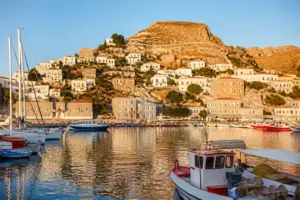
Practical Tip: Hydra, Corfu, and Crete all put on especially memorable Easter celebrations. Rooms disappear six to eight weeks ahead of Easter weekend specifically, so plan for €70–€150 a night depending on the island. Vegetarian/vegan travelers: the pre-Easter fast (Lent) has left Greek cooking with a deep well of fully plant-based dishes — gigantes plaki (baked giant beans), spanakopita, taramosalata, and countless vegetable preparations. Plenty of tavernas run full fasting menus straight through Holy Saturday. Our Greece travel guides break things down island by island.
Orange Blossom Season Food Scene — Seville Region, Spain (April, One Week)
Seville in April smells like an open perfume bottle — the bitter orange trees lining every street bloom nearly all at once, and the effect is honestly overwhelming in the best way. The Orange Blossom Festival, tangled up with the broader Feria de Abril, turns the city into a week of Andalusian food, sherry, flamenco, and the entirely normal act of eating tapas standing at a bar at eleven in the morning. Consider this one of the most overlooked stops on the italian food festivals april may circuit — yes, Seville sits in Spain, not Italy, but Andalusia is very much part of the Mediterranean food travel season.
What to Order
- Pescaíto frito — small fish, lightly battered and fried, eaten by hand with a cold glass of manzanilla sherry. Unofficially, this is the dish of the Feria.
- Espinacas con garbanzos — spinach and chickpea stew, heavy on cumin and paprika. No two tapas bars make it the same way, so order it everywhere you go.
- Orange blossom honey pastries — bakeries turn out torrijas (Spain’s answer to French toast) soaked in orange blossom water and honey specifically during this season. Worth seeking out.
The Vibe: Electric, full stop. Feria de Abril builds an entire temporary city out of casetas — decorated tents where families and clubs throw private parties full of flamenco, food, and sherry, on repeat. Public casetas welcome anyone, and the eating barely pauses between noon and four in the morning. Long shared tables, plates passed around, guitar and hand-clapping drifting from tent to tent.
Practical Tip: Book rooms six to eight weeks out at minimum — Seville during Feria draws huge crowds and prices climb fast (€100–€200/night mid-range). Wear shoes you trust; you’ll cover twelve miles a day without noticing. Vegetarian/vegan travelers: Andalusian tapas culture is more plant-friendly than you’d expect — patatas bravas, gazpacho, salmorejo, fried aubergine drizzled with molasses, plus the espinacas con garbanzos above, give you real options even at the meatiest bars.
Cous Cous Fest — San Vito Lo Capo, Sicily (Start Planning Now for Late September)
I’m slipping this one in as your long-lead festival — the event to start plotting in April while you’re still licking orange blossom honey off your fingers in Seville. Cous Cous Fest lands in San Vito Lo Capo, Sicily in late September and is, without exaggeration, one of the most joyful food gatherings anywhere on the Mediterranean. International chefs face off in a live couscous cook-off, local fishermen haul in the day’s catch for the seafood couscous Sicilians treat as sacred, and the whole town — set on a dramatic point between turquoise water and the Zingaro nature reserve — turns into one giant communal table. Tickets for cooking demos and official tastings run €15–€30 and disappear quickly, so mark the September dates now and start watching the official festival site come June. Our Italy travel content covers Sicily thoroughly if you want to build out the full trip.
The Olive Oil Kit I Now Pack So Festival Food Tastes Right Back Home
Something incredible hits your tongue at Sant’Efisio — a roasted vegetable, a fresh cheese, a heel of bread — and you realize it’s not the fire or the vendor’s hands doing all the work. It’s the oil. Try recreating that meal back home with whatever’s sitting in your pantry, and you’ll come up short every time, which is exactly why I now bring back a few small bottles of the real thing just to get closer to the memory.
What works
- The 60ml bottles slide into a checked bag without eating up space, so hauling Mediterranean flavors home doesn’t cost you in guilt or baggage fees.
- The variety pack lets you sample six different profiles until you land on the one that actually tastes like that grilled fish you keep thinking about, rather than gambling on one big bottle you might regret.
- Drizzle it over dinner at home and it genuinely pulls you back there — not in a corny way, but in that real, involuntary sense-memory way that makes you forget for a second you’re standing in your own kitchen.
What doesn’t
- It isn’t cheap, and ordering fancy oil online feels a little absurd when the supermarket shelf is right there — until you actually taste it and remember exactly why you spent the money.
- The balsamic vinegars are wonderful but travel less reliably than the oils — one of mine showed up with a cap that had loosened in transit, which kind of undercut the whole point.
I almost talked myself out of ordering this set the first time because the price made me flinch, and I thought I was being ridiculous for wanting to buy oil based on a festival memory. But here’s the thing: it works. Viva Oliva Six 60ml Variety Gift Set — Premium Flavored Extra Virgin Olive Oils and All Natural Balsamic Vinegars
Frequently Asked Questions
What is porceddu and where can I try it?
Porceddu is suckling pig roasted over myrtle wood with crackling skin and meat that falls apart. You can try it at Festa di Sant’Efisio in Sardinia, Italy, which runs late April through May 4th. It’s one of the signature dishes at the festival’s street food stalls, and locals often hand out slices from folding tables along the procession route.
How much do Mediterranean hotel rooms cost in spring?
Mid-range accommodation across Mediterranean spring festivals ranges from €60–€120 per night in April and May, compared to €150+ once summer arrives. Specific festivals vary: Cagliari runs €80–€130/night, Greek islands range €70–€150/night, and Seville climbs to €100–€200/night during Feria de Abril.
When is Greek Easter in 2025 and what is magiritsa?
Greek Easter (Pascha) falls on April 20th in 2025. Magiritsa is the midnight soup served after the Holy Saturday vigil, made from lamb offal, spring onions, dill, and egg-lemon sauce. It’s rich and herbal, marking the beginning of Easter feasting across Greece.
What should vegetarian travelers eat at Mediterranean spring festivals?
Vegetarian options vary by region. In Sardinia, order sa minestra (vegetable and legume soup) or vegetarian zuppa gallurese. In Greece, Lent’s plant-based dishes include gigantes plaki, spanakopita, and taramosalata. In Seville, try patatas bravas, gazpacho, salmorejo, fried aubergine, and espinacas con garbanzos.
About This Article

Written by Elena Vasquez. Elena Vasquez is a full-time traveler and the founder of Witty Passport. Over fifteen years and more than 50 countries across six continents — including a stretch spent leading groups professionally through Southeast Asia and the remote highlands of South America — she's written the kind of destination guides she always wished existed: practical, specific, and built on real experience rather than recycled itineraries. More about this site.
Scope and limits. Elena is a full-time traveler, not a licensed travel agent or immigration adviser. Entry requirements, visa rules, and advisories change without notice — always confirm against the official government source for your destination and passport before booking.
Verify this against a primary source
Specifics change, and your situation may differ from the one described here. These are the authorities worth checking directly:
- U.S. Department of State — entry requirements and travel advisories
- CDC Travelers' Health — vaccination and health notices by destination
- TSA — current carry-on and screening rules