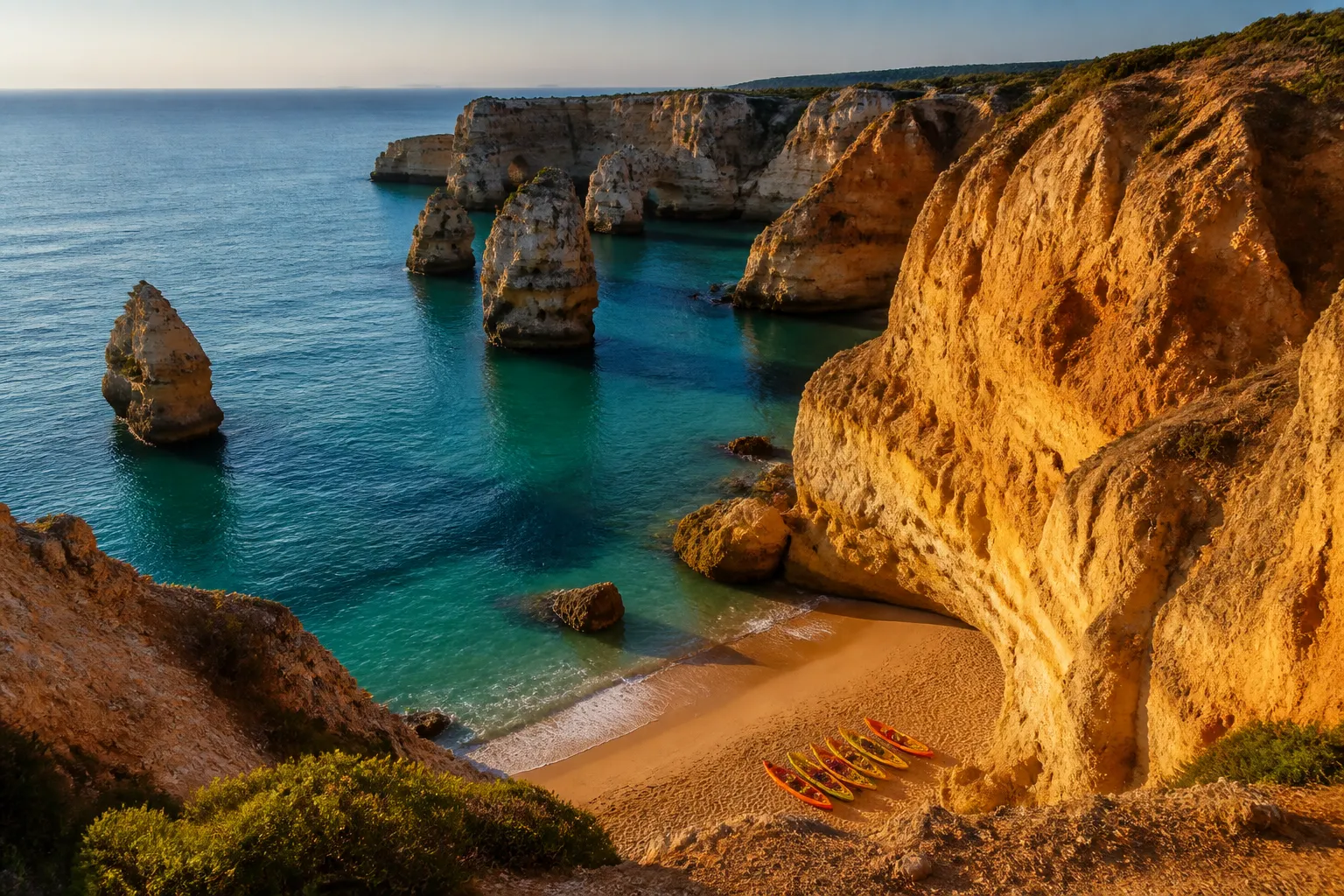
I’ll never forget the moment I stood at Praia da Marinha and realized I’d been sold a lie. For years, I’d imagined Portugal as this sunny, Mediterranean paradise—warm turquoise waters, espresso culture, that whole aesthetic. Then I got there, dipped my toe in the Atlantic, and yelped like a startled cat. Welcome to the real Portugal coastline travel guide: 1,794 kilometers of dramatic, moody, decidedly chilly Atlantic bliss that’s somehow even better than the postcard version.
Affiliate Disclosure: This post contains affiliate links. As an Amazon Associate, I earn from qualifying purchases. All recommendations are honest and based on real travel experience.
Here’s what I wish someone had told me before I arrived: Portugal doesn’t have a Mediterranean coast. Zero. Nada. Spain gets all the Med glamour; Portugal gets something wilder. Every single kilometer of Portugal’s stunning coastline hugs the Atlantic Ocean, which means cooler water (typically 15–22°C depending on season), bigger waves, and limestone cliffs that look like they were sculpted by an angry god with excellent taste. If you’re comparing Portugal’s Atlantic coast vs Mediterranean alternatives, you need to understand that difference before packing your bags.
So let me walk you through the best coastline in Portugal—region by region—so you can stop wondering “where is Portugal’s coastline?” and start actually planning a trip that matches what you really want.
The Algarve Coastline: Portugal’s Instagram-Famous South
The Algarve is the gateway drug to Portuguese coastal travel. If you’re asking “what should I see on Portugal’s coastline?” and you’ve got limited time, start here. This is where the cliffs are golden, the coves are sheltered, and the water is (relatively) warm for the Atlantic—which still means bringing a wetsuit if you plan to stay in longer than five minutes.
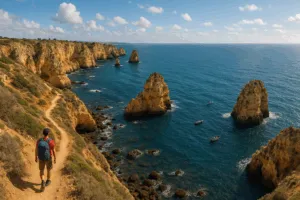
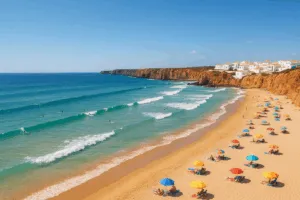
Praia da Marinha is the best overall beach in the Algarve, hands down. I’m not saying this lightly. The layered sandstone cliffs in burnt orange and cream look like a geological wedding cake, and the beach itself is intimate—small enough to feel special, large enough to escape crowds if you arrive before 10 a.m. The water is that stunning jade-green color that made me understand why people become landscape photographers. Fair warning: there’s no lifeguard, and the currents can be strong. Go prepared, go early, and don’t expect to stay in the water long.
Then there’s Praia de Benagil, home to the famous sea cave you’ve definitely seen on Pinterest. The cave is genuinely spectacular—a natural cathedral carved into the cliff face, accessible only by kayak or swimming (swimming is possible but requires nerve; kayak is the smart move). The catch? Everyone knows about it. Get there at dawn, or accept that you’ll be sharing your “solitude” with 200 of your closest Instagram-loving strangers. The kayak rental shops in Benagil village are straightforward; just book ahead in summer.
Lagos is my favorite Algarve base town—charming enough to actually want to stay there, touristy enough that you won’t starve. The nearby Ponta da Piedade rock formations jut out of the water like ancient sentinels, and the golden hour light here is photographer’s pornography. The town has actual character, good restaurants, and enough history to keep you occupied on rainy days (yes, they happen).
Sagres, at the southwestern tip of continental Europe, is where the Algarve gets serious. This is a windswept, wild place—a surfer base with strong currents, dramatic cliffs, and the feeling that you’re standing at the edge of something important. Henry the Navigator set up his school here in the 1400s, and you can feel the exploratory spirit still hanging in the salt air. Come here if you want to feel small. Bring a proper jacket.
Algarve coastline Portugal also includes quieter spots like Portimão and Alvor—less Instagram-famous, more family-friendly, with sandy beaches that shelter young swimmers better than the cliff-side drama further west.
Best for: Families, beach holidays, couples, May–September. Water temp: 18–22°C in summer.
Costa Vicentina: The Wild, Unspoiled Heart of Portugal’s Atlantic Coast
If the Algarve is Portugal’s greatest hits album, Costa Vicentina is the deep cut that devotees obsess over. This is the most unspoiled coastline in Western Europe—I’m not exaggerating. It’s part of the Vicentine Coast Natural Park, and there are virtually no resort towns, no high-rises, and no chain restaurants. It’s gorgeously, stubbornly undeveloped.
The entire section is geared toward people who love nature more than comfort. We’re talking wild camping, cold water (15–18°C even in summer), powerful swells, and hiking trails like the Rota Vicentina coastal path that will make your legs hurt for days but your soul feel restored. The beaches here have names like Praia do Amado (for experienced surfers) and feel genuinely remote.
This is where you go if you’re a surfer, a serious hiker, or someone who defines a successful vacation as “zero phone signal and perfect solitude.” Spring (April–May) and fall (September–October) are ideal—summer brings some crowds, but nowhere near Algarve levels.
Best for: Surfers, hikers, solitude seekers, off-season travel (spring/fall). Water temp: 15–18°C year-round.
The Setúbal Peninsula & Arrábida: Mediterranean Vibes (Atlantic Reality)
Here’s where the Atlantic tricks you. The Arrábida Natural Park, just south of Setúbal (45 minutes from Lisbon), has limestone cliffs that drop into crystal-clear water so green it looks Mediterranean. The coves are protected, the water is (relatively) calm, and you’ll understand why this is Lisbon’s secret playground. Praia da Figueirinha and Praia do Galáo are stunning, swimmable, and way less crowded than anything in the Algarve.
The catch? It’s still the Atlantic. Still cold. Still respects no one. But the geography of this peninsula creates natural windbreaks that make it genuinely pleasant for swimming and snorkeling, especially in summer months.
Best for: Day trips from Lisbon, swimmers, snorkelers, families wanting a “Mediterranean” experience without flying to Spain. 30 minutes from the capital makes this ridiculously accessible.
The Silver Coast (Costa de Prata): Where Portugal Gets Serious About Waves
North of Lisbon, things get dramatically different. The Costa de Prata (Silver Coast) is Portugal’s legitimate surf capital, and it’s not subtle about it. Peniche is the beating heart—a working fishing town that happens to have some of Europe’s best breaks, including the famous Supertubos. Nearby Baleal Island is a surfer village within a fishing town within a peninsula. It’s a bit rough around the edges, which is exactly why it’s perfect.
Then there’s Nazaré, home to the world’s biggest waves. Seriously. We’re talking 80-foot swells (November–February only). You can’t swim here—it’s a spectator sport. People come to watch big wave surfers do things that seem medically inadvisable. Praia do Norte is where the action happens, and even watching from shore, the power is humbling.
The Óbidos lagoon sits just inland, offering a completely different ecosystem—calm, scenic, good for kayaking if the Atlantic is being temperamental.
Best for: Surfers, wave enthusiasts, November–February for Nazaré (if you’re brave). Water temp: 14–17°C. This is the real deal cold.
Portugal’s Atlantic Coast vs Mediterranean: The Honest Comparison
Since you’re likely comparing Portugal to Spain’s Mediterranean coast, let me be direct: they’re completely different experiences. The Mediterranean is warm, sheltered, and predictable. Portugal’s Atlantic is moody, powerful, dramatic, and humbling. The water temperature difference alone is significant—Mediterranean averages 20–26°C; Atlantic averages 15–20°C depending on season and region. That’s a wetsuit conversation in Portugal.
The Atlantic means bigger waves, better for surfers, more dramatic cliff scenery, and fewer beach-lounging-in-a-bikini moments. It means you’ll feel the power of nature instead of just observing it from a lounger. Both are valid. Just know which one you’re choosing.
If you want the Mediterranean experience, go to Spain. If you want something wilder, more authentic, and less obviously touristy, Portugal’s Atlantic coast will deliver exactly that.
The Sunscreen That Actually Survives Portugal’s Atlantic Wind
Portugal’s coastline doesn’t just have cold water—it has relentless Atlantic wind that turns regular sunscreen into a greasy mess on your face within minutes. After getting burned on day two despite applying SPF 30, I learned that spray formulas are the only way to reapply without looking like you’ve been deep-frying.
What works
- Spray application means you can actually reapply between beach swims without a mirror, sink, or five minutes of awkward rubbing—critical when you’re moving between three different coves in a day.
- Mineral-based formula doesn’t pill or leave that chalky white cast under Portugal’s intense (and deceptive) coastal sun, so you’ll actually want to wear it instead of skipping the reapplication.
- SPF 50+ actually holds up against the wind-driven spray and salt water that hits you constantly along the cliffs—regular lotions wash off within an hour if you’re anywhere near the shoreline.
What doesn’t
- The spray mechanism is finicky when it’s humid or windy, and you’ll waste half a can trying to get an even coat on your shoulders while standing on a cliff face.
- It’s noticeably more expensive than regular drugstore sunscreen, and you’ll go through it twice as fast because spray application is inherently less efficient than lotion.
I almost ditched it halfway through my second week—the cost felt ridiculous for something I was reapplying every 90 minutes—but a nasty burn on day 12 when I switched back to lotion convinced me the spray was worth every euro. Grab the Reef Safe Mineral Sunscreen Spray SPF 50+ before you go.
This post contains affiliate links. As an Amazon Associate, I earn from qualifying purchases at no extra cost to you.