
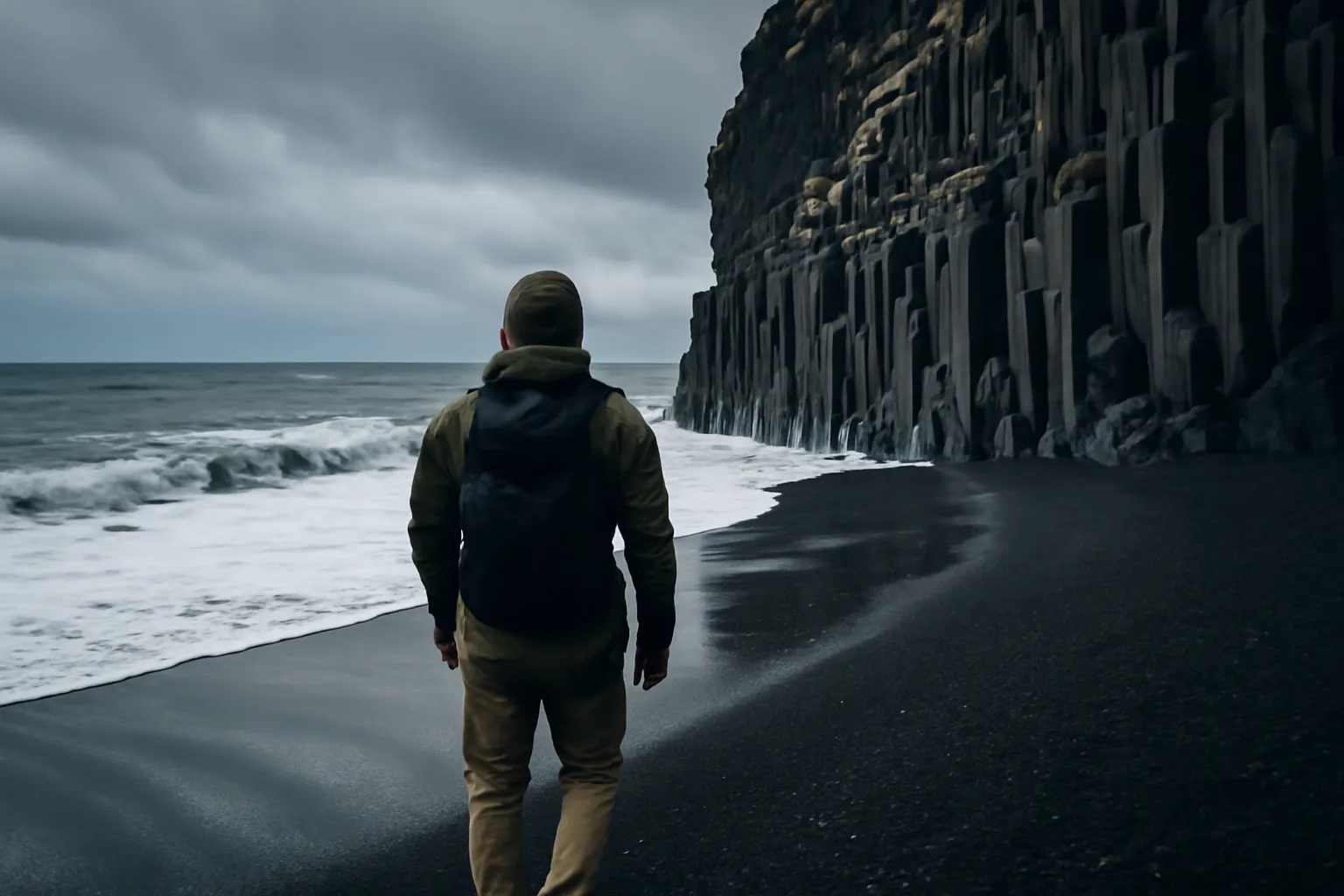
The sand looked cool. That was my first mistake. It was mid-July at Reynisfjara, the famous black sand beach outside Vík, and the sky had gone that particular shade of silver-blue that makes Iceland feel like a painting someone hasn’t quite finished. I’d kicked off my sneakers near the basalt columns and took one barefoot step onto the volcanic sand. Then another. By the third step I was doing an undignified little hop-dance that I can only describe as what happens when you forget a cast-iron skillet is still on the burner. The sand — that gorgeous, photogenic, Instagram-famous black sand — was radiating heat like a stovetop. I scrambled back to my shoes, sat on a rock, and turned around just in time to watch a wave surge 30 meters up the beach with zero warning, soaking four tourists who had been standing in what looked, ten seconds earlier, like a completely dry and safe stretch of shore. They were fine. Startled, drenched, laughing nervously. But I’d read enough about Reynisfjara beforehand to know that not everyone who stands in that spot walks away. That afternoon changed how I think about iceland black sand beach what to wear feet — and honestly, how I think about Iceland entirely.
Why Iceland’s Black Sand Beaches Are Uniquely Dangerous (and Uniquely Magical)
Iceland sits on the Mid-Atlantic Ridge, where the Eurasian and North American tectonic plates are literally pulling apart beneath your feet. The entire island is volcanic real estate — young, geologically speaking, still being actively shaped by lava flows and eruptions. The black sand at Reynisfjara, Vík, Stokksnes, and Diamond Beach isn’t imported drama. It’s pulverized basalt, the same dark volcanic rock that formed those famous hexagonal columns at Reynisfjara’s Hálsanefshellir cave. And that geological origin is exactly why it behaves so differently from the pale quartz sand you’d find in the Maldives or on a Florida beach.
Regular sand — light-colored quartz — reflects a significant portion of sunlight. Dark basalt sand absorbs it. On a sunny Icelandic summer day, the surface temperature of Reynisfjara’s black sand can reach 60°C or higher. That’s 140°F. That’s hot enough to cause a genuine burn in seconds on bare skin. Most tourists, conditioned by every beach experience they’ve ever had, assume sand is sand. It is not.
Then there are the waves. The North Atlantic doesn’t negotiate. Reynisfjara is an open-coast beach with no protective reef or bay, and the swells that arrive here have traveled thousands of kilometers from the coast of Greenland and Canada. The result is what Icelanders call “sneaker waves” — technically called sleeper waves — that surge unpredictably far beyond the previous wave’s reach with almost no warning. The Icelandic Association for Search and Rescue (ICE-SAR) is staffed by volunteers who have pulled people off this beach. The warning signs posted at Reynisfjara are not decorative. They describe a real, documented pattern of tourist deaths. Staying above the wet sand line and never turning your back on the ocean aren’t suggestions. They’re survival basics.
Factor in the water temperature — a consistent 4°C to 8°C year-round, even in July — and the picture becomes clearer. If a sneaker wave catches you and pulls you into the surf, cold shock sets in within minutes. You have less time than you think. Less time than it feels like you have.
And then there’s Diamond Beach, near Jökulsárlón glacial lagoon on Iceland’s southeast coast, where chunks of ice from Breiðamerkurjökull glacier wash ashore on the black sand, gleaming like scattered gems. It’s one of the most photographed places in the country. It’s also covered in sharp-edged ice fragments that will cut bare feet without hesitation, worn smooth enough to look harmless but dense enough to do real damage.
None of this should stop you from going. These beaches are extraordinary in a way that very few places on Earth manage to be. But going prepared is what makes the difference between a story you tell at dinner parties and a story someone else tells about you.
The Shoes That Saved Me From Reynisfjara’s Lava Sting
Black sand beaches in Iceland aren’t just visually dramatic—they’re also brutally hot, sharp, and unforgiving on bare feet. After my cast-iron skillet moment at Reynisfjara, I learned that flip-flops disintegrate in the wind and regular sneakers fill with abrasive grit that feels like walking on broken glass for the rest of your trip.
What works
- They drain instantly—I walked straight from the beach into the car without that squelching wet-sock feeling that ruins the next two hours of sightseeing.
- The grip actually holds on wet basalt rocks, which matters when you’re clambering around cave entrances and tide pools where one slip sends you into the Atlantic.
- Sand doesn’t stick to them the way it does to bare feet or regular shoes, so you’re not tracking volcanic grit into your rental car, guesthouse, or expensive hiking boots.
What doesn’t
- They look like neon pool shoes, which clashes spectacularly with Instagram-worthy landscape photography if that matters to you.
- The sizing runs small—I ordered my usual size and spent the first day with blistered heels before accepting defeat and ordering a half-size up.
I almost didn’t pack them on a follow-up trip because they felt too casual and bulky, but one afternoon at another black sand beach in South Iceland convinced me they’re non-negotiable for any volcanic coastline. SEEKWAY Water Shoes
This post contains affiliate links. As an Amazon Associate, I earn from qualifying purchases at no extra cost to you.