I still remember standing at the international departures gate for the very first time, passport gripped so tightly my knuckles went white. I had no idea what I was doing. Nobody had handed me a real first time international travel guide — just a printout from a travel forum and a vague sense of adventure. That trip nearly went sideways three times before I even boarded the plane. Fifteen years, 50-plus countries, and one former tour guide career later, I have built this guide so you do not have to white-knuckle it alone.
This is the most comprehensive resource I have ever written for Witty Passport. It covers everything a beginner needs before, during, and after their first international trip. We are talking passports, packing, airports, budgeting, safety, and cultural awareness. Nothing is glossed over. If you read one travel article this year, make it this one.
Bookmark this page. Share it with the friend who just announced their first trip abroad. Come back to each section as your departure date approaches. This is the guide I wish someone had handed me at that departures gate.
Step One: Getting Your Passport Right
Your passport is the single most important document you will ever carry. Without it, you are not going anywhere. In the United States, a standard adult passport currently costs $130 for the book, plus a $35 execution fee at most acceptance facilities. Expedited processing adds another $60. Budget accordingly and start early.
Most countries require your passport to be valid for at least six months beyond your travel dates. That catches a shocking number of first-timers off guard. I have personally met travelers turned away at check-in because their passport expired in four months. The airline was not the problem — the destination country was. Check the specific entry requirements for your destination at your government’s official travel advisory site.
Standard processing currently takes 6–8 weeks in the U.S. Expedited processing takes 2–3 weeks. If your trip is sooner than that, you can book an appointment at a regional passport agency for urgent travel within 14 days. Do not wait on this. Passport timelines fluctuate seasonally, and summer backlogs are brutal.
Visas: Know Before You Go
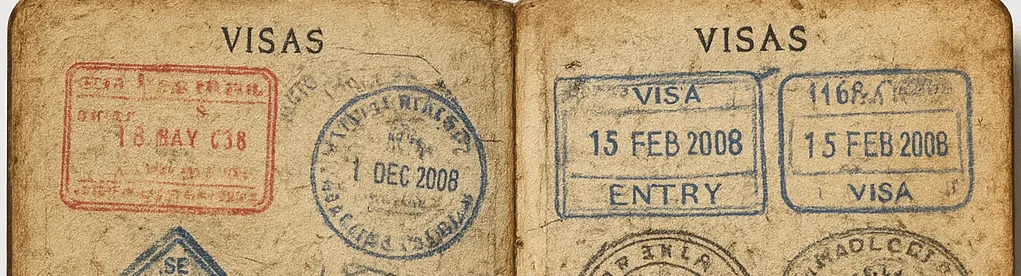
A passport gets you out of your home country. A visa gets you into someone else’s. Many destinations offer visa-free entry or visa-on-arrival for certain passport holders, but plenty require advance applications. Research this at least 8–12 weeks before departure. Some visas, like India’s e-Visa, can be approved in 72 hours. Others, like certain African or Asian visas requiring embassy appointments, can take months.
The IATA Travel Centre and your destination country’s official embassy website are your most reliable sources. Do not trust travel blogs — including this one — for visa specifics. Rules change fast. Always verify with official government sources.
How to Pack Smart for International Travel
Overpacking is the single most common first-timer mistake I see. Every. Single. Time. I spent my first international trip hauling a 32 kg suitcase through cobblestoned streets in Europe. It was miserable. Now I travel exclusively with a carry-on and a personal item, even for trips lasting three weeks.
The TSA and most international security agencies follow ICAO and IATA liquid restrictions: containers must be 100 ml (3.4 oz) or smaller, all fitting in a single 1-litre (quart-sized) clear resealable bag. One bag per passenger. This applies to virtually every international airport in the world. Pack your liquids bag last so you can pull it out easily at security.
For clothing, I use the 1-2-3-4-5-6 rule as a starting point: 1 pair of shoes, 2 pairs of pants, 3 shirts, 4 pairs of socks, 5 pairs of underwear, 6 days of outfits maximum before you do laundry. Most destinations have laundromats or hotel laundry services. Packing cubes help compress clothes and keep your bag organised. Roll, do not fold — it genuinely saves space.
The Electronics and Documents Checklist
Carry these items in your personal bag, never in checked luggage:
- Passport (and a photo of it saved to cloud storage)
- Travel insurance documentation (printed and digital)
- Flight confirmations and hotel bookings
- Universal power adapter (check your destination’s plug type)
- Portable battery bank (carry-on only — lithium batteries are prohibited in checked bags)
- Unlocked phone with local SIM or international data plan activated
Europe uses Type C, E, and F outlets. The UK uses Type G. Southeast Asia is a mixed bag. Japan uses Type A but at 100V, not 110V. A universal adapter handles plugs — a voltage converter handles wattage. Most modern electronics (laptops, phones, cameras) are dual-voltage, so you often only need the adapter. Check the label on your device’s power brick.
[INTERNAL LINK: carry-on packing guide]
Navigating International Airports With Confidence
International airports are big, noisy, and deliberately confusing if you do not know the flow. However, once you understand the process, it becomes second nature. Here is the sequence you will follow on departure from most major airports.
Departure: What to Expect Step by Step
- Check-in and bag drop — arrive at least 3 hours before an international flight, not 2.
- Security screening — remove liquids bag, laptop, and jacket. Follow agent instructions.
- Passport control / immigration — have your passport open to the photo page. Answer questions briefly and honestly.
- Duty-free and gate area — find your gate first, then explore. Gates change; stay alert to departure boards.
- Boarding — listen for your boarding group. Have passport and boarding pass ready simultaneously.
On arrival at your destination, you will clear customs and immigration there, not at departure. Expect a queue. Have your arrival card filled out (many countries still use paper forms, though this is shifting to digital). Declare anything you are unsure about — the penalties for not declaring items are steep, and customs officers are experienced at spotting hesitation.
In my experience, the biggest time-wasters at airports are avoidable. Do not wear complicated boots to security. Do not forget your liquids in your main bag. Do not assume your gate is the nearest one to security — I once walked 20 minutes through Heathrow Terminal 5 to reach my gate. Check the board, confirm the gate, and walk with purpose.
Budgeting for Your First International Trip
Money stress ruins trips. That is not an exaggeration — I have seen it happen on guided tours repeatedly. The fix is simple: plan your budget before you book anything else.
A rough framework for daily travel budgets (excluding flights and major accommodation):
- Budget destinations (Southeast Asia, Central America, Eastern Europe): $30–$60/day
- Mid-range destinations (Southern Europe, Mexico, South Africa): $80–$150/day
- Expensive destinations (Western Europe, Japan, Australia, Scandinavia): $150–$300+/day
These are honest figures, not optimistic ones. Add 15–20% as a contingency buffer. Unexpected costs always appear — a delayed flight requiring an extra night, a medication you forgot, an entry fee you did not research. That buffer is not optional.
Currency, Cards, and Cash Strategy
Notify your bank before you travel. Failing to do this gets your card flagged and blocked — I learned this the hard way in Bangkok at 11pm with no local cash. Use a debit card with no foreign transaction fees for ATM withdrawals. Avoid airport currency exchange booths; their rates are consistently 5–8% worse than ATM rates.
Always carry some local cash. Markets, small restaurants, tuk-tuks, and tips are often cash-only. A reasonable starting amount is the equivalent of $50–$100 USD in local currency when you land. Withdraw more from in-network ATMs at your destination rather than exchanging at home.
Dynamic Currency Conversion (DCC) is a trap. When a foreign ATM or card terminal asks if you want to pay in your home currency, always choose the local currency. The DCC exchange rate is padded by the merchant, not your bank. Choosing local currency means your bank applies the rate — almost always better.
[INTERNAL LINK: travel money and currency tips]
Travel Safety: Real Talk for First-Timers
Travel is safer than most people fear and riskier than most people prepare for. Both halves of that sentence matter. In fifteen years of travel, I have had one bag stolen (Rome, 2011, my fault entirely), one medical issue requiring a clinic visit, and one close call with a scam. All three were preventable.
Travel Insurance Is Non-Negotiable
I will be direct: do not travel internationally without travel insurance. A medical evacuation from a remote destination can cost $50,000–$200,000 USD. A single emergency room visit in the United States for a visiting foreigner can exceed $10,000. Travel insurance for a two-week trip typically costs $50–$150 depending on age, destination, and coverage level. The math is obvious.
Look for policies that include: emergency medical coverage ($100,000 minimum), medical evacuation, trip cancellation and interruption, and baggage loss. Read the exclusions carefully. Pre-existing conditions, adventure activities, and acts of war are commonly excluded. Know what you are buying before you need it.
Street Smarts and Personal Safety
Pickpockets target distraction, not wallets. The tourist who is reading their phone in a crowded market is the target, not the one walking with awareness. Use a crossbody bag with a zipper. Keep your phone in your front pocket or inner bag pocket. Do not flash expensive gear unnecessarily.
Register with your government’s travel advisory program before departure. In the U.S., that is the Smart Traveler Enrollment Program (STEP) at travel.state.gov. It is free, takes five minutes, and means your embassy can contact you in an emergency. Specifically, this is valuable during natural disasters, civil unrest, or family emergencies at home.
Share your itinerary with someone at home. A simple document with your flight numbers, hotel names, and contact numbers is enough. Check in with them at reasonable intervals. This is not paranoia — it is basic responsible travel.
Cultural Awareness and Respectful Travel
Here is the thing about cultural mistakes: most locals are forgiving of ignorance when they can see genuine respect. However, there is a category of error that crosses from ignorance into disrespect, and that line is worth knowing before you cross it.
Dress codes matter enormously at religious sites. In many mosques, temples, and churches worldwide, bare shoulders and shorts are not permitted — regardless of the weather. I carry a lightweight scarf specifically for this. It weighs nothing and has saved me from missing entry at incredible sites in Morocco, Cambodia, and Italy. Research dress requirements for any religious site you plan to visit.
Tipping, Greetings, and Table Manners
Tipping norms vary dramatically by country. In Japan, tipping is considered rude — it can genuinely cause offence. In the United States, 18–20% at restaurants is standard. In much of Europe, rounding up or leaving 5–10% is appropriate. In parts of Southeast Asia, tipping at restaurants is becoming more common but remains discretionary. Research your specific destination.
Greetings also vary. A handshake that is perfectly normal in Germany might be inappropriate for a woman traveler to initiate in parts of the Middle East. Pointing with a single finger is considered rude in many Asian cultures — use an open hand instead. Learning five words in the local language (hello, please, thank you, sorry, excuse me) earns extraordinary goodwill everywhere I have ever been.
Photography requires consent, especially of people. Photographing strangers without permission is rude in most cultures and illegal in some. Ask first, even with a gesture. Accept no gracefully. Delete photos if someone requests it. You are a guest in someone else’s home country — behave accordingly.
[INTERNAL LINK: cultural etiquette tips for international travelers]
Common Mistakes in This First Time International Travel Guide (And How to Avoid Them)
Mistake 1: Booking Non-Refundable Everything Too Early
Flights and hotels booked months out can be great value. However, life happens. Visas get denied. Passports get delayed. Jobs change. Book refundable or flexible accommodation where possible, especially for your first international trip. The price difference between a fully flexible hotel rate and a non-refundable one is often only $15–$30 per night. That is cheap insurance.
Mistake 2: Overscheduling Every Day
First-timers tend to cram their itineraries. I understand the impulse — you have flown this far, you want to see everything. That said, jet lag is real, logistics take longer than Google Maps suggests, and some of the best travel moments happen when you are not racing to the next thing. Build in at least one “nothing planned” half-day per week. Your trip will be better for it.
Mistake 3: Ignoring Health Preparation
Visit your doctor or a travel health clinic at least 6–8 weeks before departure. Some destinations require specific vaccinations (yellow fever for parts of Africa and South America, for example). Others strongly recommend them. Malaria prophylaxis medication must often be started weeks before arrival to be effective. Do not leave this until the week before you fly.
Mistake 4: Relying Entirely on Roaming Data
International roaming plans from major carriers have improved, but they are often expensive and unreliable in rural areas. For a trip longer than a week, purchasing a local SIM card at your destination is almost always cheaper and more reliable. Alternatively, a global eSIM service gives you data in 150+ countries from a single app. Download offline maps (Google Maps works well for this) before you lose signal, not after.
Mistake 5: Not Keeping Copies of Important Documents
Losing your passport abroad is genuinely disruptive. However, having a copy stored in cloud storage (Google Drive, iCloud, Dropbox) means your nearest embassy can help you far faster. Email yourself a copy too. Store your travel insurance policy number, your bank’s international contact number, and your emergency contacts in that same document. This takes ten minutes at home and can save days of stress abroad.
Final Thoughts: You Are More Ready Than You Think
Every experienced traveler started exactly where you are right now. Nobody was born knowing how to navigate Heathrow or fill out a customs declaration or haggle respectfully at a market. These skills are learned, trip by trip. This first time international travel guide is your starting point, not a ceiling.
The most important thing I can tell you is this: go. The planning matters, and this guide covers it comprehensively. However, at some point the research has to end and the trip has to begin. No amount of reading fully prepares you for the moment you step off a plane into a country that smells, sounds, and feels entirely unlike home. That moment is the point. Chase it.
Come back to each section of this guide as your departure date approaches. Reread the packing section the week before you fly. Reread the airport section the night before. Reread the safety section when you land. This resource will be here every time you need it — updated, honest, and written by someone who has made every mistake in it at least once.
Safe travels. I genuinely mean that.
— Alex Hartwell, Witty Passport