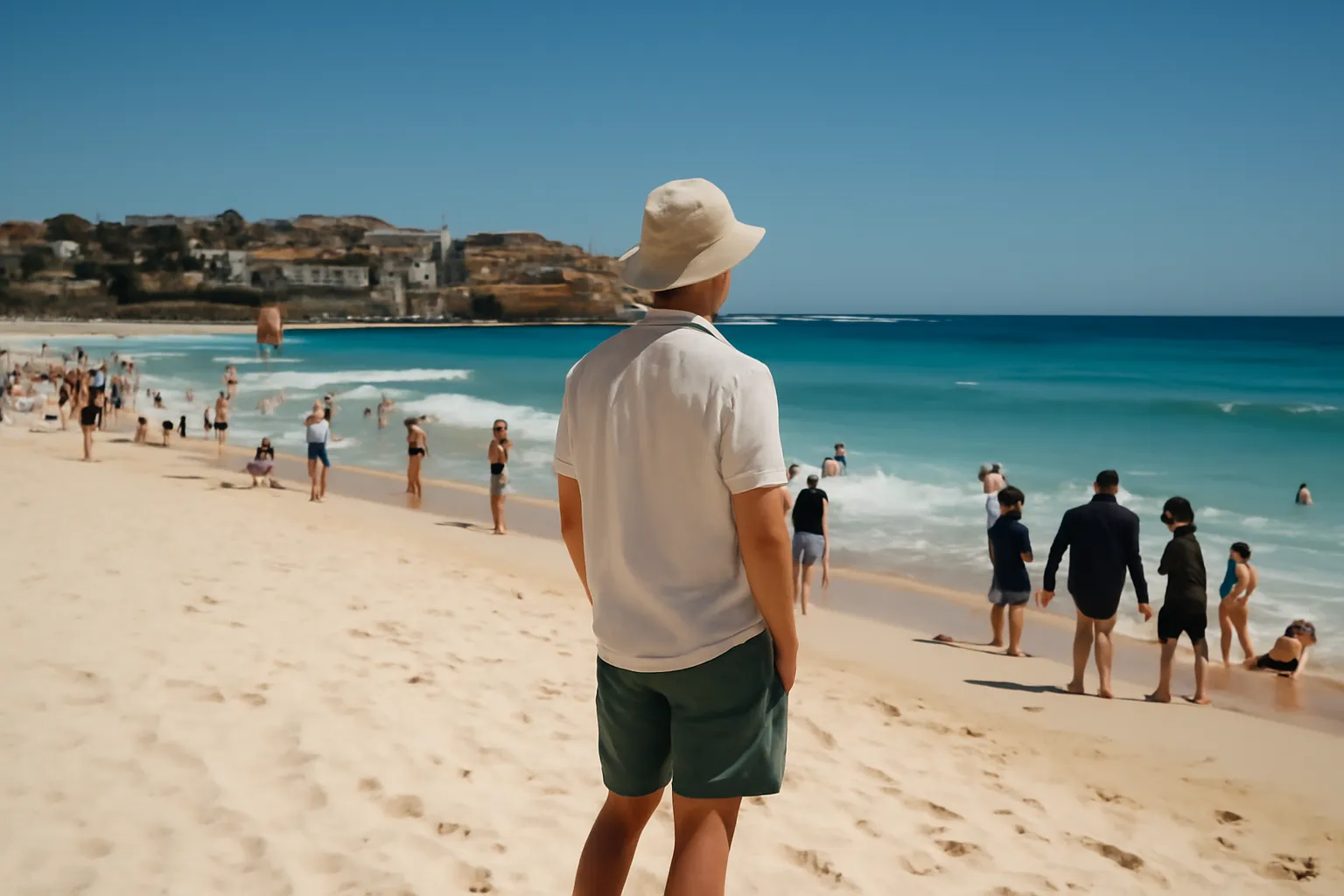
Forty-five minutes. That’s all it took at Bondi Beach for me to discover that four continents’ worth of coastline experience meant absolutely nothing here. I could read a rip current, time my sunscreen reapplication like clockwork, and find shade before the midday crush — hardly a rookie move by anyone’s standards. Yet there I was, that first Sydney morning, peeling myself off a rented beach towel and feeling something that had no business feeling like a branding iron had been pressed flat against my shoulders. Not a sunburn. A genuine, blistering burn — the sort that turns a long-haul flight home into torture and gets you a worried glance from the pharmacist along with a leaflet about skin checks. The clock read 9:47am. The UV index sat at 13. Back home, that reading would’ve been called “a gorgeous day.” Here, it was just an ordinary October Tuesday — and the locals around me were already reacting like it was a chemical spill. That’s when I clocked what my overconfidence had blinded me to: every Aussie family within view had their children zipped into full-body rash guards, legionnaire hats shading the backs of small necks, zinc smeared in hot pink and electric blue across noses. This wasn’t paranoia. This was simply how things are done in Australia. Meanwhile I sat there in a bikini, looking every bit like I’d wandered off a Camden rooftop bar, the sole person on that sand who clearly hadn’t gotten the briefing on sun protection at Australian beaches and what to wear. Everything below is what I wish someone had grabbed me by the shoulders and explained before I ever touched down.
Why Sun Exposure Is Uniquely Dangerous — and Culturally Serious — in Australia
Here’s a figure that honestly deserves a spot on the tourist visa paperwork: two out of every three Australians will hear a skin cancer diagnosis by the time they turn 70. No country on earth logs a higher skin cancer rate. This isn’t a small gap, either — it’s a chasm. And carelessness has nothing to do with it. The real culprit is geography: Australia sits beneath a stretch of the Southern Hemisphere where the ozone layer runs noticeably thinner, so more UVB radiation slips through to ground level than you’d get at a comparable latitude up north. Stand at the same distance from the equator as, say, southern France, and you’ll still soak up meaningfully harsher rays down under. The physics simply refuse to do you any favors here.
During Australian summer, the UV index routinely climbs past 14. Some context: the World Health Organisation flags anything over 11 as “extreme.” On an unclouded December afternoon in Sydney, Melbourne, or Brisbane, you can hit that extreme threshold by 9 a.m. and stay there straight through until 4 p.m. Head up to far north Queensland — home turf for the Great Barrier Reef and the Whitsundays — and readings of 16 or 17 aren’t even remarkable. At those levels, bare skin can start burning in well under ten minutes.
None of this is news to the Australian government, which has been on it for decades. Back in 1981, the Cancer Council rolled out the Slip, Slop, Slap campaign — slip on a shirt, slop on sunscreen, slap on a hat — fronted by an animated seagull called Sid. It’s gone down as one of the most effective public health campaigns the country has ever run. Ask an Australian of a certain generation and they’ll rattle it off like a nursery rhyme. Later on, “seek shade” and “slide on sunnies” got folded in, rounding it out into the five-part routine still preached today. This isn’t a marketing gimmick — it’s behavior baked into the culture, drilled into kids in primary school, printed on cereal boxes, and taken completely seriously by people who watched parents and grandparents deal with melanomas firsthand.
Wander through any coastal Australian town — Bondi, Byron Bay, Airlie Beach, Cairns, take your pick — and you’ll spot Cancer Council shops stacked with wide-brim hats, SPF 50+ sunscreen sold in bulk, and swimwear built with UV protection woven right in. Council playgrounds come with shade sails over the equipment as standard policy, not an afterthought. Lifeguards patrol in long-sleeved UV shirts as part of the standard uniform. The SunSmart app hands out a UV forecast right alongside the weather forecast, and people genuinely check it. This isn’t a place that treats sun safety as some optional beach-day extra — it’s treated with the same non-negotiable seriousness some countries reserve for road safety. As a visitor, getting your head around this matters just as much as understanding cultural clothing expectations anywhere else you’d want to blend in and enjoy the beaches properly — for the entire length of your trip, rather than spending day four hunting down burn gel at the chemist.
The Rash Guard I Wish I’d Packed for Bondi Before Learning My Lesson
Sun in Australia doesn’t play by the rules you’re used to. It moves fast, ignores whatever careful sunscreen schedule you’ve set up, and will inevitably find the one patch of skin you forgot — nine times out of ten, your shoulders. I found this out the painful way; a rash guard would’ve spared me an entire week of sleeping face-down.
Where it earns its keep
- The UPF 50+ rating genuinely survives repeated dips in the ocean — nothing needed reapplying under the fabric, which is one less thing to juggle mid-swim.
- Long sleeves in warm tropical water sound like a bad idea until you try them; the material dries out quickly enough that you’re not stuck dragging around soggy fabric for hours.
- It happens to cover exactly the trouble spots — shoulders, upper back, chest — where reef rash and sun damage tend to sneak up on a beach day.
Where it falls short
- Your face, ears, and any exposed leg still need actual sunscreen — this isn’t a substitute for full coverage, just a smart move for your upper body.
- If the idea of looking sun-shy bothers you, brace yourself, because you will visibly look more cautious standing next to the bronzed locals.
I almost left mine in the hotel on day three because I felt overdressed next to everyone else on the sand. I grabbed it anyway—best last-minute decision of that trip. Long Sleeve Swimsuits for Women Rash Guard Modest Surfing Zip Black 2XL
Frequently Asked Questions
Why is the sun so much stronger in Australia than other places?
Australia sits beneath a stretch of the Southern Hemisphere where the ozone layer runs noticeably thinner, so more UVB radiation slips through to ground level than you’d get at a comparable latitude up north. Even at the same distance from the equator as southern France, you’ll still soak up meaningfully harsher rays down under.
What UV index numbers can I expect at Australian beaches?
During Australian summer, the UV index routinely climbs past 14. On an unclouded December afternoon in Sydney, Melbourne, or Brisbane, you can hit the extreme threshold of 11 by 9 a.m. and stay there straight through until 4 p.m. In far north Queensland, readings of 16 or 17 aren’t even remarkable.
How fast can Australian sun actually burn bare skin?
At UV levels of 16 or 17, which are common in far north Queensland, bare skin can start burning in well under ten minutes. This is why sun protection is treated with serious urgency by locals and should be by visitors too.
What is the Slip, Slop, Slap campaign in Australia?
Rolled out in 1981 by the Cancer Council, this five-part sun safety routine instructs people to slip on a shirt, slop on sunscreen, slap on a hat, seek shade, and slide on sunnies. It’s one of the most effective public health campaigns Australia has ever run and is baked into the culture.
About This Article

Written by Elena Vasquez. Elena Vasquez is a full-time traveler and the founder of Witty Passport. Over fifteen years and more than 50 countries across six continents — including a stretch spent leading groups professionally through Southeast Asia and the remote highlands of South America — she's written the kind of destination guides she always wished existed: practical, specific, and built on real experience rather than recycled itineraries. More about this site.
Scope and limits. Elena is a full-time traveler, not a licensed travel agent or immigration adviser. Entry requirements, visa rules, and advisories change without notice — always confirm against the official government source for your destination and passport before booking.
Verify this against a primary source
Specifics change, and your situation may differ from the one described here. These are the authorities worth checking directly:
- U.S. Department of State — entry requirements and travel advisories
- CDC Travelers' Health — vaccination and health notices by destination
- TSA — current carry-on and screening rules