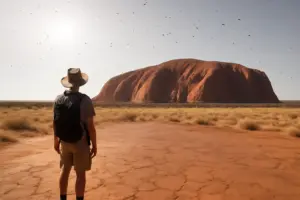
Sunrise at Uluru versus the same walk at four in the afternoon isn’t a close call — one leaves you speechless, the other just leaves you sweaty. That’s the trip a work bonus bought me: a round-trip fare and two weeks in Australia’s Red Centre, a place that had been lodged in my head since a geography lesson in eighth grade, where the dirt runs a burnt-orange no camera has ever managed to reproduce. Watching the light hit Uluru at dawn, I finally understood why this enormous, ancient stretch of land gets under the skin of people who’d never otherwise call themselves adventurous. Here’s what nobody warned me about before I stepped off the plane in Alice Springs: the Outback is generous to travelers who prepare and merciless to the ones who don’t, so treat this as required reading before you zip a single bag closed.
If you’re driving yourself, nothing here can be left to chance. This guide walks through what actually keeps a self-drive Outback trip safe — the routes worth the dirt on your tires, how to set up a vehicle before you leave, and the safety measures that matter more than any packing list. Get these right and the scenery does the rest of the work.
Preparing Your Vehicle for the Dirt
The terrain out here will find every weakness in a vehicle. Travel Guide A proper four-wheel-drive isn’t a nice-to-have, it’s the baseline — a regular sedan won’t survive what these roads throw at it. Get a mechanic to go over the vehicle top to bottom before you leave home, no exceptions.
Pack spares before you pack anything else. Bring extra belts, hoses, and more than one spare tire, along with a decent tire repair kit. Corrugated roads chew through weak rubber faster than you’d think possible.
4am, a Thermos, and Uluru: Why the Alarm Was Worth It
Tjukurpa — “just call me Tjuka,” he said before I’d even shut the car door — was already standing in the dark parking lot at 4:45am looking far more alert than a human being should at that hour. I had a thermos clamped in both hands like it was a life-support device, because honestly it was. Tjuka is an Anangu man who’s been guiding these sunrise walks for more than ten years, and within minutes he’d gotten the whole group laughing while quietly dismantling everything I thought I knew about Uluru. To the Anangu, he explained, Uluru isn’t a rock formation at all — it’s a living ancestor, shaped during the Tjukurpa, the Dreamtime, when ancestral beings built the world and left their stories written into the land itself. “You don’t climb it,” he said, no lecture in his tone at all. “You wouldn’t climb your grandmother.” Nobody in the group had a comeback for that.
The sunrise was almost unfair in how beautiful it was. Uluru moved from a flat black cutout against the sky to deep burgundy to a full, blazing orange-red over roughly twenty minutes, the color rolling across the sandstone like a dimmer switch being turned up slowly. The air carried red dust and dry eucalyptus, and the quiet was thick enough that you could hear everyone else breathing. Partway through the base walk, Tjuka was pointing out rock art tucked into a low cave — geometric shapes and figures painted in ochre, some thought to be thousands of years old — and I bent down for a closer look, badly misjudged the low ceiling, and cracked my skull against the stone hard enough to make the whole group flinch. Tjuka just handed me some water and said, “The rock has met you now.” Fair enough, honestly. I also learned that ochre carried serious ceremonial weight for the Anangu and was traded across huge distances long before Europeans ever arrived — so this place functioned as an ancient meeting point of culture as much as landscape.
If a pre-dawn wake-up call sounds appealing even with the head-injury risk attached, don’t talk yourself out of it. A guided walk led by Aboriginal guides is a completely different experience from wandering the base track solo — the stories are the entire reason to be there. You can look through similar Australia tours on Viator to find something that matches your dates and pace. Book ahead — spots disappear quickly, especially in peak season.
Gear That Gets You Unstuck
Getting stuck out here isn’t a minor inconvenience — it’s a real emergency waiting to happen. Recovery gear isn’t optional equipment; it’s near the top of the priority list for anyone who’s actually driven these tracks before.
Snatch straps should be the first thing in your kit. These elastic recovery straps stretch under load and then snap back with real force, generating enough kinetic pull to yank a bogged vehicle free. Carry a minimum of two rated straps, always.
Traction Boards and a Good Shovel
Traction boards such as MaxTrax earn their keep in almost any surface. Slide them under spinning tires and you get instant grip, whether you’re stuck in sand, mud, or loose rock. Plenty of stranded travelers have driven straight out of a bad situation with nothing but a pair of these.
A Travel Guide solid shovel rounds out the recovery kit:
- Clear packed sand from around bogged tires — dig out compacted dirt from underneath the vehicle — and cut drainage channels if things get wet
Why Your Suspension Needs Work Before You Go
Factory suspension isn’t built for the kind of load an Outback trip demands. Corrugated roads pile extra stress onto every part of the system, and stock springs sag fast once you’ve loaded up with water, food, and camping gear.
Upgrades worth looking into:
- Heavy-duty coil or leaf springs matched to your actual load
- Reliable shocks — Old Man Emu or Bilstein are common choices
- A rear airbag assist system so you can adjust on the fly
Better suspension pays off in more than one way — extra ground clearance over rocky sections, noticeably less driver fatigue on washboard roads, and improved handling if you ever need to react quickly.
Spending money on quality suspension before your Outback trip is money well placed. Cheap components tend to fail at exactly the wrong time, so stick with brands that have a real track record out here. This isn’t the place to cut corners on equipment.
Taking On the Oodnadatta Track
The Great Red Centre Road Trip Routes
The Red Centre is about as good as it gets for a road tripper. Each route out here carries its own story about the land, connecting travelers to ancient culture and raw wilderness in the same breath.
The Oodnadatta Track
The Oodnadatta Track is one of the most storied unsealed roads in the country, running over 600 kilometers through remote South Australian outback. It also follows paths Aboriginal people have walked for thousands of years.
Along the way, a handful of landmarks are worth slowing down for:
- Old Ghan Railway ruins — the skeleton remains of Australia’s first inland railway line
- Bubbling mound springs — rare natural thermal springs pushing up out of the ground
- Coward Springs — a well-liked campsite with warm natural bathing pools
- William Creek — one of the smallest, most remote townships anywhere in Australia
Why This Route Stands Out
The track also cuts through Witjira National Park, where the desert wildlife is genuinely remarkable — keep an eye out for dingoes, wedge-tailed eagles, and reptiles you won’t see anywhere else. The scenery swings between red sand dunes and old floodplains without much warning.
This is not a casual drive, though, and plenty of travelers underestimate exactly how demanding it gets. Before you set out, make sure you’ve sorted:
- A high-clearance 4WD — a regular car has no business on this terrain
- Extra fuel — service stations here are few and far between
- A real water reserve — plan on at least 10 liters per person, per day
- A satellite communication device — phone signal is basically nonexistent
When to Go
April through September is the comfortable window for driving here, which is exactly why seasoned travelers skip summer entirely. Temperatures can climb past 50°C, at which point the trip stops being fun and starts being risky.
Traveling in the cooler months also means catching the desert floor in full wildflower bloom — genuinely one of the more unforgettable sights out here.
Wabma Kadarbu Mound Springs Conservation Park — worth a stop if you’re passing through.
The mound springs at Wabma Kadarbu are a genuinely strange and beautiful sight — water bubbling up from the Great Artesian Basin. Still, this route demands real respect; keep checking the weather as conditions can shift fast.
Heavy rain can shut these tracks down without notice, so check local road reports before you leave every single time. The track is also lined with sharp rock that will puncture ordinary tires without much effort — Light Truck construction tires aren’t optional here.
Driving the Red Centre Way
The other classic option is the Red Centre Way, linking Alice Springs to Uluru and Kings Canyon. It delivers some of the most dramatic rock scenery in the country, passing straight through the West MacDonnell Ranges, where deep gorges hide genuinely refreshing swimming holes.
From there, the route shifts onto the unsealed Mereenie Loop — a section that requires a permit to cross Aboriginal land.
Bracing for the Corrugations on the Mereenie Loop
The Mereenie Loop is not a gentle drive. Its unsealed sections are famous for severe corrugations — that relentless, washboard-style rippling across the surface that demands real respect from anyone behind the wheel. These bumps aren’t just an uncomfortable ride, either; they create a constant jarring vibration that hammers on your vehicle’s components. Suspension takes the worst of it, and steering parts wear down too. Preparing for this stretch properly matters more than people expect.
Why Tire Pressure Matters So Much Here
Getting your tire pressure right is your single best defense on these brutal tracks. Drop your pressure significantly — aim for roughly 20-25 psi in most 4WDs. A lower pressure widens the tire’s footprint and lets it flex, which absorbs the constant jolting instead of transferring it straight to the vehicle — and it also improves grip on loose ground.
Dropping pressure basically softens the whole ride, which protects the chassis underneath. Skip that step and you risk cracked chassis components, bolts working loose from constant vibration, and electronics failing outright. Just remember to reinflate once you’re back on sealed roads — otherwise you’re looking at overheating and possible blowouts. Bring two spares along with a solid recovery kit, no matter what.
The Payoff: Kata Tjuta
After all that rattling, the reward is genuinely worth it. The Mereenie Loop ends at Kata Tjuta, also called The Olgas — an unmistakable, ancient formation of enormous domed rocks standing guard over the desert. A few walking trails wind through the site, each offering a different angle on the formations, and the whole place carries a deeply spiritual weight that makes the rough drive feel completely justified.
Keeping Your Fuel Situation Under Control
Fuel is one of the things you cannot afford to get wrong out here. Roadhouses can be hundreds of kilometers apart, so know exactly how far your vehicle can go on a tank before you ever leave the highway.
Carry extra fuel in approved jerry cans, always — headwinds and soft sand burn through a tank far faster than you’d expect.
Mark every single fuel stop on a physical map ahead of time, and don’t lean entirely on a phone app for this. Remote roadhouses do run dry unexpectedly, so keep a genuine safety margin — enough fuel to reach the next two stops, not just the next one.
Water and Food: Planning It Properly
Water matters even more than fuel out here. Plan on carrying at least ten liters per person daily, and split it across several smaller containers rather than one big tank — if the big one springs a leak, you’ve lost everything at once. Redundant storage genuinely saves lives.
Food needs the same forethought. Fresh produce won’t last in the desert heat, so lean on dry goods and canned food. A decent portable fridge is worth the investment if you want fresh meat along the way.
That said, fridges pull a lot of power from your battery, so a dual-battery setup is genuinely worth installing — it keeps your engine battery fully charged so you’re never staring at a dead car in the morning.
Safety and Staying in Touch
Communication Options Once You Leave the Towns Behind
Mobile signal drops off completely once you’re past the last major town. Telstra, Optus, and Vodafone all have thin coverage out here, and even Telstra’s network, the best of the bunch in rural Australia, still leaves enormous stretches with nothing.
Which means having a backup way to communicate isn’t a nice extra — it’s the kind of preparation that can actually save your life.
Satellite Phones
A satellite phone talks directly to satellites overhead instead of ground towers, which means it works nearly everywhere. Some of the more common providers:
- Iridium – covers the globe, dependable
- Inmarsat – performs especially well in the Southern Hemisphere
- Thuraya – rental options that won’t break the bank
Quite a few Outback vehicle hire companies will throw in a satellite phone rental with the vehicle, so it’s worth asking before you book.
Personal Locator Beacons (PLBs)
PLBs are small, cheap, and can genuinely save your life. Hit the button and it sends your GPS coordinates straight to emergency services. In Australia, every PLB has to be registered with AMSA (the Australian Maritime Safety Authority).
A few things worth knowing about PLBs:
- Registering one is free, and it’s mandatory
- Battery life usually runs past five years
- Rescue teams typically get your signal within minutes
- Expect to pay somewhere around $200–$400 AUD for one
Satellite Messengers
Devices like the Garmin inReach add two-way messaging into the mix. They come with an ongoing subscription cost, but being able to check in regularly with family is worth it for the peace of mind alone.
A Solid Communication Plan Before You Leave
Before you hit the road, make sure you:
- Leave a written itinerary with someone you trust
- Set fixed check-in times and stick to them
- Pack backup batteries or a solar charger
- Have your precise GPS coordinates ready whenever you check in
Australian authorities go further and recommend carrying both a satellite phone and a PLB �� one keeps you in active contact, the other is your emergency fallback. Together, they push your safety margin up considerably once you’re truly out in remote terrain.
A two-way radio is also worth having — it lets you talk to passing truck drivers and sort out safe overtaking on dusty, low-visibility roads.
Always leave your exact route and expected arrival times with someone you trust, so if you don’t check in, they know to raise the alarm. And if you do break down, stay with the vehicle — it gives you shade and makes you far easier to spot than you’d be on foot.
Reading Road Conditions as They Change
Outback roads never sit still for long — graders smooth them out, then traffic corrugates them right back within days. Adjusting your tire pressure is non-negotiable here; dropping it softens the ride, protects your suspension, and improves grip on loose gravel all at once.
Just remember to slow down once your tires are softer — high speeds build up heat fast and lead straight to blowouts. Wildlife is another real hazard: kangaroos, emus, and the occasional stray cow wander onto the road without warning.
Driving in the Outback — Tourism Australia
Never drive between dusk and dawn — that’s exactly when animals are most active. Get to camp early instead, and let the sunset be the thing you’re enjoying rather than dodging.
Why the Red Centre Is Worth All of It
An Outback trip asks a lot of you before you even start driving. But the payoff is real — skies packed with more stars than you knew existed, and landscapes so old and vivid they’ll leave you speechless.
Prep your vehicle properly and the trip stays safe. Manage your supplies with care and you get real peace of mind. In the end, respecting this harsh environment rather than fighting it is what separates a good trip from a bad one.
Start pulling the maps together, get the vehicle sorted, and pack your supplies — the Red Centre is waiting.
What I Wish I’d Had When My Rental Sank 40km From Alice Springs
The dirt roads through the Red Centre feel perfectly manageable right up until they aren’t — and when a hired 4WD sinks into red sand after a rare downpour, isolation stops being an abstract idea and becomes very real, very fast. A set of vehicle recovery snatch straps turned what should have been a costly tow-truck call and a wasted afternoon into a quick, ten-minute favor swapped with another traveler.
What worked
- Light enough to toss in a day pack, but strong enough that two vehicles could genuinely pull each other free without any panic — we had it sorted in under 10 minutes, no drama at all.
- The neon-orange color meant we spotted them instantly when we needed them, and other drivers recognized exactly what they were without any explanation needed.
- They fit every hookup point I ran into, from the rental 4WD to a battered old Land Rover belonging to a guy I met at camp — no guessing about compatibility.
Where they fall short
- You actually need to know what you’re doing — strap tension physics isn’t obvious at a glance, and a careless pull can snap the equipment or cause worse damage.
- If there’s genuinely no one else around, they’re dead weight — they solve mutual rescue, not solo self-extraction.
I almost didn’t pack them because they felt like pessimistic overkill—until the moment we actually needed them and I realized I’d nearly left us stranded. Grab some vehicle recovery snatch straps before you go.
Frequently Asked Questions
What vehicle do I need to drive the Oodnadatta Track?
A high-clearance 4WD is required for the Oodnadatta Track. A regular car has no business on this terrain. Before setting out, make sure you have a high-clearance 4WD, extra fuel since service stations are few and far between, at least 10 liters of water per person per day, and a satellite communication device since phone signal is basically nonexistent.
Why should I lower tire pressure on corrugated Outback roads?
Dropping tire pressure significantly—aim for roughly 20–25 psi in most 4WDs—widens the tire’s footprint and lets it flex, which absorbs the constant jolting from severe corrugations instead of transferring it straight to the vehicle. Lower pressure also improves grip on loose ground and softens the ride, protecting the chassis underneath.
What communication devices work in the Australian Red Centre?
Mobile signal drops off completely past the last major town, so backup communication is essential. Satellite phones like Iridium, Inmarsat, and Thuraya work nearly everywhere. Personal Locator Beacons (PLBs) cost around $200–$400 AUD and send your GPS coordinates to emergency services. Two-way messengers like the Garmin inReach offer ongoing messaging for peace of mind.
When is the best time to drive the Oodnadatta Track?
April through September is the comfortable window for driving the Oodnadatta Track. Temperatures can climb past 50°C during summer, at which point the trip stops being fun and starts being risky. Traveling in cooler months also means catching the desert floor in full wildflower bloom.
About This Article

Written by Elena Vasquez. Elena Vasquez is a full-time traveler and the founder of Witty Passport. Over fifteen years and more than 50 countries across six continents — including a stretch spent leading groups professionally through Southeast Asia and the remote highlands of South America — she's written the kind of destination guides she always wished existed: practical, specific, and built on real experience rather than recycled itineraries. More about this site.
Scope and limits. Elena is a full-time traveler, not a licensed travel agent or immigration adviser. Entry requirements, visa rules, and advisories change without notice — always confirm against the official government source for your destination and passport before booking.
Verify this against a primary source
Specifics change, and your situation may differ from the one described here. These are the authorities worth checking directly:
- U.S. Department of State — entry requirements and travel advisories
- CDC Travelers' Health — vaccination and health notices by destination
- TSA — current carry-on and screening rules