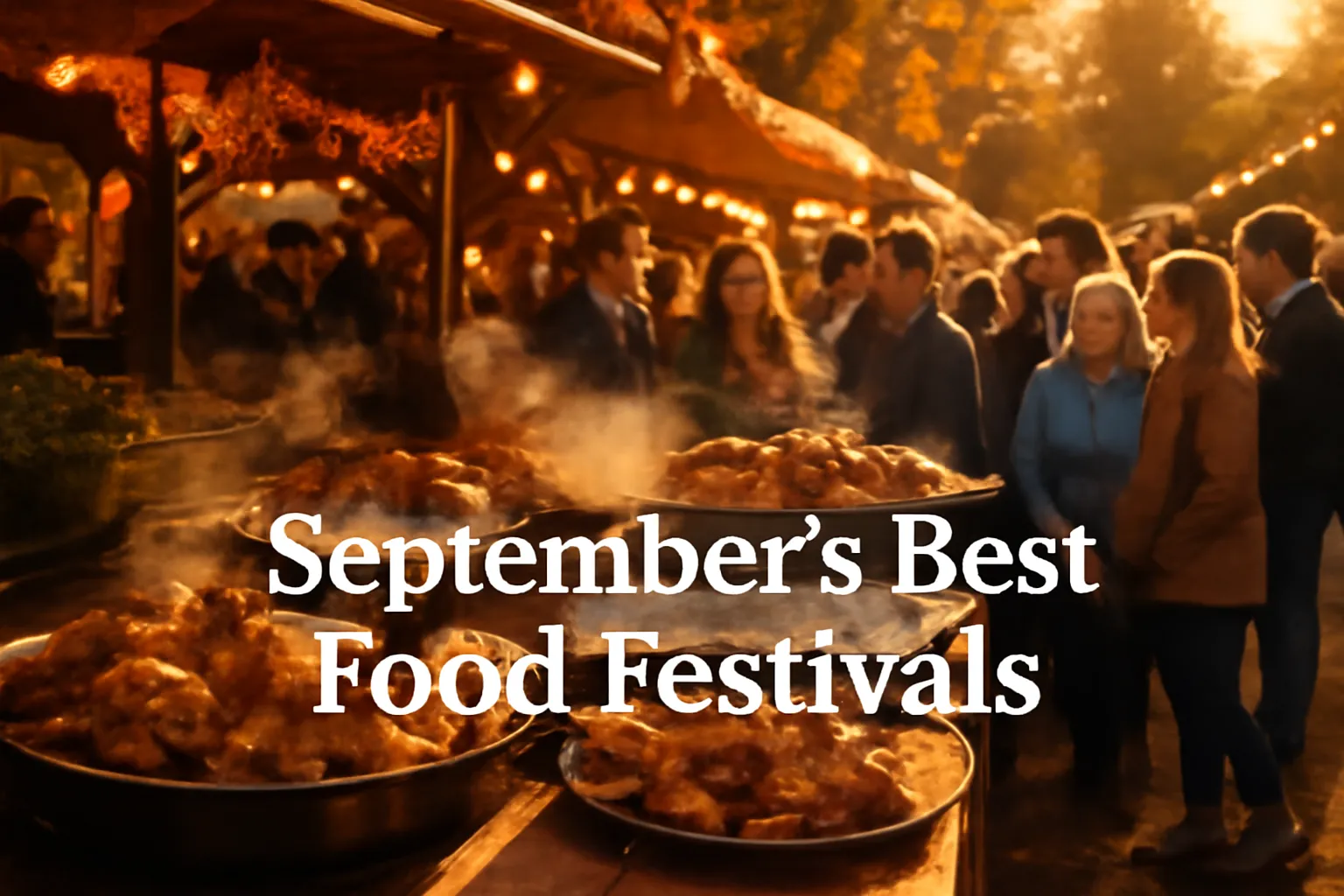
I plan vacations around meals. Not around museums, not around beaches, not around “must-see landmarks” — around food. Specifically, around the kind of food that only exists in one place, at one time of year, made by people who have been perfecting it for generations. And if you share this affliction (it’s not a disorder, it’s a lifestyle), then let me tell you: September is your month. The food festivals September harvest season brings together is honestly unmatched — the summer heat breaks just enough to make standing in a crowd bearable, the agricultural calendar reaches its glorious peak, and cultures all over the world independently decided that autumn’s arrival deserves a proper celebration involving too much food and not enough regret. This is the month I live for, and this listicle is my love letter to it.
Why September Is the Unofficial World Capital of Food Festivals
There’s a beautiful convergence happening every September that no travel calendar seems to talk about loudly enough. Harvests are peaking across the Northern Hemisphere — grapes, grains, root vegetables, orchard fruits — which means local ingredients are at their absolute finest. Meanwhile, the brutal summer tourist crowds have thinned just slightly, airfares start to soften, and the weather in most of Europe and Asia settles into that perfect crisp-but-not-cold zone that makes outdoor festival eating genuinely pleasurable. It’s the culinary sweet spot of the entire year.
It’s also worth knowing the difference between the two dominant festival formats you’ll encounter this month. Harvest festivals are ingredient-driven — they exist to celebrate what the land produced, to honor farmers, and to showcase raw, regional abundance. Chef festivals, on the other hand, are technique-driven — they gather culinary talent to demonstrate what human creativity can do with those ingredients. September somehow gives us both, often in the same week. As a food-obsessed traveler, that means you get to bounce between feast tables piled with roasted pork knuckles and Michelin-starred tasting menus, and somehow call it research. Let’s get into it.
Best Food Festivals Fall Season: The September Harvest Lineup
1. Oktoberfest — Munich, Germany
Dates: Typically mid-September through the first weekend of October (~16–17 days)
Location: Theresienwiese, Munich, Bavaria
Yes, everyone knows Oktoberfest exists. But most people think it’s a beer festival with some pretzels on the side. Let me correct that misconception immediately: Oktoberfest is one of the great harvest food festivals of the world, and if you’ve only ever experienced it through the lens of a beer stein, you’ve been doing it wrong. The food culture inside those massive tents is extraordinary — rooted in Bavarian tradition and completely unapologetic about it.
- Hendl (rotisserie chicken): Whole chickens roasted on spits, golden-skinned and juicy, eaten with your hands over wax paper. One of the great festival foods on earth.
- Schweinshaxe (roasted pork knuckle): A massive, crackling-crusted pork leg that requires two hands and zero shame. The skin shatters like glass. It is glorious.
- Kaiserschmarrn: A fluffy, shredded pancake dusted with powdered sugar and served with plum compote. Don’t skip dessert.
The vibe: Organized chaos with an extraordinarily warm heart. Lederhosen, brass bands, communal tables where you’ll be clinking steins with strangers from six different countries by the second round. The atmosphere inside the tents — particularly the historic ones like Hofbräu-Festzelt or Augustiner-Festhalle — is unlike anything else in the festival world.
Practical tip: Book your tent reservations (called “table reservations”) 6–12 months in advance if you want a guaranteed seat inside the major tents for weekend evenings. Walk-in spots exist on weekday mornings, but they fill fast. Budget around €15–€18 per Mass (liter of beer) and €20–€30 for a main food dish. Comfortable walking shoes are non-negotiable — you’ll cover more ground than you expect.
2. Mistura — Lima, Peru
Dates: Typically early-to-mid September (~10 days)
Location: Parque de la Exposición, Lima, Peru
If you haven’t heard of Mistura, I need you to stop whatever you’re doing and look it up right now. Widely considered the most important food festival in the Americas — and I don’t say that lightly — Mistura is a celebration of Peru’s staggering culinary biodiversity. Peru has somewhere around 3,000 varieties of potato. It has 55 types of corn. It has a coastline, an Amazon basin, and high-altitude Andean terrain all producing wildly different ingredients. Mistura exists to honor all of it, and it draws over half a million visitors annually.
- Ceviche: Lima is the world capital of ceviche, and tasting it here — fresh, local, properly dressed in leche de tigre — is a revelation.
- Anticuchos: Grilled beef heart skewers from street vendors, smoky and perfectly spiced with ají panca. Don’t let the description scare you.
- Picarones: Sweet potato and squash donuts drizzled with chancaca syrup. Eat them hot from the fryer.
The vibe: Genuinely democratic and deeply proud. This isn’t an elite chef showcase — it’s a gathering of Lima’s finest restaurants alongside grandmother-run street food stalls, regional producers, and farming cooperatives. You’ll find celebrity chefs like Gastón Acurio (whose culinary vision essentially built modern Peruvian cuisine) alongside indigenous communities sharing ancestral cooking traditions. It is profoundly moving, and also extremely delicious.
Practical tip: Entry tickets typically run around 20–30 Peruvian Soles (~$5–$8 USD) per day, making this one of the best-value food festivals on the planet. Pair your Lima visit with a trip to the Miraflores neighborhood food scene — the city is worth several extra days of eating. Check the official festival website for exact dates, as scheduling has shifted in recent years.
3. San Sebastián Gastronomika — Basque Country, Spain
Dates: Typically early October (often announced in late September, ~4 days)
Location: Kursaal Congress Centre, San Sebastián (Donostia), Spain
If Mistura is the soul of food festivals, San Sebastián Gastronomika is the brain. This is a culinary summit — a gathering of some of the most technically brilliant chefs in the world, held in a city that already has more Michelin stars per capita than almost anywhere on Earth. The Basque region is not playing around when it comes to food, and this four-day congress is where global culinary conversation happens at its highest level. It’s chef-driven in the best possible way, and attending feels like sitting in on the future of gastronomy being written in real time.
- Pintxos (Basque tapas): The city’s bar-hopping pintxos culture is worth the trip alone — bite-sized masterpieces of anchovy, jamón, Idiazabal cheese, and creative modern combinations.
- Bacalao al pil-pil: Salt cod cooked in a gelatinous garlic-olive oil emulsion. Deceptively simple, technically demanding, and extraordinary.
- Txakoli wine: The local slightly sparkling, bone-dry white wine, poured from height to aerate it. The perfect companion to everything on this list.
The vibe: Sophisticated, intellectually charged, and somehow still deeply convivial in the Basque way. Mornings inside the Kursaal are for chef demonstrations and panel discussions; evenings are for wandering the Parte Vieja (old town) from pintxos bar to pintxos bar with a glass of Txakoli in hand. The combination is perfect.
Practical tip: Congress passes can run €300–€600+ for professional access, but the city itself is the festival — you can experience the full spirit of Gastronomika by timing your visit to the event week and simply eating your way through San Sebastián’s old town. Book accommodation 4–6 months out; the city fills quickly during festival week. If you enjoy reading about Spain’s food culture, check our destination guides on wittypassport.com for more Basque Country travel inspiration.
4. Mid-Autumn Festival / Moon Festival — China, Taiwan, Vietnam
Dates: 15th day of the 8th lunar month — falls in September or early October (~1 week of celebrations)
Location: Across China, Taiwan, Vietnam, and Chinese diaspora communities worldwide
The Mid-Autumn Festival is one of the most food-specific holidays in the world, and if you’re anywhere near a city with a strong Chinese, Taiwanese, or Vietnamese community in September, you need to be paying attention. The entire festival orbits around the mooncake — a dense, ornate pastry filled with lotus seed paste, salted egg yolk, red bean, or increasingly creative modern flavors. Bakeries spend months preparing. Families exchange boxes of mooncakes like we exchange wine bottles. It is a deeply ritualistic food culture, and it is gorgeous to witness.
- Mooncakes: Traditional baked varieties in Cantonese style, snowskin versions from Hong Kong and Taiwan, and contemporary flavors like matcha or durian — all worth trying side by side.
- Pomelo: The festival fruit — eaten fresh and used decoratively. Sweet, tart, and utterly refreshing.
- Family reunion feasts: The evening meal on the festival’s peak night often includes whole roasted meats, glutinous rice dishes, and taro preparations that vary beautifully by region.
The vibe: Warm, familial, and luminous — literally. Lanterns everywhere, children carrying glowing paper animals through parks, families spreading blankets to watch the full moon rise. In Taipei, the festival has also evolved into enormous communal BBQ culture, with city parks filling up with grills and the smell of marinated meats drifting through the autumn night air. In Hội An, Vietnam, the river fills with floating lanterns. Each iteration is its own magic.
Practical tip: Check the lunar calendar for exact dates each year — the festival shifts annually. If you’re traveling to Taiwan, Taipei’s Dihua Street transforms into a mooncake market spectacle in the weeks leading up to the festival. Budget around $5–$20 USD for quality mooncake boxes as souvenirs and gifts — they pack surprisingly well.
Harvest Food Festivals Around the World: Planning a Multi-Festival September
Here’s the genuinely exciting thing about the harvest food festivals around the world that land in September: several of them are geographically close enough that you can chain them together into one epic trip. As a dedicated food traveler, this is the kind of itinerary planning that makes me actually excited to open a spreadsheet.
The European Food Festival Circuit: Start the trip in San Sebastián during Gastronomika week (early October, but book your trip around the late September lead-up when the city is already buzzing). Take a train or cheap flight to Munich and arrive in time for the last week of Oktoberfest. The train journey from San Sebastián to Munich via Paris or Zurich is genuinely beautiful, takes under a day, and costs €80–€200 depending on how far in advance you book. You’ve now covered two of the world’s great september food events autumn in under two weeks, eaten your body weight in exceptional food, and have excellent stories about both pintxos bars and pork knuckles.
The Americas + Asia stretch: If you’re willing to commit to the big trip, Lima in early September flows naturally into a Southeast Asia leg timed for the Mid-Autumn Festival later in the month. Lima to Tokyo or Taipei involves a transpacific crossing, but for serious food travelers, it’s the kind of itinerary that defines a year.
Festival Gear Worth Packing for the Best Food Festivals Fall Season
Let’s talk about what to actually wear to these things, because the right gear makes the difference between a miserable soggy afternoon in Munich and a genuinely comfortable one. September weather across the Northern Hemisphere is notoriously unpredictable — warm afternoons that drop sharply once the sun goes down, occasional rain that rolls in without warning, and outdoor festival spaces that offer little protection from any of it. Layering is
This post contains affiliate links. As an Amazon Associate, I earn from qualifying purchases. If you click a link and make a purchase, I may earn a small commission at no extra cost to you. I only recommend products I’d genuinely throw in my own bag.