Sixteen days a year — that’s the entire window Munich spends as, in my estimation, the single best open-air eating destination on Earth, and most visitors never clock it. I schedule my whole year around meals, not monuments, not coastlines, and certainly not checklists of famous buildings. A dish I haven’t tasted yet is reason enough to buy a plane ticket, full stop. Late September through early October is when that instinct pays off hardest, because that’s when the Wiesn takes over the city. Say “Oktoberfest” and everyone pictures beer, and fair enough — a liter of Märzen under canvas with a brass band going full tilt is one of the genuine highs of travel. But if beer is the only reason you’ve ever considered going, this Oktoberfest food guide is going to rearrange how you plan the trip.
Why Your Oktoberfest Food Guide Should Start with the Food (Not the Beer)
Nobody mentions this part before your first trip: the Wiesn stretches across 16 days spanning late September into early October, and the food scene underneath all that beer is layered enough, considered enough, and worth strategizing around the way you’d plan a serious tasting menu. Over 14 massive beer tents and countless smaller ones run in parallel during that stretch, and a good number of them double as legitimate kitchens turning out thousands of Bavarian plates a day. Step outside the fairground and Munich’s own neighborhoods start putting on restaurant specials, pop-up markets, and food-focused events that most visitors miss entirely because they’re stuck in the Hofbräuhaus queue. Consider this your green light to approach Oktoberfest first as a food event — the beer, excellent as it is, comes along for the ride.
Eight Dishes Worth Building Your Trip Around: The Real Oktoberfest Menu
1. Hendl (Roast Chicken) — €14–18
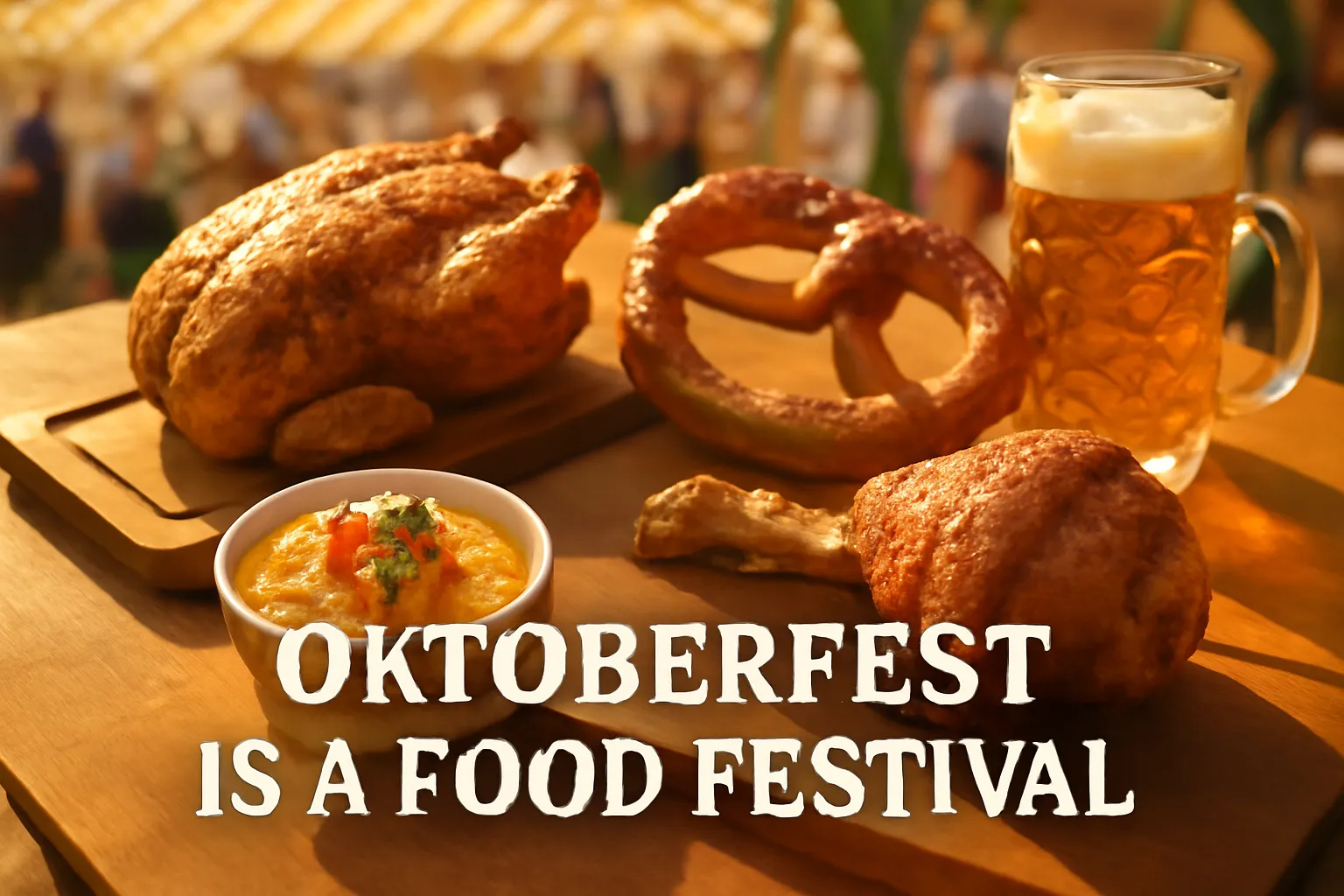
Forget every grocery-store rotisserie bird you’ve ever suffered through. Oktoberfest’s half chicken comes off giant rotating spits inside the tents with skin gone shatteringly crisp, meat rubbed with herbs, and everything sliding off the bone with barely a nudge. Hacker-Pschorr has built a real reputation on theirs. Hands only — cutlery is basically an insult here.
2. Schweinshaxe (Pork Knuckle) — €18–24
Picture a pork knuckle roughly the size of your forearm, slow-cooked until the skin turns into deep, lacquered crackling, plated alongside potato dumplings and a dark beer gravy. It’s the plate that makes even committed vegetarians pause and reconsider. Ochsenbraterei built its name roasting whole oxen, but you’ll find a serious Schweinshaxe at nearly every tent on the grounds. Set aside at least €20 for it and don’t think twice.
3. Obatzda (Bavarian Cheese Spread) — €7–10
This is the dish nobody warns you about, and it quietly steals the show — whipped aged Camembert dusted with paprika, mixed with butter, cream cheese, onion, and caraway, scooped up with a Brezen and a few radishes on the side. Rich, sharp, and dangerously easy to keep ordering. It also happens to be an unnervingly good match for a Mass of Märzen. Make it your daily starter — it’s also one of the cheapest things you’ll find on any tent menu, which never hurts.
4. Kaiserschmarrn (Shredded Pancake) — €10–13
Yes, dessert has a place here, and it’s a serious one. Kaiserschmarrn is a torn, fluffy pancake dusted with powdered sugar and served alongside plum compote or apple sauce. The name loosely means “the Emperor’s mess,” and working through a warm, caramelized plate of it while a brass band plays nearby tends to lodge itself in your memory for years afterward.
5. Weisswurst (White Sausage) — €6–9 for two
Munich’s white veal sausage is technically a breakfast dish — the local saying is it shouldn’t hear noon church bells — but Oktoberfest bends that rule without much fuss. It arrives in warm water with sweet mustard and a pretzel, and the texture is far more delicate and herb-forward than any standard sausage. Tradition calls for “zuzeln” — drawing the meat straight out of the casing by suction. Do it without embarrassment. You’re already committed by this point.
6. Brezen (Pretzels) — €4–7
A proper lye-dipped, coarsely salted Bavarian pretzel has almost nothing in common with whatever’s sold at an airport kiosk or mall food court — they only share a name by accident. At Oktoberfest they show up genuinely oversized, sometimes stretching half a meter across, carried through the crowds by women balancing wooden boards over their shoulders. Get one warm with butter first. Then buy a second just to hold while you wander — it’s basically a festival prop at this point.
7. Steckerlfisch (Grilled Fish on a Stick) — €12–16
Wander out to the fairground’s outer edges and you’ll hit a row of stalls grilling whole mackerel, trout, and herring on wooden skewers over open fire. The skin goes crackling-crisp while the meat inside stays soft, and the smoke alone is worth the detour. It’s one of the most overlooked things on the entire fairground and a smart pick if you need a break from pork. It’s also a genuinely better deal than sitting down for a full tent meal.
8. Dampfnudeln (Steamed Dumplings) — €8–11
These are soft, pillowy steamed yeast dumplings served with vanilla custard or a sweet wine sauce, and they capture the coziest side of Bavarian cooking. You won’t stumble on them as easily as the other dishes here — they tend to turn up at smaller traditional tents like Schöniger’s Wirtshaus am Bavariapark — which turns finding one into its own small victory.
Big Beer Tents vs. Food-First Tents: What Matters Before You Book
Here’s the split that changes your whole approach: the large beer tents — Hofbräu, Augustiner, Paulaner — exist primarily to serve drinks, with food as a secondary act, while a handful of smaller, family-run tents lean much harder into traditional Bavarian cooking. Ochsenbraterei has been roasting whole oxen since 1881 and operates almost as much like a restaurant as a beer hall. Fischer Vroni is the tent to head to for Steckerlfisch. If you want the full food-first experience, check out the Oide Wiesn too — the “Old Oktoberfest” section that keeps things centered on traditional Bavarian culture, crafts, and food, with a pace that’s noticeably slower. Book large-tent reservations three to six months out — booking systems for most of them open in spring. Walk-in tables do exist, but mainly on weekday mornings before the crowds arrive.
Off the Fairground: Munich’s Restaurant Scene and Food Events During the 16-Day Run
Here’s something few visitors realize about the Wiesn: you can eat exceptionally well in Munich without ever crossing onto the festival grounds. Throughout the festival, restaurants across Maxvorstadt, Schwabing, and near the Viktualienmarkt roll out Oktoberfest specials with shorter waits, quieter dining rooms, and frequently stronger versions of the classics than you’ll find under the tents. The Viktualienmarkt — Munich’s much-loved daily market — runs an outdoor beer garden and stalls that go fully Bavarian for the season. It’s an ideal spot for an unhurried mid-morning Weisswurst breakfast, or an afternoon Obatzda without scrambling for bench space. Places like Zum Franziskaner and Spatenhaus an der Oper near the center run full traditional menus and take advance bookings well before the crowds descend. If you want to dig deeper, look into Bavarian cooking classes and food tours timed to the festival — several operators run market-to-kitchen sessions pairing a Viktualienmarkt shopping trip with hands-on cooking.
Vegetarian, Vegan, and Family Options — There’s More Here Than You’d Guess
Oktoberfest has become noticeably more vegetarian-friendly than its pork-forward reputation lets on. Obatzda is meat-free by default. So are pretzels, Kaiserschmarrn, Dampfnudeln, and Käsespätzle (that cheesy baked noodle dish that honestly deserves its own entry on this list). Multiple tents now run dedicated vegetarian sections on their menus, and the organic tent Bioladen on the grounds serves sustainably sourced, plant-based Bavarian food. Families will find the Children’s Area (Kinderland) built specifically around family dining — cheaper prices, a calmer environment, and food kids will actually eat. The Oide Wiesn section also charges a modest entry fee (around €4), which cuts the crowd density substantially and makes it the sensible choice if you’re eating with children, or honestly anyone who’d like to taste their meal without being jostled.
Planning Your Meals Across Multiple Days (So Day One Doesn’t Wreck the Budget)
If you’re staying multiple days — and three at minimum is what I’d actually recommend to do this right — ration yourself like someone who’s done this before. On day one, go to your reserved tent and go all in: Hendl, Obatzda, a full Mass of beer, Kaiserschmarrn to finish. Let yourself get swept into the full spectacle of it. On day two, get moving early — before 11am — for a Weisswurst breakfast at the Viktualienmarkt, then work the outer fairground stalls for cheaper Steckerlfisch and Brezen. On day three, skip the grounds at lunchtime altogether — eat at a neighborhood spot running Oktoberfest specials — and save the fairground for evening, when you’ll want the atmosphere and a Schweinshaxe to match it. Money-wise, expect €30–45 per person for a tent meal with a beer. Outer stalls and market food can get you a full meal under €20. Spread it out across your days and both your budget and your waistband stay in decent shape.
The Costume That Survived My Carry-On and a Crowded Beer Tent
Turn up to Oktoberfest in ordinary street clothes and you’ll feel like the one guest who showed up formal to a backyard barbecue. But hauling a full Bavarian outfit from home meant either blowing my checked-bag weight limit or settling for whatever the airport gift shop had left — which I actually did once, and it’s not a mistake I’m making twice.
Where it delivers
- Everything ships as a single set, so there’s no scrambling between three different Munich shops on arrival day chasing down lederhosen, hat, and suspenders separately.
- The material genuinely withstands spilled beer and hours on a tent bench — it’s not the flimsy costume fabric that splits the second a crowd packs in tight.
- Having it shipped ahead — to Munich or home first — beats trying to find your true size in a shop where you don’t speak the language and you’re running on no sleep.
Where it falls short
- Sizing tends to run tight — I ordered my usual size and spent my first full festival day negotiating some genuinely risky seated positions in the lederhosen.
- Treat it as costume-grade rather than a keepsake — it’s not built to be an heirloom piece, so don’t count on it surviving much past 2–3 heavy-use festival seasons.
I nearly sent it back after trying it on the morning of opening day, convinced I’d made a terrible call with the fit. But I sized up a piece, made it work, and actually enjoyed blending in with the crowd instead of feeling like an American tourist in khakis. Spooktacular Creations Oktoberfest Costume Set with Lederhosen and Bavarian Hat
Frequently Asked Questions
How many days does Oktoberfest run each year?
Oktoberfest runs for 16 days spanning late September into early October. Elena recommends staying a minimum of three days to experience the food scene properly and spread meals across the festival without straining your budget or appetite.
What’s the cheapest traditional dish at Oktoberfest?
Obatzda, a whipped aged Camembert spread with paprika, butter, cream cheese, onion, and caraway, costs €7–10 and is one of the cheapest items on any tent menu. It comes with a Brezen and radishes and pairs excellently with a Mass of Märzen.
Where should I eat Steckerlfisch at Oktoberfest?
Head to Fischer Vroni tent or the outer fairground stalls grilling whole mackerel, trout, and herring on wooden skewers over open fire. Steckerlfisch costs €12–16 and is one of the most overlooked dishes on the fairground.
Can I eat well at Oktoberfest without going to beer tents?
Yes. Throughout the 16-day festival, restaurants across Maxvorstadt, Schwabing, and near the Viktualienmarkt run Oktoberfest specials with shorter waits. The Viktualienmarkt itself runs an outdoor beer garden and stalls serving traditional Bavarian food with less crowd pressure.
About This Article

Written by Elena Vasquez. Elena Vasquez is a full-time traveler and the founder of Witty Passport. Over fifteen years and more than 50 countries across six continents — including a stretch spent leading groups professionally through Southeast Asia and the remote highlands of South America — she's written the kind of destination guides she always wished existed: practical, specific, and built on real experience rather than recycled itineraries. More about this site.
Scope and limits. Elena is a full-time traveler, not a licensed travel agent or immigration adviser. Entry requirements, visa rules, and advisories change without notice — always confirm against the official government source for your destination and passport before booking.
Verify this against a primary source
Specifics change, and your situation may differ from the one described here. These are the authorities worth checking directly:
- U.S. Department of State — entry requirements and travel advisories
- CDC Travelers' Health — vaccination and health notices by destination
- TSA — current carry-on and screening rules