Let me be honest with you: I have never once planned a trip around a museum. I have, however, rearranged an entire spring itinerary because I found out a small Sardinian village would be slow-roasting suckling pig over open flame for four days straight. If you’re the kind of traveler who considers a restaurant reservation a legitimate cultural experience and thinks “what will I eat there?” before “what will I see there?” — welcome home. Mediterranean food festivals in spring are your people, your place, and your most compelling reason to book a flight in April or May. The timing is not accidental: spring across the Mediterranean basin brings the first tender vegetables, the last of the winter citrus, newly pressed olive oils still grassy and electric, and communities bursting with the particular joy of eating together after months of grey weather. If you’ve been searching for the best mediterranean food festivals spring has to offer, this post is your planning bible.
Why Spring Is the Secret Season for Mediterranean Food Travel
Here’s something the summer-crowd doesn’t know: the Mediterranean in April and May is a completely different sensory experience from July. The produce hasn’t been cooked into submission by the heat yet. Artichokes are at their peak — nutty, sweet, almost creamy at the center. Fava beans are young and bright. Strawberries are small and intensely flavored. Wild greens foraged from hillsides end up in everything from pasta fillings to festival stews. Festival food made from spring ingredients tastes fundamentally different — more delicate, more complex, less about bold preservation and more about showing off what just came out of the ground. Crowds are also thinner, accommodations are cheaper (budget €60–€120/night for mid-range options versus €150+ in summer), and locals actually have time to talk to you. Mediterranean food travel season starts now, and savvy food travelers know that April and May are the sweet spot before the chaos arrives.
Festa di Sant’Efisio Food Stalls — Sardinia, Italy (Late April–May 4)
Officially, Festa di Sant’Efisio is a religious procession — one of Europe’s oldest and most spectacular, winding 70 kilometers from Cagliari to the village of Nora over four days starting May 1st. But around the procession? Around it is one of the most authentic street food scenes you will find anywhere in the Mediterranean. Food stalls and pop-up restaurants begin appearing in the streets of Cagliari in the final days of April, and the eating is absolutely relentless in the best possible way. This is a genuine community festival, not a tourist market, and the difference shows up on the plate.
Must-Try Dishes
- Porceddu — Sardinian suckling pig roasted over myrtle wood, the skin crackling like thin glass, the meat impossibly tender. This is the dish people talk about for years.
- Culurgiones — Sardinia’s signature stuffed pasta, crimped into a wheat-ear shape, filled with potato, pecorino, and mint. Find them dressed in tomato sauce or simply with butter and sage at festival stalls.
- Seadas — A fried pastry filled with fresh sheep’s cheese, drizzled with bitter corbezzolo honey. Order two. You won’t regret it.
The Vibe: Deeply local, visually extraordinary. Thousands of Sardinians in traditional costume, horses decorated with silver, centuries of tradition playing out in real time — and then you turn a corner and someone’s grandmother is handing out slices of porceddu from a folding table. Long communal tables line the side streets in the evenings. Sit down next to strangers. Share the bread.
Practical Tip: Book your accommodation in Cagliari by February at the latest — this is not a secret festival among Italians, and the good mid-range hotels (€80–€130/night) go fast. Vegetarian travelers: Sardinia has a strong tradition of vegetable-forward antipasti and herb-filled pastas — ask specifically for sa minestra (vegetable and legume soup) or zuppa gallurese (vegetarian version available). You won’t go hungry. Check out our Italy travel content for more on planning your Sardinian adventure.
Greek Easter Food Traditions — Greece (Variable April–May Dates)
Greek Easter — Pascha — is the most important celebration in the Greek calendar, and it is, from a food perspective, one of the most extraordinary multi-day eating events in the entire world. The dates shift annually with the Orthodox calendar (in 2025, Greek Easter falls on April 20th), but the food traditions are beautifully consistent. This isn’t a ticketed festival; it’s an entire nation eating together, and if you happen to be traveling through Greece during this window, you will stumble into the middle of it whether you planned to or not. Lean in. This is exactly what greek food festivals spring dreams are made of.
Must-Try Dishes
- Magiritsa — The midnight soup eaten after the Easter Saturday vigil. Made from lamb offal, spring onions, dill, and egg-lemon sauce, it’s rich, herby, and surprisingly delicate. Brave travelers: this is your moment.
- Lamb on the spit (Ovelias) — Easter Sunday. Whole lambs over charcoal, rotating for hours. The smell alone is worth the flight. Find it in every village square and most family courtyards.
- Tsoureki — The sweet braided Easter bread, flavored with mahlab and mastic, sometimes stuffed with chocolate or topped with a red-dyed egg. Buy one from a local bakery on Saturday morning while they’re still warm.
The Vibe: Intimate, family-centered, and genuinely moving. Village squares become open-air feast halls. Strangers invite strangers to their tables — this happens more than you’d expect. The combination of the candlelit midnight church service and then the sudden explosion of feasting is one of travel’s great experiences.
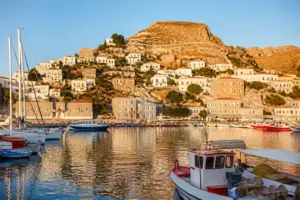
Practical Tip: The islands of Hydra, Corfu, and Crete all have particularly spectacular Greek Easter celebrations. Accommodation books out six to eight weeks in advance for Easter weekend specifically. Budget €70–€150/night depending on island. Vegetarian/vegan travelers: The pre-Easter fasting tradition (Lent) means Greek cuisine has a rich tradition of entirely plant-based dishes — gigantes plaki (giant baked beans), spanakopita, taramosalata, and a dozen different vegetable preparations. Many tavernas offer full fasting menus right up through Holy Saturday. Explore our Greece travel guides for island-by-island tips.
Orange Blossom Festival Food Events — Seville Region, Spain (April, One Week)
Seville in April smells like the inside of a perfume bottle — the bitter orange trees that line the city’s streets burst into bloom all at once, and the scent is genuinely intoxicating. The Orange Blossom Festival (and the broader cultural events surrounding Seville’s April Fair, Feria de Abril) transforms the city into a week-long celebration of Andalusian food, sherry, flamenco, and the particular joy of eating standing up at a tapas bar at eleven in the morning because that is simply what you do here. This is one of the most underrated stops on the italian food festivals april may circuit — yes, I know Seville is in Spain, but the pan-Mediterranean food travel season absolutely includes Andalusia.
Must-Try Dishes
- Pescaíto frito — Lightly battered and fried small fish, eaten with your hands, washed down with a cold glass of manzanilla sherry. This is the Feria’s unofficial dish.
- Espinacas con garbanzos — Spinach and chickpea stew, deeply spiced with cumin and paprika. Every tapas bar does it differently. Order it everywhere.
- Orange blossom honey desserts — Local pastry shops produce torrijas (a Spanish version of French toast) soaked in orange blossom water and honey during this season specifically. Extraordinary.
The Vibe: Electrifying. The Feria de Abril sets up an entire temporary city of casetas (decorated tents) where families and associations host private parties — flamenco, food, sherry, repeat. The public casetas are open to everyone and the eating never really stops between noon and four in the morning. Long communal tables, shared plates, the sound of guitar and hand-clapping drifting between tents.
Practical Tip: Book accommodation six to eight weeks out minimum — Seville during Feria is extremely popular and prices spike sharply (€100–€200/night for mid-range). Wear comfortable shoes; you will walk twelve miles a day and not notice. Vegetarian/vegan travelers: Andalusian tapas culture is surprisingly plant-friendly — patatas bravas, gazpacho, salmorejo, fried aubergine with molasses, and the espinacas con garbanzos mentioned above give you plenty of options at even the most meat-forward bars.
Cous Cous Fest — San Vito Lo Capo, Sicily (Plan Ahead for Late September)
I’m including this one as your planning horizon festival — the event that you start thinking about in April while you’re still licking orange blossom honey off your fingers in Seville. Cous Cous Fest in San Vito Lo Capo, Sicily, happens in late September and is flat-out one of the most joyful food events in the entire Mediterranean. International chefs compete in a live couscous cook-off, local fishermen bring in fresh catch for the seafood couscous that Sicilians consider their own deeply personal tradition, and the whole town of San Vito — perched on a dramatic promontory between turquoise water and the Zingaro nature reserve — becomes a giant outdoor table. Tickets for cooking demonstrations and official tastings run €15–€30 and sell out quickly; note September dates in your calendar now and watch the official festival website starting in June. Our Italy travel content covers Sicily in depth — start planning the full trip.
The Olive Oil Set I Pack Now Because Festival Food Tastes Better at Home
You’ll taste something incredible at Sant’Efisio—a roasted vegetable, a fresh cheese, a crust of bread—and realize it’s not just the fire or the vendor’s skill: it’s the oil. Coming home and trying to recreate that meal with whatever’s in your pantry is a study in disappointment, which is why I started bringing back small bottles of the good stuff to at least approximate the memory.
What works
- The 60ml bottles fit perfectly in a checked bag without taking up much space, so you can actually haul Mediterranean flavors home without guilt or excess luggage fees.
- The variety pack means you can taste-test six different profiles and figure out which one actually reminds you of that grilled fish you had, instead of committing to one big bottle and regretting it.
- When you drizzle it over food at home, it genuinely transports you back—not in a cheesy way, but in that real, involuntary muscle-memory way that makes you briefly forget you’re in your kitchen.
What doesn’t
- It’s not cheap, and you’ll feel a little ridiculous buying fancy oil online when you could just buy whatever’s on sale at the supermarket—until you actually use it and remember why you bothered.
- The balsamic vinegars are lovely but don’t ship as reliably as the oils; I’ve had one arrive with a slightly loosened cap, which defeated the entire purpose of the exercise.
I almost talked myself out of ordering this set the first time because the price made me flinch, and I thought I was being ridiculous for wanting to buy oil based on a festival memory. But here’s the thing: it works. Viva Oliva Six 60ml Variety Gift Set — Premium Flavored Extra Virgin Olive Oils and All Natural Balsamic Vinegars
This post contains affiliate links. As an Amazon Associate, I earn from qualifying purchases at no extra cost to you.