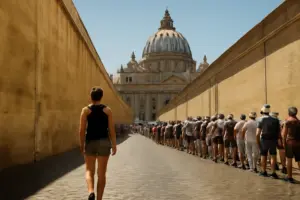
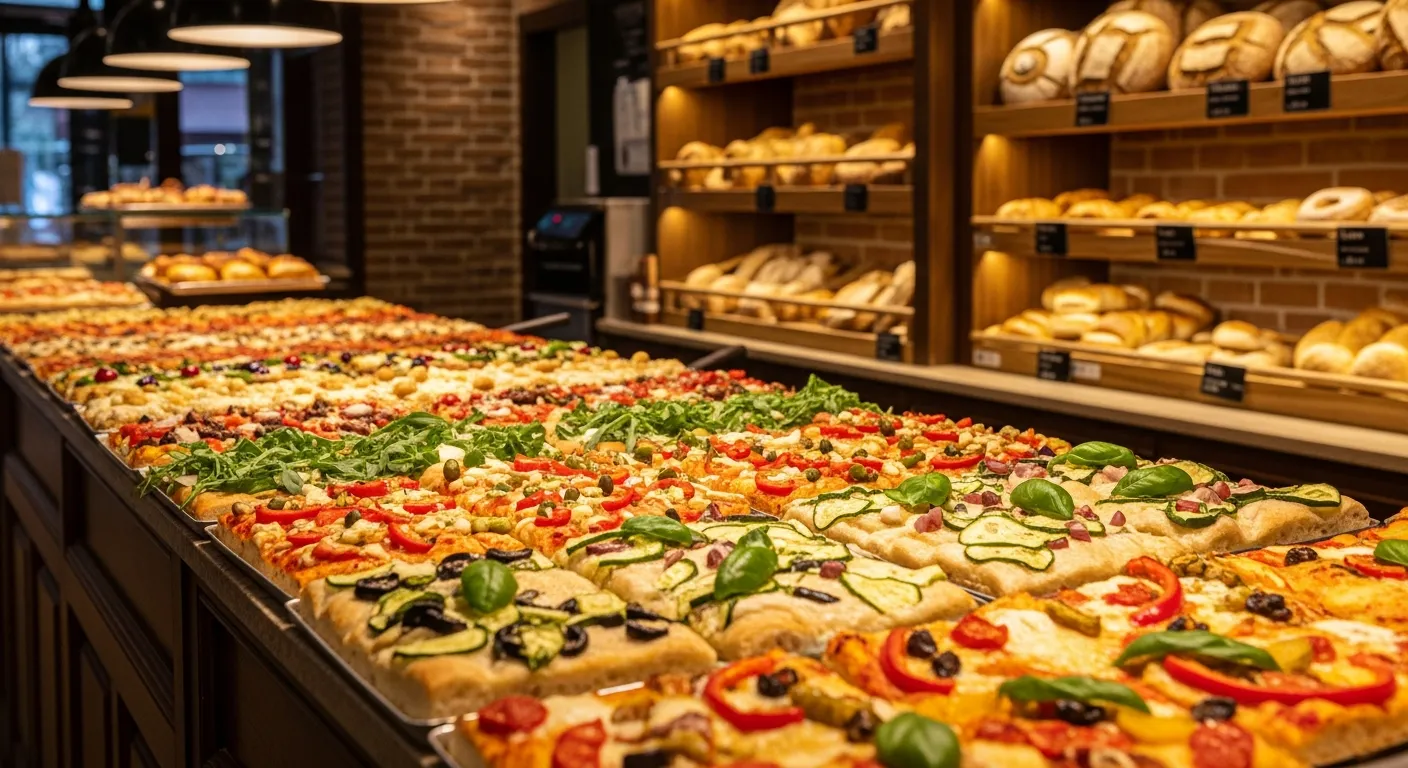
Half the advice floating around online about eating in Rome tells you to just wander into whatever trattoria looks charming near the Colosseum and trust your gut; the other half insists you should never eat within five blocks of a major monument, full stop. The second piece of advice is the one that’s actually correct, and I learned it the expensive way. My husband and I eloped on a Tuesday with three friends and a bottle of champagne, promising ourselves the real trip would happen eventually. Eventually turned out to be eighteen months later, when we finally stopped waiting for some perfect window and booked two weeks in Rome. Nothing we found there matched the glossy pins on our vision board — it was noisier, scruffier, and far more delicious than we’d imagined. We nearly wrecked the whole trip on day one at a tourist-trap restaurant steps from the Colosseum, until a neighbor steered us down a side street to a spot with no English menu and a stack of plastic chairs, and that’s when the city finally made sense. Everything in this guide is what we wish someone had told us before that first meal — how to drink a proper cappuccino standing at a bar, how to order like you’ve done this before, and which late-night gelato will ruin every other gelato you eat for the rest of your life.
The Plug Adapter That Kept Our Trattoria Reservations Alive
Italian sockets follow their own strange logic, and there’s no faster way to torch a candlelit dinner reservation than showing up with a dead phone and zero clue how to retrace your steps to the trattoria. Day two taught us that lesson the hard way.
Where it delivers
- Slides straight into Italian sockets with no jiggling or muttered prayers required — the two round pins match the spec exactly, and the metal housing feels solid rather than flimsy.
- Fast enough that a three-course meal is plenty of time to top off your phone, leaving battery to spare for the gelato photos afterward.
- Small enough it won’t monopolize both sockets in a cramped Airbnb bathroom — useful when your partner’s camera battery needs juice too.
Where it falls short
- The cable itself is short, almost comically so, meaning your phone charges right against the wall instead of clear across the room the way you might expect.
- Pack a laptop, hair dryer, and phone together and one adapter won’t cut it — you’ll need a second, which undercuts the whole light-packing plan.
The night before departure we nearly swapped it out for some bulkier universal adapter, sure we were over-packing — a mistake that would’ve left us stuck in a city where cash barely exists anymore. Get the travel adapter.
No. You should never eat within five blocks of a major monument. Restaurants flashing laminated picture menus or staffed by someone standing outside waving you in are built for tourist traffic, and the kitchen shows it. Instead, hunt for small storefronts with handwritten menus in residential blocks away from monuments. Dinner in Rome starts much later than in America, usually around 8 or 9 p.m., and tends to be the lighter of the two meals by tradition. Showing up at 6 p.m. means you’ll find locked doors or a dining room full of only other tourists. The whole exchange runs two to four euros. You step into any bar, order at the counter, knock it back standing up in roughly thirty seconds, and walk out. This is how Romans have breakfast before ordering a cornetto—a light, flaky pastry—at the same counter. Track down shops where the people behind the counter treat gelato as a craft. Natural coloring is the tell; neon-green pistachio means it’s fake. Taste the real version once and every other gelato you eat afterward will feel like a letdown.Frequently Asked Questions
Should I eat at restaurants near the Colosseum in Rome?
What time should I have dinner in Rome?
How much does a cappuccino and cornetto cost in Rome?
What makes authentic Roman gelato different from other gelato?
Rome’s Food Scene Has Its Own Unwritten Rules
With working phones finally in hand, we could dig into Rome’s food scene the way it deserved. That’s really where the learning curve started. Eating well in this city has nothing to do with ticking off a list of famous dishes — it’s about grasping how Romans actually eat, and more importantly, where.
Rule number one: steer clear of any restaurant flashing laminated picture menus or staffed by someone standing outside trying to wave you in off the street. Those places are built for tourist traffic, and the kitchen shows it. Look instead for tables full of locals actually eating. Finding them means wandering into residential blocks well away from the big monuments, hunting for small storefronts with handwritten menus taped to the window. And if there’s a queue of Italian grandmothers out front, you’ve found the real thing.
Breakfast Means Cappuccino Standing at the Bar
Before any other lesson about Roman food sank in, breakfast had to click first. No Roman sits down with a cappuccino. You step into any bar, order at the counter, knock it back standing up in roughly thirty seconds, and walk out. The whole exchange runs two to four euros, and the espresso beats anything you’ll find back home by a wide margin.
Alongside that cappuccino, most Romans grab a cornetto — a light, flaky pastry, nothing like the American version the name might suggest — and eat it standing at the same counter. Skipping this pairing basically isn’t done. And ordering a cappuccino at a café table past 11 a.m. is an instant tourist tell; Romans won’t say anything, but you’ll feel the silent judgment. It’s not hostility, just a quiet awareness that you’re not from around here.
Why Meal Timing and Structure Actually Matter
Lunch in Italy runs bigger and slower than the American version, typically stretching from 1 to 3 p.m. Dinner starts much later, usually around 8 or 9 p.m., and tends to be the lighter of the two meals by tradition. Show up looking for dinner at 6 p.m. and you’ll either find locked doors or a dining room full of nobody but other tourists.
A full Roman meal moves through four stages: antipasti to start, primi for pasta or risotto, secondi for meat or fish, and contorni for vegetables on the side. Nobody requires you to order through all four — plenty of Romans bypass secondi in favor of straight to contorni, or skip primi altogether. Still, knowing the sequence means you’ll order like you actually understand what you’re doing.
Four Dishes Worth Building a Meal Around
A handful of dishes are so woven into Rome’s identity that leaving them off your plate would be a real loss. Cacio e pepe uses nothing but Pecorino Romano and black pepper on pasta — and needs nothing else. Carbonara keeps things nearly as simple: pasta, guanciale (cured pork jowl), egg yolk, and more Pecorino. Carciofi alla romana are artichokes braised down with garlic and mint. Saltimbocca is a thin cut of veal layered with prosciutto and sage.
None of these dishes matter because they’re refined — quite the opposite. They matter because they’re what Romans genuinely cook at home and order in their own neighborhoods, recipes handed down through generations, the kind of food you find on menus at places furnished with plastic chairs and zero reservation policy.
Gelato Plays By Its Own Rules Entirely
Cappuccino belongs to the bar, meals belong to the social calendar, but gelato answers to none of that. Eat it any hour you like, seated or standing, solo or in a crowd. Track down the shops where the people behind the counter treat it as a craft — natural coloring is the tell (neon-green pistachio means it’s fake). Taste the real version once and you’ll understand exactly why we’re warning you now: every other gelato you eat afterward will feel like a letdown.
Rome pays back anyone willing to slow down and stay curious about its food. Bypass the famous tourist-magnet restaurants, pick up on the rhythm locals actually eat by, and let that rhythm lead you into the neighborhoods where the city’s real life happens. That’s where the meals worth remembering are waiting.
About This Article

Written by Elena Vasquez. Elena Vasquez is a full-time traveler and the founder of Witty Passport. Over fifteen years and more than 50 countries across six continents — including a stretch spent leading groups professionally through Southeast Asia and the remote highlands of South America — she's written the kind of destination guides she always wished existed: practical, specific, and built on real experience rather than recycled itineraries. More about this site.
Scope and limits. Elena is a full-time traveler, not a licensed travel agent or immigration adviser. Entry requirements, visa rules, and advisories change without notice — always confirm against the official government source for your destination and passport before booking.
Verify this against a primary source
Specifics change, and your situation may differ from the one described here. These are the authorities worth checking directly:
- U.S. Department of State — entry requirements and travel advisories
- CDC Travelers' Health — vaccination and health notices by destination
- TSA — current carry-on and screening rules