Never trust a no-name battery pack with a boarding pass you can’t print. Mine died on me in Tbilisi, Georgia, at 11:47 p.m., phone reading 4%, taxi driver ringing a number I couldn’t pick up because — obviously — the battery was gone. The airport sat thirty minutes away. The brick I’d bought off a market table in Bangkok six months prior had quietly given out somewhere above the Black Sea. I paid for that night with a missed flight, a freezing bench, and a lesson about gear I really should’ve absorbed years earlier. That’s the night the Anker PowerCore portable charger travel review stopped being optional homework and became something I actually needed to get right.
The Power Bank That Saved Me From Another Tbilisi Airport Bench
Sixteen-hour travel days will drain a phone faster than a Georgian wine bar drains your resolve, especially once you start hopping time zones. What you need is a charger that won’t quit on you in the middle of some unfamiliar continent, leaving a frozen bench and a blown connection as your only backup plan.
Weeks of digging followed that Tbilisi mess. I combed through reviews, compared specs line by line, and — more usefully — asked other travelers what they actually carried in their bags, not what some gear blog told them to buy. Cheap power banks share one flaw: they quit exactly when you need them most. Charge drains off mysteriously overnight. Cables fray within a month. Capacity numbers on the box turn out to be fiction. What I wanted was something built to survive the actual grind of nonstop travel.
Battery Capacity and Why It Matters Over 16 Hours
Your average phone battery sits around 3,000-4,000mAh. A basic 10,000mAh charger sounds fine on paper — until you’re wandering a city you don’t know at dusk, GPS running, messages pinging, photos uploading to the cloud every few minutes. That kind of use burns through a battery like it’s jet fuel.
A sixteen-hour stretch usually throws several demands at your phone at once: navigating an airport, catching ground transport, wandering on foot, hunting down dinner, fielding the occasional emergency call, and — guilty as charged — shooting far too many photos. Your phone can be losing charge even while it’s plugged into the power bank. What you actually need is capacity with room to spare, not just enough to scrape by.
Where This Charger Delivers
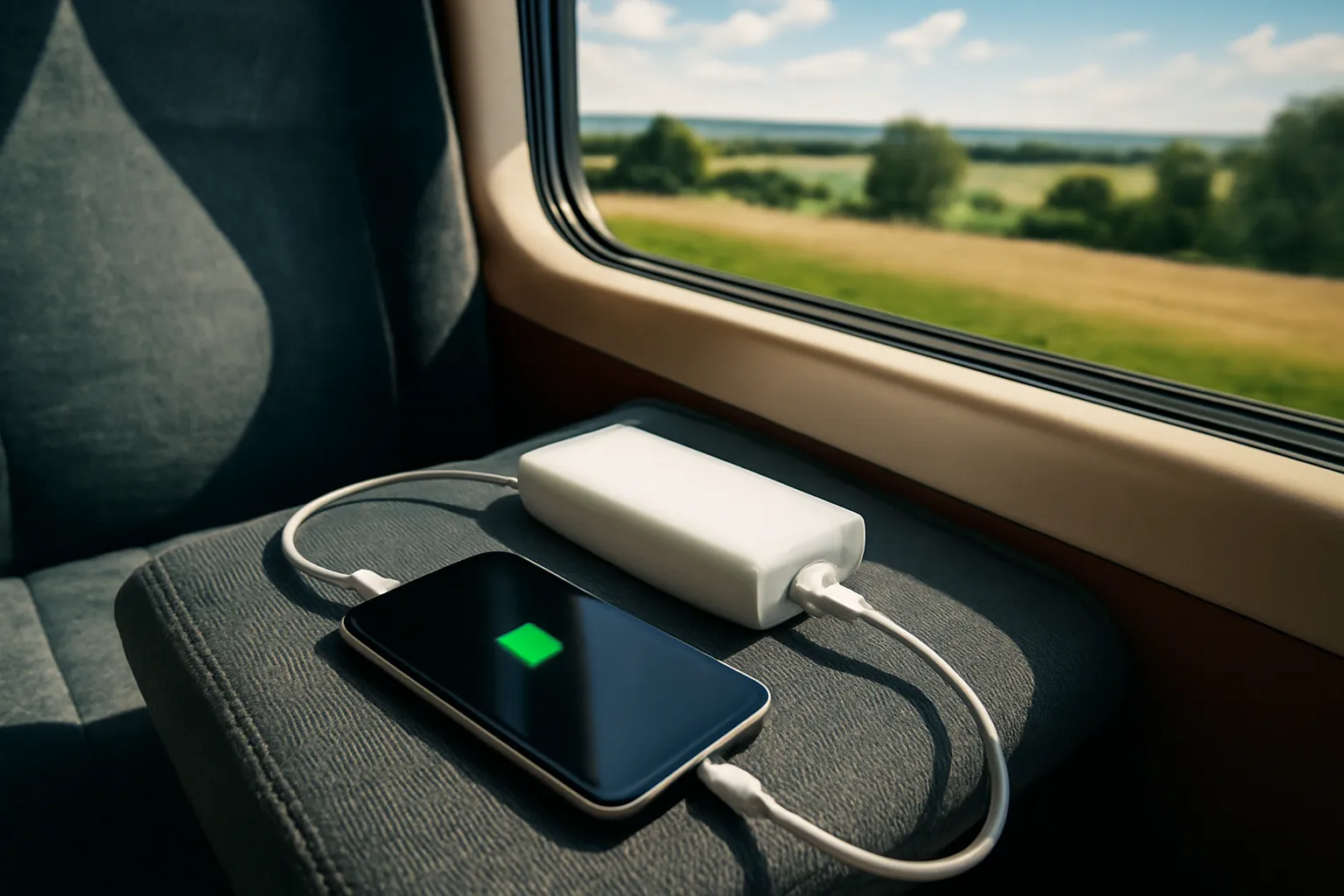
- Twenty thousand mAh is enough to carry me through two solid days of heavy use without ever hunting for a wall outlet — I’ve run it from Tbilisi through Istanbul into Cappadocia without once needing to plug in.
- The built-in USB-C cable saves me from packing yet another cord in an already overcrowded daypack, and the charge speed is quick enough that a thirty-minute layover buys another twelve hours of battery.
- It’s small enough to disappear into your bag — I forget it’s in there until my phone drops to 20% and I remember I’m actually covered.
- Build quality holds up. No brittle plastic, no sticky buttons. Mine has gone through airport scanners, gotten crammed into side pockets, and hit tile floors more than once without a scratch that mattered.
- Charge retention is genuinely impressive — leave it untouched for weeks and it barely dips. I pulled mine out after a month sitting at home and it still read 80%.
Where It Falls Short
- Size is the tradeoff — pack light with a tiny crossbody bag and this thing will feel like a second phone riding along.
- Wall-to-bank charging isn’t fast — with only forty-five minutes before a flight, don’t count on topping it off completely.
- No wireless charging here, though in years of actual travel I’ve never once missed it.
How to Get the Most Out of It on the Road
If you’re leaning toward buying this power bank, here’s what actual use taught me:
- Top it off the night before you travel. Never count on finding time at the airport — assume you won’t have any.
- Flip on airplane mode between transit legs. Killing the constant network search buys you another three to four hours of battery life.
- Plug in before your phone drops below 10%. Draining it completely wears down long-term capacity, so top up somewhere around 20-30% when you can.
- Keep the cable within reach at all times. Don’t let it disappear into checked luggage — it belongs in your day bag, no exceptions.
I had one moment at Istanbul’s airport where the cable connection felt loose and I genuinely panicked—the kind of panic only someone who once missed a flight understands—but it was user error, not a flaw. If you’ve learned the hard way (like I have) that travel without a reliable backup battery is just anxiety with luggage, grab the Anker Power Bank, 20,000mAh Travel Essential Portable Charger with Built-in USB-C Cable.
Your phone carries more weight than any other item in your bag — it’s your map, your translator, your booking confirmation, your emergency line home. Don’t let it flatline on some cold bench half a world away. That kind of disaster is entirely avoidable.
Frequently Asked Questions
How many times can a 20,000mAh power bank charge a phone?
A 20,000mAh power bank can fully charge an average phone with a 3,000-4,000mAh battery several times over. The author reports it carries her through two solid days of heavy use without hunting for a wall outlet, running from Tbilisi through Istanbul into Cappadocia without needing to plug in once.
What should I do before a long travel day?
Top off your power bank the night before you travel. The author advises never counting on finding time at the airport—assume you won’t have any charging time available before departure.
How much battery life does airplane mode add?
Flipping on airplane mode between transit legs buys you another three to four hours of battery life by killing the constant network search. This simple step extends your phone’s endurance significantly during travel days.
How long does the Anker Power Bank hold a charge?
Charge retention is impressive—the author left hers untouched for a month at home and it still read 80%. This makes it reliable for travel since you can charge it well before your trip and it won’t drain sitting in your bag.
About This Article

Written by Elena Vasquez. Elena Vasquez is a full-time traveler and the founder of Witty Passport. Over fifteen years and more than 50 countries across six continents — including a stretch spent leading groups professionally through Southeast Asia and the remote highlands of South America — she's written the kind of destination guides she always wished existed: practical, specific, and built on real experience rather than recycled itineraries. More about this site.
Scope and limits. Elena is a full-time traveler, not a licensed travel agent or immigration adviser. Entry requirements, visa rules, and advisories change without notice — always confirm against the official government source for your destination and passport before booking.
Verify this against a primary source
Specifics change, and your situation may differ from the one described here. These are the authorities worth checking directly:
- U.S. Department of State — entry requirements and travel advisories
- CDC Travelers' Health — vaccination and health notices by destination
- TSA — current carry-on and screening rules